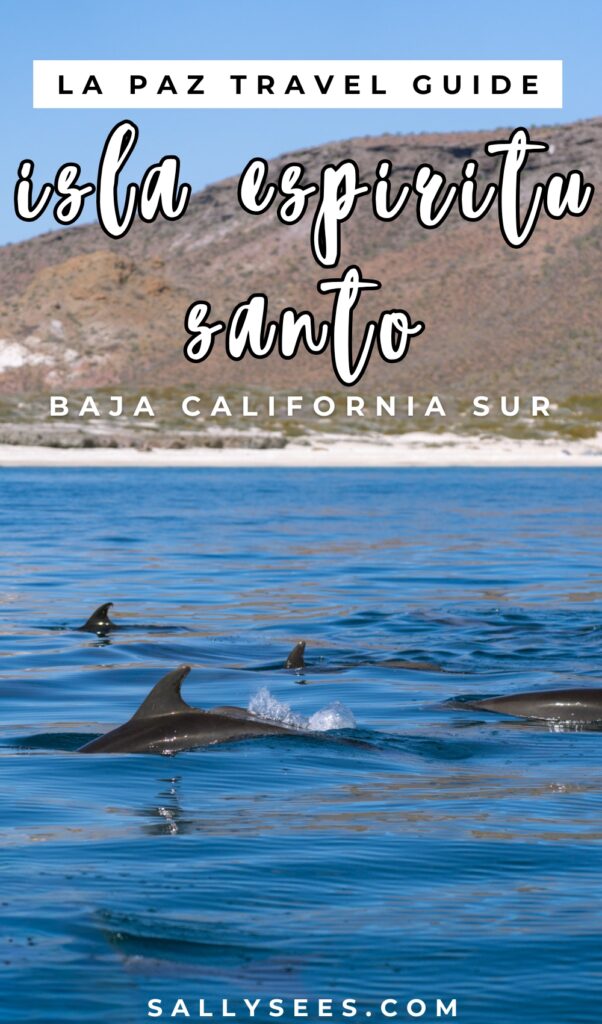
Our experience and tips for visiting the beautiful Isla Espiritu Santo in La Paz, Baja California Sur. A protected national park, UNESCO World Heritage Site and home to the largest sea lion colony in all of Mexico, this rugged desert island has towering rock formations, perfect turquoise waters, white sand beaches, and a mind-boggling amount of marine life.
This post is divided into two parts: practical information and logistics for visiting the island, and secondly, a recount of our fabulous day on Isla Espiritu Santo.
This article may contain affiliate / compensated links, that may earn me a small commission, at no extra cost to you. For full information, please see our disclaimer here. While all efforts have been taken to ensure the information included in this post is correct and current, travel information such as opening hours, business operations and prices change frequently. If you find anything in this post that is incorrect or outdated please let me know in the comments so I can update it for other readers.
About Isla Espiritu Santo
Isla Espiritu Santo is a volcanic island located in the Sea of Cortez (aka Gulf of California) in the Mexican state of Baja California Sur. The island lies offshore of the state’s capital, La Paz, and is one of the most popular things to do in La Paz – for good reason!
Espiritu Santo showcases the landscapes Baja is best known for – the desert and the sea. The rugged rocky island, with towering rock formations and colourful layers of sediment, falls into the Sea of Cortez, teeming with marine life like whales, dolphins, rays, turtles and hundreds of species of fish.
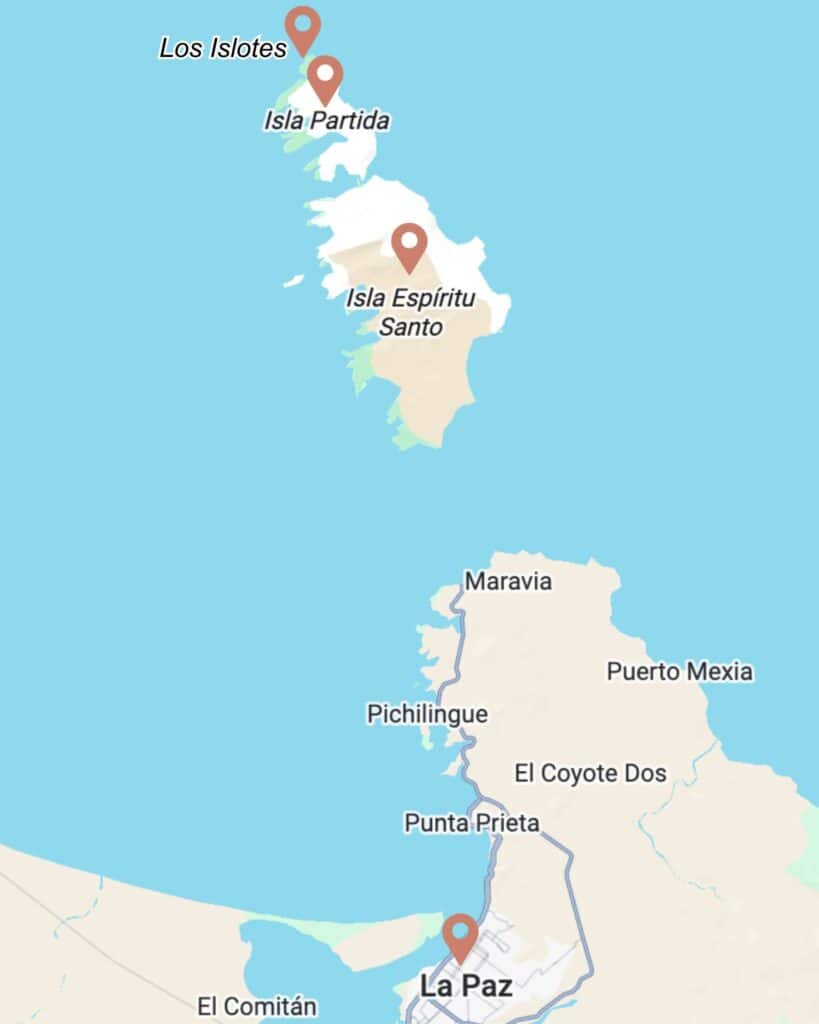
There are actually several islands and islets that collectively make up the Isla Espiritu Santo Archipelago. Isla Espiritu Santo is the largest, connected to neighbouring Isla Partida by a narrow channel, as well as a few other islets and rocky outcrops.
The archipelago was declared a UNESCO World Heritage Site in 2005 and a national park in 2007, the Parque Nacional Archipiélago de Espiritu Santo.
All visitors must obtain a ‘bracelet’ to enter the national park, paying an access fee. Tour operators generally include this fee in the tour cost and take care of the bracelets for you. Make sure you receive one on the boat before you enter the bounds of the national park.
Besides the spectacular scale of the cliffs, its pristine beaches and unbelievably clear turquoise waters, the main reason visitors come to Isla Espiritu Santo is to come face to face with its most popular residents: California sea lions.
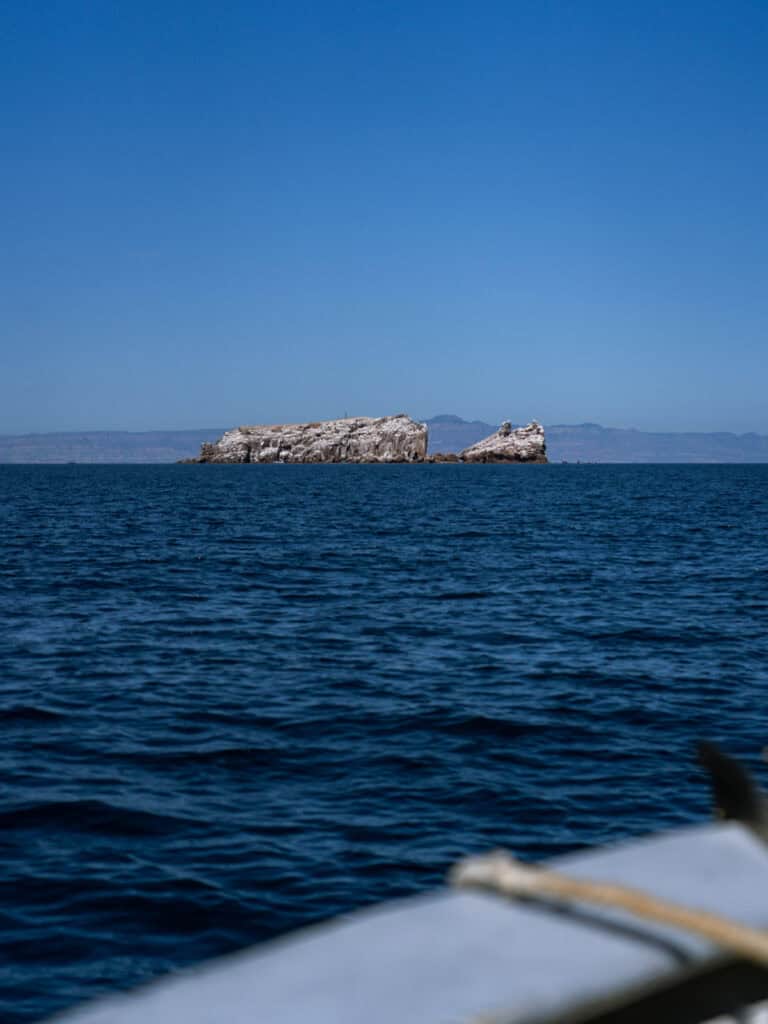
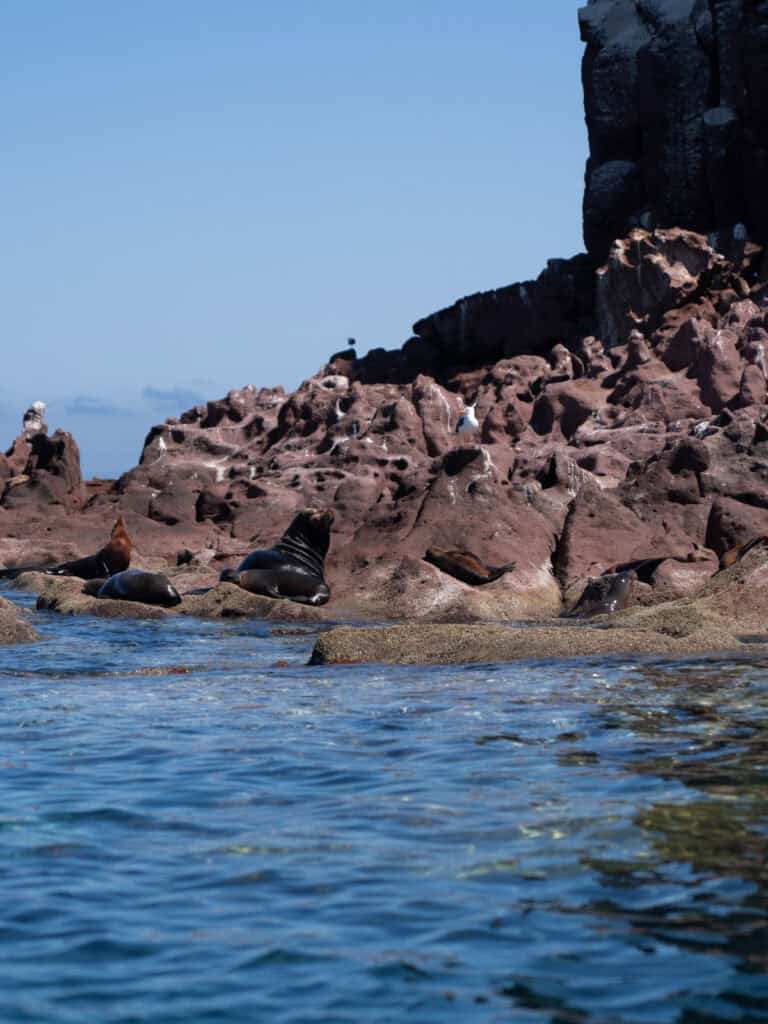
The sea lions live in a colony at Los Islotes in the northern part of the archipelago. It’s the biggest sea lion rookery in the country, housing up to 800 individuals.
Authorised tour operators are allowed to take visitors to swim with the sea lions, in a tightly controlled program managed by the Mexican Government’s environmental agencies, CONANP, SEMARNAT, and PROFEPA.
Operators must follow strict regulations so as not to interfere with the animals. There is no evidence that tourists swimming with the sea lions has impacted their reproduction and usual activities, and their colony is one of the only ones in the Sea of Cortez that is growing in size. I believe this is in part due to the tight regulations in place for tour operators that are generally well-adhered to.
🏖️ We visited Isla Espiritu Santo with Mexico Travel Adventures and highly recommend them, they are a true ecotourism company

Quick facts
- 🏝️ What? A protected and untouched archipelago, including the main island of Isla Espiritu Santo, 60 – 90 minutes from the city of La Paz in Baja California Sur, Mexico.
- 🦭 Why? To experience the unique volcanic landscapes of the island, with layers of coloured rock towering above the sea, pristine beaches, marine life, and to swim with California sea lions at their rookery, Los Islotes.
- 🚤 How? A full-day boat tour from La Paz, including a stop at Los Islotes to snorkel with the sea lions, lunch on a beautiful beach and marine life spotting around the island. You can also go scuba diving or camp on the island with specific operators.
- 🐬 Who? Book our recommended day tour with Mexico Travel Adventure here.
Where is Isla Espiritu Santo
Isla Espiritu Santo is located in the Sea of Cortez (aka Gulf of California) in the state of Baja California Sur, Mexico, near the capital city La Paz.
It’s a 60 – 90 minute journey to the island, depending on your destination and weather conditions.
Depending on winds and swell, the trip can get a little bumpy around the eastern (ocean) side of the island and sea sickness tablets will come in handy. If you’re blessed with a wind-free day as we were, it’s a smooth ride to and around the island.
Most tours depart from one of the ports in La Paz city, the Muelle Fiscal or Marina de La Paz.
History of Isla Espiritu Santo
Isla Espiritu Santo has a long and varied history, coming from volcanic origins millions of years ago, to hosting the country’s first pearl aquaculture farm in the late 1800s.
But its more recent history is just as fascinating and a tremendous example of community-led conservation. A few decades ago, Isla Espiritu Santo almost suffered a terrible fate.
The island was privately owned by a local ejido (a form of communal land ownership in Mexico) that wanted to sell the island in the 1990s. Of course, developers were interested, with grand plans to build a resort and a casino on this untouched slice of paradise.
Luckily, local residents, environmental groups and activists could see the immense natural value of this island and wanted to protect it, so they devised a plan to buy the island from the ejido and transfer it to the Mexican Government, on the condition that it become a protected national park forever, with no future threats of development.
Donations came from several environmental groups in Mexico and the USA, a Mexican billionaire, and the local people, who collectively donated about a third of the funds to buy the island.
Today, the island remains almost exactly as it was back in the 90s. It’s a protected national park, the land area of the island is almost entirely off limits to visitors, with the exception of a few beaches and short hiking trails. The waters around the island are teeming with marine life, from whales, rays, dolphins and of course, the famous California sea lions.
Isla Espiritu Santo tours
Being an island, the only way to visit Isla Espiritu Santo is on a tour via boat. There are a few different types of experiences you can arrange.
- 🦭 Day tour: the most common way to visit the island is on a full-day tour from La Paz with a local operator, which is what we did.
There are dozens of different tours, but most follow a similar format: cruising to the island and looking for marine life on the way, snorkelling with sea lions at Los Islotes, a lunch stop at one of the beaches on the island, where you may be able to do a short hike (permitting the trails are open to visitors), possibly kayak or paddleboard around a calm bay or have another stop for snorkelling.
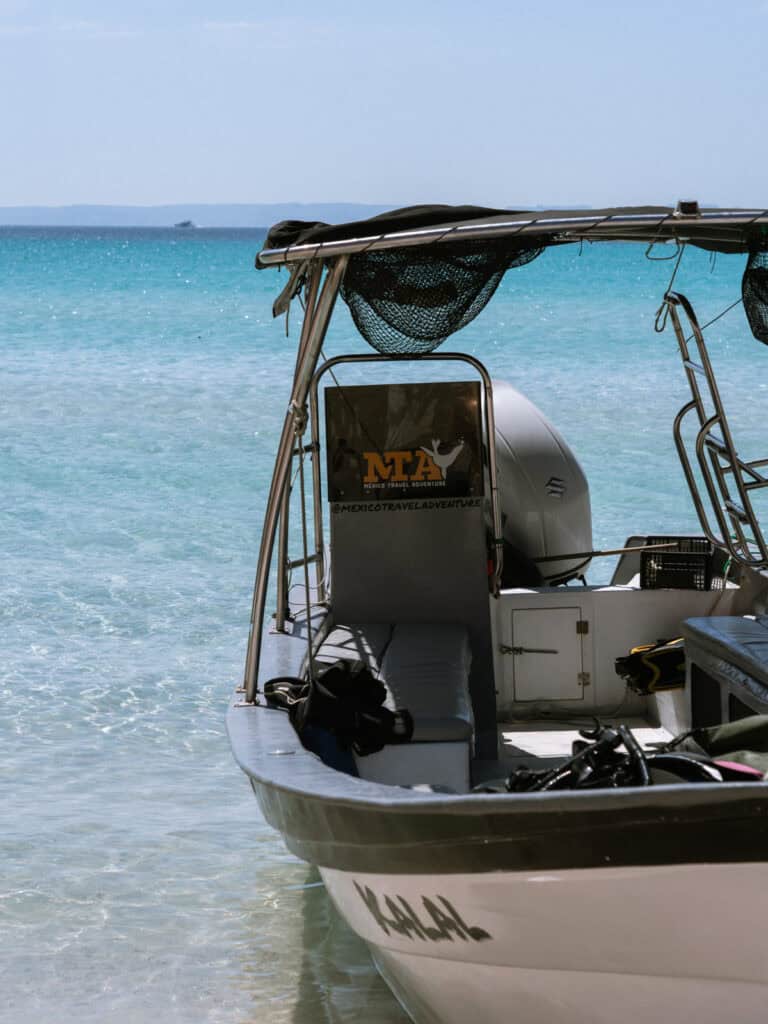
These tours are typically done on pangas, local fishing boats. While you will find some tours on larger yachts, I’d highly recommend opting for a panga, as larger vessels pose a risk to the marine environment and also bring much larger groups.
We visited with Mexico Travel Adventure, and I cannot recommend them more highly. They are a true ecotourism company with the environment at their core.
As you’ll read about in our experience below, we had an excellent guide, Mateo, who was a marine biologist and answered every question I threw at him with great detail and provided a wealth of information about the island, the marine life and Baja in general.
Our captain Alexi and Mateo were respectful of every animal we encountered, there were no single-use plastics on the boat and Mateo expertly managed our swim with the sea lions within all the regulations. They were honestly wonderful, and we had such a great day with them.
- 🤿 Scuba diving: you can also take a day tour to go diving around Espiritu Santo. There are several excellent dive sites around the archipelago, and it’s possible to dive at Los Islotes with the sea lions. Mexico Travel Adventures also offers scuba diving.
- 🏕️ Multi-day camping tours: there are a couple of local operators who have permits to offer camping on the island. Camp Cecil is the most popular option. We are yet to have this experience, but it looks absolutely wonderful!
When to visit Isla Espiritu Santo
The island can be visited year-round, but there are some quirks to each season.
- 💨 Winter (December – February): this is the most common time to visit Baja California Sur, with mild temperatures and generally dry, sunny days. It’s also the peak of the whale watching season and the whale sharks are around La Paz too. However, this is the windiest time of year, with the El Norte winds blowing strong down the Sea of Cortez (it’s why La Ventana, just down the road from La Paz, is a world-renowned kite surfing destination!).
Worst case, strong winds can often close the port in La Paz for days at a time, cancelling all boat tours to the island, or at the very least make for quite a long and bumpy ride. If you’re visiting at this time, I’d recommend organising your tour to the island right at the start of your itinerary, so you have flexibility to rearrange it if the winds do impact your plans. We actually couldn’t visit Isla Espiritu Santo on our first visit to La Paz due to the winds!
- 🌞 Spring (March – May): I think this is the best time to visit the island for less wind, milder temperatures and slightly warmer waters. We visited in early March and were blessed with almost zero wind. The trip was still a little chilly and the water was cool, but by no means freezing and lazing on the beach in the sun was perfect!
- 🚫 Summer (June – August): it is possible to visit the island during summer. The beaches are very appealing in the scorching temperatures and the water clarity is excellent. However, swimming with the sea lions is banned during these months. This is their breeding season, and visitors are not allowed at Los Islotes.
- ⛈️ Autumn (September – November): it doesn’t rain too often in Baja, but if it does, it’s generally in autumn. Temperatures are still pretty scorching, but Los Islotes is open to visitors, water temperatures are warm, and visibility is good.
🐋 Read more about the best time to visit Baja California Sur for weather and wildlife
Amenities on Isla Espiritu Santo
There are no amenities on Isla Espiritu Santo. No bathrooms, no restaurants, no food stalls, no bars, no changerooms. Totally natural. It is pristine and undeveloped.
Some boats have marine toilets on board, otherwise it’s holding on or using the ‘adventure bathroom’.
What to bring
- 👙 Swimwear (coming wearing it, there’s nowhere to change)
- 🧖🏽♀️ Towel
- 🤿 Snorkel gear (if you prefer your own, most tours include it though)
- 🧥 Warm clothes (in winter/spring, the boat ride can be cold!)
- 💊 Sea sickness tablets (if required)
- 🎒 Dry bags (to protect your electronics and belongings)
- 😎 Sunglasses, reef-friendly sunscreen and hat
- 📸 Camera and/or phone for above-the-surface photos
- 🎥 Underwater camera for snorkelling (we’ve recently upgraded to the Osmo Action 6 and it is SO much better than our old GoPro)
- 💧 Reusable water bottle (say no to single-use plastics if your tour operator uses them)
- 🥪 Snacks or lunch (if not provided by your tour, this is generally included)
- 💰 Cash (to pay for your national park bracelet if it’s not included in the tour cost and to tip your guide and captain)
🎒 Find out exactly what’s in our backpacks! I’ve listed all our travel gear on my Amazon shopfront
Our experience at Isla Espiritu Santo
There is no better way to explain the island than to share how our incredible day went! We took a single-day boat tour to the island from La Paz.
Departing La Paz
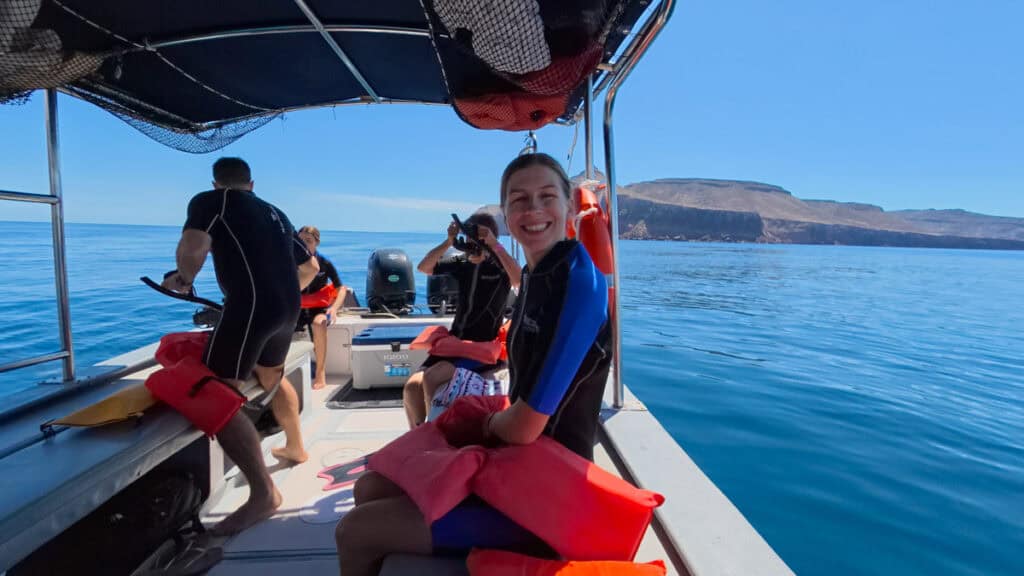
We (me, Brayden and my Mum) met our guide Mateo from Mexico Travel Adventures at 9:00 am on the Malecon, by the Muelle Fiscal. We were joined by another couple and jumped on board to meet our captain, Alexi. After a short briefing about the day and safety, we donned our life jackets and headed for the island!
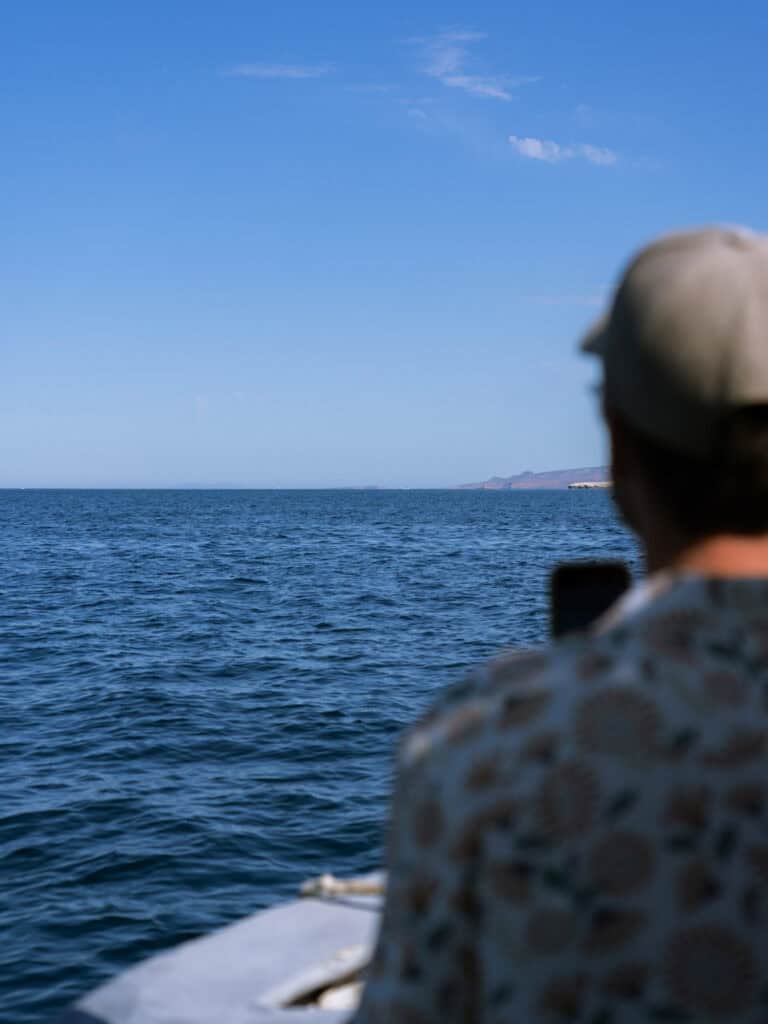
Our first destination was the sea lion colony at Los Islotes. It is at the far northern tip of the island, and we were going to travel around the outer, east side of the island on the way there. Mateo said it would take around 75 – 90 minutes, depending on what we saw along the way.
A whaley good surprise
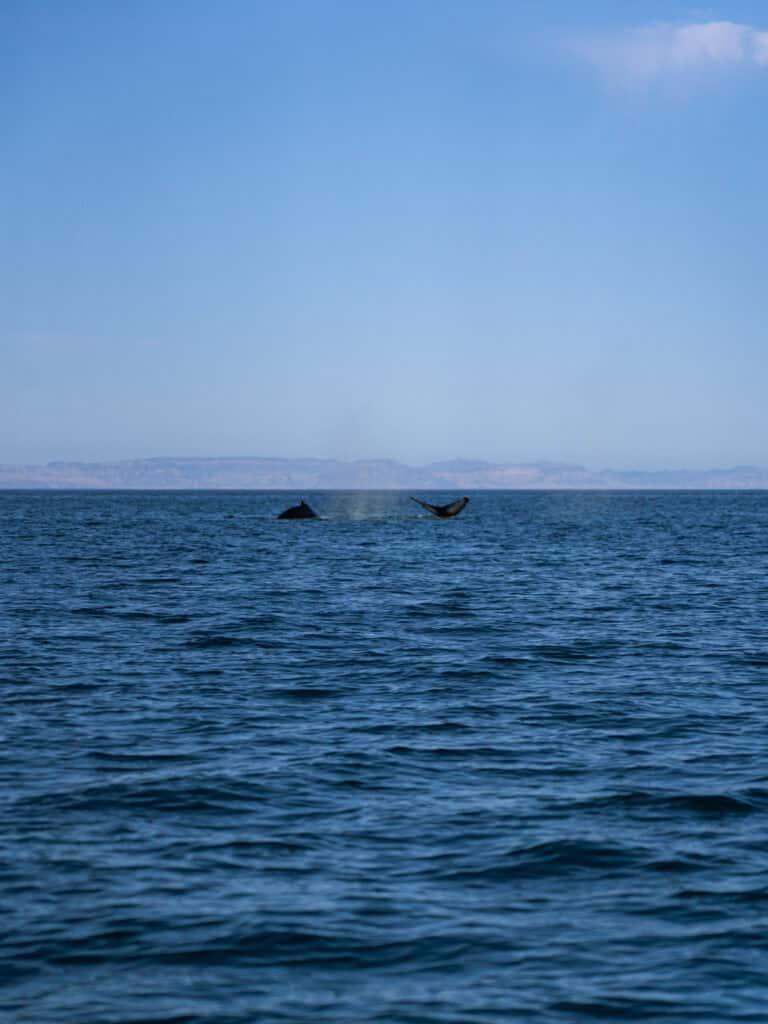
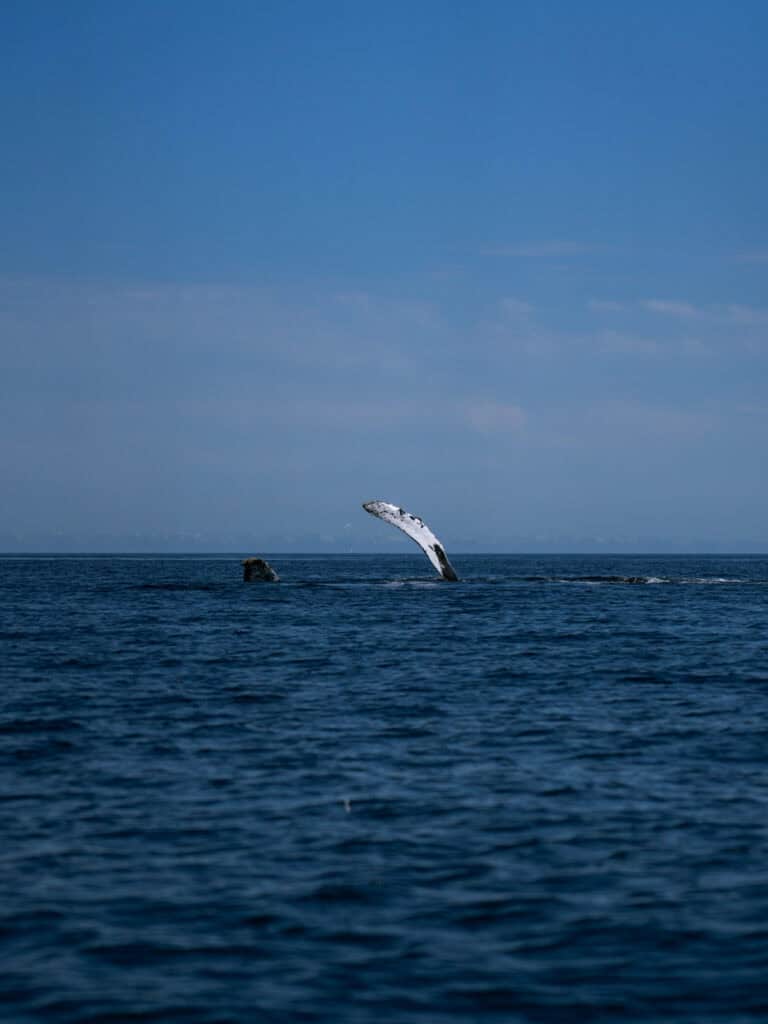
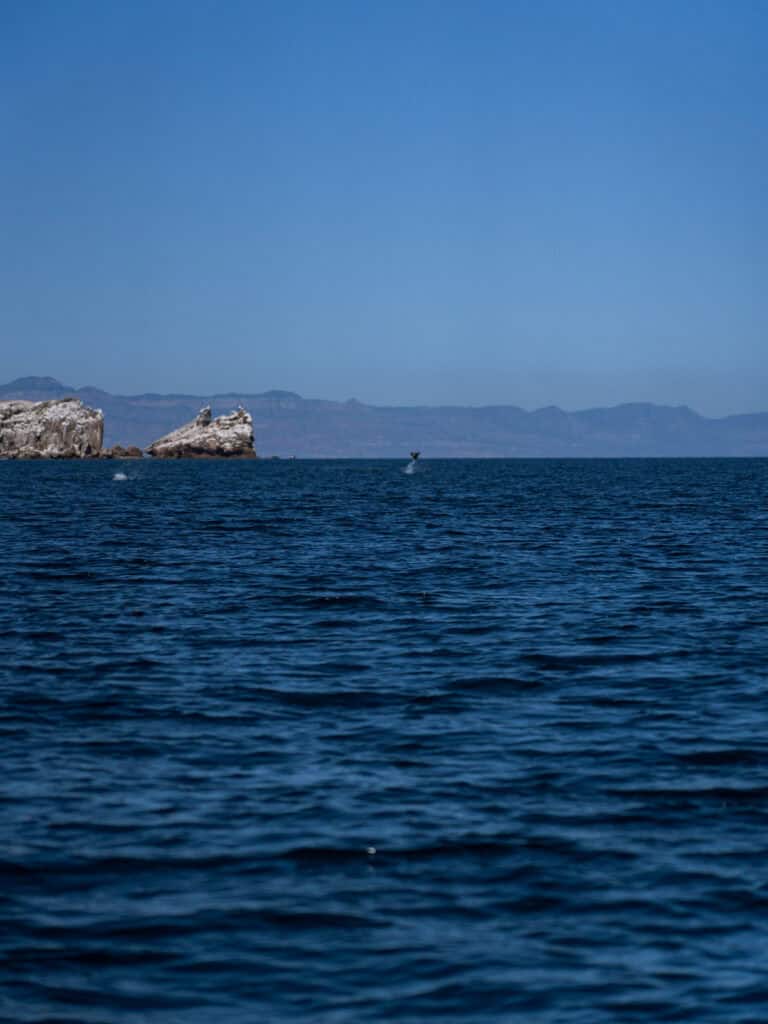
Well, within not even 20 minutes of leaving port, we saw a whale puff in the distance. Before we even had time to register and discuss the whales, we got a huge DOUBLE BREACH!! Two humpback whales launching themselves out of the water before crashing back with an enormous splash. It happened so fast we were all totally shocked. Alexi approached the whales, stopping at a safe distance from them to see what they would do next – we were blessed with another breach! Such a special experience and something I did not expect to see today.
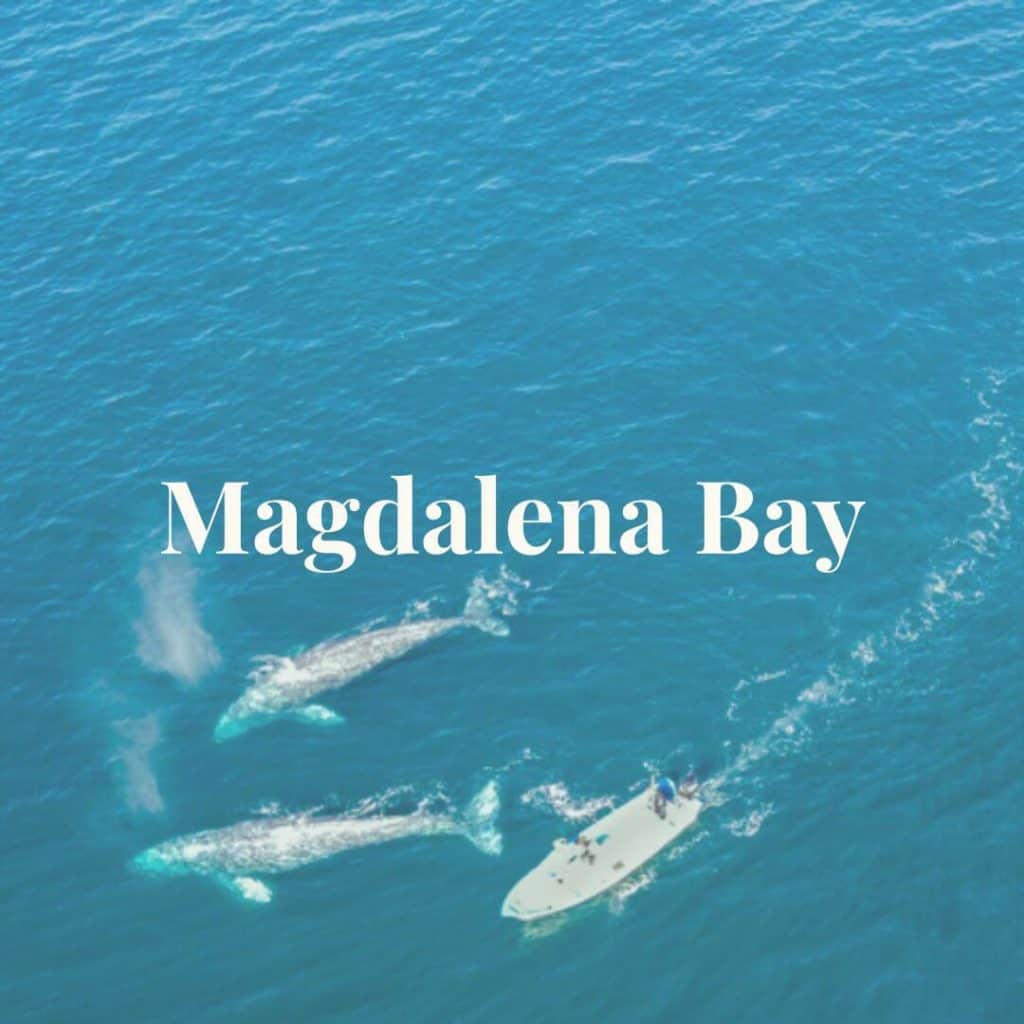
There are several populations of humpback whales that migrate to Baja California Sur during the winter. You find the highest number of species around Los Cabos, at the convergence of the Pacific Ocean and the Sea of Cortez, where multiple populations meet. However, some choose to enter the Sea of Cortez and travel north, and others head towards the Pacific Coast of mainland Mexico. This was a beautiful surprise to see humpbacks in the Sea of Cortez (a first for us), and especially so late in the season, early March, when Mateo informed us they had usually started their homeward journey.
We reluctantly continued on, leaving the whales in peace. We never approached too close, chased them or intruded on their space. I loved Mateo’s phrase ‘let’s take a hint’ when the whales dived deep and moved on, understanding they weren’t interested in us and continuing to approach would have been distressing to them. This is such a touchy topic in Baja and a line that is very fine, to please the clients, the whales, the captains – I felt like the line was towed perfectly today.
Approaching the island
We picked up speed as we cruised further north along the coast, passing stunning coves and eventually the beautiful Balandra Bay in the distance. We sped away from the mainland, crossing towards the huge island looming ahead of us.
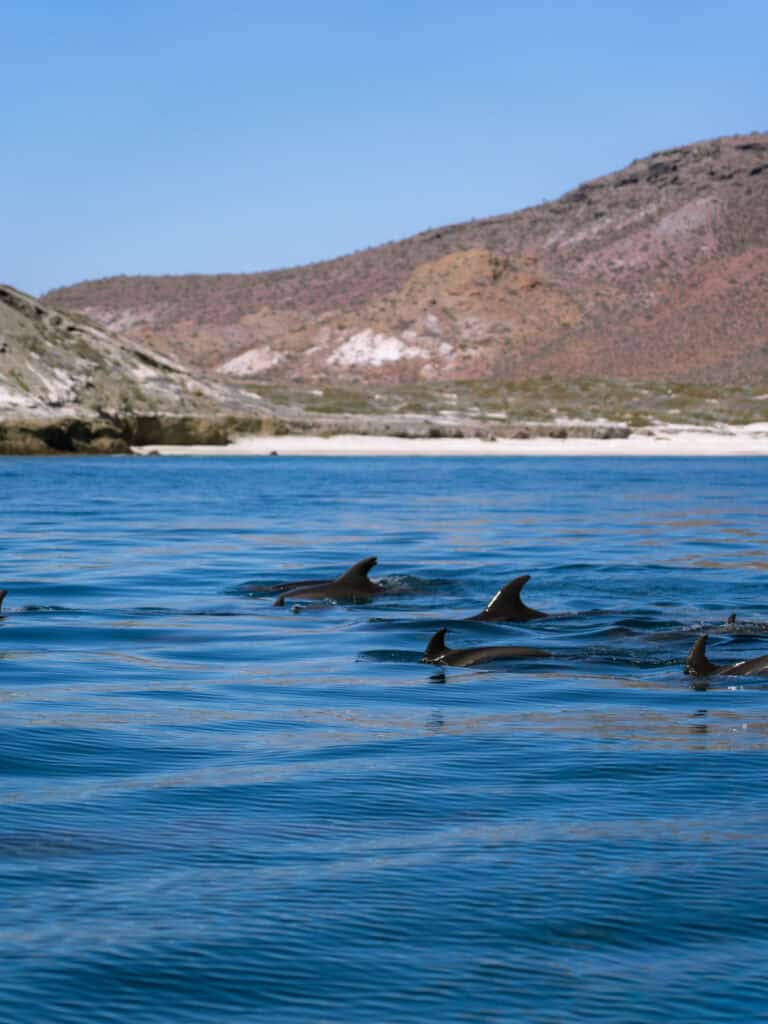
The ocean had another special surprise in store for us, and as we rounded the southeastern tip of the island, a huge pod of bottlenose dolphins appeared. They cruised alongside the boat, zooming up and down, under the hull, popping up for a breath and dipping their tails under. They are such beautiful, graceful creatures.
At this point, I was looking over at my Mum, finally able to explain why I love Baja so much. There is life EVERYWHERE here, and by choosing to put yourself in the right situation, you will be blessed by nature – out on the water, on a hiking trail, or simply sitting on the beach.
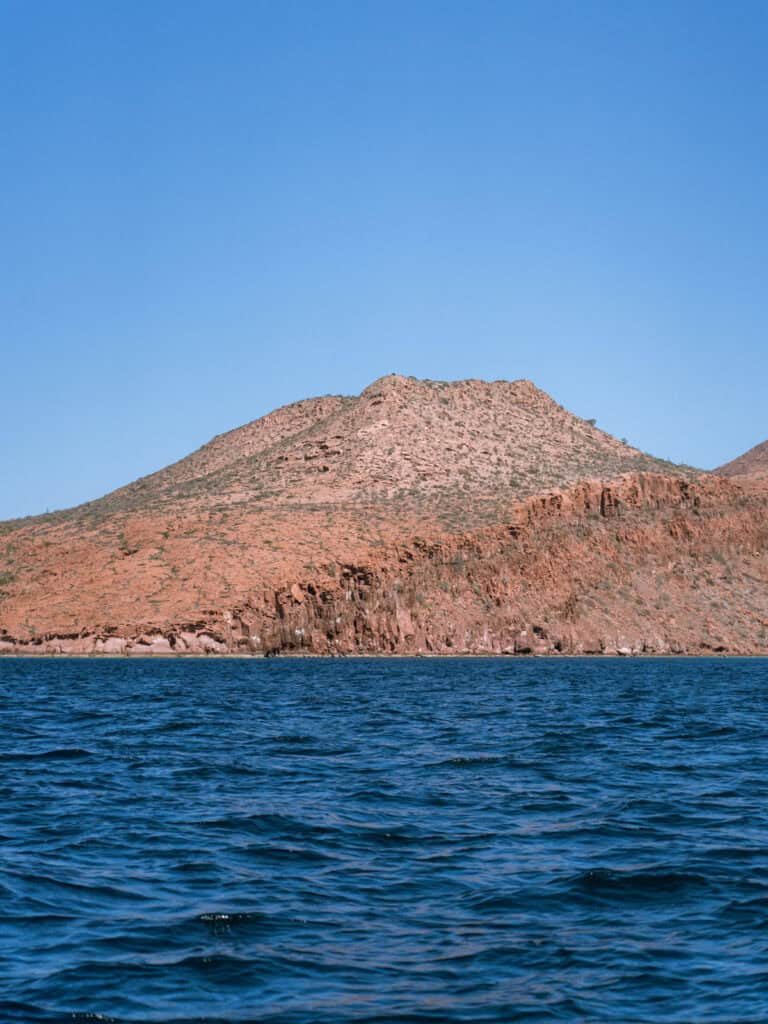
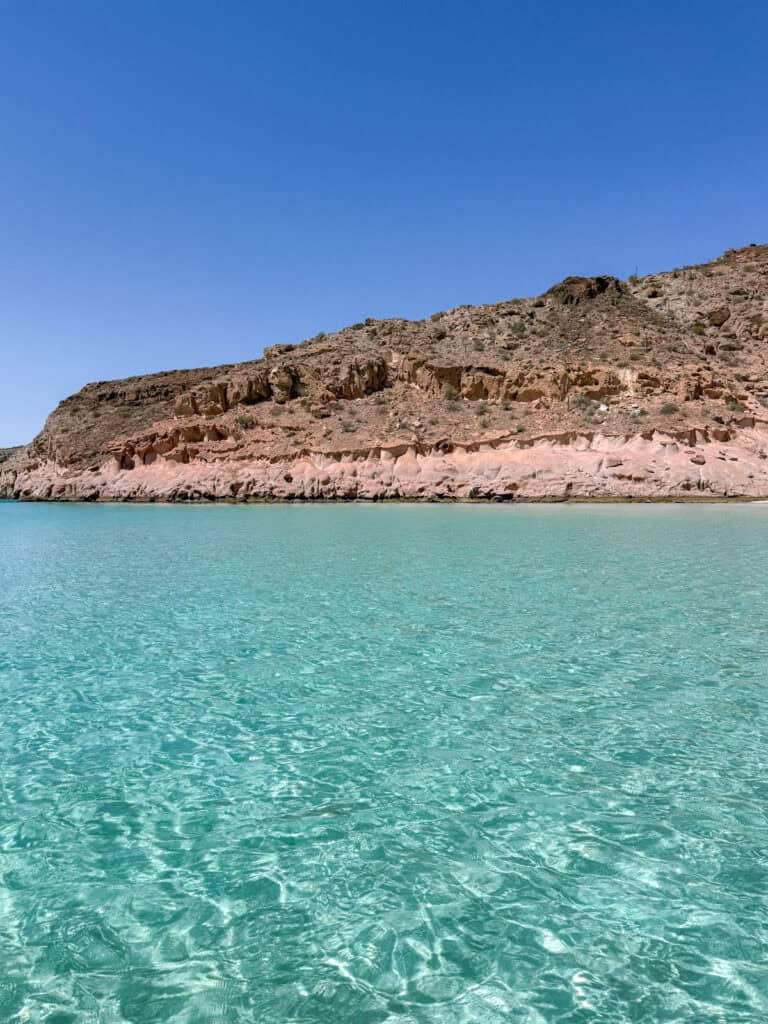
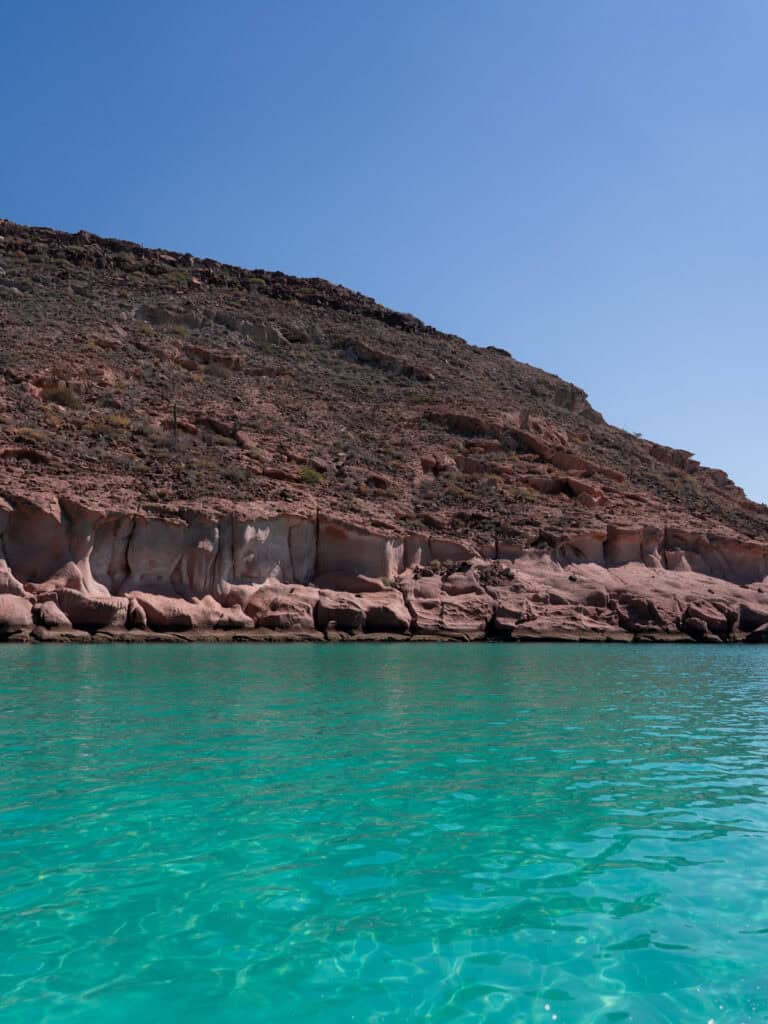
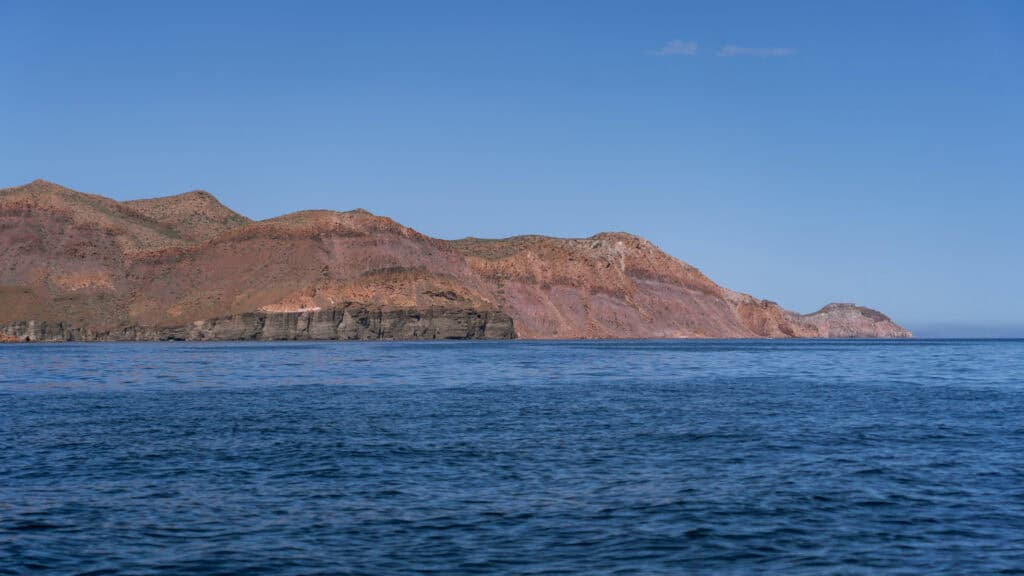
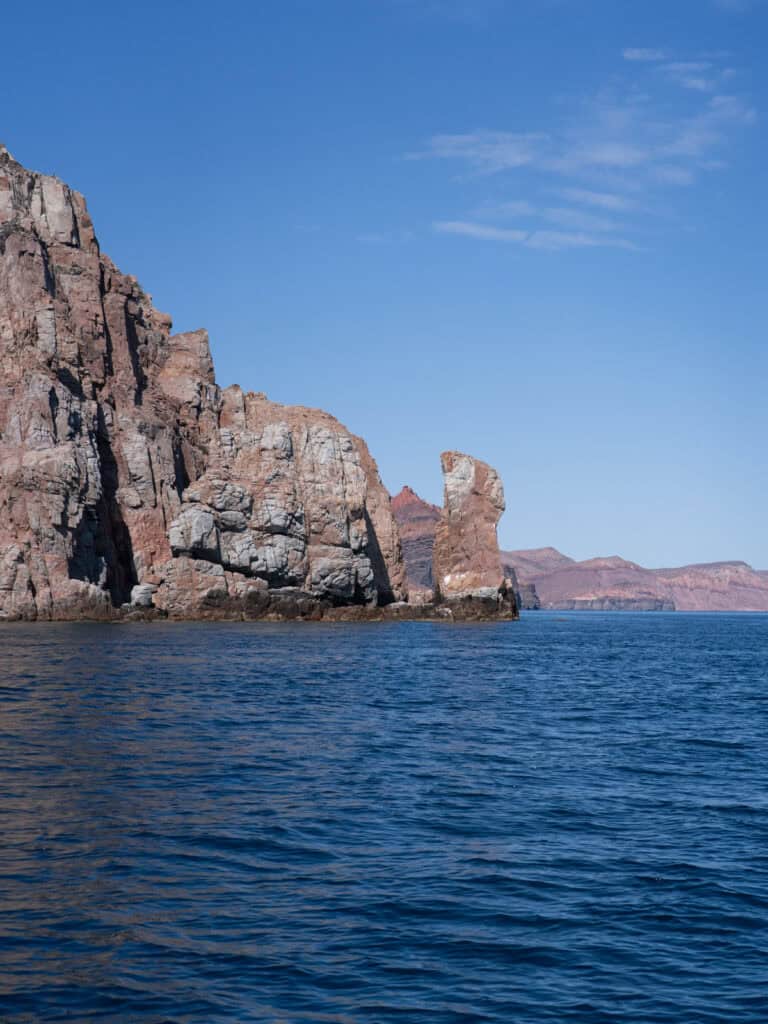
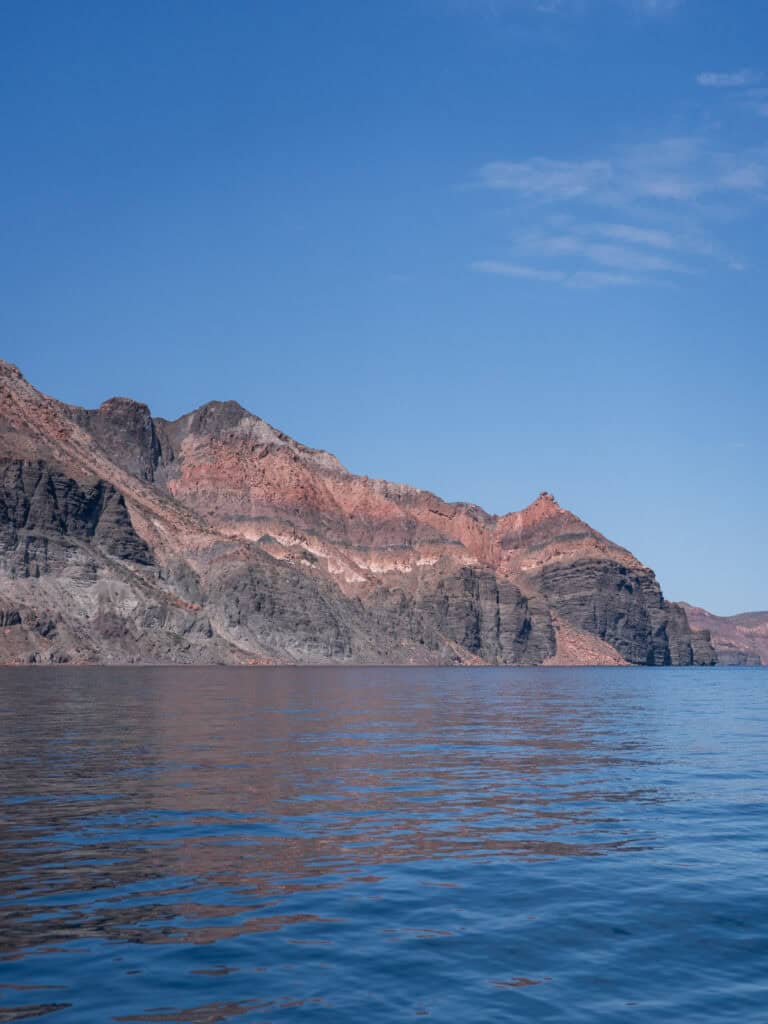
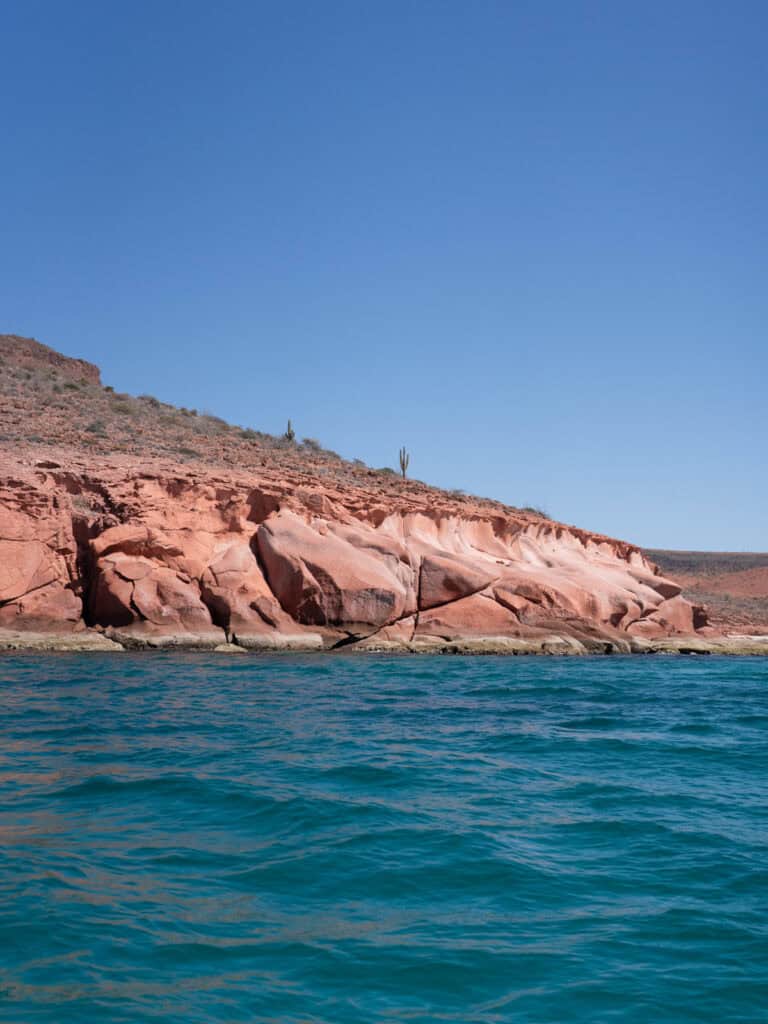
We continued along the eastern side of the island, sticking close to the coastline to marvel at the sheer scale of the cliffs. It has volcanic origins, but there is evidence of so many different periods of life in the layers of rainbow rock. Black, red, orange, yellow, green, purple, the island is a huge rainbow that differs at every turn. The cliff faces are enormous, with rock tumbling down towards the sea, and gigantic columns towering out of the water.
Entering caves
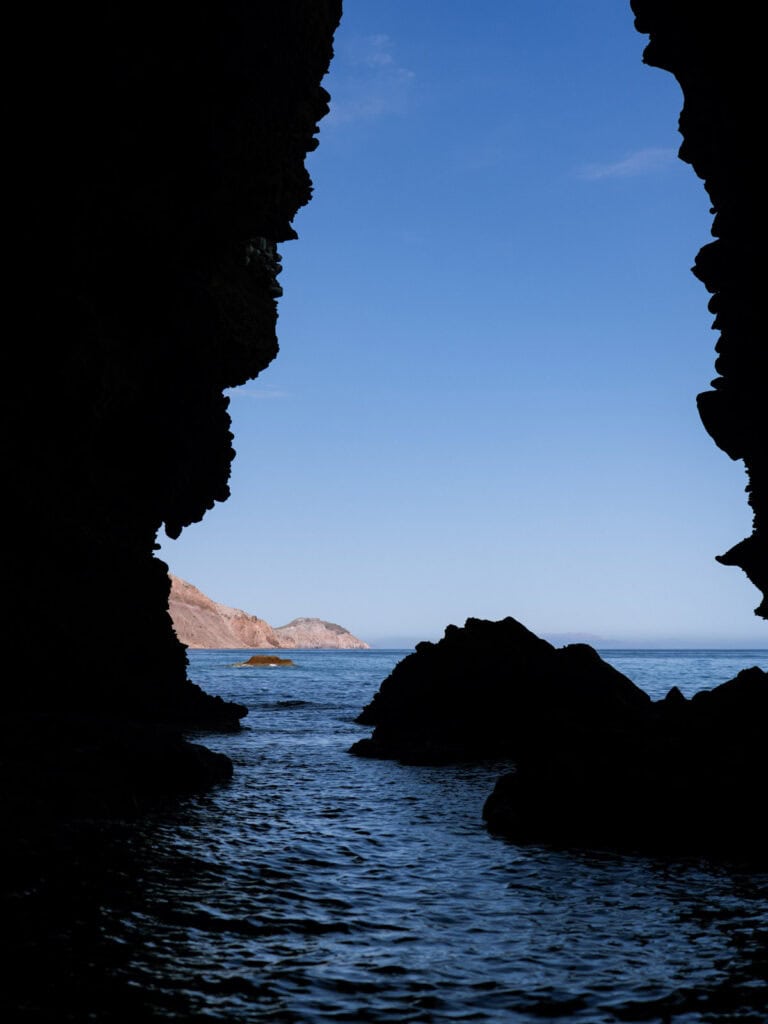
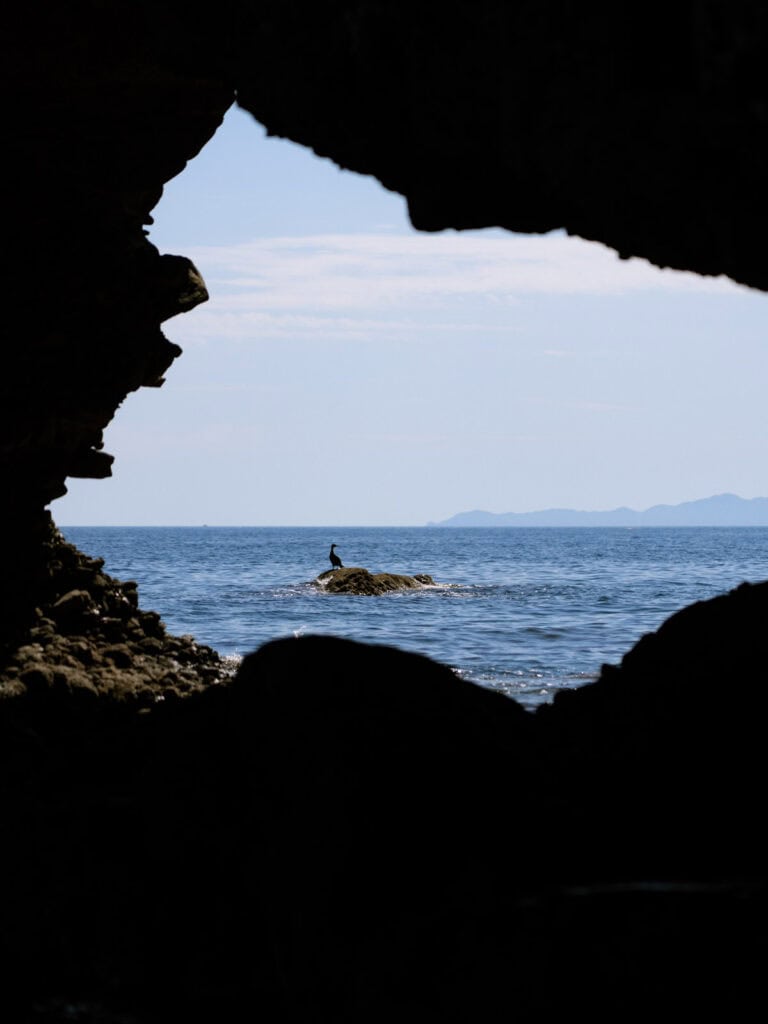
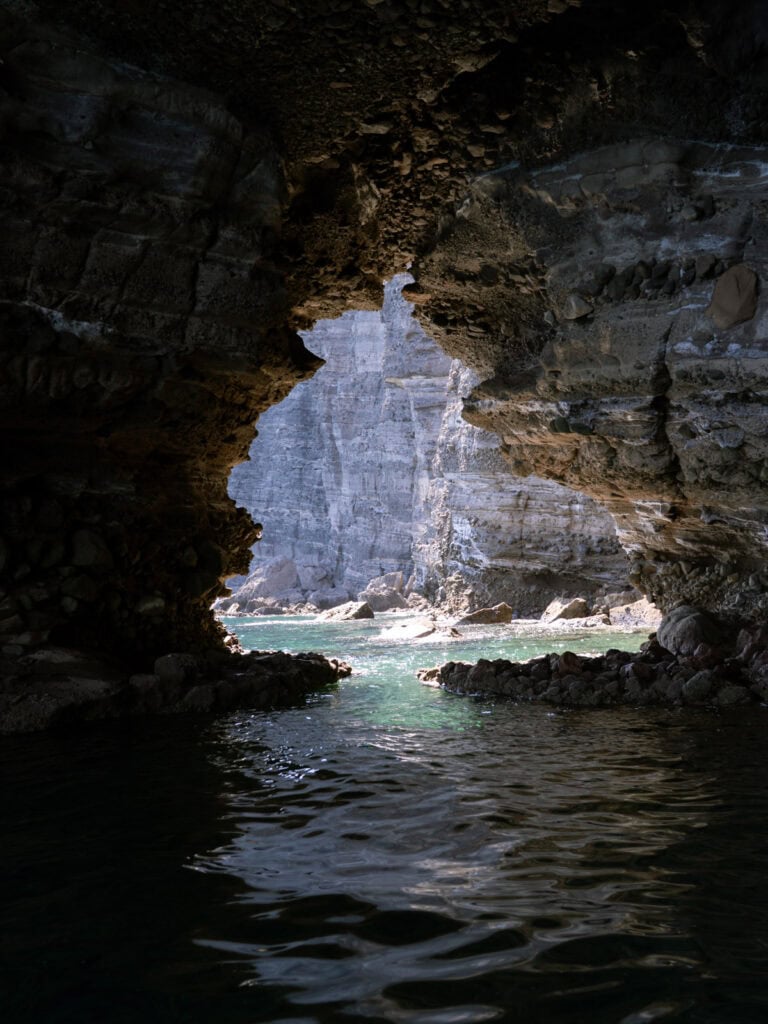
The weather gods were definitely on our side today, with barely a breath of wind (quite unusual in the winter/early spring months), and we were able to enter the Cueva de las Dos Ventanas (Cave of the Two Windows). This small cave was once used by British pirates to monitor the island, as one side had a view towards its southern tip, and the other towards the northern tip, so they could monitor activity without being seen.
More whales
At this point it had been two hours since we departed La Paz. The journey was already longer than Mateo expected, but none of us were mad about it – when the ocean delivers, you accept!
Just when he thought we were on track to continue directly to Los Islotes, there was a puff out to the east. It was quite a while away, so we didn’t expect to veer off, but our captain Alexi has better eyes than all of us, and before we knew it, we were speeding off in that direction.
As we approached, we could see there were two whales, and they were having a grand old time slapping their fins atop the water, rolling around, smacking their tails on the surface. We stopped a safe distance from the pair and quickly realised it was a mum and a baby. The mum was performing different behaviours to teach the baby, who was adorably copying her. It was another incredible moment to witness, and even our guide and captain were blown away at how lucky we had been!
Mateo was cautious not to spend too long with the pair, given it was a mum and baby and we didn’t want to interfere. We sped back towards the island with the promise that we were going straight to Los Islotes. Sorry Mateo, the wonderful Baja ocean again had other ideas!
Jumping rays
I had spotted a few mobula rays throughout the journey, doing their characteristic leap out of the water. It’s something we had experienced on our previous trip to Baja, and we were so fascinated with these funny creatures launching themselves out of the water, flapping their ‘wings’, before belly whacking back onto the surface.
The mobulas congregate in the thousands during the summer months, so we only expected to see one or two individuals, but as we reapproached the coastline of the island, dozens of mobulas were leaping out of the water all around us!
The group wasn’t anywhere near as big as what you would see in summer, but we were blissful watching these funny rays launching out of the water all around the boat.
Los Islotes and swimming with the sea lions
Los Islotes was in sight, and we finally made it to the rocky outcrop 2.5 hours after departing La Paz. We were greeted by the noisy barks of hundreds of Californian sea lions. Some lazing on the rocks, baking in the sun like funny lazy blobs. Others were darting around in the water, much more graceful under the surface than above. We rounded the towering rocky formation and tied off to a buoy.
It felt like we had already had such a full and wonderful day on the water, but the best was yet to come! We got geared up in our wetsuits, flippers and snorkels as Mateo briefed us on the plan to get in the water and see the sea lions below the surface!
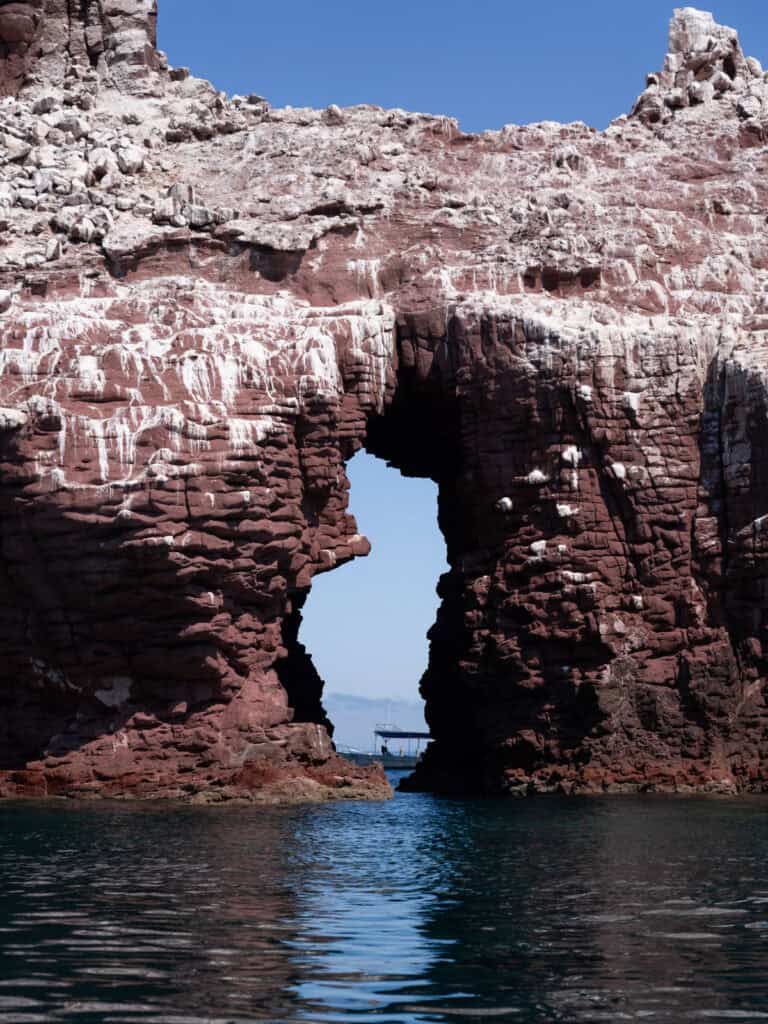
We were to swim quite a long route through a narrow channel in the island, before rounding the rocks and following the rocky coastline, from a safe distance so as not to threaten or interfere with the sea lions protecting their territory.
Mateo briefed us on how to safely be in the sea lion’s space, including staying a healthy distance from the rocks, not touching them or directly approaching (obviously) and staying calm if a big male swam past to suss us out. Mateo assured that so long as we kept a respectful distance from their space, they wouldn’t be threatened, and the males would simply do a ‘swim by’ to remind us who’s boss.
If we were lucky, some of the younger pups and juvenile males would be interested in swimming around us, and they often come quite close, but it’s totally on their terms.
My Mum was a little nervous, not having snorkelled for many years (besides the brief stint she did a few days prior at Isla Coronado in Loreto, also with sea lions but for a much quicker time), but I was so proud of her for giving it a go.
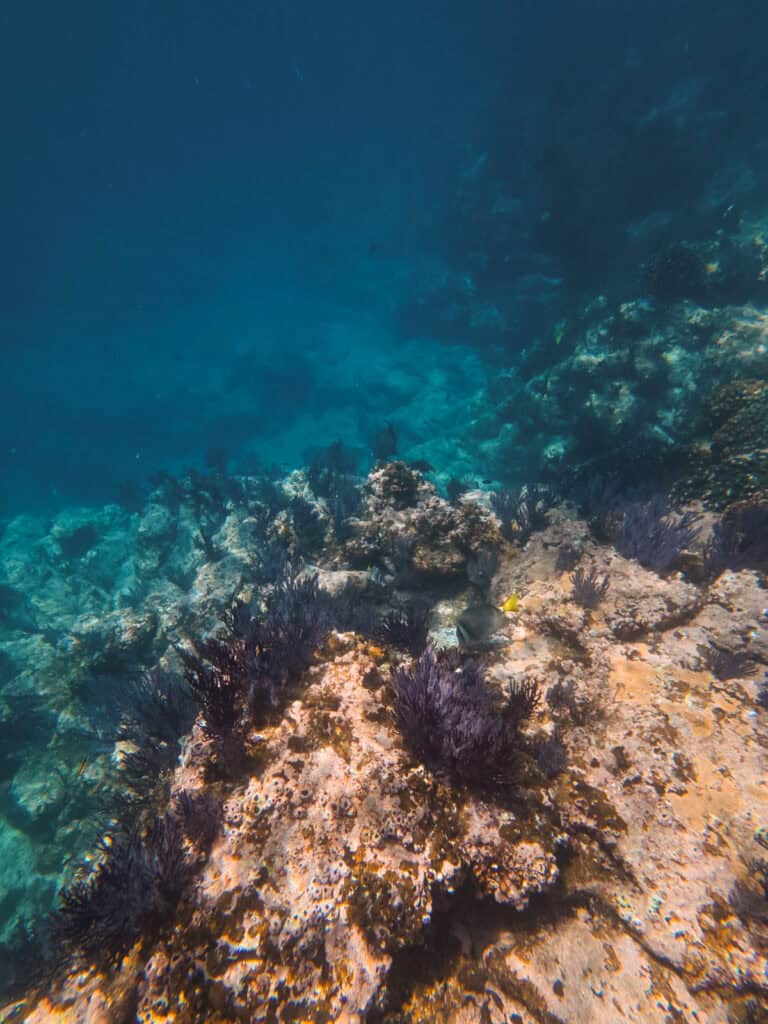
We jumped in the water, which was cold but not painfully so (it was FREEZING in Loreto), and immediately, I was amazed at how beautiful the reef was. There was so much more life than I expected, with colourful corals growing all over the rocks, and all kinds of fish surrounding us. We swam through the narrow channel, with sea lions playing deep below us.
As we rounded the island, there was a deep wall dropping into the ocean below, and there were so many beautiful fish species of all shapes, sizes and colours.
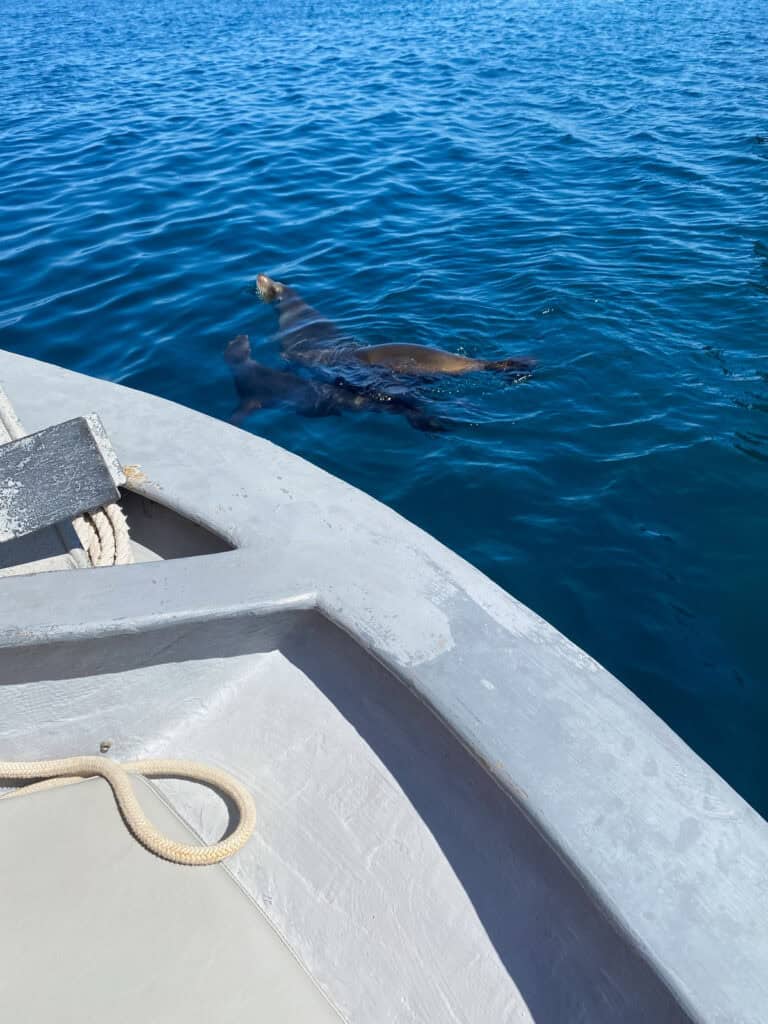
We started to see more sea lions. They were ducking and weaving and spinning all around us, some swimming directly below us so close you could feel their whiskers! The younger sea lions are not threatening or aggressive at all, they are interested in sussing you out, and it felt like they were showing off!
We had a few very large males swim past us, not close, but man, you could see how much bigger they are than the females and how large they can get at maturity (> 400 kgs!). The experience was never scary, and the males behaved exactly as Mateo explained they would.
Mateo found a small cave where juvenile sea lions often hang out and play. He sussed it out to confirm there were no males inside and whether it felt okay for us to enter, and we did. The light dimmed but wow the sea lions inside were so playful! They were zooming around in constant circles, flipping and diving. One had found the rope attached to the buoy Mateo was carrying, grabbing and swimming around with it, they seemed so joyful!
Alexi came to collect us in the boat, we’d been in the water for quite a long time so we were all thankful not to swim back. It was cold briefly until we wriggled out of the wetsuits and warmed up in the sun. We drove slowly towards our lunch stop.

Lunch in paradise
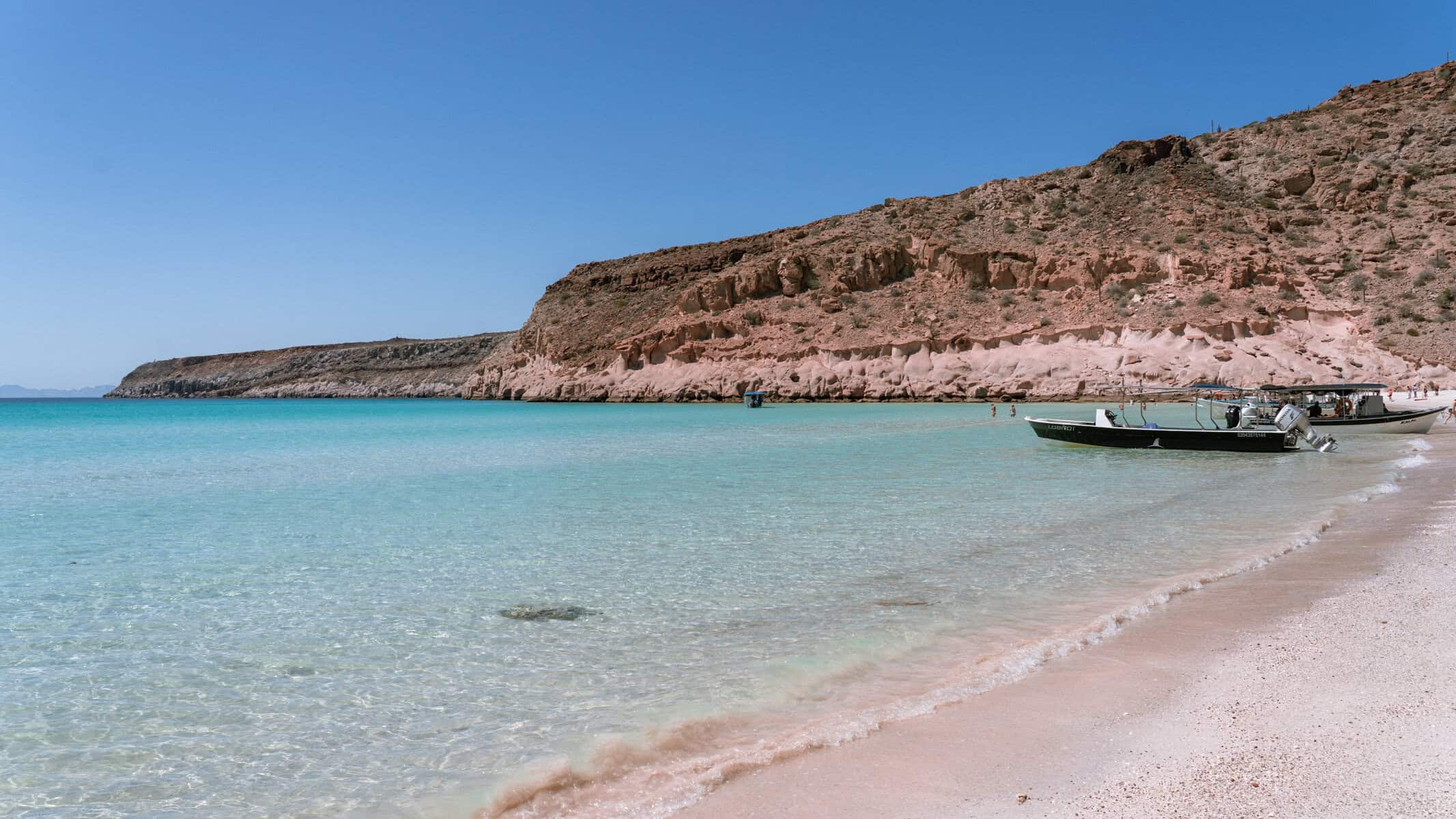
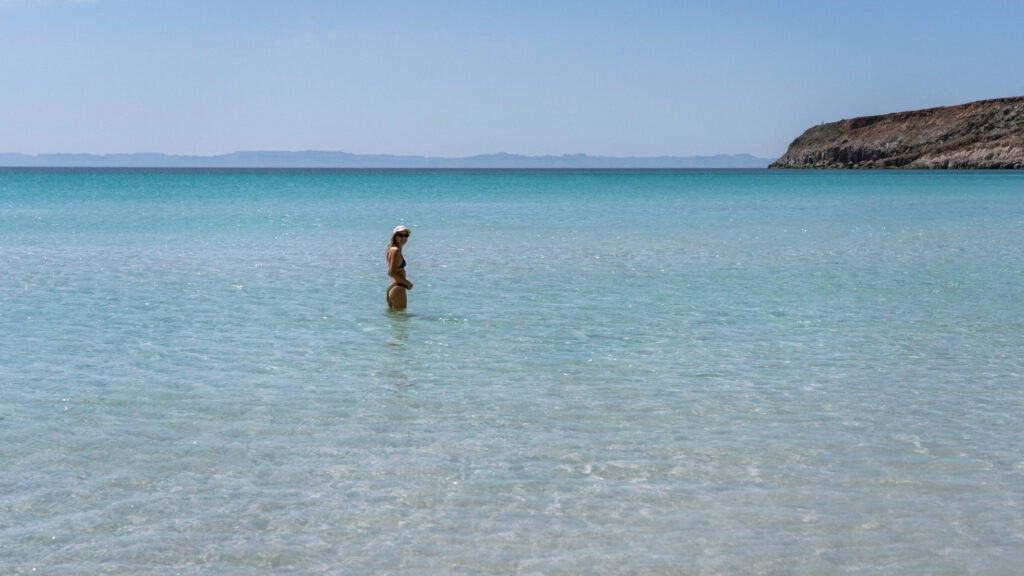
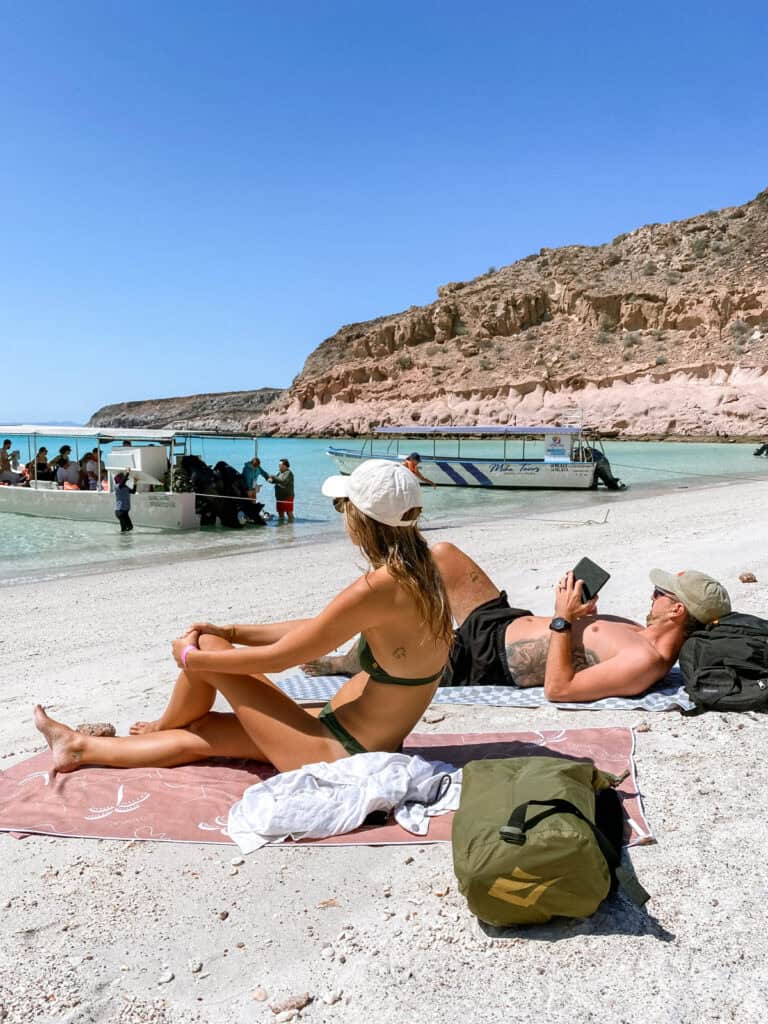
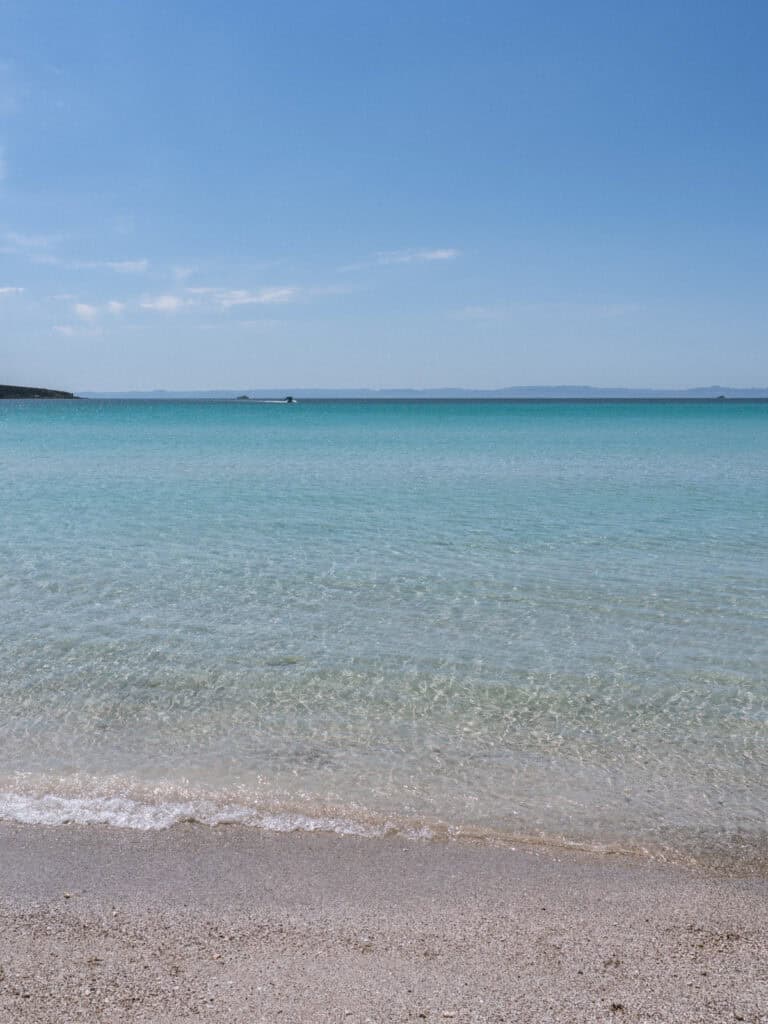
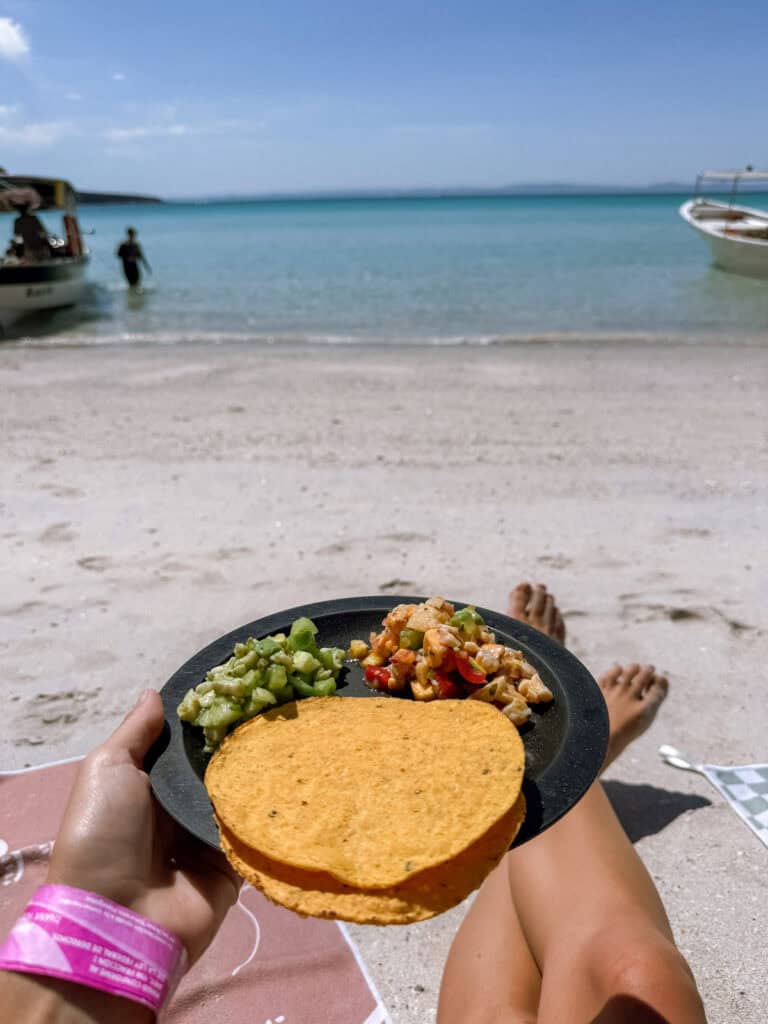
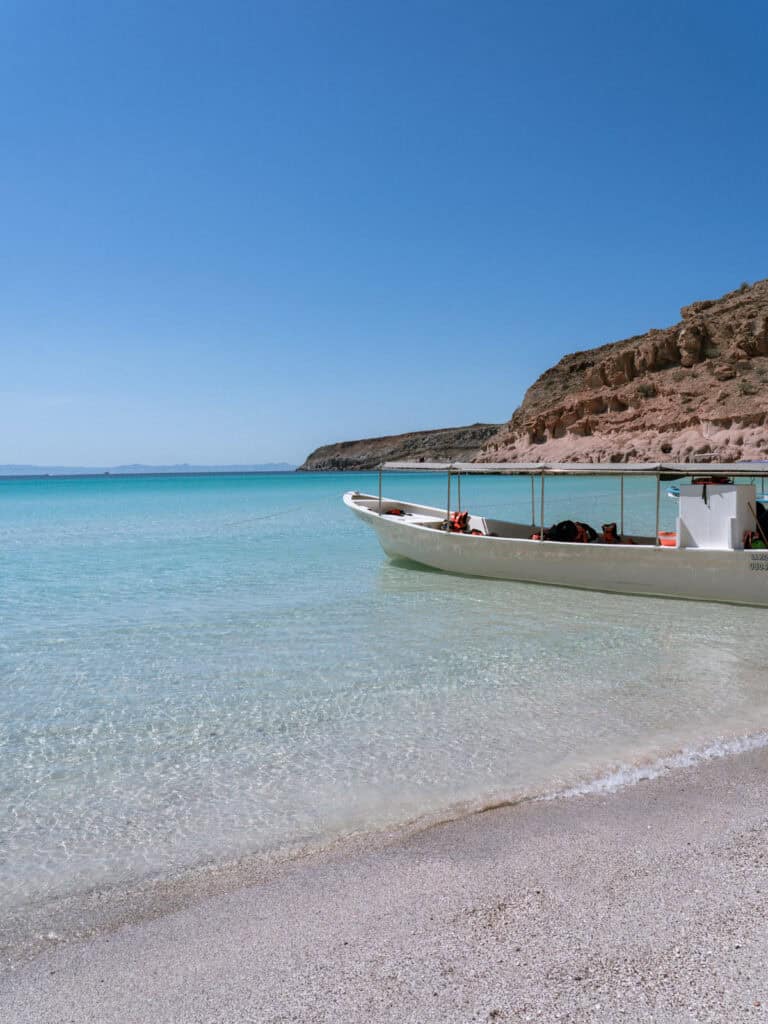
The most beautiful beach you’ve ever seen! Playa Ensenada Grande is on Isla Partida, which is actually a separate island from Isla Espiritu Santo but forms part of the broader national park and archipelago. The water here is an unbelievable shade of turquoise, with clear, calm waters meeting the white sandy beach.
Access is restricted to the shoreline only, and there are ropes blocking access to the dunes and the interior areas of the island. I think this is great, as it keeps tourists, possibly rubbish and human impact totally confined to the beach and doesn’t disturb any of the flora and fauna on the island.
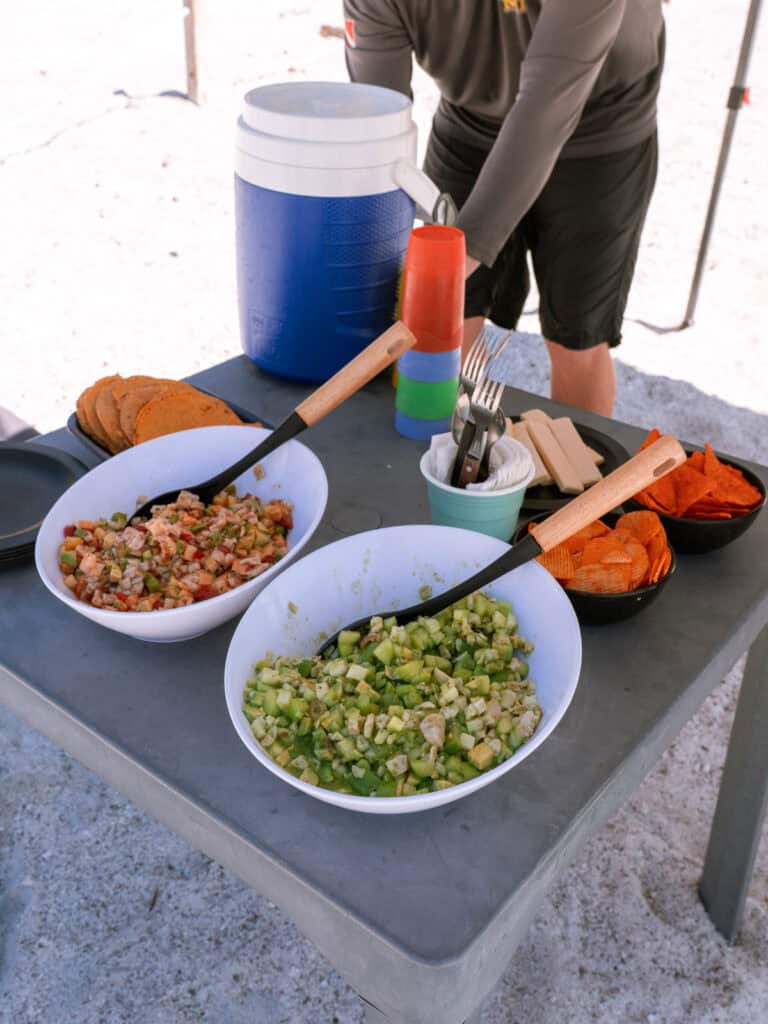
Mateo set up a gazebo for shade and prepared lunch. We had the tastiest ceviche with two flavours, one yellow pineapple flavour and one green with olives and avocado. Eating fresh ceviche tostadas on a beach like this was pure heaven!
We had about an hour to swim and wander up and down the beach. I could have stayed there forever it was so beautiful! This is a popular spot for tours to stop, so there were a fair few boats lined up on the beach, but I was pleasantly surprised by how unintrusive this felt. No one was blasting music or drinking or anything like that, everyone was a respectful visitor on the island.
Back to La Paz
It came time to depart and head back to La Paz. Given we’d had so many wonderful stops on the way there, we needed to jet back pretty fast, but of course, we’d still stop if we encountered anything amazing. We returned via the west side of the island, and it was fascinating to see how different the island looked in terms of rock colour and formations.
The ride back was uneventful in terms of marine life sightings, but Mateo shared a lot of interesting history about the island and pointed out different areas of interest. I can’t believe this beautiful place was almost turned into a resort.
We had some wonderful chats about sustainable tourism and conversation, and how challenging it can be to manage the needs of all parties and the environment. But Isla Espiritu Santo is a great example of how it can work well when done right, and this beautiful island still appears as it did many, many years ago and is still teeming with life. Tourists like us can visit and appreciate without leaving any long-lasting impact.
We pulled into the port in La Paz, tired but beaming. I was reminded why I love Baja so much, and how by just putting yourself out on the water for the day, you’re allowing for so many possibilities. There is always something special to see here, at any time of the year.
A day on Isla Espiritu Santo, La Paz
We had the most incredible day at Isla Espiritu Santo with Mexico Travel Adventure. It was the highlight of my Mum’s brief time in Baja, and we were so blessed by what the ocean decided to share with us!
The island was so much bigger than I expected, the colourful towering cliffs were so imposing and so different on each coast. The amount of marine life we saw in one day was mind-boggling, and swimming with the sea lions was wonderful. The reef and fish life were an unexpected bonus.
Isla Espiritu Santo is a must-visit if you’re in Baja. I highly recommend staying in La Paz for a few days, as there are so many other things to see and do here, like swimming with whale sharks and visiting the famous Balandra Beach.
Oh, and most importantly, if you’re visiting in the winter months, don’t forget to plan your tour for the start of your itinerary, in case the wind interferes with your plans.
MORE LA PAZ POSTS
OUR BAJA CALIFORNIA SUR TRAVEL GUIDES