This article contains affiliate links that may earn me a small commission at no extra cost to you. As an Amazon Associate, I earn from qualifying purchases. For more information, see our affiliate disclaimer.
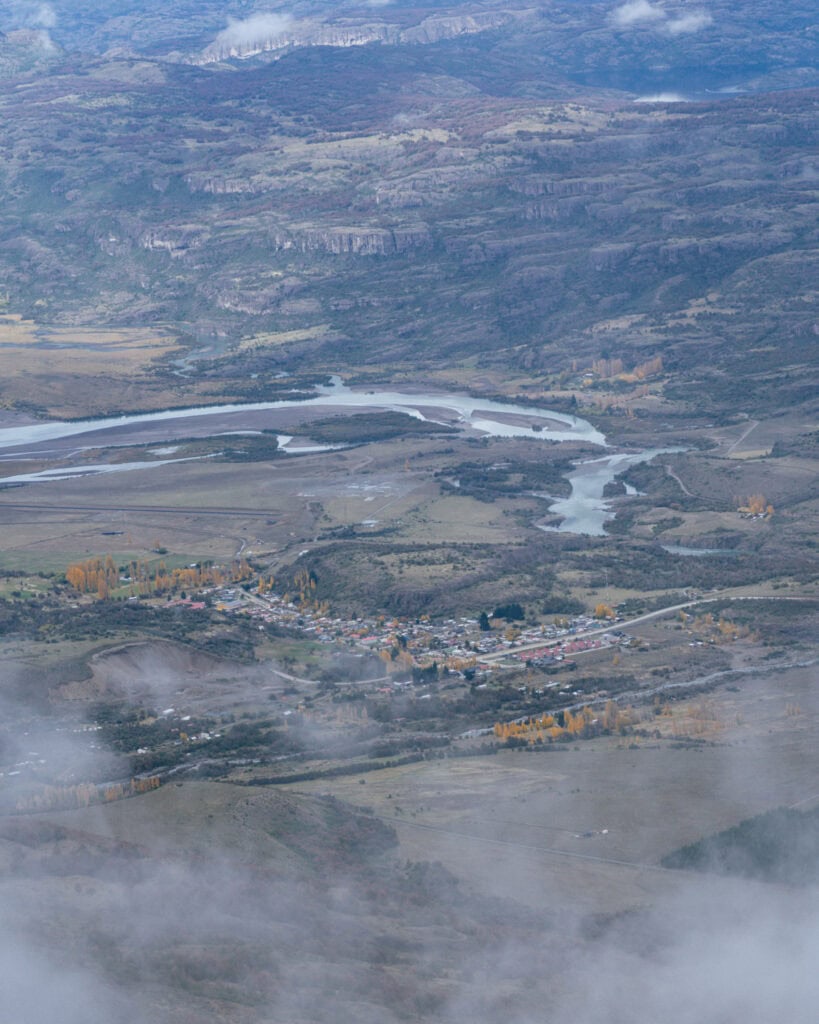
Villa Cerro Castillo is a tiny town on Chile’s Carretera Austral, acting as the gateway to the eponymous Cerro Castillo National Park.
Named for the jagged, castle-shaped basalt peaks looming 2,700 metres over the town, this national park is becoming a firm fixture on many hikers’ Patagonia itinerary.
Hosting one of the toughest and most famous day hikes in the region, the Laguna Cerro Castillo trail rivals more popular hikes down south. With an alpine lagoon landscape and jagged spires comparable to Mirador Base las Torres in Torres del Paine National Park and Monte Fitz Roy in El Chalten.
The town itself doesn’t have much to write home about, besides being the end of the pavement on the Carretera Austral (or start, depending on which direction you’re coming from). It’s this type of destination you should be coming to prepared with cash and groceries, as there isn’t too much on offer once you arrive!
Here’s everything you need to know about Villa Cerro Castillo, including details about the namesake national park, other things to do, where to stay and eat, how to get there and around, and amenities in town.
About Villa Cerro Castillo
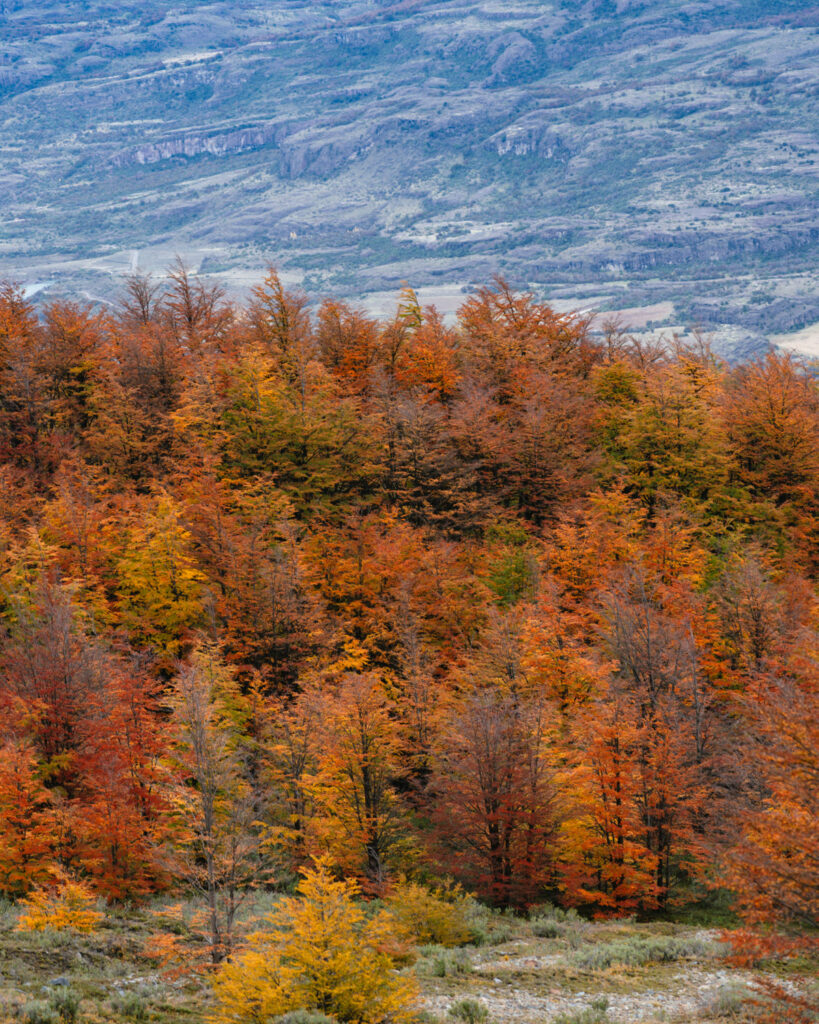
Villa Cerro Castillo is the smallest and most unimpressive town we visited along the Carretera Austral.
With just over 500 permanent residents, this is not a place to restock on supplies or visit an ATM – this is the place you are preparing for when leaving bigger cities like Coyhaique!
There is a new COPEC petrol station and a handful of small minimarts and restaurants, but don’t expect big things.
The most noteworthy feature of the town is that this is where the paved section of the highway ends (or starts, if you’re travelling from the south as we were). A few kilometres south of town, we hit the magical pavement and waved goodbye to the previous 500 km + of ripio (gravel) that had rattled our bones for the previous few weeks. If you’re travelling from the north, the fun is yet to come when you leave VCC!
The town was named after the imposing Cerro Castillo or Castle Hill, with its black, jagged peaks looming 2,700 metres above the town. If you’re blessed with clear weather, your jaw will constantly be on the floor as you catch a view of this hulking mass of rock, visible from almost everywhere in town.
The national park of the same name is starting to draw interest from hikers and outdoor adventurers. Its basalt peaks are frequently compared with those in Torres del Paine National Park in Southern Chile or around El Chalten across the border in Argentina – without the crowds.
The national park is poorly run, incredibly expensive, but incredibly beautiful, and the Las Horquetas Circuit, a 3 – 5 day hiking route, is becoming a very popular Patagonian trek. In the summer months, the tiny town swells with hitchhiking backpackers and stinky hikers, returning from their multi-day traverse craving pizza, burgers and beers.
If you’re not up for a 5-day trek, you can tackle one of the toughest day hikes on the Carretera Austral, the Laguna Cerro Castillo. Which, although shorter, is comparable in difficulty and scenery to the Laguna de los Tres trek in El Chalten.
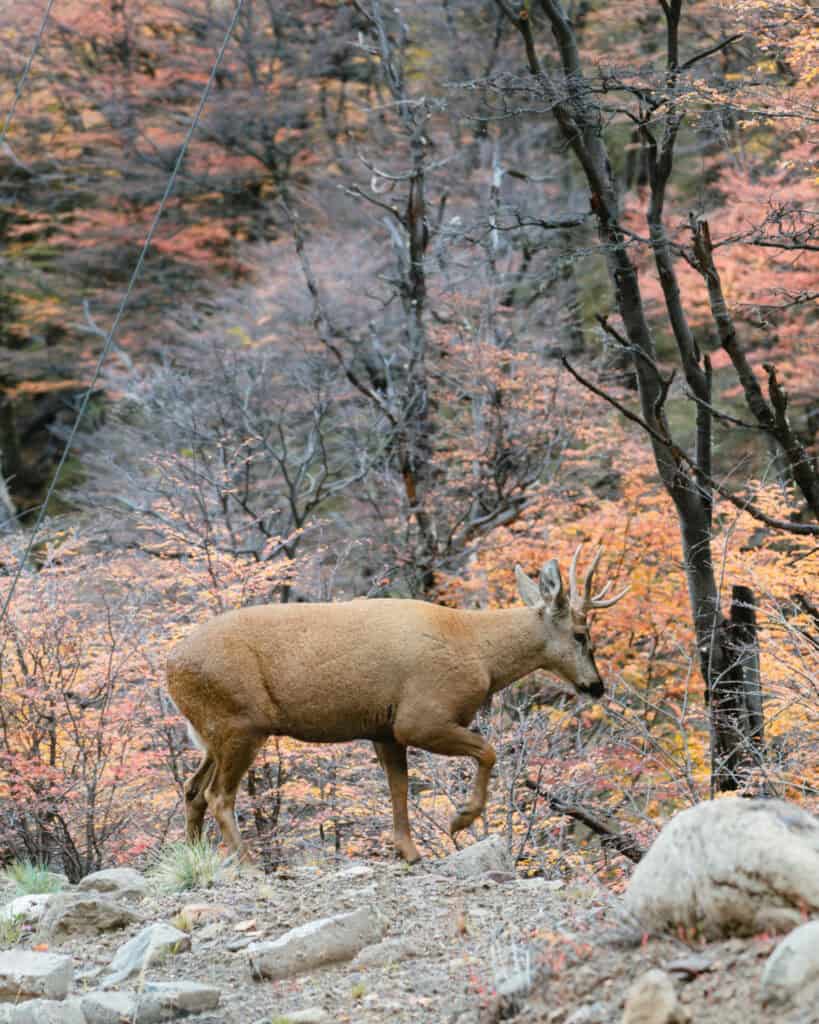
This area is also a favourite habitat of the endangered huemul deer, and a section of the Carretera Austral to the north of town passes right through the national park, offering consistent sightings of these elusive creatures! It was our first and only glimpse of the deer.
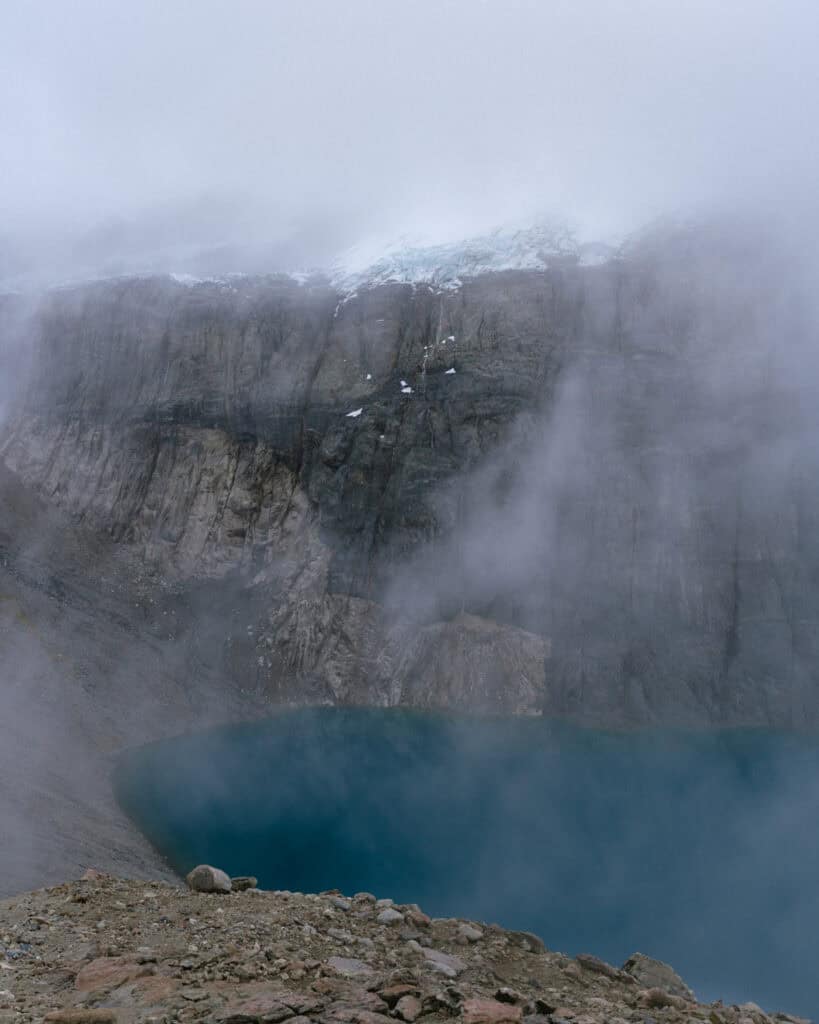
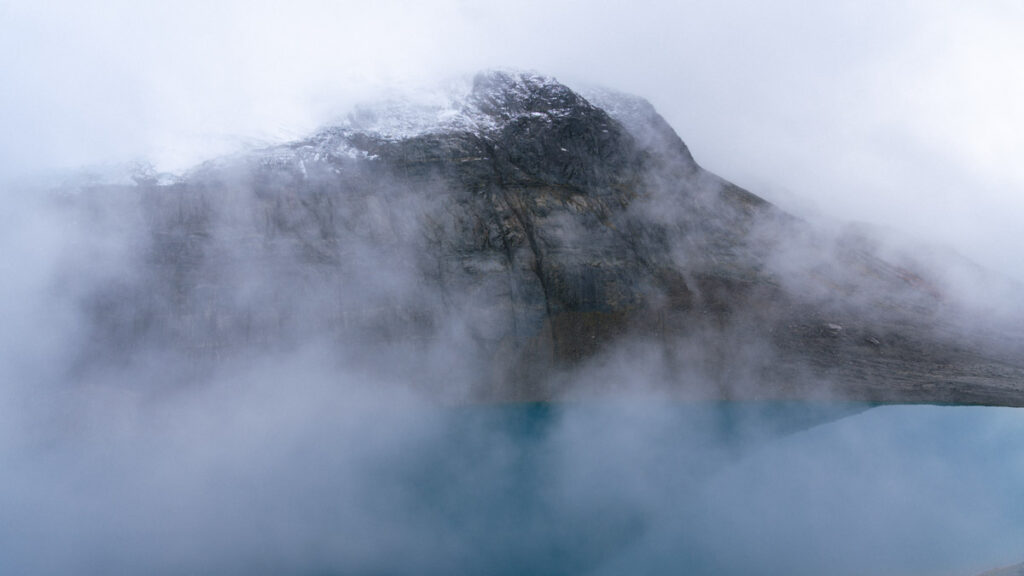
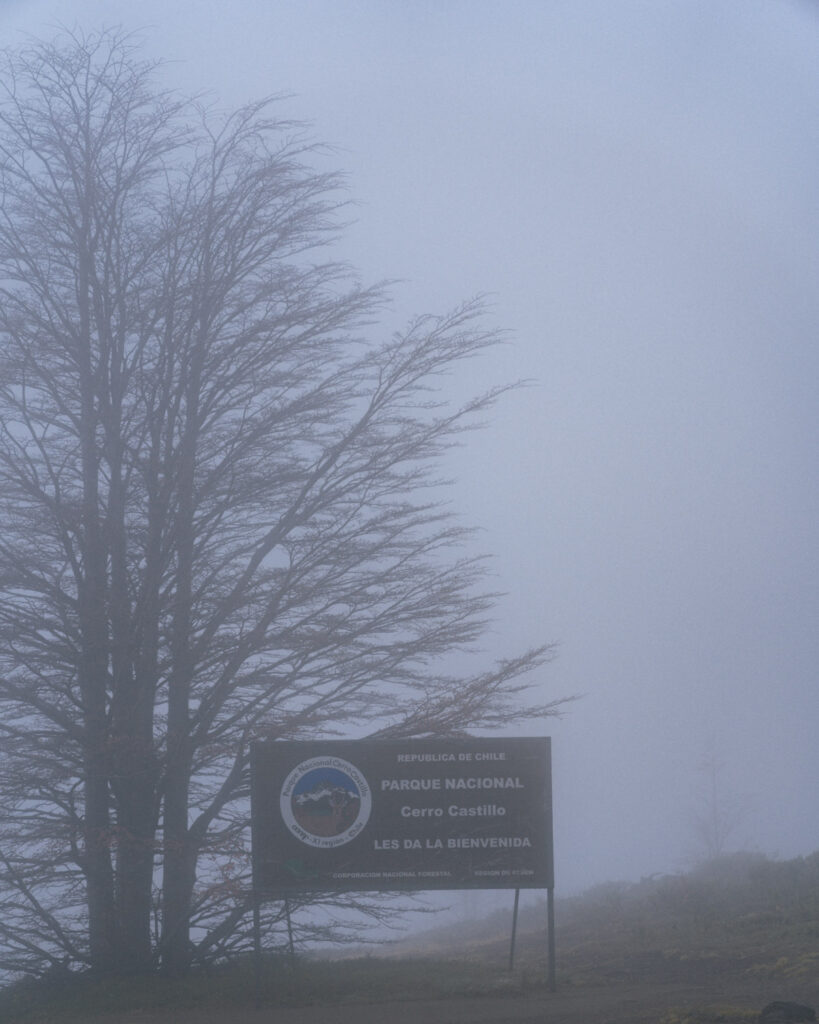
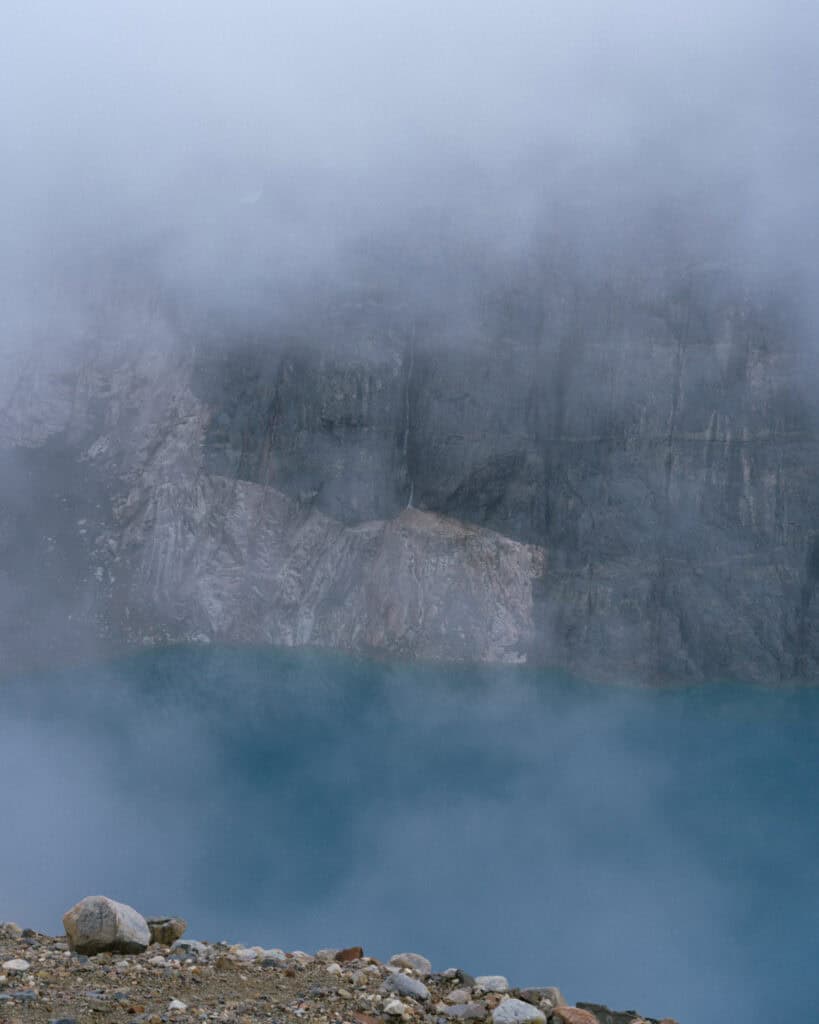
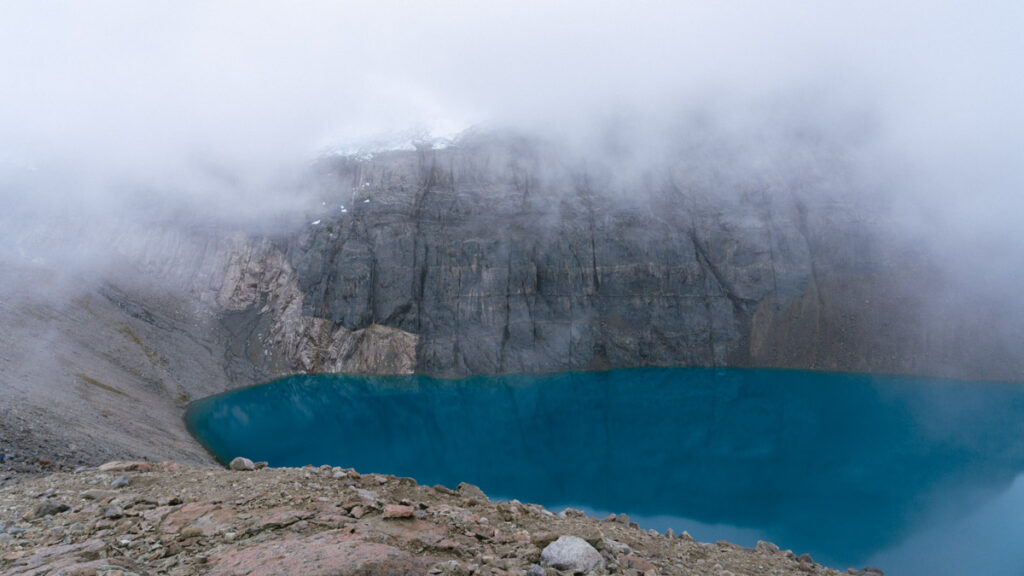
Unfortunately, when we visited Villa Cerro Castillo, the weather was terrible. Throughout our two days here, I don’t think we saw Cerro Castillo once. It was persistently grey, raining and freezing, and even as we slogged up the trail to Laguna Cerro Castillo, we were not rewarded with a view! Just a wall of fog.
I almost didn’t write this post, as this was one of only a few places in Patagonia that I know we didn’t get to experience properly on account of the weather. When the drawcard of the town is seeing those impressive spires, it’s hard to share our experience in a helpful way when we didn’t get to see them!
Alas, we still learnt and discovered a lot while visiting this little town, and I hope it’s helpful for your (much sunnier) visit.
🛻 Villa Cerro Castillo was one stop on our road trip along the Carretera Austral in Chilean Patagonia. Don’t forget to browse all our posts about the Carretera Austral, or if you want to skip the multiple tabs and scribbling notes from my blog, I’ve got you covered with my Carretera Austral Road Trip Handbook. A 365-page eBook compiling everything I know about the highway into one beautifully designed place, available offline in your pocket while you’re on the carreterra!

PLANNING YOUR CARRETERA AUSTRAL ROAD TRIP CAN BE CONFUSING… I KNOW, I’VE BEEN THERE!
I spent months planning our Carretera Austral road trip – jumping between tabs, scribbling notes, and trying to remember ferry times. It’s a confusing region, and it’s easy to get it wrong!
That’s why I created the Carretera Austral Road Trip Handbook: all the info you need in one beautifully designed guide, available offline while you’re on the highway. Pair it with our Custom Google Map (500+ pins!), and you’ll have a clear, stress-free plan for the road trip of a lifetime – before you leave and while you’re on the highway.
Villa Cerro Castillo map

How to get to Villa Cerro Castillo
- 🚗 By car: Villa Cerro Castillo is located around the middle of the Carretera Austral. It sits south of the regional capital of Coyhaique (~ 1.5 hours), and it’s actually quite close to the Balmaceda Airport (~1 hour), making it one of the more accessible towns along the highway. It’s 2.5 hours north of Puerto Rio Tranquilo, if you’re travelling from the south.
Villa Cerro Castillo is the point where the pavement ends (if you’re travelling south) or starts (if you’re travelling north). There are no ferries required to get here from its immediate neighbours.
The drive into Villa Cerro Castillo should be stunning from either direction, with the imposing basalt peaks guiding you into town. Unfortunately, thick fog covered the peaks when we both arrived and departed. Unfair!
📍 I’ve pinned lots of miradors and scenic stops en route to Villa Cerro Castillo from Puerto Rio Tranquilo (south) or Coyhaique (north) on my Carretera Austral map
- 🚌 By bus: there are no specific bus routes to Villa Cerro Castillo, but it’s a scheduled stop for most routes coming to or from Coyhaique. The Chile Chico – Coyhaique route (and vice versa) passes Puerto Rio Tranquilo and Villa Cerro Castillo 3 times per week. The Cochrane – Coyhaique route (and vice versa) passes Puerto Rio Tranquilo and Villa Cerro Castillo 6 days a week. There isn’t a formal bus terminal, the buses just stop on the side of the Carretera Austral, which runs through the centre of town.
This is the best website I’ve found for bus information along the Carretera Austral. I’d recommend contacting the transport companies directly to confirm, as public transport in this region of Chile is unreliable and changes seasonally. Villa Cerro Castillo in particular, as most routes don’t start or terminate here, they’re just passing through.
- 🇦🇷 From Argentina: Villa Cerrro Castillo doesn’t have a direct route from Argentina, and if you were self-driving across the border, this wouldn’t be your first stop. But it’s worth noting that there is a ferry route from Chile Chico, which is one of the most common border crossings along the carretera.
We didn’t do this, but there is a ferry that runs across Lago General Carrera from Chile Chico to Puerto Rio Ibañez, which is just over half an hour to VCC. Naviera Austral runs the ferry, and you book tickets online in advance. I believe there is an infrequent shuttle route from Puerto Rio Ibañez to Villa Cerro Castillo if you’re not driving.
How to get around in Villa Cerro Castillo
Like everywhere along the Carretera Austral, having your own car or bicycle makes getting around Villa Cerro Castillo a lot easier!
The town itself is a tiny grid of just a few streets that is easily walkable, but the majority of things to do here (namely Parque Nacional Cerro Castillo) are not directly accessible from town.
I’ll discuss getting to the park in more detail below, as there are a few different entrance points depending on the trails you plan to hike.
If you don’t have a vehicle, you will most likely need to organise private transport to the park, at least if you are planning to hike Laguna Cerro Castillo, as there is no public transport to this sector.
There are the names and numbers of a few local tour and transport companies outside the tourist information office in one of the town’s plazas.
We also found this information on the Chile parks website about local transport operators:
- Luis Eduardo Morales (+56 9 76494451)
- Transfer Villarrica (+56 9 66560172)
- Buses Marcelo (+56 9 78736157)
- Buses Javier Alí (+56 9 3131402)
- Transfer Feña (+56 9 62041342)
Where to stay in Villa Cerro Castillo
🏨 ACCOMMODATION
Despite its size, Villa Cerro Castillo has some decent accommodation. I wouldn’t leave booking to the last minute in the height of summer (there aren’t that many rooms!), but there is more choice than I expected.
Like everywhere in this region, if you’ve got a car, make the most of the scenic, nature-based stays on the outskirts of town. There are some gorgeous cabins near the national park.
- 💰 Nordic Patagonia Camping & Hostel
- 💰 Quelen Patagonia
- 💰💰 B&B y Cabañas Cerro Castillo
- 💰💰 OUTSCAPE Cabaña
- 💰💰💰 Alto Castillo Lodge
- 💰💰💰 Refugios Australes – Cerro Castillo
🏕️ CAMPING
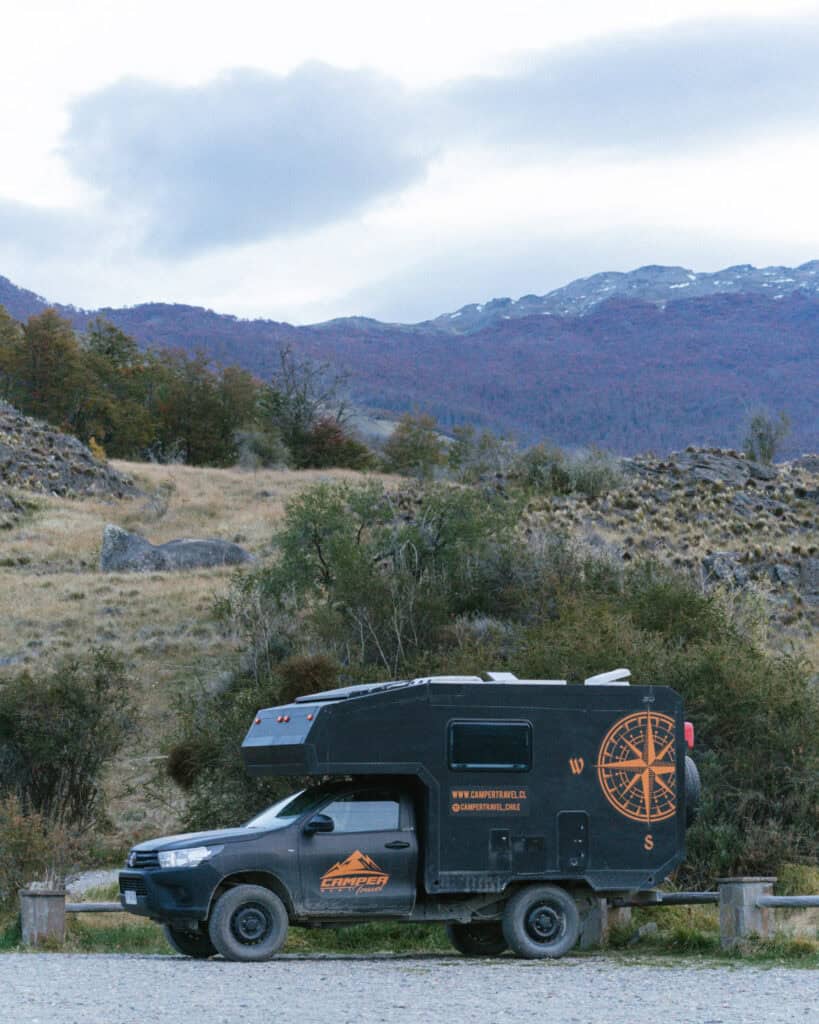
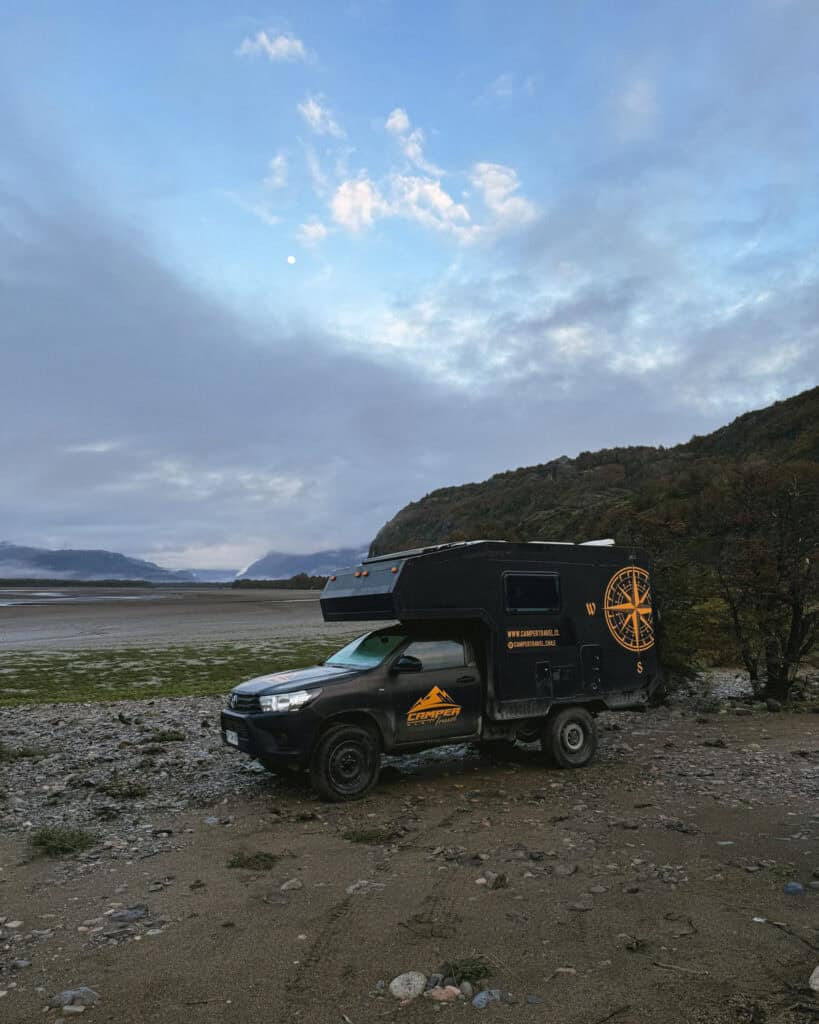
We were camping on the Carretera Austral in our self-contained camper, so we looked for a free, wild camp around VCC. We wanted to start hiking the Laguna Cerro Castillo trail first thing in the morning, so we searched for something near here.
There aren’t a lot of great options, but we ended up in a quiet and secluded area along the Rio Ibañez, at this location. I wouldn’t attempt camping here without a 4×4 as it was a steep, sandy and rutted entrance down to the riverbank. We were fine in our Hilux camper.
If you need more amenities, there are various paid campgrounds around Villa Cerro Castillo with toilets, hot water showers, electricity, kitchens, etc. If you want to be central to town, try Nordic Patagonia or Camping Araucaria (aka Al Galope).
Otherwise, there is a paid campground at the entrance to the Laguna Cerro Castillo trail, called Camping Sendero Cerro Castillo (note that if you’re driving, a 4×4 is recommended for the last steep hill to the campground and trailhead).
There are also multiple hike-in campsites inside the Parque Nacional Cerro Castillo if you’re tackling a multi-day trek in the park (more on that below).
Things to do in Villa Cerro Castillo
1. Visit the Parque Nacional Cerro Castillo
The primary reason people come to the tiny town of Villa Cerro Castillo is to visit the eponymous national park.
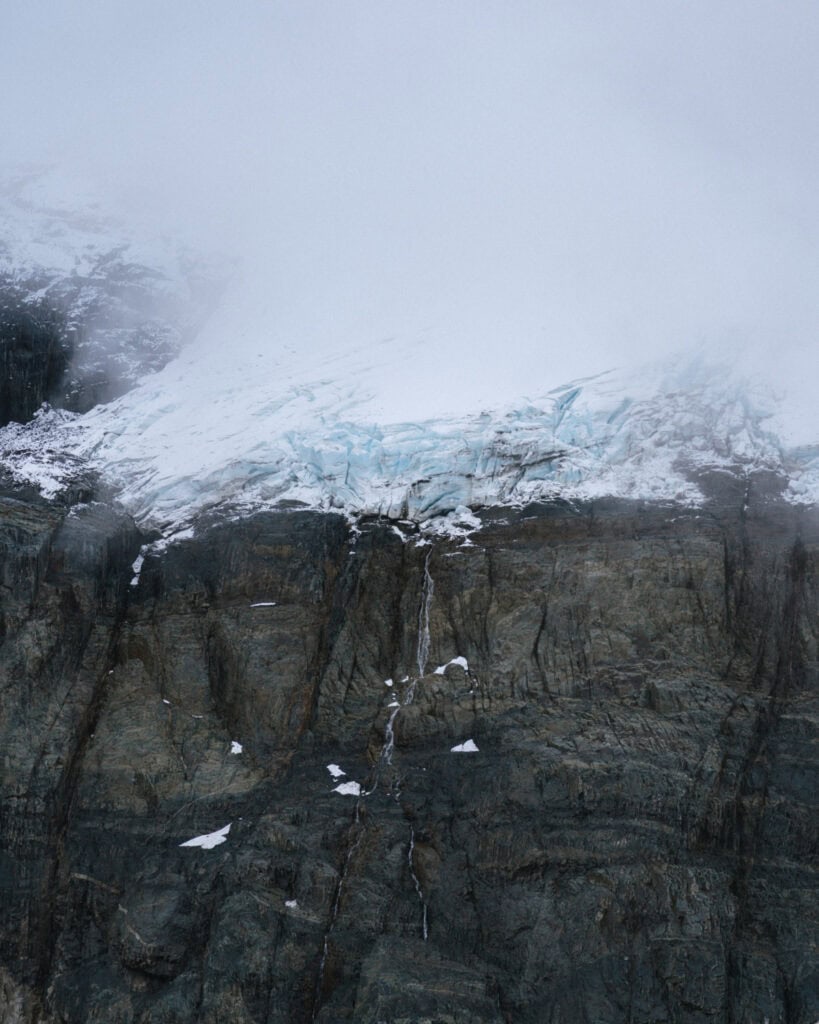
Meaning Castle Hill in English, the park takes its name from the triple basalt peak, looming 2,700 metres above the town, with three glaciers clinging to its southern slopes.
We didn’t get to experience the sheer scale of these jet-black peaks, which were sadly shrouded behind a stubborn wall of cloud for the duration of our visit, but they are said to rival those found in Torres del Paine National Park and the peaks of El Chalten in Argentina.
The park has a few notable day hikes, plus the popular multi-day trek ‘Circuito Las Horquetas’:
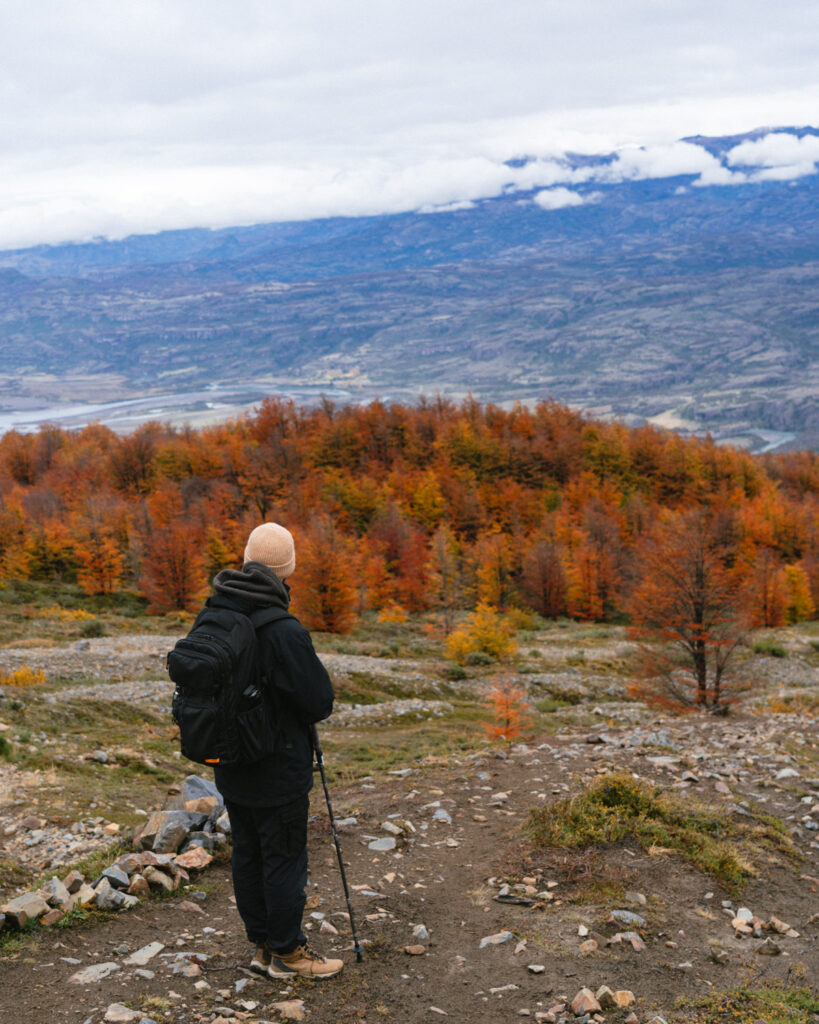
- 🥾 Laguna Cerro Castillo: the most famous day hike, and what we did in PN Cerro Castillo. It’s a TOUGH uphill slog to reach a cobalt blue lagoon with the iconic black spires towering above. It’s a 13 km (8 mi) out-and-back trail, passing beautiful nirre and lenga forest in the beginning, before hitting a gruelling section of scree for the final stretch to the lagoon. You must start the hike between 8:00 am – 12:00 pm, and the park staff will check that you have the correct gear. Read everything you need to know about the hike in our guide.
- 🥾 Laguna Duff: doable as a long single day or an overnight hike, the Laguna Duff trail starts from the Estero Parada entrance. It’s a 22 km (13.7 mi) out-and-back trail if you tackle it in one day, but you can spend the night at Campamento Neozelandes (Camping New Zealand) or Campamento Porteadores (Camping Porters). You must start the hike between 8:00 am – 11:00 am or by 3:00 pm if you’re staying overnight at one of the campgrounds.
- 🥾 Laguna Chiguay: a shorter walk in a different section of the park, north of Villa Cerro Castillo. This is an easy stroll around a scenic lagoon, around 4 km (2.5 mi). We didn’t visit this lagoon, and there’s not a lot of info online about opening hours. Apparently, there is a ranger office here, but it’s not always staffed. I’m not sure if this trail closes to self-guided walks in winter.
- 🥾 Circuito Las Horquetas: sometimes called the Travesía Cerro Castillo or the Cerro Castillo Circuit, this is a 55 km (34.4 mi) traverse starting from the Las Horquetas entrance, 30 km north of town along the Carretera Austral, and finishing back in Villa Cerro Castillo. You’ll pass Laguna Cerro Castillo, Laguna Duff, stunning high alpine scenery, glaciers and aerial views of the Rio Ibañez. The recommended route is 5 days / 4 nights, but some people do it in 4 days / 3 nights or even quicker. There are several basic campsites along the route, but you have to carry all of your own gear. You can rent gear in town from La Montañita if required. As of the 25/26 season, there is now a limit of 40 hikers who can start the trail each day. To ensure you secure your date, you’ll need to pre-purchase your pass on the park’s website.
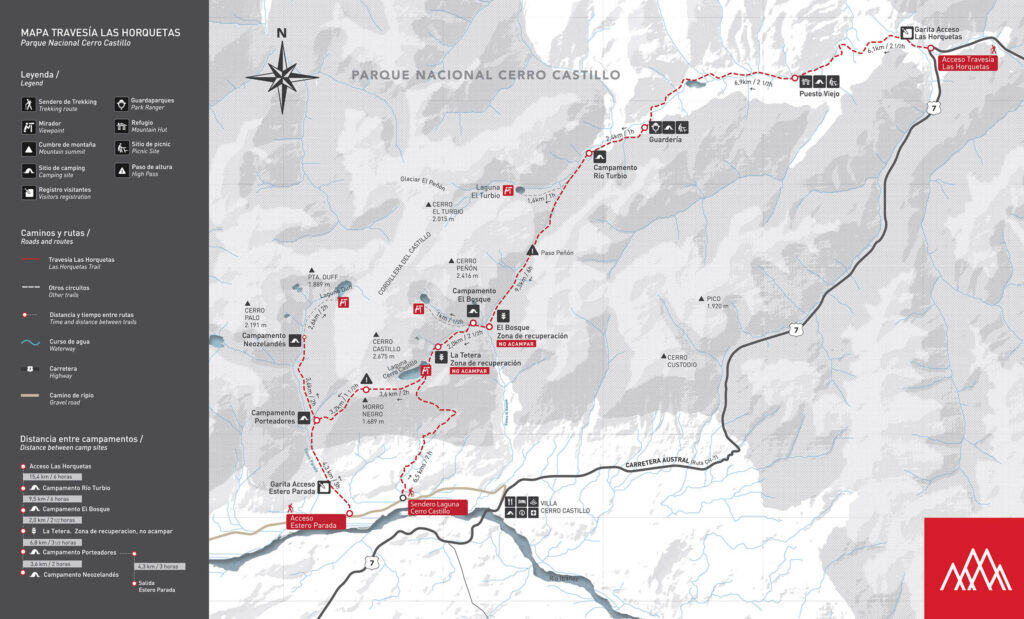
The national park is jointly managed by CONAF and a local tourism association. It was declared a national park in 2017, but the management and facilities are handled quite differently from other parks that are solely managed by CONAF.
The trails pass a lot of private property, and from what I understand, there have been extensive negotiations and eventual cooperations with landowners over the years to make these trails accessible to the public. I believe this is part of the reason why the park is so expensive.
For foreign tourists, you pay a steep 20,000 CLP (~ $20 USD) for one day’s access to the park. It’s 28,000 CLP (~ $28 USD) for two days or 35,000 CLP (~ $35 USD) for three days or more (aka if you’re hiking the circuit). The park has recently introduced the option to buy tickets online via their website. From what I understand, this isn’t mandatory, and you can still buy tickets on arrival (with card), except if you want to hike the Las Horquetas Circuit, which now has a limit of 40 hikers starting per day, so you’ll want to secure your place online in advance.
There is a lot of inconsistent and outdated information online about seasonal access and opening hours of each of the trails. The national park has its own website (outside of the regular CONAF site), which has just been updated for the 25/26 season. Their Instagram page is another good spot to find time-sensitive information.
The park closes to self-guided visits during the winter months, which is generally from October – April. However, what is determined as ‘winter’ changes each year, depending on the snow cover and weather forecast at the time. It also differs per trail.
To give you an idea of what to expect, these were the dates for the 2024/25 season as per the park’s Instagram:
- 🗓️ Laguna Duff: opened for self-guided hikes on 12 October 2024 and closed on 21 April 2025 *open since 16 October 2025 for 25/26 season
- 🗓️ Laguna Cerro Castillo: opened for self-guided hikes on 30 November 2024 and closed on 21 April 2025 *open since 21 November 2025 for 25/26 season
- 🗓️ Las Horquetas: opened for self-guided hikes on 16 December 2024 and closed by 13 March 2025 (exact closure date unknown) *open since 5 December 2025 for 25/26 season
The park will close the trails in the case of inclement weather. This is most common on the Las Horquetas Circuit and Laguna Cerro Castillo trail, especially in the shoulder months of November/December and April, when there can be snow cover on the upper parts of the trails.
If you’re visiting during the winter months when guides are required, you can organise a guide with the local cooperative, Cerro Castillo Mountain Guides.

2. Paredón de las Manos cave paintings
Meaning wall of hands in English, a series of hand prints are painted on an imposing rock wall, just outside the centre of Villa Cerro Castillo.
These cave paintings are nearly 5,000 years old and were left by the first inhabitants of the region, the Tehuelche people.
Entrance is 3,000 CLP (~ $3 USD) and a local guide should accompany you on the short walk and explain the history of the area.
There is also an old school here that has been turned into a museum with artefacts and information about the history of the area. Entrance to the museum only is 2,000 CLP (~ $2 USD), or you can combine both attractions for 4,000 CLP.
3. Explore the town
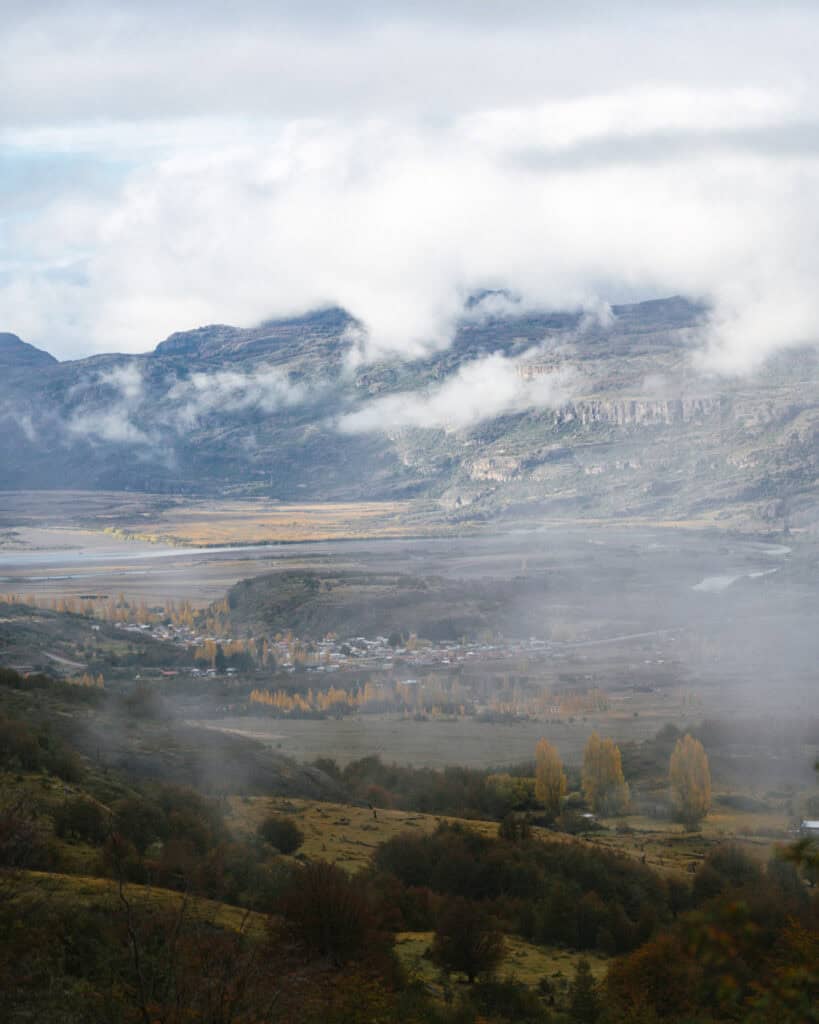
Villa Cerro Castillo is a tiny town, probably the smallest we encountered along the Carretera Austral. There’s not much to it, but I encourage you to spend an hour wandering around.
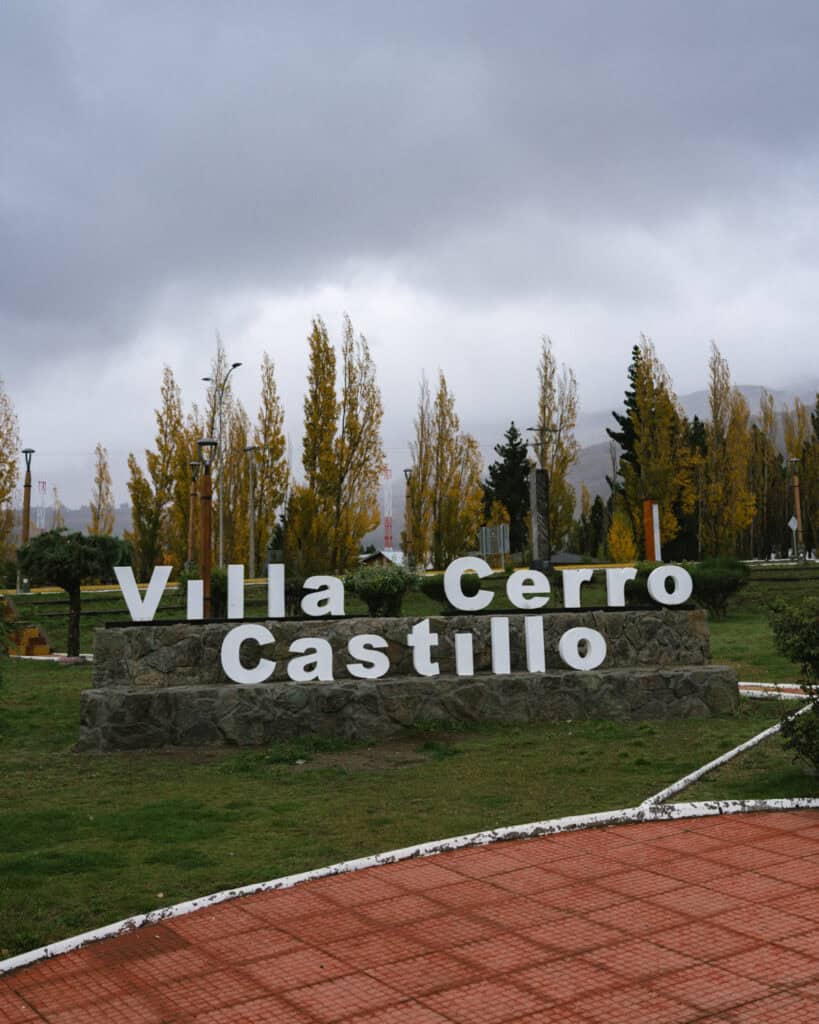
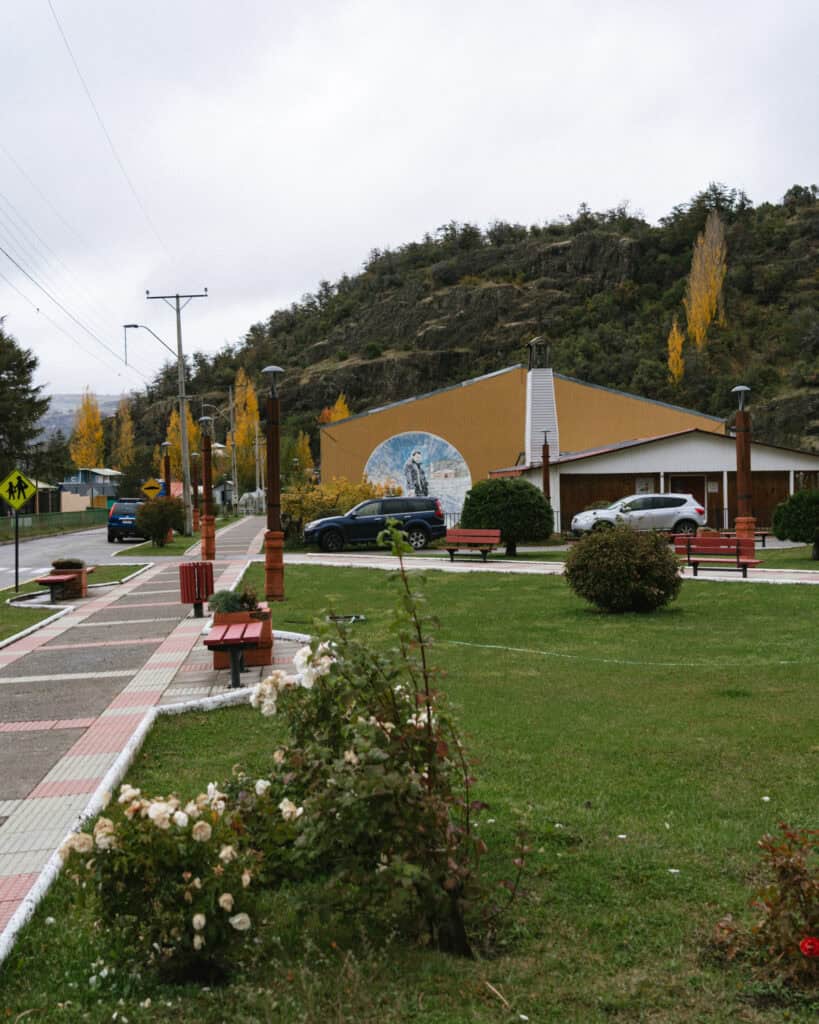
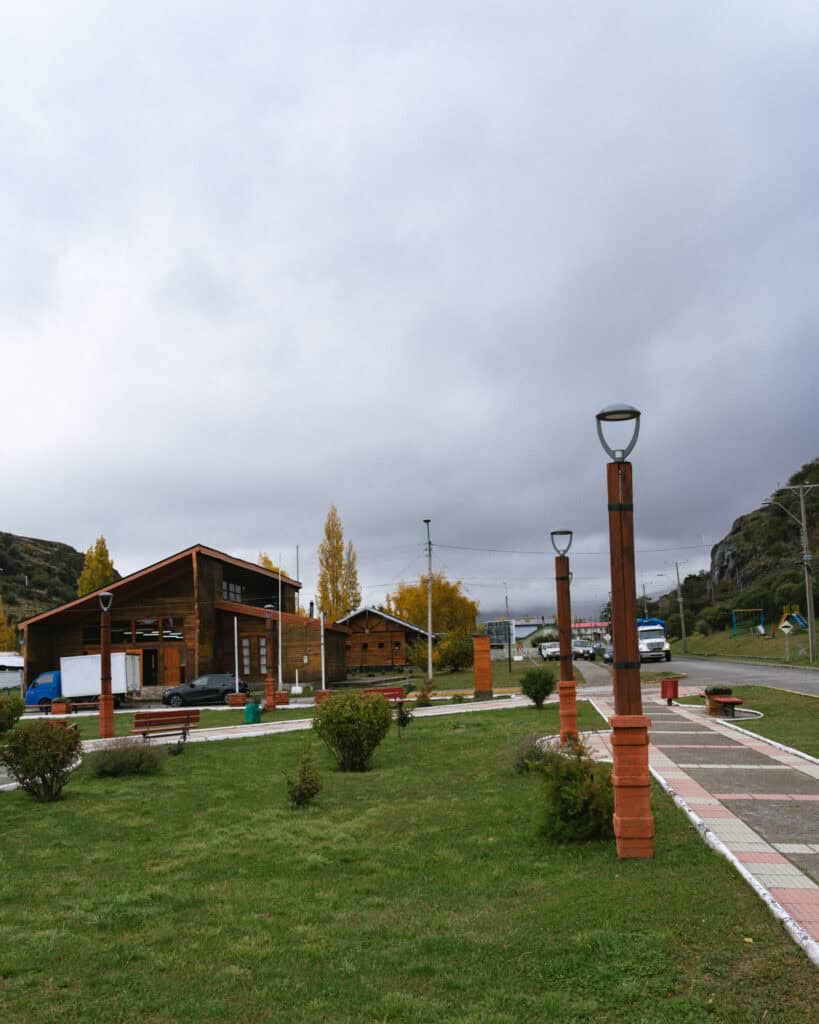
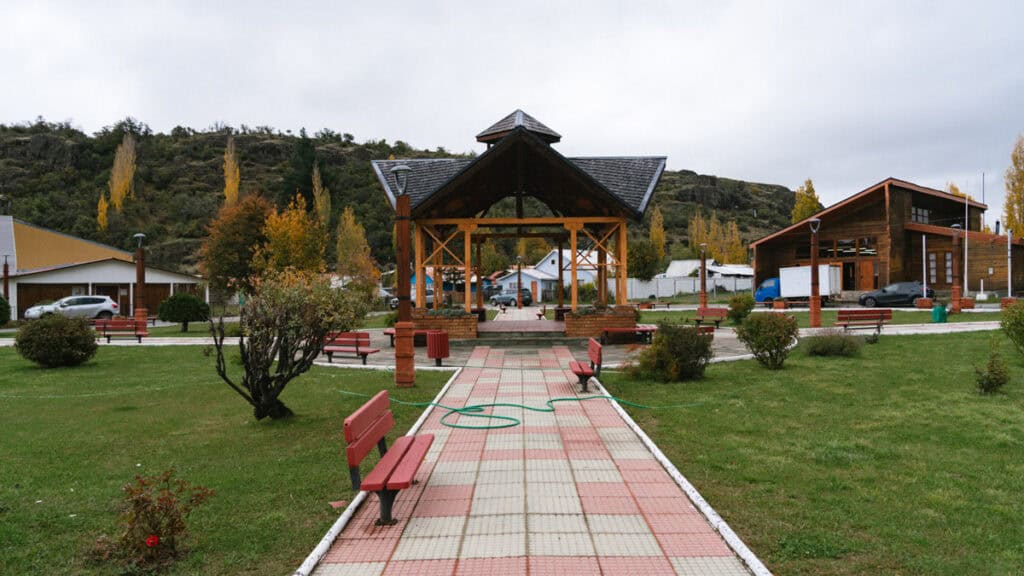
There is a nice little plaza, Plaza Villa Cerro Castillo (original, I know), as well as another little park area next to the highway, with the classic town letters, the visitor information centre and some stalls for local tour companies.
Unfortunately, on a freezing, grey day, the town didn’t have much life, and I dashed around in the rain just to say I’d seen it. But I know on a clear, sunny day, the views would be sublime and the vibe in this little trekking town would be excellent.
4. Go horseback riding
This is real gaucho country, aka Chilean cowboys, and there are plenty of local operators offering horseback riding tours.
Due to the aforementioned terrible weather, we didn’t take up this opportunity when we visited and luckily, we had already been horse riding in El Calafate, Argentina.
But I had my eye on a family-run ranch just out of town. Calbagata Aventuras offers a range of different horse rides around the area. They also do authentic asados (BBQs) and breakfasts to combine with your ride.

5. Drive the X-723 Las Ardillas scenic route
The X-723 is a 40 km (25 mi) dirt road running from Villa Cerro Castillo to Puerto Ibañez. It’s not the quickest road connecting these two towns, but it’s most definitely the scenic route.
It is recommended to have a 4×4 vehicle, but I have read reviews of people doing this in 2×4 vehicles. You’ll just need to take it VERY slow, and I wouldn’t recommend attempting it after rain.
The road passes multiple beautiful lakes, including Lago Tamango, where you can get an uninterrupted view of the Cerro Castillo massif. You should also make a pit stop at Salto del Río Ibáñez, a thundering waterfall right on the roadside.
You’ll end up in the small town of Puerto Ingeniero Ibañez, on the shores of Lago General Carrera.
If you’ve just driven the road as a day trip excursion, you can return to Villa Cerro Castillo via the better-made X-65. Don’t forget to stop at Mirador Puerto Ingeniero Ibañez on the way out of town for some epic views over the lake. There are several other lagoons on the way back, and of course, excellent views driving back towards the Cerro Castillo spires.
Puerto Ibañez is also a great jump-off point if you’re continuing further south. There is a ferry across the lake from here to Chile Chico, where you can cross the border to Argentina or enter the Parque Nacional Patagonia in the Lago Jenimeni Sector of the park.
6. Check out Mirador Cerro Castillo and Cuesta del Diablo
You’ll pass this mirador on the Carretera Austral on your way into town (if you’re travelling south) or on your way out (if you’re heading north), but it’s worth mentioning.
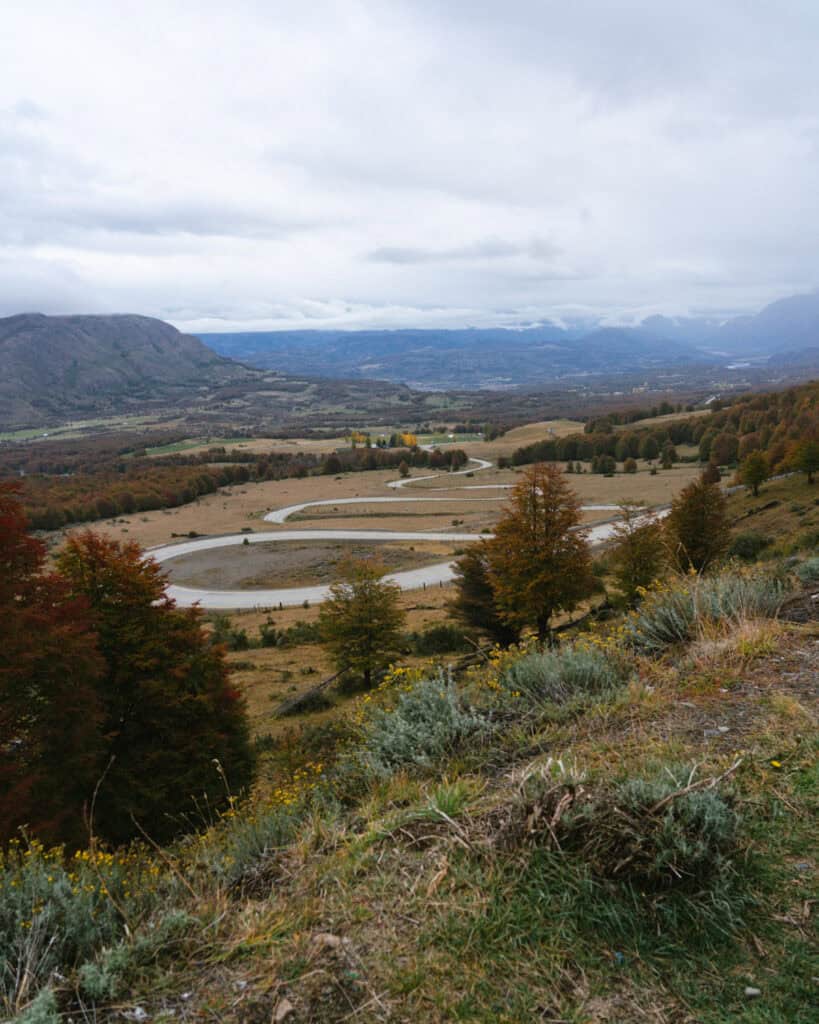
The mirador is one of the best places to get a clear view of Cerro Castillo, but it also looks back on Cuesta del Diablo (Devil’s Hill).
‘Cuesta’ translates as a steep slope or ascent, and in this context, it refers to a famous stretch of the Carretera Austral with a series of steep switchbacks and curves. It’s pretty cool to look back down onto the winding road.
7. Look for huemuls
The huemul or South Andean deer is an endangered species of deer found around Patagonia. It’s Chile’s largest deer, and these beautiful animals are a highly desired wildlife sighting in the region.
While they are found in many national parks along the Carretera Austral (particularly the Tamango Sector of Parque Nacional Patagonia), Villa Cerro Castillo is another excellent spot to see the deer, and the first (and only!) time we sighted one.
You should keep an eye out while you’re hiking in the national park, but there is also a stretch of the Carretera Austral north of town that actually goes through the middle of the park, and is a very common area for sightings.
Somebody put a random pin on Google Maps called ‘Mirador de Huemules’, which I thought was a bit of a joke. Who can really say where they will be? They’re wild animals! But it was within 5 minutes of passing this point that we FINALLY saw a male and female dash across the road in front of us and scurry off into the forest.
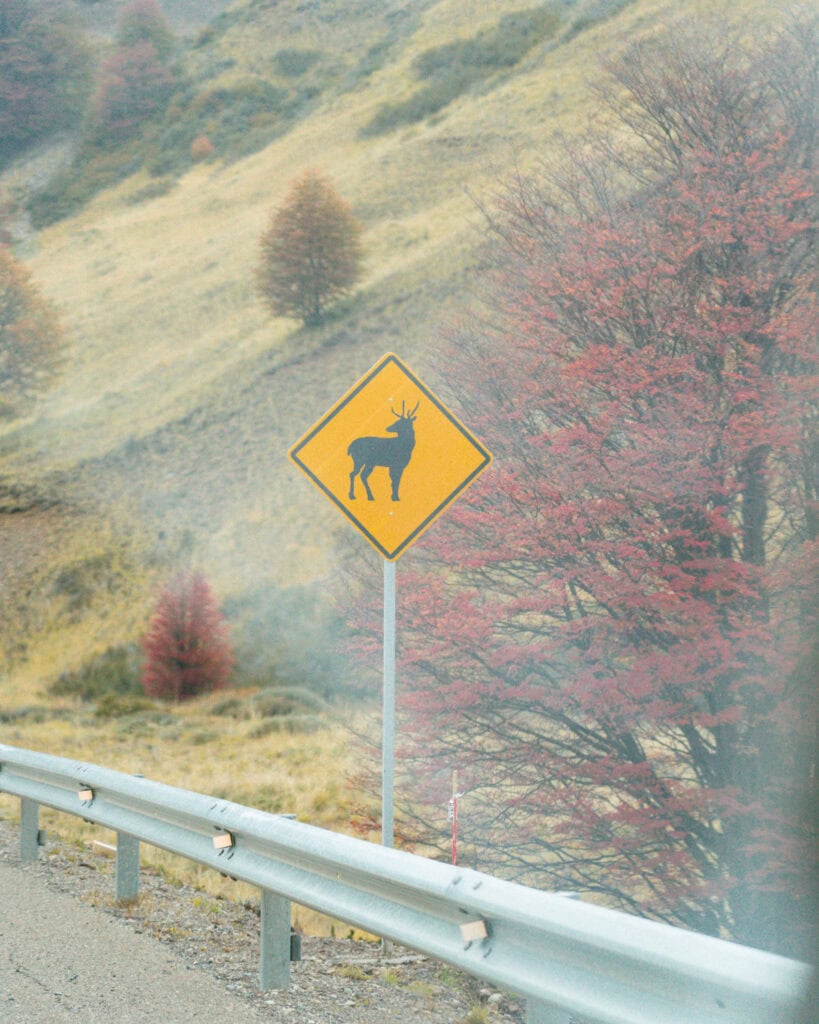
You will see lots of road signs indicating you are in the habitat of the huemul, so please follow the speed limit restriction of 60 km/h, or even slower, and be sure to keep your eyes peeled. They are around this area frequently, but as we discovered, they are often in the middle of the road, so stay aware!
Where to eat in Villa Cerro Castillo
I’m sure in summer it has a bit more atmosphere and bustle about the place than it did on a rainy day when we visited on the cusp of low season. Regardless, Villa Cerro Castillo is a very small town, and there aren’t that many options for food and drink.
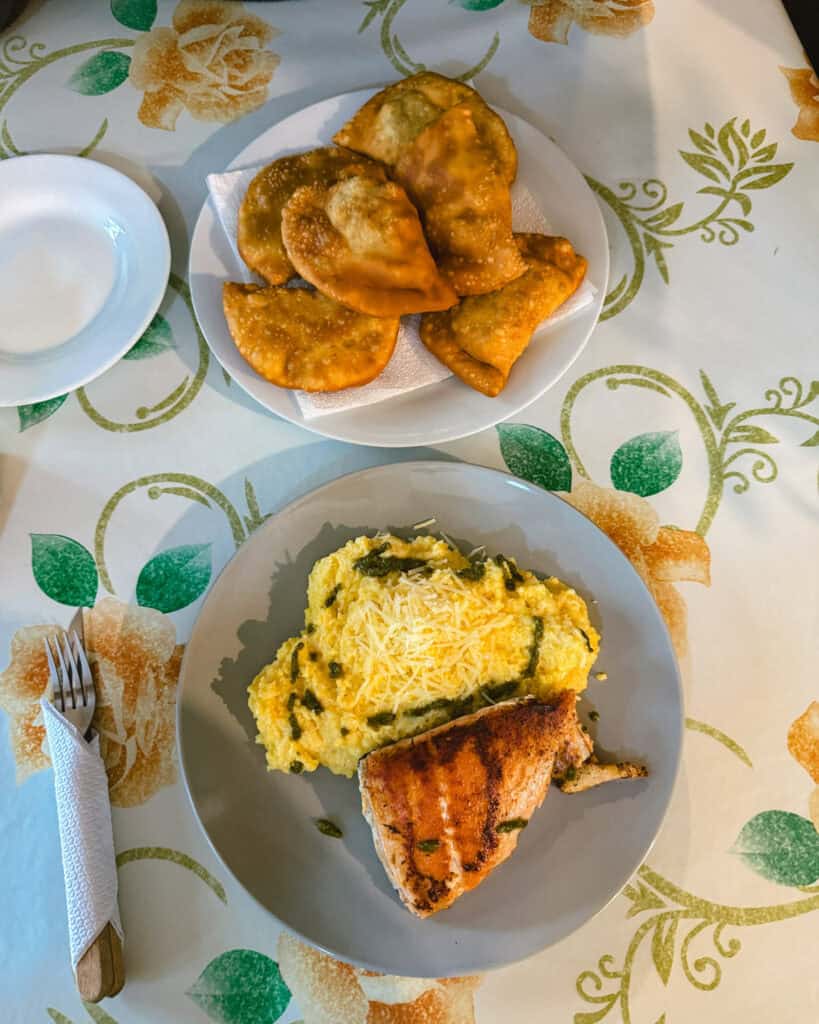
- 🥟 Restaurant y Café Campesino El Castillo: we had a surprisingly excellent meal here! It’s a very cosy little spot with indoor and outdoor seating, depending on the weather. We had fried beef empanadas and salmon with polenta, which were both delicious. The coffee machine and sweets cabinet were very tempting too – this is a one-stop shop in town.
- ☕️ El Arbolito Cafeteria: if you want another coffee and sweets option, this is top-rated with a lovely garden and gorgeous views (on a clear day!).
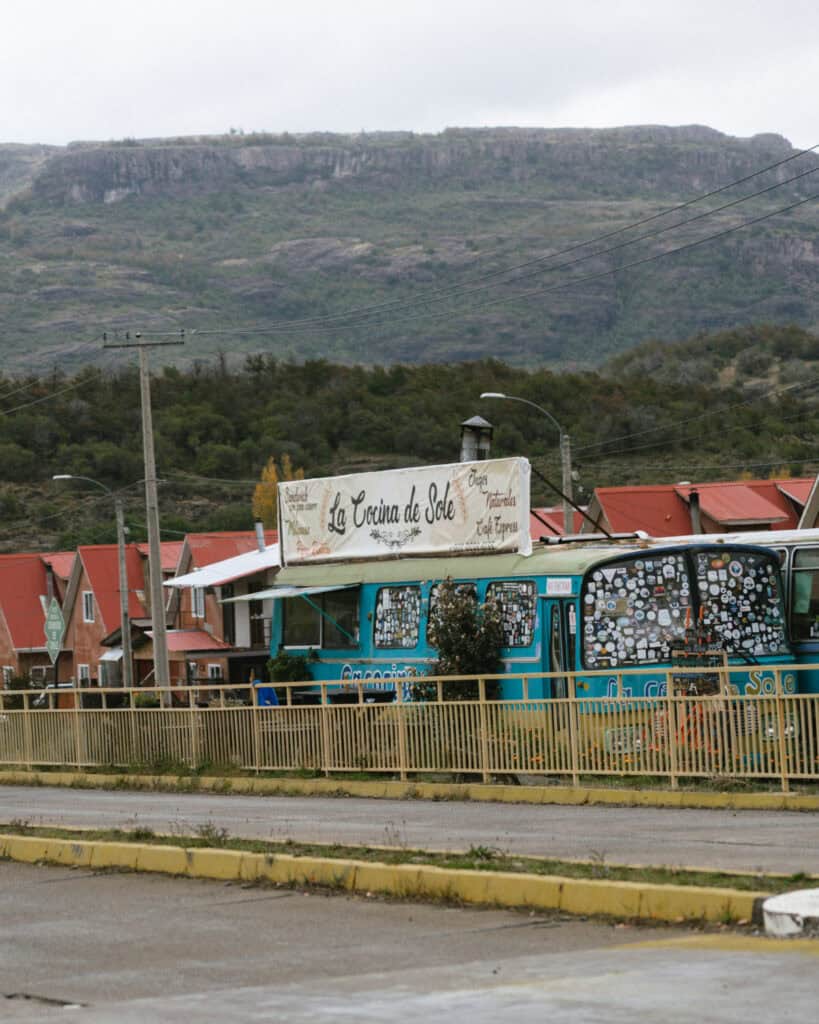
- 🚌 La Cocina de Sole: an old converted school bus plonked right on the highway in the middle of town, this is a great cheap eats option. They make classic Chileno fast food: sandwiches, chorrillanas, lomos, all with veggie and vegan options too.
- 🍕 Pizzeria y Hamburgueseria D-LIZIA: amazing, thin crust crispy pizzas that are the perfect post-hiking treat!
- 🍔 420 Restobar: if you’ve got a car, this new spot is located on the highway outside of town with sweeping views of the jagged peaks. They do all the basic comfort foods like burgers and pizza, just check hours on their Facebook before visiting.
- 🍽️ Restaurant La Querencia: probably the ‘nicest’ restaurant in town, you’ll find main dishes like fish and lamb, but of course, sandwiches and chorillanas too!
📍 All of these restaurants are pinned on my Carretera Austral custom map
Things to know before visiting Villa Cerro Castillo
- 🌤️ Best time to visit: like all of Patagonia, the best time to visit Villa Cerro Castillo is generally in the warmer months between October – April. Although you should expect wild weather at any time of the year, with rain, wind, snow and sun always possible – this is Patagonia after all!
It’s important to reiterate that the Cerro Castillo National Park closes to self-guided visits during the winter months. However, what is determined as ‘winter’ changes each year, depending on the weather at that time, and it also differs per trail.
Generally, the park is closed to self-guided visits from April – October, but the exact dates are dependent on the current snow cover and forecast. The trails close and open on a rolling schedule. Laguna Duff remains open for the longest period, then Laguna Cerro Castillo and finally the Las Horquetas Circuit, which is usually only available from mid-December to early-March.
- 🗓️ How long to stay: it depends on what your plans are in Parque Nacional Cerro Castillo. If you’re just planning a day-hike to Laguna Cerro Castillo or Laguna Duff, 1 – 2 nights is plenty. If you’re doing the La Horqueta Circuit, that will take 4 – 5 nights, and you might like to tack on one night before and after, although some people do arrive and depart directly from Coyhaique.
- ⚠️ Safety: we felt completely safe in Villa Cerro Castillo, as we did everywhere on the Carretera Austral. These tiny towns are incredibly welcoming, and people are very friendly.
- 🗣️ Language: Spanish is the official language in Chile, and there is barely any English spoken in the remote towns of the Carretera Austral. Chilean Spanish is notoriously hard to understand, so even if you’ve got a decent level of Spanish, be prepared to struggle with their unique vocabulary, fast speaking and mumbling!
- 💰 Currency: the currency in Chile is the Chilean Peso (CLP). While in some more touristy areas of the country, US Dollars are occasionally accepted for tourist activities, this isn’t the case in Villa Cerro Castillo.
- 💧 Can you drink the water: tap water is safe to drink in most parts of Chilean Patagonia, including Villa Cerro Castillo. It’s also a good idea to check with your accommodation before you drink, just to be sure.
Amenities in Villa Cerro Castillo
- 🛒 Supermarkets: there are a handful of small supermarkets around town, and you’ll probably need to go to all of them to find everything that you need! We thought Supermercado Janito and Minimarket Entre Vientos were the best stocked options, the second also had some fresh bread available.
- 🏧 ATMs: apparently there is now one ATM in Villa Cerro Castillo, inside the COPEC fuel station. We didn’t use it ourselves, but I believe it is a Santander cajero (very high fees!). I’d suggest coming to town stocked with cash from Coyhaique or Cochrane, just to be on the safe side.
- 💳 Card or cash payments: we had no problem paying with card at a few restaurants, the national park, gas station and supermarkets. I’d come stocked with cash anyway, as there are bound to be some places you cannot pay by card. You should always keep a healthy supply of cash on the Carretera Austral, as paying by card is not always a given!
- ⛽️ Petrol stations: yes, there is a COPEC station in Villa Cerro Castillo with all types of unleaded fuel and diesel. Prices were no more or less than in neighbouring towns along the carretera. There is quite a nice ‘motorhome repair’ area here, including a hose to fill your tanks, air for your tyres and outdoor sinks to wash dishes.
- 📱 Phone service and wifi: we had 4G service with Movistar in the centre of Villa Cerro Castillo. Once we drove out of town towards the national park, we had absolutely nothing though!
I believe Entel also has service and is considered the best provider for this area, however, due to new laws that came into effect in February 2025 banning foreigners from registering SIM cards in Chile, it’s near impossible to get an Entel SIM as a tourist. We had no problem buying a Movistar one; I think they did some quick thinking to find a workaround, but Entel repeatedly told us in multiple stores it was not possible.
Save hours planning your Carretera Austral road trip with our Handbook + Custom Map

Final thoughts: Villa Cerro Castillo
I know that we didn’t see Villa Cerro Castillo in its best light. It was some of the worst weather we had during our Carretera Austral road trip.
Unfortunately, we didn’t have time to hang around any longer, so we embraced it as best we could on the hike, but we left town begrudgingly before the clouds had cleared and allowed us to soak up the iconic view that this area is so famous for.
I hope this post has still been helpful in planning your time in Villa Cerro Castillo, despite us not doing that much ourselves! May the weather gods be on your side, and I hope you get to see those stunning black spires over the town and actually get to see Laguna Cerro Castillo after walking all the way up there!
📍 Where to next? If you’re travelling along the Carretera Austral, your next stop will most likely be Coyhaique if you’re heading north or Puerto Rio Tranquilo if you’re travelling south.
MORE VILLA CERRO CASTILLO POSTS