
This article contains affiliate links that may earn me a small commission at no extra cost to you. As an Amazon Associate, I earn from qualifying purchases. For more information, see our affiliate disclaimer.
The best way to experience the Carretera Austral is undoubtedly camping.
This famous scenic highway travels more than 1,200 km through the most remote parts of Chilean Patagonia. While there are a handful of towns, they’re small with few amenities and not a lot of choice for accommodation.
Camping on the Carretera Austral is the best way to immerse yourself in the pristine nature. Skip the hotels, and instead sleep next to rushing rivers, at the foothills of snow-capped mountains or on the shores of a fjord with dolphins playing offshore.
But camping isn’t always straightforward, especially if you don’t do it all the time. You have to consider things like where to safely set up, finding bathrooms, electricity, showers, etc. It’s always worth it, but it does require a little more planning and effort.
We spent 4 weeks camping on the Carretera Austral, navigating all of these challenges. I want to share all the tips and tricks we discovered along the way, as I couldn’t find any of this information online before our road trip.

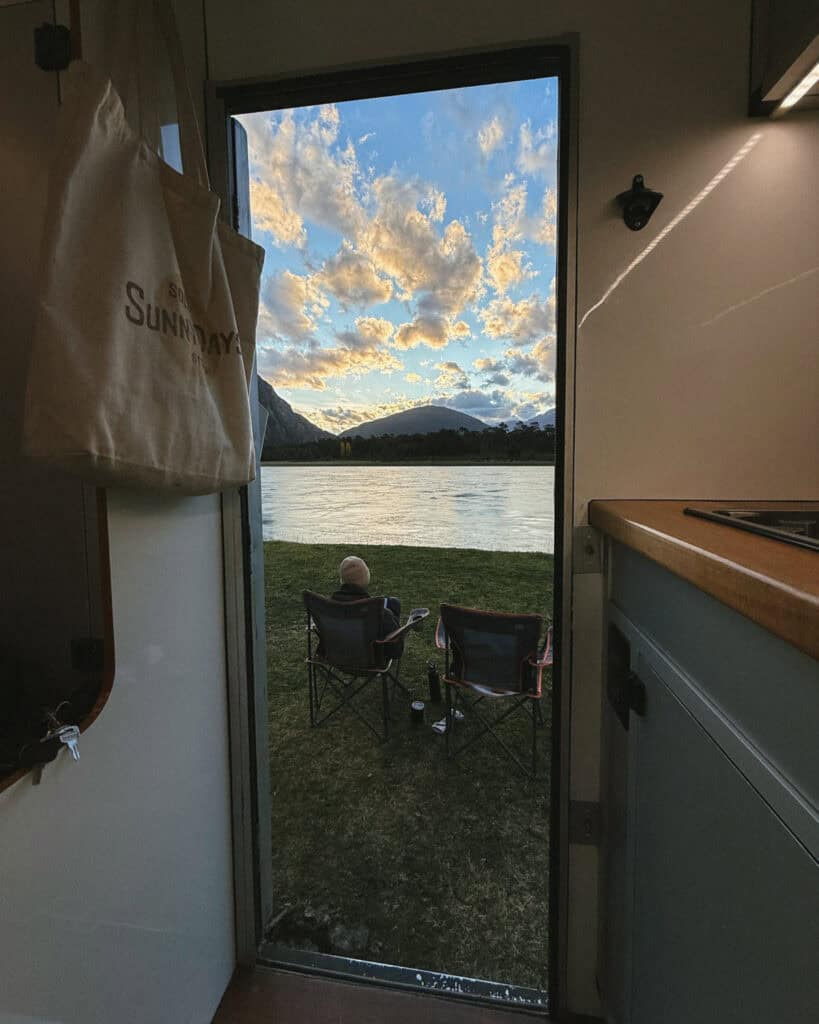


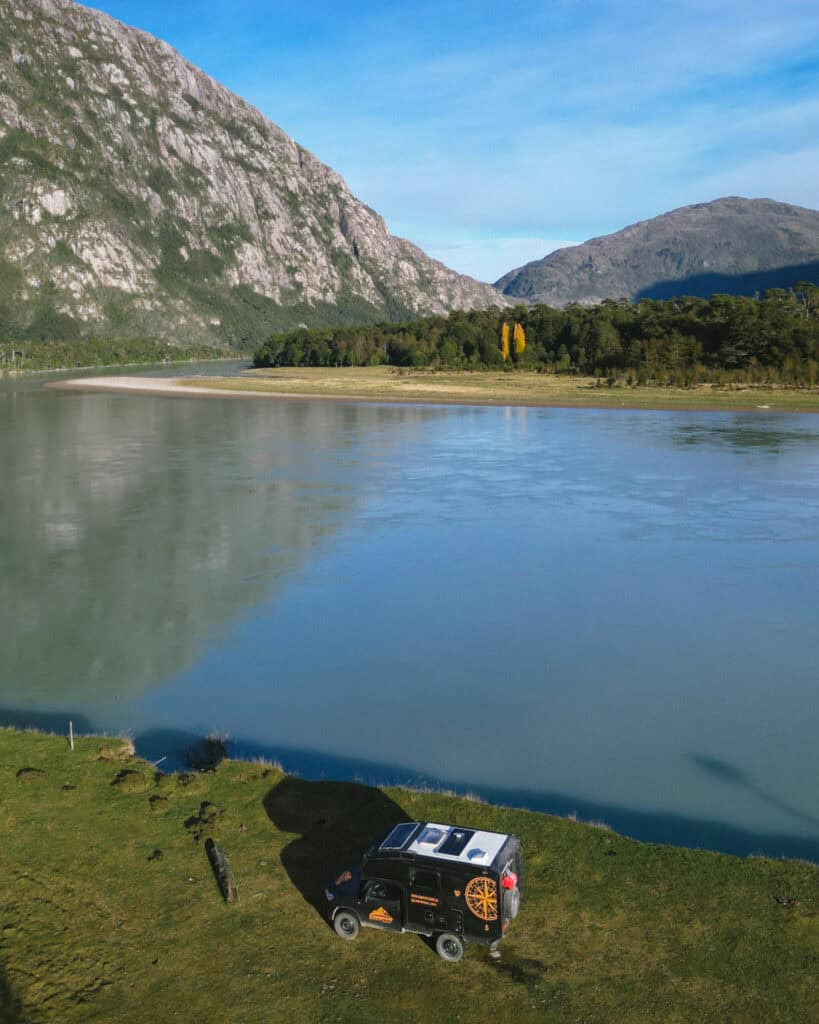
Why camp on the Carretera Austral?
The Carretera Austral (aka Ruta 7 or the Southern Highway) is a 1,240 km (770 mi) highway that starts in Puerto Montt in the north and ends at Villa O’Higgins in the south.
The highway passes through the most remote region of Chilean Patagonia, with dozens of national parks, glaciers, forests, rivers, lakes and some of the most untouched nature you’ll find in South America.
There are a handful of small towns along the Carretera Austral, but most are pretty tiny with few amenities. There’s not a lot of accommodation (definitely no fancy resorts!), and not a lot of restaurants or cafes.
That is why camping is such an attractive way to explore the Carretera Austral.
You can completely immerse yourself in the pristine nature, and not worry about sifting through the (limited) accommodation options that usually confine you to the towns.
Wild camping is legal in many places in Chile, meaning you can pull up your car or pitch a tent in some very scenic spots without paying a cent. There are also paid campgrounds all along the carretera, both in and out of the towns, if you need more amenities.
Camping really is the best way to experience the Carretera Austral. Sleeping to the sound of flowing rivers, waking up to the sun rising over the mountains and escaping civilisation in one of the most scenic places we have ever visited!

PLANNING YOUR CARRETERA AUSTRAL ROAD TRIP CAN BE CONFUSING… I KNOW, I’VE BEEN THERE!
I spent months planning our Carretera Austral road trip – jumping between tabs, scribbling notes, and trying to remember ferry times. It’s a confusing region, and it’s easy to get it wrong!
That’s why I created the Carretera Austral Road Trip Handbook: all the info you need in one beautifully designed guide, available offline while you’re on the highway. Pair it with our Custom Google Map (500+ pins!), and you’ll have a clear, stress-free plan for the road trip of a lifetime – before you leave and while you’re on the highway.
Camping options on the Carretera Austral
There are lots of different ways you can camp on the Carretera Austral, and the factors you need to consider (like water, bathrooms, electricity, etc.) will differ depending on your setup.
Here are the most common ways you can go camping on the Carretera Austral:
- 🏕️ Tent camping: whether you’re driving a car, riding a bike or using a mix of public transport and hitchhiking to travel the highway, if you’re planning to camp with a tent, you will most likely require more amenities. If you didn’t bring a tent with you to Chile, you can usually buy gear like this secondhand on Facebook Marketplace from other travellers, or in department stores like Sodimac in the bigger cities. You can technically pitch a tent and free camp wherever you like, which might be fine for a night or two, but without any of your own amenities (toilet, shower, water, kitchen, etc.), you’ll need to stay in paid campgrounds more frequently.
- 🚐 Van: it’s common to rent a camper van to travel Patagonia. These vans are usually fitted out with a bed and a kitchen, but generally don’t include amenities like water tanks, bathrooms or even battery systems, depending on the vehicle. You will most likely be able to free camp a bit longer than those in a tent, but you’ll still need to use paid campgrounds often when it’s time for a shower or to charge up your devices.
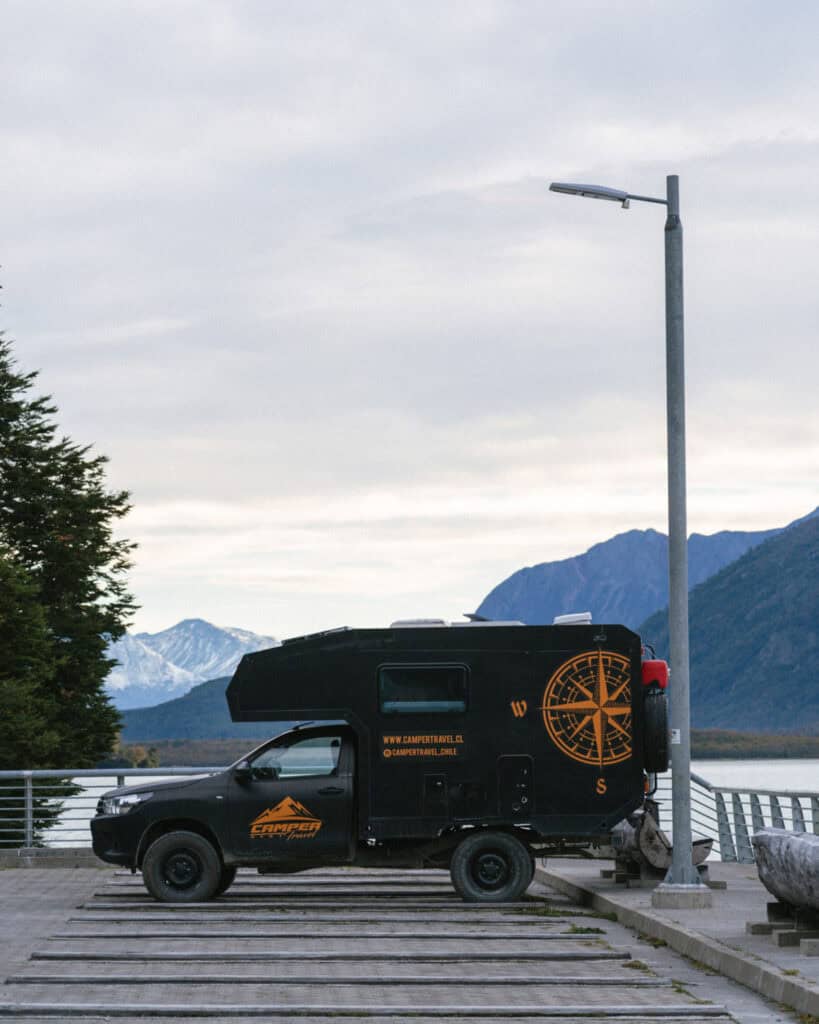
- 🛻 Motor home: I’m using this term to collectively include all kinds of recreational vehicles that are fully equipped for self-contained, off-grid camping. Whether you’ve driven your own vehicle to Chile (a common stop on the Alaska-Ushuaia Panamerican route) or rented a vehicle in Chile specifically to travel the Carretera Austral like we did with Camper Travel Chile. With a setup like this, you can free camp most of the time, having everything you need inside your vehicle (bathroom, kitchen, battery system, water tanks). While this is the easiest and most comfortable camping option, there are a lot more things to consider with a setup like this, like where to find water to fill your tanks, emptying black water and restocking on gas.


How to find spots to camp
Finding a spot to park up or pitch your tent is very easy on the Carretera Austral, there are many!
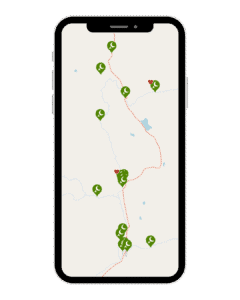
The app iOverlander is the best place to start, featuring a visual map with camp spots that have been reviewed by other travellers, often with photos and general information about the amenities available at the site.
📱 Make sure you download this app and also download the country of Chile for offline use before you start your trip, it will be your BIBLE! You can download one country offline on the free version of the app
Wild v paid campgrounds
There are two main types of camping in Chile:
- 🏕️ Wild camping or free camping, where you camp in nature for free
- 💰 Paid campgrounds, where you stay at a formal site with amenities
WILD CAMPING
‘Wild camping’ or ‘free camping’ is legal in Chile. This means you can technically camp in most public places for free.
You need to make sure there are no signs prohibiting camping or overnight stays, and that (to the best of your knowledge) you are not on private property, i.e. there are no gates or fences that you’ve crossed.
Wild camping in Chile is exactly as the name suggests – wild. You won’t have any amenities or facilities, you are sleeping in nature. For the most part, this means no toilets, no showers, no electricity, no access to water and no shelter. It’s just you and nature.
If you’ve got a fully equipped vehicle with all your own amenities, like we did from Camper Travel Chile, then this isn’t a problem! You get free accommodation in a stunning location, without paying a cent.
The only time we paid for accommodation on our four-week Carretera Austral road trip was when we stayed inside Parque Nacional Patagonia, otherwise, it was entirely FREE!
If you’re camping in a tent or in a van without so many amenities, wild camping can be at times uncomfortable and unhygienic (read: no toilets, no showers, no electricity).
But what supersedes all these feelings is being totally immersed in some of the most pristine nature in the world. Camping alongside a crystal clear river, watching the stars at night without any light pollution, and waking up to the birds. Most of the time, you’ll be the only one around. The fact that you don’t have any of those basic comforts makes it even more special.
Although legally you can pretty much pull up anywhere and camp, we would still recommend using iOverlander to find verified and safe places to park. It’s not always easy to find public, open places that are viable for you to camp, but iOverlander does the work for you.
You can filter by type of campground if you’re looking specifically for free and wild spots. It’s comforting to read recent reviews and ensure other campers have had positive experiences.
Although rare, sometimes reviews will alert you to issues around theft, or unsavoury characters known to be hanging around or drinking in the area, and you can steer clear. This is rare on the Carretera Austral, but it is more common in the bigger, more built-up areas around Puerto Montt.
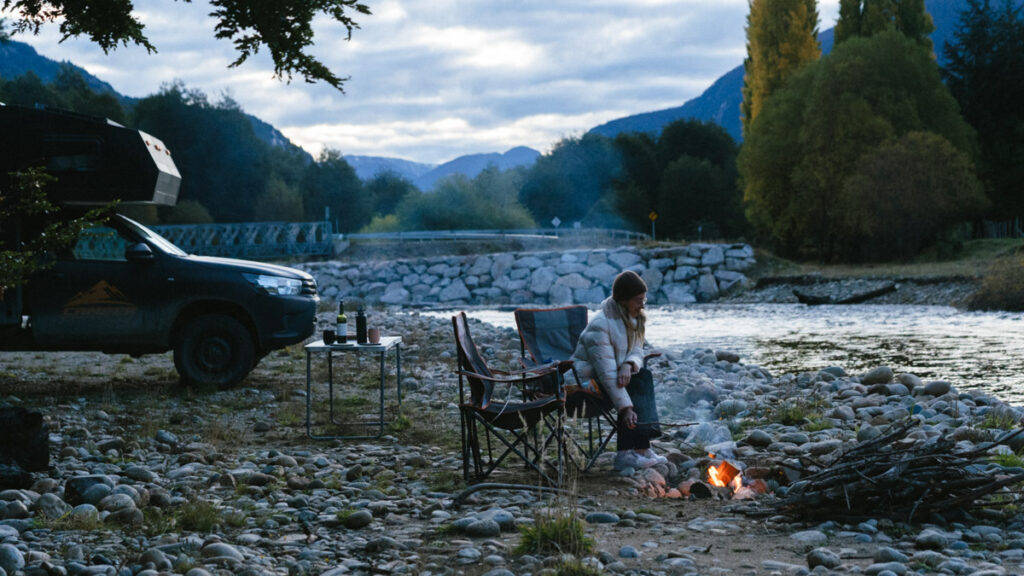
PAID CAMPING
There are dozens of established campgrounds along the Carretera Austral where you can pay to set up your tent or park your vehicle.
There are always campgrounds in the main towns, but there are also plenty of options spread in the beautiful in-between areas that offer a more natural setting.
Even if you aren’t self-contained, you can still enjoy the ‘wild camping’ feel at some of these paid spots, with locations right along rivers or next to forests.
These sites generally offer more amenities, with toilets, showers, lights and electricity, Wi-Fi if you’re lucky, communal kitchen facilities and sheltered areas.
The quality of these campsites varies a lot, and if you need a particular amenity (e.g electricity at your site or a washing machine), you should specifically check in advance and never assume!
The majority of campgrounds are privately owned, but many national parks along the carretera also offer camping for a fee. These are great places to stay as you’re most likely visiting the park anyway, so you will be right at the trailhead for hikes.
Paid campgrounds generally charge around 5,000 – 10,000 CLP ($5 – 10 USD) and they charge per person, not per site. It’s actually not that cheap, considering the amenities are usually basic, but when you need a shower, you need a shower!
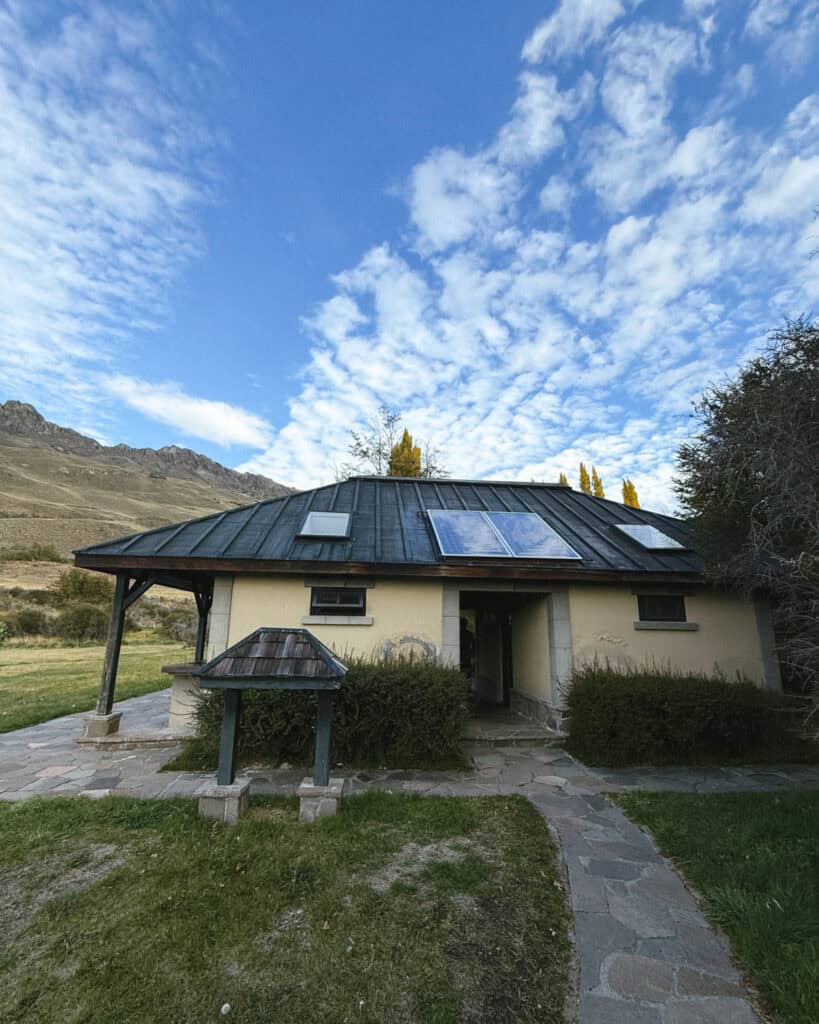
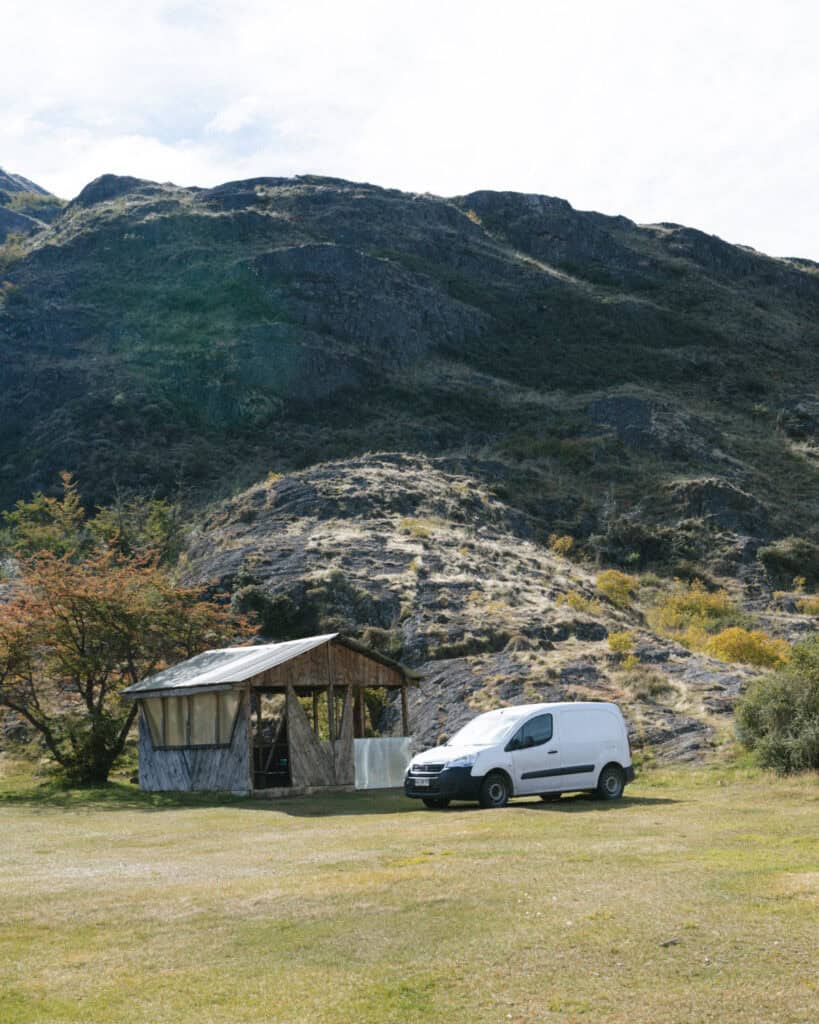
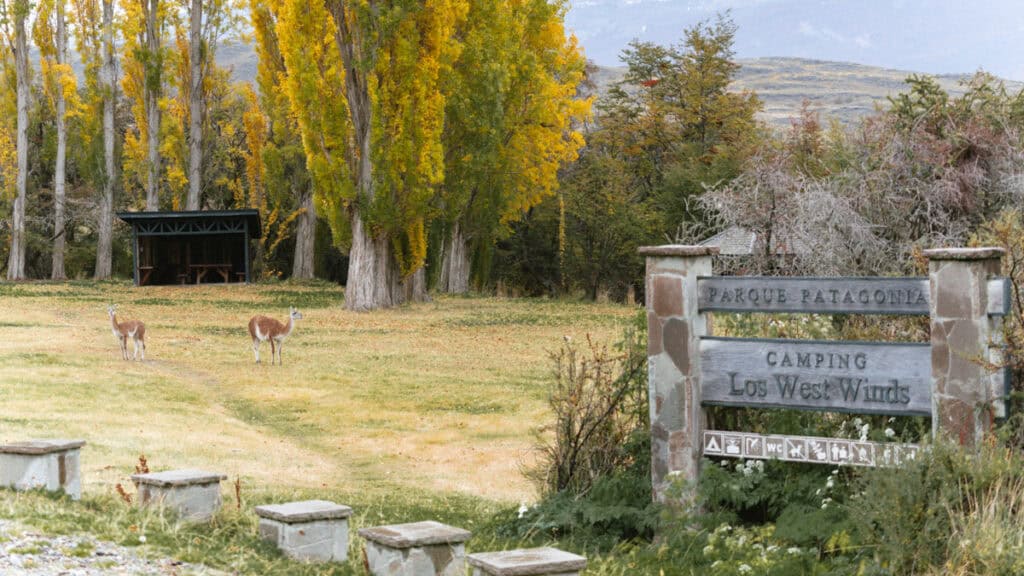
Camping basics on the Carretera Austral
Let’s face it, no matter where you are camping, it can be tedious to do even the most basic of tasks. Unless you own or have rented a motorhome vehicle like we did with everything on board, your daily tasks like making a cup of coffee, having a shower and charging your phone can become complex problems to solve!
When you don’t have access to the basic amenities most of us are used to in modern life, it can be frustrating and uncomfortable. With some careful planning and consideration, you can overcome or work around most of these issues and try and make your camping experience on the Carretera Austral as comfortable as possible.
Here’s how we navigated the age-old camping issues.
Finding water
Water is a hot commodity when camping. There are a couple of different things you need water for, and how to find it will differ accordingly.
Again, iOverlander is going to be your best friend here, and they have a specific filter for water points.
DRINKING AND COOKING WATER
The first thing you need water for is drinking and cooking. No matter how you’re camping (tent, van, camper), you’ll need access to water for these reasons.
Most places in Chile have clean drinking water, which makes things easier. Every town we visited on the Carretera Austral had clean drinking water from the tap inside houses. Random taps you find at petrol stations or outside buildings may NOT be potable though, so always ask.
If you’re staying at paid campgrounds, they will have some kind of potable water source. If you’re staying exclusively in paid campgrounds, you don’t necessarily need to store or carry water, as there will always be water available.
If you’re planning to wild camp but don’t have a motor home, you’ll need some kind of vessel to store water, as there is generally no access to any (potable) taps outside of towns.
You can buy 6-litre water bottles very cheaply from the supermarkets all along the carretera (< 2,500 CLP) to refill. In desperate times, if you can’t find a potable tap, you can always buy another full bottle, although please try and keep the plastic waste to a minimum where possible.
One of the best things about camping on the Carretera Austral, and Patagonia more broadly, is that there are also many clean, natural sources of water. Driving along the highway, you will pass dozens of waterfalls with crystal clear water that is safe for drinking. You can fill up your bottles from flowing streams, too.
Even though we had a water tank inside our camper, we didn’t use that water for drinking or cooking. It restricts where you can fill your tank, as it doesn’t really matter if the water you use for showering or washing dishes is not potable. So, we bought 2 x 6-litre bottles to store drinking water.
Whenever we could verify a tap was potable, we would fill the bottles, as well as our tanks. Or if we were staying alongside a river or waterfall, we would fill the bottles.

WATER FOR TANKS
If you’re travelling in a motorhome that has water tanks on board, you’ll need to work out where to fill your tanks.
The most common place to do this is at COPEC petrol stations, which are scattered all along the Carretera Austral. There are generally water points marked on iOverlander if they allow travellers to fill up here.
You’ll need your own hose (the longer the better) and ideally a variety of tap fittings, as some of the taps had strange attachments that we couldn’t use.
We would always try and coordinate to fill up our fuel at the same time, so we could kindly ask the attendant if we could use the hose after we’d paid for our fuel and given them a little tip.
We had no issues filling the water tank in our camper in the southern part of the highway (Villa O’Higgins – Coyhaique). The staff always said yes and kindly pointed us towards the tap.
By the time we reached Puyuhuapi and headed north, getting water became more of a problem. We were rejected at many COPECs, including a very unpleasant encounter with a guy at the Chaiten station who very rudely advised us we were not allowed to fill up, and that they only let travellers use the tap in the summer months.
We would never want to put local communities at risk of water shortage, but the northern part of the highway is one of the wettest places in all of Chile, with 3,000 mm+ of rain each year, so we were a little confused!
Another good option for filling tanks is at the dump points. They generally also have potable hoses there. Again, they should be marked on iOverlander.
If all else fails, you can door knock and offer to pay locals or pay to stay at a campground where there are taps. Even then, sometimes the owners request an additional payment if you’re going to fill your tank, so beware.

Electricity
Whether you need electricity or already have it totally depends on the camping set-up you have.
If you’re travelling the Carretera Austral in your own or a rented motor home-style vehicle with a dual battery system and solar panels, this isn’t really something you need to consider.
However, it can be very cloudy and rainy in this part of Chile, so there may be times when your battery runs low if you’re not driving every single day. In that case, you’ll need to book into a paid campground, where they have outlets to plug your vehicle into.
If you’re not in a fully-equipped motorhome and you’re tent camping or in a more basic vehicle without a battery system, finding electricity is a much more important factor when camping on the Carretera Austral.
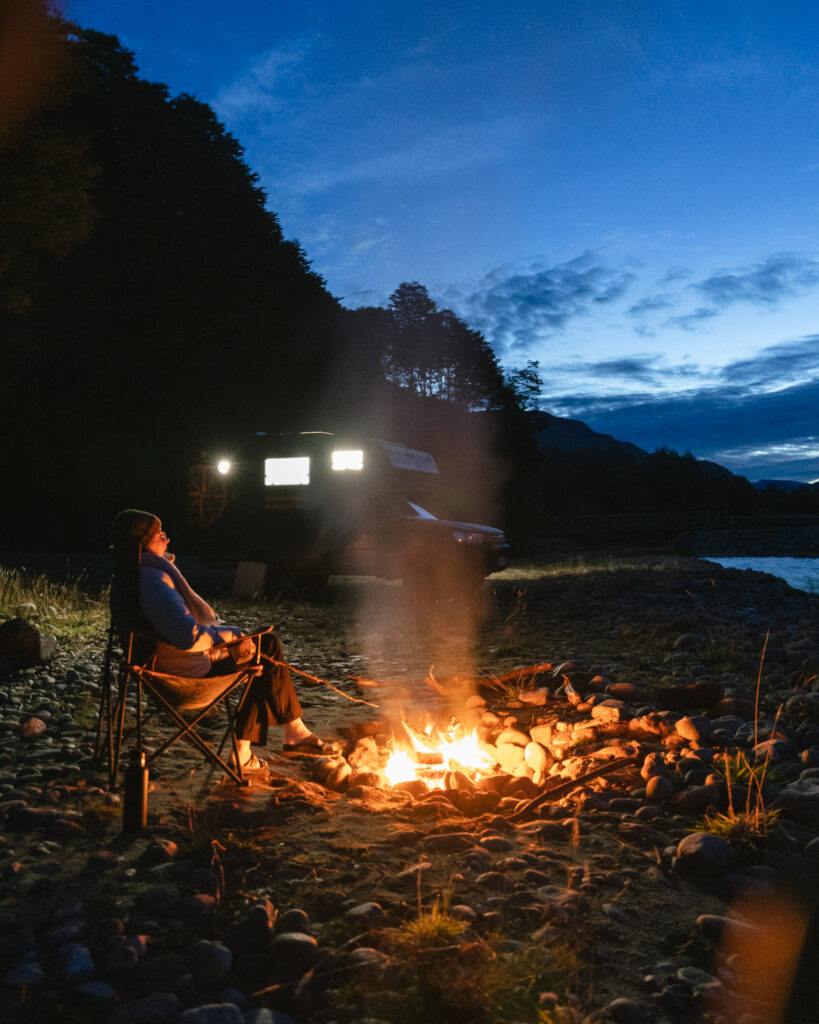
Light for nighttime and charging electronic devices are the main things to consider when it comes to electricity. Neither of which you’ll find wild camping!
In the summer months, the sun doesn’t set until 8, 9 or even 10 pm at night, but by the time autumn rolls around, the sun sets before 7 pm, so sitting in a dark tent for the evening isn’t too fun.
Paid campgrounds have lit areas in the evening as well as outlets you can use to charge your devices.
Regardless, you should travel with a headtorch, a battery/USB lantern if you’ve got room to carry one, and a power bank.
Toilets
Not the nicest topic, but something you have to think about when camping!
If you’re in a motorhome with a toilet on board, that takes care of the problem temporarily, but you will have a black water tank to deal with later (more on that below).
If you’re staying at paid campgrounds, you’ll definitely have access to a toilet, which is the easiest option.
If you want to wild camp, you’ll be saving money, but sacrificing guaranteed access to the loo!
If you’re a guy, you’ve got number 1 sorted pretty easily. Girls, number 1 isn’t so bad either, and a cheeky squat behind a tree does the trick. If you think you’ll use it often, a SheWee is an amazing invention and makes it a lot easier! ALWAYS take your toilet paper with you to dispose of as rubbish, do not leave it in the wild.
Number 2 is a little more complicated… Given that the best wild camping spots on the Carretera Austral are very remote and not really near any towns or restaurants, there aren’t a lot of options for toilets.
Preparation is key here, and you have to plan your business a little more than usual. If you’re eating out at all or doing any activities during the day, be sure to take advantage of the toilet when you have it. Gas stations and big supermarkets usually have toilets available for free or a small fee. Just be sure to scout out your options before setting up for the night. Try to arrive at camp relieved if you can!
Unfortunately, iOverlander doesn’t have a toilet filter, which I think would be really helpful, but you can search on Google for ‘toilets’ and sometimes things will pop up.
If all else fails, into the bushes! If you do need to do your biz in the wild, be sure to follow some simple rules to be courteous to other people and protect the environment.
Head as far away from populated areas as possible, finding some natural privacy in the meantime, and don’t go anywhere near a water source. Dig a hole, and be sure to cover it up when you’re finished. Bring toilet paper and/or baby wipes with you, but do not leave them in the wild. They are rubbish that needs to be disposed of correctly.

Black water dump points
If you’re travelling in a motorhome with a toilet on board, you’ll have to deal with emptying your black water tank.
There are dump points at various places along the Carretera Austral, and most towns have at least one point where you can dump your black waste.
The dump point filter on iOverlander is the best way to find these places.
The majority of dump points along the highway are provided by an organisation called Aguas Patagonia. The service is free, but they do require you to register in advance online via their website. You’ll usually find the instructions in the relevant listing on iOverlander, which other travellers have shared, but if in doubt, their website is a good resource.
We were quite confused about the whole process of emptying the black water in our Camper Travel Chile camper. In Australia, we use cassettes in our chemical toilets, which you remove from the toilet and tip directly into the dump point. In Chile, the vehicles are more likely to have an actual tank for the black water, which you empty into the dump point via a hose.
Buying chemicals for your chemical toilet isn’t necessarily easy either, in a place as remote as the Carretera Austral.
We couldn’t find the usual Thetford brand chemicals in any stores (only to purchase online), but we ended up buying this product, which is available in Sodimac stores. These are located in Puerto Montt, Coyhaique and further south in Puerto Natales and Punta Arenas if you’re travelling northbound.
Showers
Less gross, but believe me, just as important.
Luckily the weather in Chile is generally quite mild, even in the summer, so you’re not going to be overly sweaty and smelly if you don’t shower every day. Still, if you’re taking advantage of all the amazing hiking trails on the Carretera Austral, you’re going to need a shower every now and then!
If you’re lucky enough to have a motorhome with a shower on board like we did, you’re sorted. But you do need to constantly stay across your water levels and where to fill your tanks, as above.
If you don’t have a shower in your vehicle, you can stay in paid campgrounds where you’ll always have access to a shower. Easy.
They SHOULD be hot, given Chile is a cold place most places do have water heaters, but as for whether this works, it depends. If you’re desperate for a hot shower, read the reviews on iOverlander before you book in, or you might be sorely disappointed.
If you’re wild camping, showering/cleaning is a bit trickier.
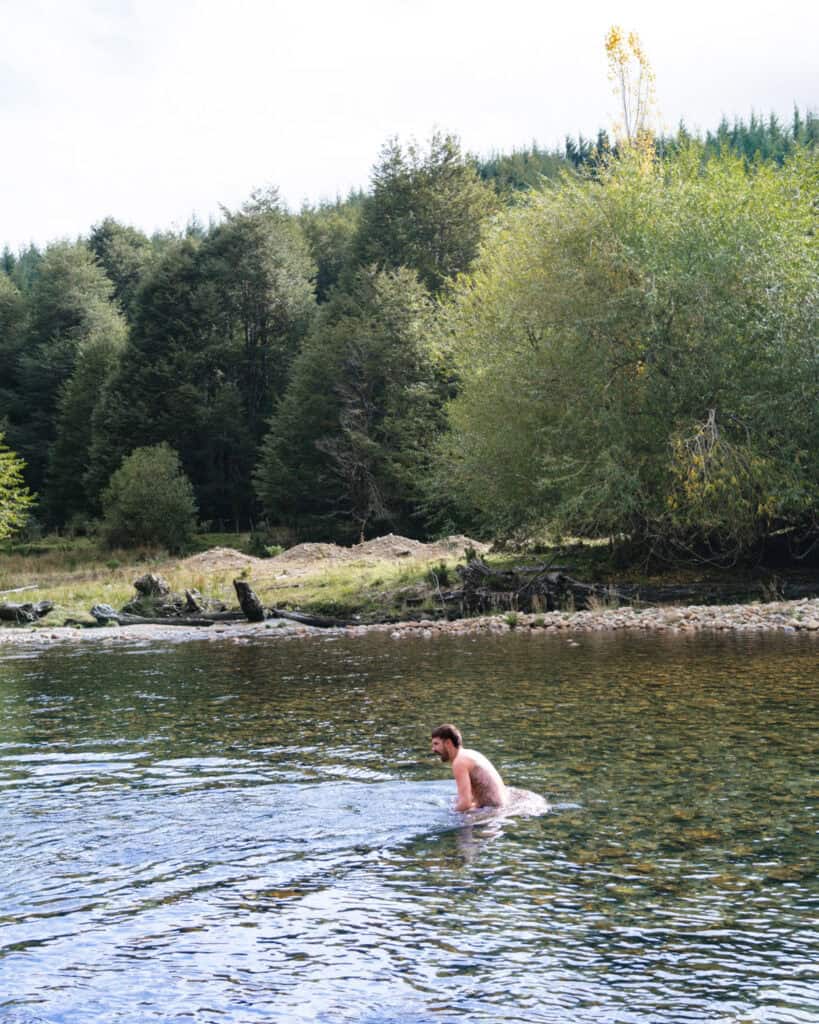
If you’re travelling the Carretera Austral in the summer months, there are so many beautiful rivers and lakes that are perfect for a swim, which is a great way to rinse off. Beach destinations have the problem of salt water, which doesn’t really clean you, but most of the highway has plenty of fresh water sources.
The water will be cold no matter what time of the year you visit, but in the warmer months it’s easier to gee yourself up to get in! It wasn’t such an attractive option for us in autumn, when it was single digits in the morning, although Brayden did go in for a cold dip a few times.
Otherwise, buy a pack of baby wipes and a face washer/flannel and do it the old-fashioned way.
To manage your personal hygiene and not end up dirty and smelly, we would recommend switching between wild and paid camping if you’re not in a motorhome with a shower.
Or even factor in a couple of nights of accommodation in the middle of your trip to have a proper clean-up and refresh. Even with a shower in our camper, we still spent 2 nights in accommodation in Coyhaique right in the middle of our road trip to properly freshen up, have a LONG shower, wash hair, etc.
Cooking and gas
Camping generally = cooking, and in a place as remote as the Carretera Austral, you should plan to be cooking a LOT!
One, because there aren’t that many restaurants around outside of the main towns, and two, they’re usually really expensive and not of the best quality.
Unless you’re building fires each night to cook over the flames (which isn’t a bad idea sometimes, but generally not feasible for your entire trip), you’ll need some kind of gas for your stove.
If you’re in a motorhome kind of vehicle, like our camper from Camper Travel Chile, you’ll probably have a gas bottle. We had one 5 kg bottle connected to the gas line, plus one spare 5 kg bottle to switch out.
Most COPEC stations along the Carretera Austral had gas bottles you could swap out. Alternatively, if you search for distribuidora de gas on Google Maps, the larger towns should have one somewhere.
If you’ve got the capacity to carry a spare bottle, I think that’s ideal. Although you’ll always find somewhere to change it, I wouldn’t want to have to rush through the remote places and change plans to get to a town.
It’s easier to stock up in the bigger cities like Puerto Montt, Coyhaique, Puerto Natales or Punta Arenas than run the risk of not finding it when you need it along the highway.
If you’ve got a more basic camping set-up, you should bring or buy a camping stove. These need butane gas canisters.
I would highly recommend stocking up on multiple canisters in the bigger cities before you start your road trip, as we didn’t notice these types of gas canisters anywhere along the Carretera Austral.
Sodimac should have them, which means you might be able to re-stock midway through the highway in Coyhaique, but I’d come with a couple of spares to be safe.

Groceries and supplies
To cook your own meals, you need ingredients to cook with.
The best and cheapest place to stock up on groceries is in the bigger cities on either side of the Carretera Austral, and in Coyhaique.
In Chile, the biggest and most affordable supermarkets are Unimarc and Lider. Both of these chains have stores in Puerto Montt, Puerto Natales and Punta Arenas.
Once you’re on the Carretera Austral, there is only Unimarc, and they are only in Coyhaique and neighbouring Puerto Aysen.
Every town has small supermarkets and minimarkets, and you can buy basic ingredients everywhere you go. It’s not that there is no food, it’s just more expensive given how remote it is, and the variety is much more limited.
In each of my Carretera Austral town guides, and in my Carretera Austral map I’ve mentioned some specific supermarkets that we found to be well-stocked.
We did a huge shop in Puerto Natales before we started the Carretera Austral (via the TABSA Ferry to Puerto Yungay). We planned a couple of weeks’ worth of meals that mostly required dry ingredients and would give us multiple dinners or lunches from each. We bought all the dry ingredients from Lider and stocked up a cupboard in our camper.
Then, as we were ready to cook each meal, we bought any fresh ingredients we needed in the towns along the way. We were easily able to find things like tomatoes, potatoes, bananas, apples, eggs, fresh dairy products, bread, etc., in most towns on the Carretera Austral.
We probably could have also bought all the dry ingredients as well, but at a much higher cost. It also probably would have required scouring multiple stores to find what we needed, instead of just one big, easy shop at a large supermarket with lower prices.
My advice is to stock up on all your dry food essentials (coffee, tea bags, spreads, oats, spices, dry ingredients for dinners, wine, etc.) before you start the Carretera Austral and again in Coyhaique, which is about the halfway point. Then you can just grab fresh ingredients and smaller items as you go.


Weather on the Carretera Austral
If you’re a camper, you know the weather can make or break your camping experience.
The best time to travel the Carretera Austral is the warmer months from October – April. In winter (May/June – August/September), it snows in many places along the highway and driving and camping are pretty much off the cards.
Although you should expect wild weather at any time of the year, with rain, wind, snow and sun always possible. This is Patagonia, after all!
The Chilean side of Patagonia is typically wetter than the Argentinian side, and nowhere is this more true than the Carretera Austral. The northern part of the highway is one of the wettest places in Chile, with some towns like Hornopiren receiving over 3,000 mm of rain each year.
We had a few days with 40 – 70 mm of rain, which basically knocked out the ability to do anything. You need to think about what your wet weather plan will be, and I think factor in extra days to your trip in case of a wet day timetable. You need a few extra days up your sleeve to be able to shift plans.
No matter what time of year you visit, you need to be prepared for rain, wind, cold temperatures and blazing sun. Your camping set-up needs to be adaptable.
If you’re in a motorhome, you’re much more protected from the elements, and we were very happy to have a proper area inside to shelter from the rain. We also had a diesel heater for the cold mornings, which was very luxurious!
If you’re in a tent, you’re obviously much more exposed to the weather. If there is a lot of rain forecast, I think it’s worth checking into a paid campground as they often have sheltered areas for tents, so you’re not getting totally soaked.
No matter what set-up you’ve got, ALWAYS go to bed assuming it is going to rain, so you don’t get all your stuff wet. It can be bright and sunny one minute, and cloudy and rainy the next.
The wind can also be incredibly strong, especially during the summer months, so be conscious of where you set up camp around big trees. It’s always best to set up west-east as this is the direction the wind usually blows from, so it won’t be rattling you side-to-side.

Safety when camping on the Carretera Austral
Chile is a generally safe place to travel and is considered one of the safest countries in South America. This is even more true in Patagonia, which is an extremely safe region on both sides of the border.
We felt entirely safe everywhere we went on the Carretera Austral. People = crime, and when there are so few people, there’s not that much crime!
The only places we read any negative reviews on iOverlander were around the bigger cities of Coyhaique and Puerto Montt. Nothing major, just usual city stuff with a few campsites to avoid where locals hang out drinking on the weekends.
We spent days wild camping completely alone and never had any issues or concerns. Everyone in the towns we visited was friendly and welcoming, but honestly, entirely uninterested in us.
Of course, you should always take precautions, like anywhere in the world. Don’t leave valuables on display in your vehicle or around your campsite, always lock your doors and don’t leave things outside your car or tent at night.
The most likely scenario is that a dog will steal your shoes (a true review I read on iOverlander!), but it doesn’t cost you anything to be careful.
The other main factor to be aware of is the weather and nature, and being very careful where you set up camp. The climate in Patagonia is wild, with mountains, glaciers, rivers and winds to watch out for.
For example, don’t park right next to a river if it’s raining. We were advised one night by a local that we should move higher as the river was going to rise overnight, thank gosh we listened! While we wouldn’t have been washed away, the water would have been at our doorstep if we had stayed where we were.
Save hours planning your Carretera Austral road trip with our Handbook + Custom Map

Camping on the Carretera Austral: Once in a lifetime experience
Camping on the Carretera Austral was a true once-in-a-lifetime experience.
While we could have just rented a normal car and stayed in accommodations, having the camper from Camper Travel Chile and being able to fully immerse ourselves in the pristine nature was unbeatable.
Yes, camping can be a bit more work and uncomfortable at times, but waking up to some of the views we did, it was all totally worth it!
I didn’t find any tips and tricks like this online before our road trip, so I hope this post comes in handy if you’re planning an adventure camping on the Carretera Austral.
If you have any other questions about camping, let me know in the comments below, and I’ll do my best to help!
I’ve also got a detailed eBook and a custom Google Map of the Carretera Austral that will make your trip planning SO easy (it’s what I wish I had before we visited!).
MORE CARRETERA AUSTRAL POSTS
- The Carretera Austral, Chile: Everything You Need to Know
- Our Epic 3-Week Carretera Austral Road Trip Itinerary
- Carretera Austral Ferries Guide: Mandatory + Optional Routes
- TABSA Ferry: Sailing from Puerto Natales to Puerto Yungay
- Camping on the Carretera Austral, Chile: Our Tips & Tricks
- Camper Travel Chile 4×4 Camper Review: Our Experience



The Comments
Scott Green
Sally
Nice thorough information about camping on the Carretera Austral. My son and on of my best friends are talking me into bike packing the route in February . You mention the good food choices are sparse in sections . We will cook a lot but also would love some suggestions on any special cafes/road side stands etc. that you stumbled upon .
Thanks
Scott
Sally Rodrick
Scott GreenHey Scott, glad your son has talked you into it, it will be an incredible adventure. I’ve got dozens more posts about the towns we visited on the Carretera Austral, each with our favourite foodie recommendations – https://sallysees.com/chile/. Alternatively, you can get my custom Google Map where I’ve pinned EVERYTHING including restaurants, cafes etc. – https://sallysees.kit.com/carretera-austral. Enjoy it. Sally
Monika
If you only have a week, which section should you choose? We’ll probably travel from the south. We want to see Perito Moreno and Fitz Roy first, then go to Puerto Natales, where I’m planning 3-4 days of trekking, and then head towards Santiago. If there’s enough time, we’ll go to the Atacama. We have 20 days for the whole trip. Thank You.
Sally Rodrick
MonikaHi Monika, my first thought is that this sounds very very rushed in just 20 days. Especially if you are driving? We spent 4 weeks travelling the Carretera Austral alone. If you want to approach the highway from the south, the only way is to take the 3 day TABSA ferry from Puerto Natales to Puerto Yungay, which connects to the southern end of the highway. Alternatively, if you don’t already have a car you could fly to Balmaceda (middle of the highway) or Puerto Montt (north of the highway) and rent a car there for a shorter section. Hope that helps! Sally