
Planning a trip to Costa Rica? Start here. Our Costa Rica travel guide is designed to be an overview of the best places to visit, top things to do and important travel logistics to help you start planning the perfect pura vida trip, without the overwhelm.

This article may contain affiliate / compensated links, that may earn me a small commission, at no extra cost to you. For full information, please see our disclaimer here. While all efforts have been taken to ensure the information included in this post is correct and current, travel information such as opening hours, business operations and prices change frequently. If you find anything in this post that is incorrect or outdated please let me know in the comments so I can update it for other readers.
Planning a trip to Costa Rica
I’ve never been anywhere else in the world with nature like Costa Rica. The pura vida mantra is more than just a marketing slogan.
Greens feel greener, the air feels fresher, and the wild, palm-lined beaches stretch for miles.
From wandering through a sea of mist in a magical cloud forest, to swimming in hidden waterfalls and floating in crystal clear Caribbean waters, our time in Costa Rica felt like a true jungle book fairytale.
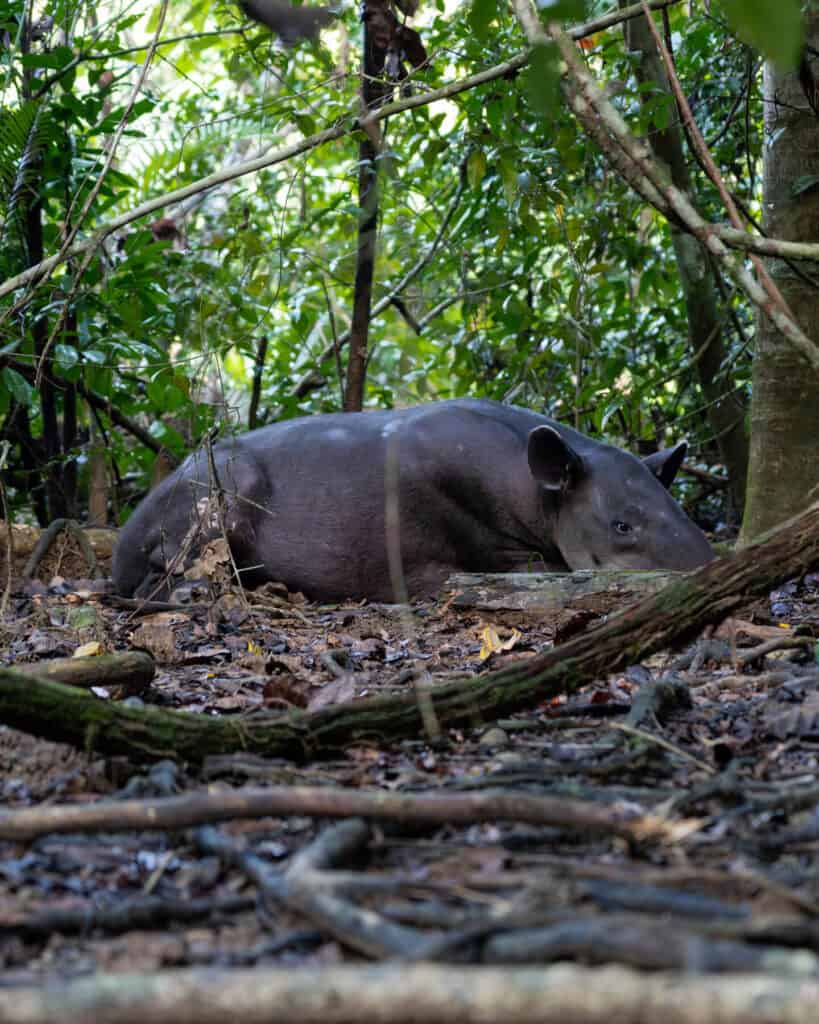
We saw more animals here in a month than we have on all our other trips combined. Coming face to face with (multiple!) tapirs in Corcovado National Park, seeing so many sloths in the wild that we lost count, and accumulating a list longer than my arm of all the animals and birds we spotted was a huge reason we fell totally in love with Costa Rica.
This Central American country has made a name for itself on the global tourist trail and is a popular destination for travellers of all demographics and budgets.
Regardless of your bank balance or the type of trip you’re planning, Costa Rica promises an unforgettable adventure. The hardest part is deciding where, when and how you’re going to visit, and sifting through the overwhelming amount of information.
My Costa Rica travel guide is designed to be your starting point. I’ll give you an overview of the best places to visit and top things to do, the best time to visit, as well as how to get to and around the country – aka the information you need to start thinking about before you make any plans.
I’ll also share handy travel info like entry requirements, money matters and phones and SIM cards so you can start planning the perfect Costa Rica trip.


Why visit Costa Rica?
There are so many reasons why you should visit Costa Rica, no matter what your budget is, whether it’s part of a broader trip through Central America or as your primary destination. If you’re here, you’ve already made the excellent decision to plan a trip to Costa Rica, but in case you need some reminding, here are a few reasons why we fell in love with Costa Rica and think everyone should visit!
- 🦥 Wildlife: I’ve already said it once, and I will say it multiple times – the animals in Costa Rica are insane! It is one of the most biodiverse places on earth, and you can see species here that are hard to find anywhere else in the world. Sloths are the unofficial icon of Costa Rica, and you’ll see plenty of them, but don’t forget about the four species of monkeys, anteaters, armadillos, tapirs, jaguars, toucans, macaws, hummingbirds, turtles, whales and countless other species!
- 🌿 Pristine nature: after travelling all over Central America and spending extensive time in Mexico and South America, I can honestly say that nowhere has protected its nature like Costa Rica. It is clean, green and pristine all over the country. The Ticos embraced environmentalism before it was ‘cool’, and despite periods of deforestation and uncontrolled development, the country has turned it around with extensive reforestation strategies. Costa Ricans have a deep love and respect for nature, unlike anywhere else I’ve experienced in Latin America.
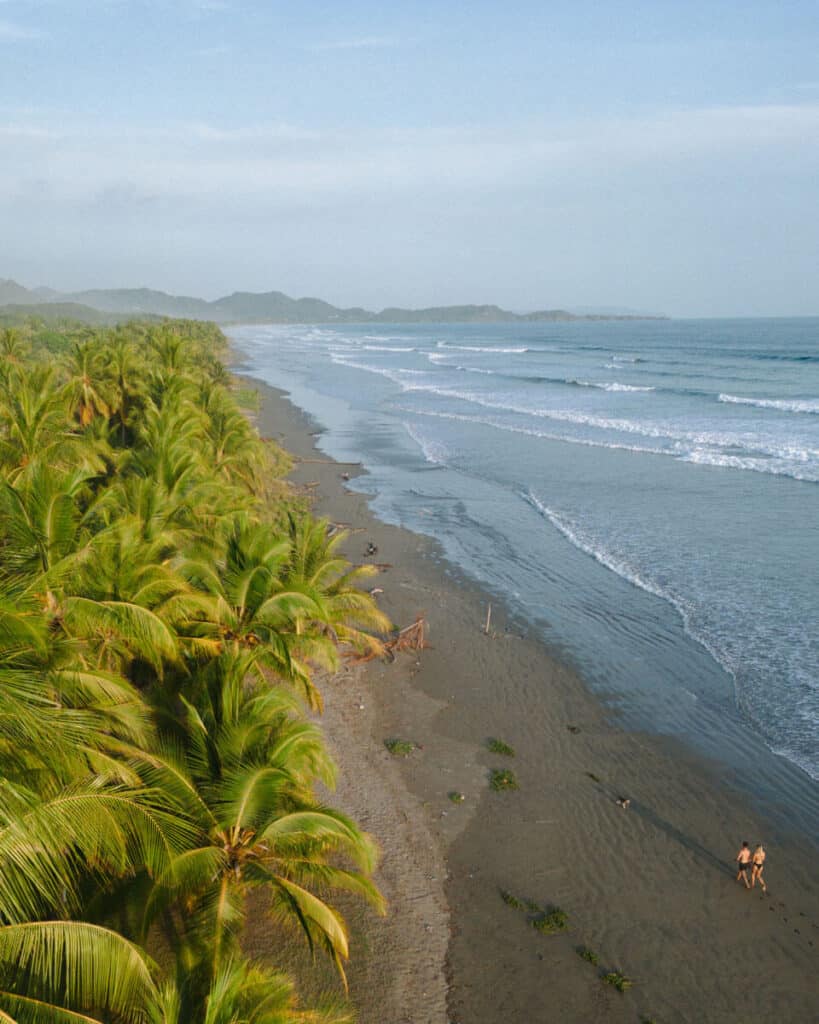
- 🌴 Beaches: Costa Rica has over 1,000 km (621 mi) of Pacific coastline and 200 km (124 mi) of Caribbean coastline – there is a beach for everyone here! From raging surf beaches with pounding waves, to laidback golden sands backed by rainforest or calm Caribbean bays with offshore reef, no matter how you like your beaches, Costa Rica delivers. Another excellent initiative Costa Rica has undertaken to protect its environment is restricting all development directly along its coastline, usually to the line of palm trees. All beaches are public, and this rule is mostly adhered to, unlike in Mexico, where resort corporations take over and privatise beaches.
- 🧗🏼♀️ Adventures galore: if you don’t like lying by the pool on your holidays, Costa Rica will be perfect for you. You can do every kind of activity here, from relaxing kayaking, hiking and swimming to thrilling white water rafting, canyoning and ziplining.
- 😌 Pura vida lifestyle: pura vida (pure life) isn’t just a marketing slogan. Ticos live by this philosophy, to have a relaxed, carefree, positive approach to life, always in tune with nature. Whether it’s a sunrise stroll on a beautiful beach, the juicy sweetness of a roadside pineapple, or simply listening to the palm trees sway, slowing down, appreciating the little things, focusing on your health and connecting with nature is a way of life all over Costa Rica, and you can’t help but absorb it when you’re here.

Is Costa Rica safe to travel?
Costa Rica is one of the safest countries in Latin America, and we felt entirely safe and comfortable everywhere we went during our 5 weeks in the country.
The USA, Australia, Canada and New Zealand all categorise Costa Rica as level 2 – exercise increased caution, with the UK providing similar advice. This is a pretty standard rating, and most countries around the world are level 2 or higher.
There is not a lot of violent crime towards tourists in Costa Rica, but you do need to be very aware of opportunistic theft and pickpocketing. Theft from parked cars (especially outside national parks, tourist sites, etc.) and off beaches is common.
Just be hyperaware of your belongings at all times, and don’t leave anything unattended on the beach while you swim.
Also, try to avoid leaving luggage in the car. This isn’t always possible (we drove around in a camper with ALL of our belongings for 4 weeks), and I don’t think you should be discouraged from stopping places on travel days, as that’s really the whole benefit of renting a car. But always lock doors, ideally keep as many things out of sight as possible (sedans are better or boot covers for hatches), lock your suitcases and don’t leave valuables visible inside the car.
There are areas of San Jose that are sketchy and not nice places to be wandering around. My advice is to avoid the city as much as possible, not because it’s very unsafe, just because it’s not that great, and your time is much better spent in Costa Rica’s beautiful nature!
We spent a couple of nights in the city, transiting between destinations, and we had no issues. We caught the bus multiple times from the city and didn’t feel unsafe. Just don’t wander around the neighbourhoods near the terminals with all your belongings, they’re not that safe. The terminal we visited felt okay inside.
The other major thing to be very careful of in Costa Rica is ocean safety. A lot of Costa Rica’s beaches, even the most famous tourist ones, are not really safe for swimming, especially if you are inexperienced. Dangerous rips and currents can drag you out in an instant.
Tourists drown every year while surfing and/or swimming, and most beaches are unpatrolled. Always respect the ocean and be very aware of your abilities. On the beaches that are patrolled, swim between the flags always.
Language in Costa Rica
As with most countries in Central America, Spanish is the official language in Costa Rica.
Given that Costa Rica is quite a popular international tourist destination, we found English to be more widely spoken here than in neighbouring countries. You can expect people directly in the tourism industry (tour operators, hotels) to speak some English.
However, when we did speak with locals in Spanish, they were so impressed and instantly relaxed and appreciative of our effort, even when our Spanish wasn’t perfect. Just because some people can speak English doesn’t mean you shouldn’t try to speak Spanish.
As a reminder, not everybody will speak English, and you should never expect it. The best parts of Costa Rica are off-the-beaten-track, away from the tourist hot spots. The further away you get, the less English will be spoken. Brush up on your Spanish and have the Google Translate app at the ready!
Best time to visit Costa Rica
Costa Rica has a hot and tropical climate with a wet and dry season, although the climate varies across the country on either coast and at different altitudes.
Given that Costa Rica is so lush and forested, it’s a wetter country overall than some of the others in the region, and rain is not uncommon year-round, especially in heavily jungled areas like the Osa Peninsula and Caribbean Coast.
The dry season (high tourist season) is typically from December to April and the wet season (low tourist season) is from May to November.
The northern Pacific Coast (including the Nicoya Peninsula) tends to follow these seasons more rigidly, and the dry season is usually free of rain, with hot sunny days. The rain starts a little later here, and the wet season is a bit shorter. You’ll notice the forest here is a dry tropical forest, used to long periods without rain.
The southern Pacific Coast, including the Osa Peninsula, is one of the wettest parts of the country, and its wet season might start a little earlier, be a bit more intense and last a little longer. This is a true tropical rainforest!
Destinations sitting at altitude in the Central Highlands, like Monteverde and Bajos del Toro, can be quite cold, especially after any rain. It’s a shock to the system after the heat of the lowlands, so don’t forget to pack a jacket!
The Caribbean Coast also has a more humid tropical climate with a chance of rain year-round. They have a unique wet and dry season compared to the rest of the country. The driest months (and the best time to visit) are February – March and August – September. Their second dry season makes the Caribbean Coast a very attractive destination, when the rest of the country is in the height of the wet season!
Costa Rica is a very popular tourist destination and can become intensely crowded around holidays and peak periods. Skip Christmas, New Year and Semana Santa (Easter) if you can, as these are the busiest periods for international and domestic travel. December – February is peak peak season, so if you can avoid these months, you’ll miss the worst of the chaos.
Given its mature tourism industry, Costa Rica was one of the only countries in Central America where we noticed a dramatic drop in prices from high to low travel season. If you’re looking to save some money, the savings by visiting in the ‘green season’ (aka wet season) are substantial.
I wouldn’t suggest visiting from July – November (unless you’re going to the Caribbean Coast) as the chances of a tropical front coming in and dumping rain on your entire trip are too risky. May/June is a great transition period though, when you can make the most of lower prices, fewer crowds and (hopefully) not too much rain.
🌞 If you’re planning to visit both the Pacific and Caribbean Coasts, I think March is the best time to visit Costa Rica. You’ll maximise your chances of clear, dry weather on both coasts, and skip the worst of the crowds in the height of peak season.

Places to visit in Costa Rica
This country has so many amazing places to visit, the hardest decision when planning a trip to Costa Rica is choosing which ones to include on your itinerary!
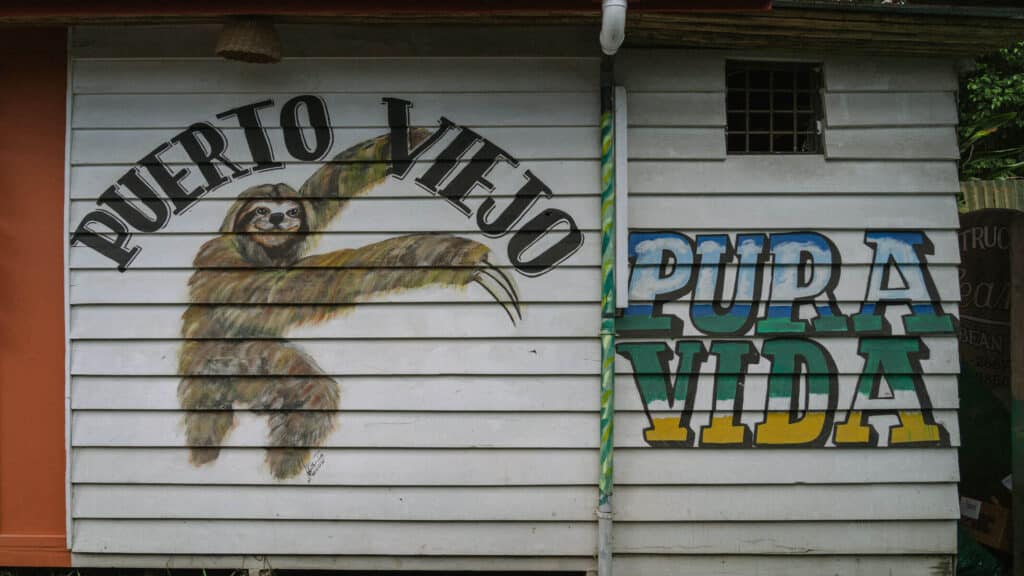
- 🦥 Puerto Viejo and the Caribbean Coast: the majority of Costa Rica’s tourist destinations are concentrated along the Pacific Coast, but it’s the Caribbean Coast that really stole our hearts! Puerto Viejo de Talamanca is the most popular destination here, but a string of small beach towns branches out north and south along the coast. The vibe here is entirely different to the rest of the country, with a strong Afro-Caribbean influence, different cuisine with rich coconut flavours, and more English spoken. The Caribbean beaches are the best in the country (imo), there is wildlife (including sloths!) everywhere and plenty of jungle adventures to be had. Tortuguero on the north Caribbean Coast is the best place in the country to see sea turtles, and if you visit during nesting season (usually July – October), you can witness mumma turtles coming ashore to lay their eggs.

- 💦 Bajos del Toro: not a common fixture on most people’s Costa Rica itineraries, but it absolutely should be! Perfectly situated between San Jose and La Fortuna in the Central Highlands, Bajos del Toro is a waterfall wonderland and one of our favourite places in Costa Rica. Dozens of vibrant blue rivers and waterfalls are concentrated in one lush valley. It’s rarely crowded, so intensely green and often covered in a mystical sea of cloud – everything we imagined Costa Rica to be.

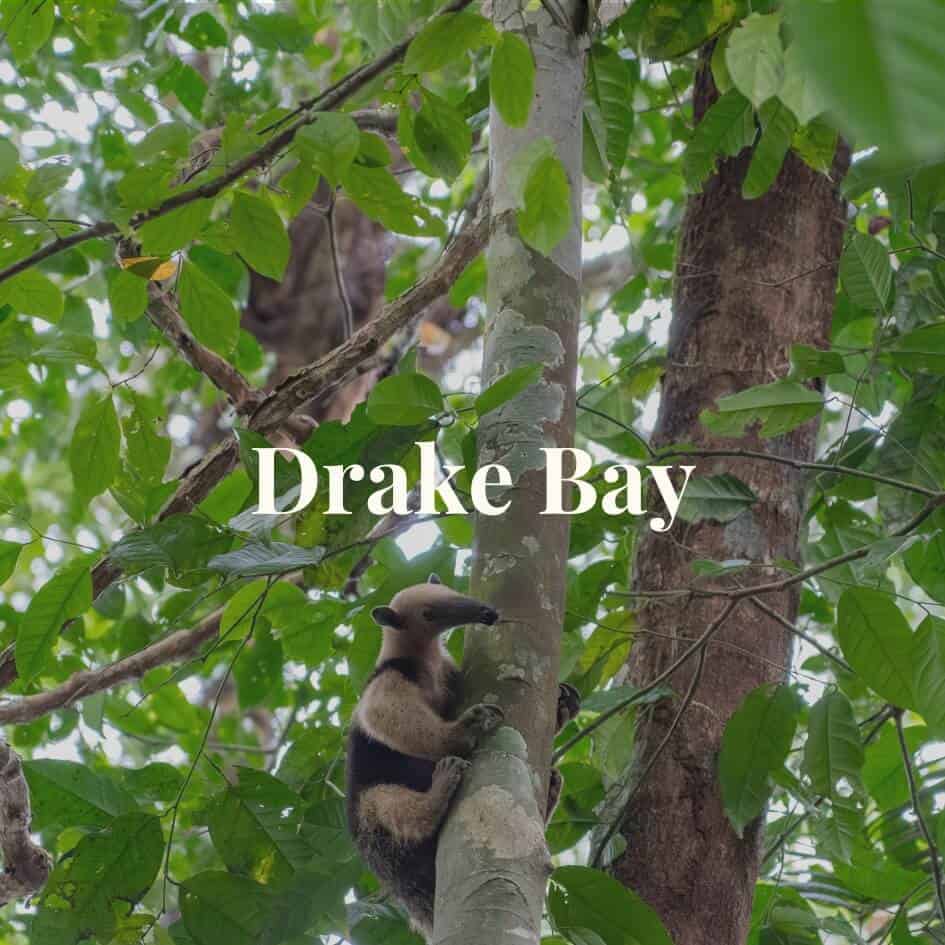
- 🦜 Drake Bay and the Osa Peninsula: if you want to experience the raw, wild side of Costa Rica, you have to go to the Osa Peninsula. Home to the country’s largest national park, Corcovado, which is considered one of the most biodiverse places on the planet, this is where you come if you’re serious about seeing wildlife. Drake Bay on the west side of the peninsula is one of the gateways to the park and hosts some fantastic jungle lodging and beautiful beaches. If you want to explore this region further, Puerto Jimenez is the major hub on the east side, but there are also smaller towns strung along the Golfo Dulce, like Carate and Matapalo.

- 🌋 La Fortuna: Costa Rica’s adventure jungle hub, La Fortuna is a small town sitting in the shadow of the conical Volcan Arenal. Waterfalls, hot springs, jungle hikes, rafting, hanging bridges, ziplining and even zorbing – any outdoor adventure you’re chasing can be done here! It is a popular destination, but attractions and accommodations are spread amongst the jungle, with wildlife running around everywhere, so you still feel immersed in nature despite being in one of the most touristy places in the country. We liked La Fortuna a lot more than we thought we would!

- 🏄🏽 Nicoya Peninsula: if surfing is on your radar in Costa Rica, or you just want to enjoy those typically Tico stretches of golden sands, backed by palm trees, the Nicoya Peninsula is a great spot. A big finger of land on the north Pacific Coast, not all beaches and beach towns are created equal here. This area has some of the most concentrated tourism developments in the country. In the north, destinations like Tamarindo (aka Tamagringo) have rapidly grown into obnoxious resort hubs, while the pseudo-spiritual-surfer-hub of Santa Teresa gets busier by the day. We found our place in Montezuma, on the southeast corner of the peninsula. A quieter, more laidback alternative to Santa Teresa with plenty of hikes, waterfalls and wildlife.

- ☁️ Monteverde and Santa Elena: being enveloped by mist in the cloud forests of Monteverde is a very special experience in Costa Rica. The highland town hosting the cloud forest is actually called Santa Elena, but ‘Monteverde‘ is a generally accepted term to encompass this micro-region. If wandering through the cloud forest isn’t thrilling enough, this is the home of ziplining in Costa Rica.

- 🐒 Manuel Antonio: long been a fan favourite for holidaymakers in Costa Rica, Manuel Antonio is famous for its national park of the same name. It’s the smallest and most popular national park in the country (not the best combo for crowds!), but it is an excellent wildlife watching destination that should not be missed. The beaches here are stunning, and the ‘town’ is stretched out along a road nestled into the jungle perched above the coast, so it doesn’t feel too crowded despite being very popular. If you’re looking for a combo of beach and wildlife that isn’t too hard to reach, Manuel Antonio is the winner.
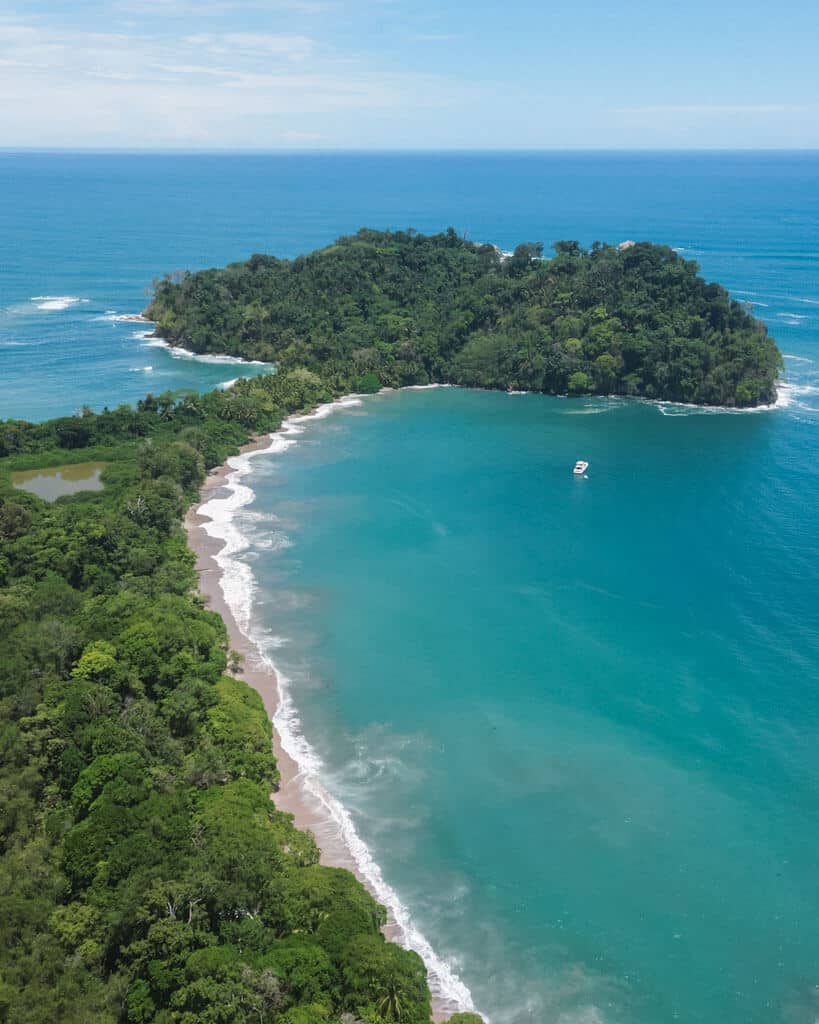
- 🌴 Costa Ballena: the Costa Ballena (Whale Coast) occupies the South Pacific area between Manuel Antonio and the Osa Peninsula. Its most notable towns are Uvita, Dominical and Ojochal, each with its own unique vibe and identity. The area is characterised by long stretches of palm-lined beaches backed by rainforest, full of waterfalls. This is the best place to visit the fairytale Nauyaca Waterfalls, and as you may have guessed by the name, go humpback whale watching!

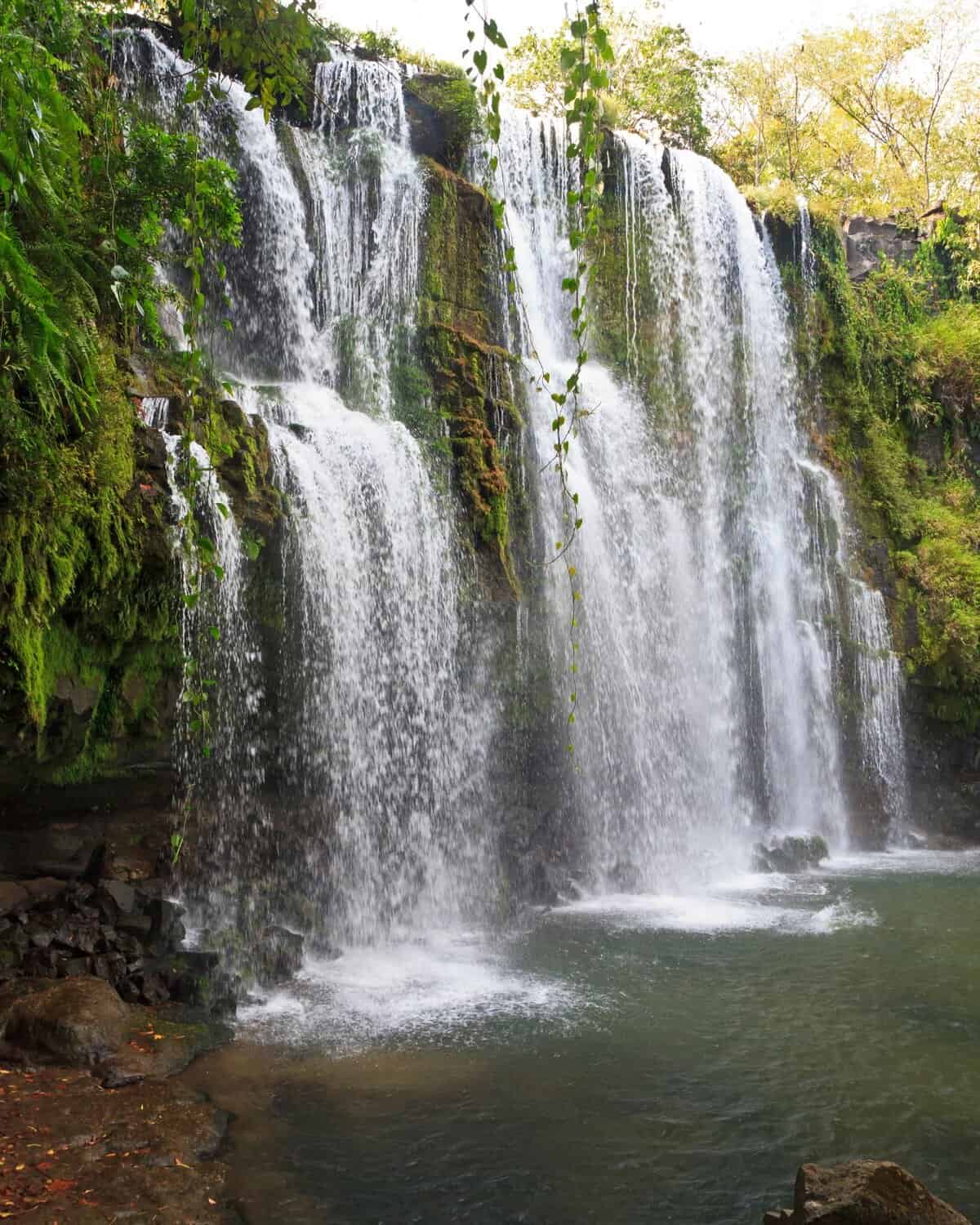
- ♨️ Liberia and the Northwest: Liberia is the capital of the Guanacaste province. Its coastal region falls part of the Nicoya Peninsula, but the inland areas, along with neighbouring Alajuela province, hide some incredible adventures! From the Rincon de la Vieja Volcano and its steamy thermal springs to waterfalls like the Cataratas Llanos del Cortes, this is a great inland companion to beach time on the Nicoya Peninsula. Plus, there’s an international airport in Liberia too.
- 🏙️ San Jose: Costa Rica’s capital San Jose is just about the only ‘city’ in the country and certainly the biggest by far. Unless you’re a city person keen to explore culture, food and history over nature, I wouldn’t really bother spending a lot of time here. If you’ve got a few days up your sleeve, there is some beautiful architecture to explore, and you can organise day tours to nearby volcanoes, coffee plantations and waterfalls. But my recommendation is to rent a car as soon as you land, skip the city, and go and visit all these places independently!

Top things to do in Costa Rica
There are so many amazing things to do in Costa Rica, far too many to include here. I’ve listed many in my specific destination articles, but if you’re wondering what are the absolute top, bucket list experiences that you should plan your trip around, here’s my top 10!
- 🦥 Spend a night inside Corcovado National Park: the wildest, most biodiverse park in the country, just 80 people per night are permitted to sleep at the Sirena Ranger Station, deep inside the jungle. This was the most incredible nature experience we have ever had, and the amount of wildlife we saw in 24 hours was mind-boggling. Read all about our experience in my post here, or book the exact overnight tour we did from Drake Bay.
- 💦 Hike to Catarata Vuelta del Cañon: situated in Bajos del Toro, this waterfall was one of the most epic we’ve ever experienced. The hike was an 11 km (6.8 mi) out-and-back trail with more than a dozen river crossings, but the reward was so sweet. Enjoying Vuelta del Cañon Waterfall in the middle of the rainforest all to ourselves was so special.
- 🌴 Laze on the Caribbean beaches: I’m a Caribbean gal at heart, and I love nothing more than bright turquoise waters, powdery white sand and palm trees. I don’t want to surf or get bowled over by waves, I want to float starfish-style in warm, calm waters, and all the beaches around Puerto Viejo and the Caribe Sur (South Caribbean) delivered! Our favourite was Playa Punta Uva Arrecife. Don’t miss kayaking at Sloth Point while you’re there.


- 🐒 Manuel Antonio National Park: I had my expectations duly managed before visiting this popular park, but it turned out to be one of our favourite experiences in Costa Rica. Wildlife, beaches and jungle hiking? It’s the perfect combo! Manuel Antonio National Park is really worth the hype in my opinion. Go with a guide if you want to maximise your chances of seeing wildlife.
- 🌿 Early mornings at Mistico Hanging Bridges: this was another experience I was worried would be an Insta vs reality moment, but was another highlight of our time in this country. The famous Mistico Hanging Bridges in La Fortuna can be overcrowded and anything but peaceful, but we planned our visit for the first slot in the morning at 6:00 am, and watching the rainforest wake up while we walked amongst the canopy was a very special experience.
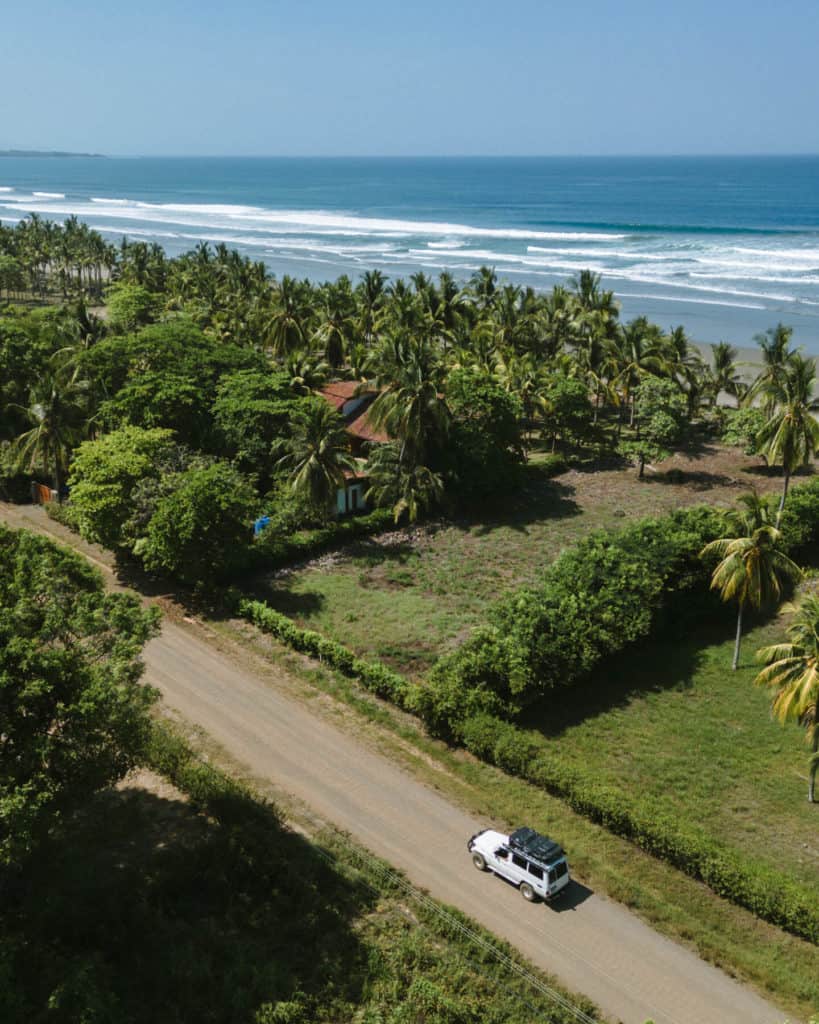
- 🏕️ Camping on empty beaches: many of our favourite Costa Rica moments weren’t specific places, they were the collective experience of renting a 4×4 camper from Nomad America to explore the country on our own terms. Camping on empty stretches of beach, with hundreds of palm trees, fresh coconuts, macaws flying overhead and amazing sunrises was an experience I could only have dreamed of before we arrived. I’d really encourage you to consider seeing Costa Rica in this alternative way, as you can totally immerse yourself in the country’s nature.


- ☁️ Santa Elena Cloud Forest: I’ve never experienced a more mystical, foggy forest than in Monteverde. The one time you actually want it to rain, we were blessed with light drizzle and a huge sea of cloud that covered the forest in mist and moisture. We opted for the Santa Elena Cloud Forest Reserve, instead of the more popular Monteverde Cloud Forest, and we were the only ones on the trails!
- ✨ Swim in Nauyaca Waterfalls: Costa Rica just delivers fairytale after fairytale, and standing at the base of the curtain of water that is Nauyaca Waterfalls was a pinch-me moment. It blew my expectations out of the water. Just make sure you read my guide to understand the two different entrances and various ways to reach the falls (hike, 4×4, horse).
- 🥾 Hike the Drake Bay Trail: a FREE hiking trail passing dozens of empty beaches, through the jungle with wildlife everywhere? Excellent. The Drake Bay Hiking Trail is one of the best free things to do in the country and the perfect warmup for Corcovado. You can spot monkeys and macaws, sloths and snakes and countless other species on this long but relatively easy trail.
- 🏡 Sleep in a treehouse: we spent most of our time in Costa Rica camping in our rooftop tent (kind of like a treehouse?), but we splurged on an epic stay at Sangregado Lodge in La Fortuna. Our little villa was nestled right up in the canopy, with direct views of Volcan Arenal. We spent most mornings and afternoons on our balcony, watching a family of toucans in the tree right in front of us. Walking to and from our room usually involved some kind of interaction with an agouti, peccary or coati.


Visas and immigration to enter Costa Rica
Citizens of many nationalities can enter Costa Rica without a visa for tourism purposes for up to 180 days.
You will most likely be asked for proof of onward travel, proving you will depart Costa Rica within your permitted stay.
If you’re on a short vacay, this isn’t a problem as you will most likely have your return flight booked out of the country. If you’re travelling through Central America long term, your plans might be looser and you’ll most likely be departing Costa Rica via land, not air, and probably don’t have anything booked.
Although I think a flight ticket is preferred, we were able to enter Costa Rica with a shuttle booking out of the country to Panama, plus an international flight out of Panama City about a month later. We had to explain our plans in Spanish, and we were lucky that the agent was nice.
If in doubt, you can purchase a legitimate flight ticket with Onward Ticket. It’s an online service that instantly books you a real flight ticket for just a few bucks and automatically cancels the booking after 48 hours. You don’t have to pay the full amount for the flight, just their service fee (currently $16).
You will definitely be asked to show some kind of evidence that you are departing the country when you enter Costa Rica, it’s up to you if you want to take a chance using a bus or shuttle booking or just present a flight itinerary.
You may also be asked for the address of your first accommodation, so have that prepared, as well as proof of funds to support yourself. If you have recently been in certain South American countries, you may be asked to show evidence of a yellow fever vaccination.
Costa Rica doesn’t charge any entry fees, but there is an $8 USD exit fee if you depart by land. You can pay online in advance via this website and show the QR code you get at the border.
If you’re flying out, you’ll most likely have this exit fee already built into your airline ticket.
Getting to Costa Rica
✈️ BY AIR
Costa Rica has two international airports.
The SJO – Juan Santamaría International Airport near San José, which is the country’s busiest airport, and the LIR – Daniel Oduber Quirós Liberia Guanacaste International Airport in Liberia.
SJO is the more common airport with the most flights, but if you’re travelling primarily around the Guanacaste and Nicoya Peninsula area, it’s also worth checking Liberia too, as there are often great flight deals here, mostly from the USA.
🚌 BY LAND
If you’re already travelling in Central America, you can easily cross the land border into Costa Rica from Panama or Nicaragua.
- 🇵🇦 From Panama: it’s possible to cross from Panama to Costa Rica on the Caribbean Coast or the Pacific Coast.
The Caribbean Coast is probably the most popular crossing, typically from Bocas del Toro to Puerto Viejo via the Guabito-Sixaola border. You can DIY this route with a combination of a boat, taxi and local buses from the islands of Bocas del Toro, but it’s simpler to just book a shuttle that combines your ferry and van.
If you want to cross on the Pacific side, you’ll most likely be coming from somewhere like Boquete in Panama, and heading to anywhere along the South Pacific Coast in Costa Rica (like Drake Bay, Uvita, etc.). Again, you can DIY this with a series of local buses, but it is more straightforward to book a tourist shuttle from Boquete to the border, Paso Canoas, where you can connect with local buses.
- 🇳🇮 From Nicaragua: the most common border crossing from Nicaragua to Costa Rica is Peñas Blancas. Ticabus and Nicabus are long-distance international bus companies that run between Nicaragua and Costa Rica. Their route is Managua, Nicaragua – San Jose, Costa Rica, but you can get on or off at various points along the way, like at Rivas (if you’re coming from Ometepe Island) or La Virgen (for San Juan del Sur and neighbouring beaches).
Alternatively, you can book a point-to-point tourist shuttle from either of these popular destinations in Nicaragua to your first stop in Costa Rica. The most common routes are to Tamarindo and other Guanacaste beach towns, Monteverde or La Fortuna. Browse all Costa Rica shuttle routes on Bookaway.

Getting around Costa Rica
Costa Rica isn’t the easiest country to get around in. It’s not big, but there is a big mountain range in the middle, meaning a neat, circular route isn’t really possible if you’re planning to visit both coasts. There is a lot of backtracking involved in most routes.
- 🚌 Bus: Costa Rica’s bus system isn’t the best in the region, and this is partly because a lot of locals own cars. There are buses to most destinations around the country, and you can very easily and affordably travel by bus. However, a lot of routes go via San Jose, so you end up having to transit via the capital, which is wasted time in a not-so-nice place.
I’ve got more detailed info about bus routes in my specific destination guides, but from San Jose, you can pretty much get a direct bus to most destinations around the country.
The problem with the buses is that a) once you get there, there’s not really a lot of local buses or colectivos within that destination, so you’re relying on tours and taxis, and b) there may not be buses to your next destination, or it will be a convoluted route. This isn’t true everywhere, but it can be tricky to move between certain destinations as the tourist route isn’t necessarily the same as the local bus routes that are designed for residents.
If you want to see the country by bus, it’s very possible, you’ll just need to be more considerate with your route and spend some time in advance researching and mapping a route that doesn’t require constant trips to the capital.
- 🚐 Tourist shuttles: tourist shuttles are the quickest and most convenient way to travel around Costa Rica. They’re usually minivans, and they shuttle tourists directly between popular destinations, with few or no stops in between. They are expensive though, and Costa Rica has some of the priciest shuttles in Central America.
They can be a good substitute for the buses when the route from A to B involves five changes and misaligned times.
Bookaway is the best resource for finding and booking shuttles in Costa Rica.
- 🚗 Rental car: renting a car is by far the best way to get around in Costa Rica! Now you’re aware that the buses exist but aren’t great, and tourist shuttles are really expensive, you should consider renting a car! It is a bigger upfront cost, but I guarantee it will end up saving you money and definitely maximising your time.
With a car, you can see and do things on your travel days as you move between destinations, but you lose this ability with a bus or shuttle. You’re also not tied to taking unnecessary tours purely just for transport, and you can take advantage of all the amazing nature-based accommodations that are inconveniently out of town for those without a car.
A Costa Rica road trip is the best adventure, and I’ve got more tips on renting a car, whether you need a 4×4 and driving in Costa Rica in my guide. Unless you’re after a specific type of recreational vehicle (like a van or 4×4 camper), I recommend using DiscoverCars to rent your car. It simplifies the technicalities of insurance, contracts, etc., and everything is in English.
- ✈️ Flights: there are a handful of airports around Costa Rica, and domestic flights do exist. I just don’t think they’re that necessary or worth the extra cost and carbon emissions. The only route that can be helpful and avoid a lengthy back-track is Drake Bay or Puerto Jimenez on the Osa Peninsula to San Jose. Sansa Air is the most popular airline for domestic flights in Costa Rica.
- 🚐 Tours: unless you’re on a boat, or doing an extreme activity like ziplining, rafting or canyoning, most experiences in Costa Rica don’t actually require a tour. Most tours are really only to provide transport to people who don’t have their own wheels. They are expensive, and in many cases, are for activities that you can easily do independently without a guide. But, if you don’t want to rent a car for whatever reason, you’re bound to find tours in every destination that will get you to the places you want to go without a car! Some of the ‘combo tours’ are good value and will hit a lot of sights in an area in one day. We use Viator to book tours, and I think they have a better range of tours in Costa Rica than GetYourGuide.
- 🚕 Taxi: there is Uber in Costa Rica, but only in bigger destinations like San Jose. Some smaller towns have Uber, but getting a driver is not guaranteed (e.g. La Fortuna). In their place are local taxis, which can be expensive and scammy. Always agree on a price before getting in! In some places, like Puerto Viejo on the Caribbean Coast, taxis will actually be tuk-tuks.

Costa Rica travel routes
You could spend years in Costa Rica and never see it all.
As I mentioned, Costa Rica isn’t the easiest country to plan a nice, tidy linear route. Whether you’re flying in and out of San Jose or travelling through the country from Nicaragua or Panama.
You can’t get from coast to coast without bypassing the city area again, and there’s a big mountain range in the middle, so if you travel one way down the Pacific Coast, you pretty much just have to turn around and come back the same way.
The best thing to remember is to work with the time you have and not overfill your itinerary. A good formula is 1 – 2 inland/jungle destinations and 1 – 2 beach destinations.
I think the hardest part is narrowing down which beach town is right for you, as they all have unique personalities and appeal to different travel styles. I wrote a detailed post comparing the best beach towns in Costa Rica, which might help your decision!
If you want to do a ‘highlights’ road trip of Costa Rica and see the Pacific Coast, Central Highlands and Caribbean Coast, I think you need at least a month. We spent 5 weeks here and it was full on, but incredible, and I think we gave it a really good go.
I’ve got an in-depth Costa Rica road trip itinerary post with more details on my suggested route, but this is my recommended order if you’re flying in and out of San Jose.
1 month Costa Rica road trip itinerary
- 🦥 Puerto Viejo: 5 nights
- 💦 Bajos del Toro: 2 nights
- 🌋 La Fortuna: 4 nights
- ☁️ Monteverde: 3 nights
- 🦋 Montezuma: 4 nights
- 🐒 Manuel Antonio: 3 nights
- 🐋 Uvita: 3 nights
- 🦜 Drake Bay & Corcovado National Park: 4 nights
- 🌴 Dominical: 2 nights
🗺️ Get more details about our Costa Rica road trip route

Accommodation in Costa Rica
Costa Rica has every kind of accommodation you could imagine. It’s a popular tourist destination, and you can find an accommodation style catered to your needs and budget.
On the lower end of the budget spectrum, there are campgrounds, hostels, and family-run hotels. There are lots of nice hostels, but Costa Rica isn’t as well-known as a backpacking destination as say, Guatemala or Nicaragua, so there aren’t quite as many boujee hostels or flashpacker-style places.
If you’re cost-conscious but want privacy and amenities, Airbnb is an excellent resource for mid-range budgets, as well as cabañas and locally-run B&Bs. There are self-contained options all over the country that allow you to cook your own meals.
If you’ve got a bigger budget, there is an incredible array of boutique hotels and ecolodges. On the coast, you’ll find trendy surf and yoga retreats with an aesthetic boho style. In the highlands, you might be sleeping in what feels like a treehouse, surrounded by forest with wildlife on your doorstep.
Costa Rica does eco-stays very well, and if you’re not travelling with tight purse strings, take the chance to experience some unique, nature-focused accommodations, it will be a highlight of your trip!
There are also the typical international resort chains and all-inclusives, but please skip them. There are so many more unique options that are immersed in and conscious of nature.
🏩 Top unique and boutique options in Costa Rica (mid-range and high-end prices):
- Sangregado Lodge, La Fortuna
- El Silencio Lodge & Spa, Bajos del Toro
- The Jaguars Jungle Lodge, Drake Bay
- awā Beachfront Hotel, Puerto Viejo
- Chira Glamping, Monteverde
- Casa Frangipani, Montezuma
- Vista Celestial, Uvita
- Arenas Del Mar Beachfront & Rainforest Resort, Manuel Antonio
🛏️ Top hostels in Costa Rica:
- Playa 506 Beachfront Hostel, Puerto Viejo
- Luminosa Montezuma Hostel, Montezuma
- Cool Vibes Beach Hostel, Dominical
- Life for Life Hostel, Drake Bay
- Teva Jungle Hostel, Manuel Antonio
- OutBox Inn, Monteverde
- Shipwrecked Hostel, Uvita
- Rio Agujitas Eco Farm Hostel, Drake Bay


Money in Costa Rica
The official currency of Costa Rica is the Costa Rican Colón (CRC or ₡, plural Colones).
1 Colón is made up of 100 céntimos. There are ₡1,000, ₡2,000, ₡5,000, ₡10,000, ₡20,000 bills in common circulation. Apparently, there is also a ₡50,000 bill, but we didn’t see it, and they are rare. Coins come in ₡10, ₡25, ₡50, ₡100 and ₡500.
The banknotes in Costa Rica are some of the prettiest we have ever seen! Each note is a different theme of environment, like coral reefs with bull sharks, dry forest with deer or mangrove swamps with crabs and capuchin monkeys. They’re stunning!
$1 USD is (on average) 500 Colones.
Untorn and unmarked US Dollar bills are also widely accepted in Costa Rica. Using local currency will always get you a better rate, but you can basically pay for most things with USD.
Every now and then, we saw tourist activities, transfers or accommodation priced in USD or listed with a dual price with both Colones and USD. We found most menus, local transport and smaller entry fees priced in Colones.
It’s tricky to navigate two currencies, and it can be confusing to work out which is the most cost-effective way to pay. My general rule is that you should pay in the currency the item is listed in, if possible.
We had a couple of occasions in the very touristy Santa Teresa where things were priced in USD, and they wanted to charge us a ridiculous exchange rate to pay in Colones (the local currency of this country!), so we paid in USD.
If something is listed in Colones and you want to pay in USD or vice versa, just check carefully what rate the vendor is applying to the conversion. Sometimes they use a pretty low rate.
ATMs 🏧
ATMs are widely available in big cities, but are rarely in small towns.
Most ATMs in Costa Rica will offer you to withdraw cash in Colones or USD.
We always used Banco Nacional (BN) or Banco de Costa Rica (BCR) as they offer fee-free ATM withdrawals with foreign cards. Banco Nacional has a higher withdrawal limit, from memory, we were able to withdraw 300,000 Colones at a time, but it is dependent on the ATM.
Always use ATMs affiliated with banks and located in a secure location, like inside the bank or inside a supermarket as these are less likely to be tampered with.
CREDIT CARDS 💳
Don’t assume you can pay with credit card, although it is possible in most touristy places.
Local sodas, roadside stalls, off-the-beaten-path waterfalls and campgrounds will usually only accept cash, so you should always keep a healthy supply.
Remote destinations like Drake Bay are less likely to accept cards too.
If you know you have a big purchase coming up (e.g. a costly accommodation payment, scuba diving tour or Corcovado overnight experience), I’d recommend checking in advance with the operator if you’re relying on paying by card. Especially if you’re travelling out of the way to get there – Drake Bay being the prime example where people have major issues paying for cash-only payments in a tiny town with no ATM!

Tipping in Costa Rica
Tipping is not traditionally a Costa Rican habit, but it has become expected in certain areas that receive a high volume of American tourists. Please don’t feel the need to bring your usual tipping practices if you’re from the US, as this is not required or customary here.
Most restaurants (unless they are very informal/street food) will add a government-mandated 10% service charge or ‘service tax’ to your bill. This is your tip, it goes to the staff, and it’s sufficient.
If you’re staying in a nicer hotel with porters, a concierge and daily room service, tipping a few thousand colones per day is a nice gesture. You should also give a similar amount to anyone who assists you, e.g. at a gas station or supermarket.
If you have a great experience with a tour guide, it’s nice to show your appreciation with a tip. You will probably be asked for a tip in touristy destinations, because the guides know Americans usually do tip, but it’s not mandatory, so don’t feel obliged.
The main complication for tipping in Costa Rica is the parking mafia. In short, at most popular tourist attractions that don’t have official car parks (read: all of them!), unofficial guys are hanging around ‘helping’ you park your car. Allegedly, they will keep your car secure while you’re gone, but they are not official in any capacity, and they don’t own the car park.
It’s become an accepted thing that you will give them a tip, just to avoid any unsavoury encounters as some can be quite snarky and pushy. What you give is up to you, but don’t let them take you for a ride.
Costs of travelling in Costa Rica
Costa Rica is on the higher end of the budget spectrum compared to other countries in Central America. It has a reputation as being an expensive country, and while it can be expensive, if you take up every tour, ecolodge and international restaurant, it doesn’t have to be.
It’s certainly not as cheap as Guatemala, El Salvador and Nicaragua, but we didn’t find it as pricey as Belize.
I’m a huge believer that Costa Rica can be visited on a budget. You will need to make some sacrifices, cook some of your own meals, cut down on coffee and alcohol, and focus on free and cheap activities, but it is SO worth it to experience the beautiful nature.
If you want to save money, consider renting a camper and camping in Costa Rica. It is a big upfront cost, but you will have all the gear required to sleep for free (wild camping is legal in Costa Rica), cook your own meals and transport yourself everywhere, cutting out the need for pricey shuttles and tours.
Our average budget was $86 USD per person, per day, for part camping, part accommodation, mid-range travel, without skimping on any experiences.
I’ve got a post about our exact Costa Rica travel budget, with more detailed info about what we spent and what things cost.
Some typical costs of travel in Costa Rica (I’ve listed the currency these expenses would most likely be priced in):
- 🚌 Long-distance bus ride (4 hours) on public bus – 7,500 CRC (~$15 USD)
- 🚐 Tourist shuttle between popular destinations (4 hours) – $40 USD
- 🚙 Standard sedan car rental with all insurance – $60 USD per day
- 🛏️ Dorm bed in a well-rated hostel – $15 – $20 USD per night
- 🏡 Airbnb private room with bathroom and kitchen – $50 USD per night
- 🌿 Room in a high-end ecolodge or boutique hotel – > $250 USD per night
- 🍛 Casado meal in local soda restaurant – 3,000 CRC (~$6 USD) – 4,500 CRC (~$9 USD)
- 🍍 Groceries for 6 servings of a home-cooked dinner – 5,000 CRC (~$10 USD)
- 🐒 Average national park entrance fee – $18 USD
- 💦 Average waterfall entrance fee – 7,500 CRC (~$15 USD)
💵 Find out exactly what we spent in Costa Rica


Phones and SIM cards in Costa Rica
The main phone providers in Costa Rica are Kölbi (aka ICE), which is government-owned and apparently has the best coverage, Claro and Liberty (formerly Movistar).
Phone plans here are quite pricey for the low data included, and the phone service around Costa Rica was some of the worst we experienced in Central America.
We bought a Claro pre-paid plan, which cost 6,000 Colones + 1,000 Colones for the SIM (~ $13 USD) for 15 days. It only included 4 GB and no social media allowance (common in neighbouring countries).
Claro currently has one longer plan for 30 days, which includes 5 GB for 10,000 Colones (plus 1,000 for the card = ~ $22 USD).
Kölbi has slightly better offerings, with a 30-day plan with 5 GB of data + 5 GB for Instagram, Facebook, WhatsApp and Waze for 12,095 Colones + 1,000 Colones for the SIM (~ $26 USD).
The easiest place to buy a SIM card is from the phone store itself. The problem is that you won’t really be spending much time in a city or big towns in Costa Rica, as everything is spread out across small towns, so you need to plan and time your SIM purchase carefully.
I believe there is a Claro kiosk at the airport in San Jose if you are flying into Costa Rica, and all the phone stores have storefronts in San Jose. You will find some stores in other hubs around the country, but it might not be your first destination.
Alternatively, you can purchase a SIM card from a local tienda or phone shop. You just need to ask very kindly for their help to activate the SIM and get you on the right prepaid plan, as it can be tricky if you don’t speak Spanish.
If you’re travelling to Costa Rica from Nicaragua, your Claro SIM card from Nicaragua will most likely work in Costa Rica too. Ours did! You just need to top up in Nicaragua before you cross the border, and it should work until it expires. So much cheaper!
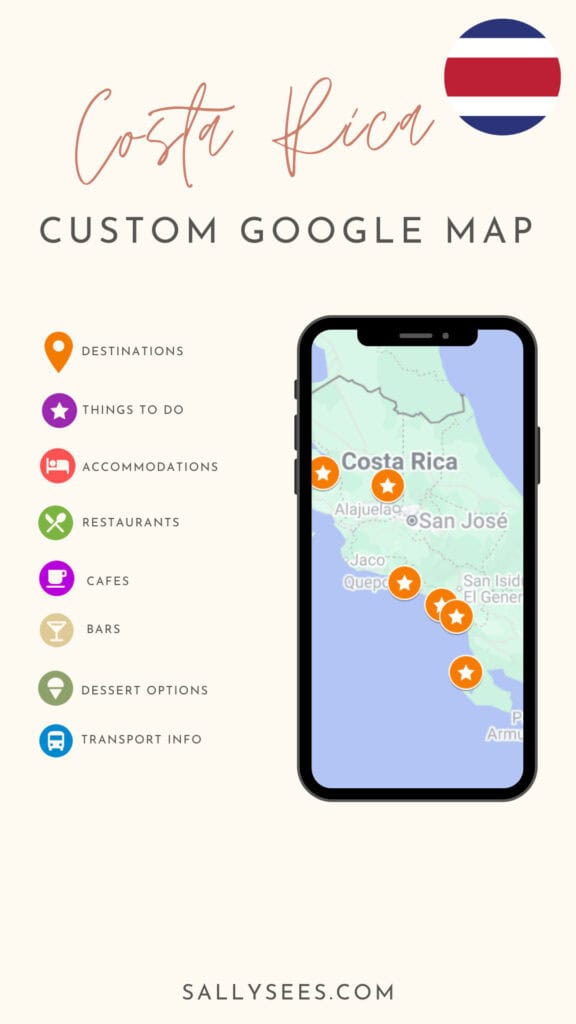
GET OUR COSTA RICA GOOGLE MAP
Save hours with our FREE custom Costa Rica Google Map!
With hundreds of locations pinned, giving you our best tips and recommendations in your pocket.

Food and drink to try in Costa Rica
Cuisine in Costa Rica isn’t too dissimilar from neighbouring Central American countries, but we found it a lot tastier, fresher and more flavourful. Rice, beans and plantains are all staples here, with plenty of fresh vegetables and the tastiest tropical fruits you’ve ever eaten!
The cuisine on the Caribbean Coast is quite different and more reminiscent of a Caribbean nation, with lots of seafood, coconut milk and richer spices and flavours.
The most common type of restaurant is a soda, aka a small, family-run local restaurant with typical Tico cuisine. Sodas are the BEST place to eat for cheap, tasty and huge servings and you can find them all over the country.
Some of the most popular dishes and drinks in Tico cuisine that you should try are:
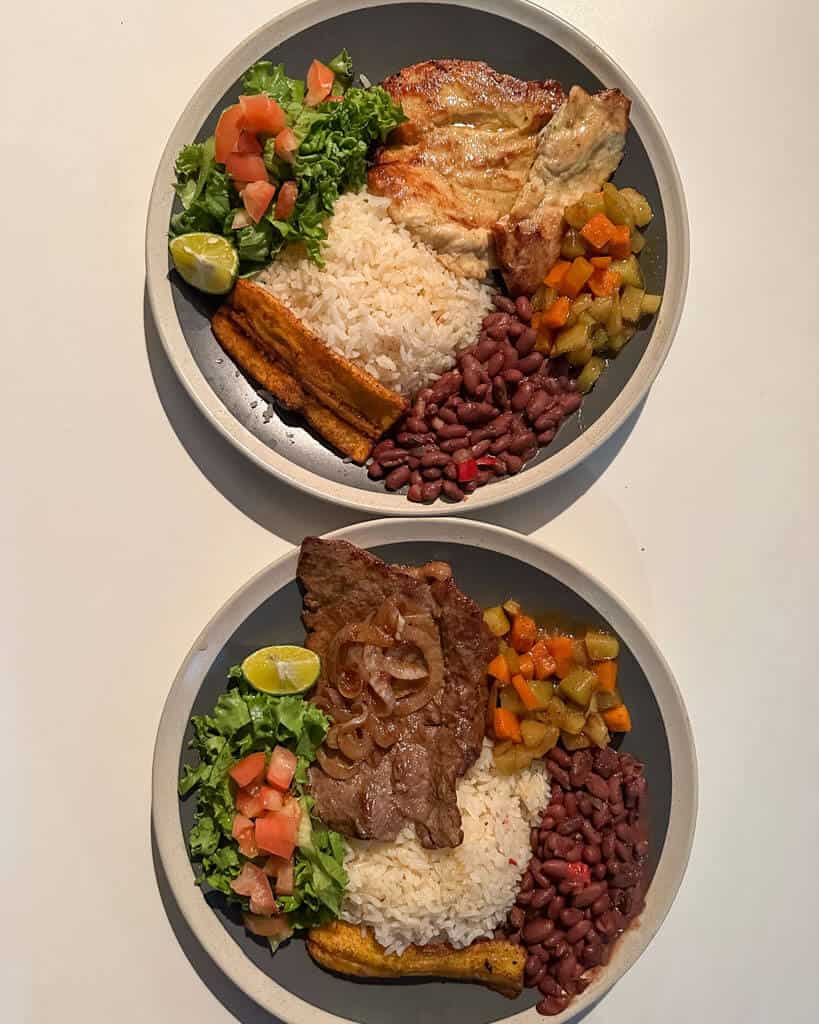
- 🍛 Casado: the humble casado is Costa Rica’s national dish and a staple of our time in the country. Casaado means marriage in Spanish, and the name either refers to the fact that these meals were like what married men would eat at home, cooked by their wives, or in reference to the marriage of all the ingredients on a plate.
A casado is a typical lunch or dinner plate. You choose your protein (usually chicken, pork chop, beef or fish) and it comes with sides like rice, beans, plantain and salad, but every chef puts their own spin on it. It’s a great way to use up what’s left in the kitchen, and the exact sides you get are a mystery box. Every now and then, we got a rogue serving of pasta, extra vegetables, noodles or a second type of salad. They are huge serves, mostly very healthy, filling and affordable. I think Brayden had a casado every single day for the 5 weeks we were in Costa Rica, and we miss them!
- 🍗 Pollo o res caribeño: they cook differently on the Caribbean Coast, and a common dish is meat in Caribbean sauce. It might be chicken or beef, but if you see ‘caribeño’ or ‘salsa caribeño’ on the menu, order it. It’s a flavoursome, creamy, coconutty sauce and the meat melts in your mouth!
- 🍛 Arroz con vegetales/pollo/mariscos/cerdo: something I did not expect to find in Costa Rica but loved was fried rice. They just call it arroz con [meat/veg], so I wasn’t really expecting a Chinese-style fried rice, but that’s basically what it is! It’s a stir-fried mix of rice, vegetables and meat if you want it. Cheap, tasty and always in huge portions!
- 🍚 Gallo pinto: aka rice and beans, the origin of this dish is hotly contested with neighbouring Nicaragua, and both countries claim to have created it. Oftentimes, the casados will come rice next to beans, not the actual combo of rice and beans, but if you do get gallo pinto (rice and beans cooked together) it’s your lucky day! On the Caribbean Coast, it’s made with coconut milk, and it is to die for.
- 🍍 Fruit: the fruit in Costa Rica is absolutely delicious. There is such a variety of tropical fruits that you probably can’t get in your home country. While we tried lots of different things, the pineapples were my favourite. They were so sweet and juicy, and readily available all over the country, usually from roadside stalls where you could get 5 for a couple of bucks.
- 🥟 Pati: more commonly found on the Caribbean Coast, a pati is essentially Costa Rica’s version of an empanada or a turnover. It’s a pastry usually stuffed with a savoury meat filling, most commonly beef, cooked in tasty spices and herbs. However, you can get sweet versions too, and I loved trying pineapple and sweet plantain.
- 🥥 Pipa fria: in Costa Rica, they call coconuts ‘pipa’ and ‘pipa fria’ is a cold, young coconut cooled on ice and served with a straw. If you’re a handy tree climber or creative with sticks, cooler boxes and machetes like Brayden, you can source your own fresh coconuts from most beaches! Otherwise, there is always a stall on the shoreline or a cart pushing around pipas frias. BYO metal straw.
- 🍳 Desayuno tipico: my favourite Central American dish that is just as good in Costa Rica as anywhere else, a typical breakfast plate. Usually consisting of eggs, gallo pinto, sweet plantains, salty cheese and tortillas, it’s the perfect fuel for the day.
- 🥤 Batidos: a batido is a milky smoothie (sometimes called a licuado in other Latin American countries). You can have it with all kinds of local fruits, from banana to mango to pineapple and other exotic flavours. They were my budget weakness while we were travelling CR, I wanted one with every meal!
- 🍻 Imperial: Costa Rica’s national beer is Imperial (closely followed by Pilsen and Bavaria Gold). It’s a light, easy-drinking lager perfect for watching the sunset on the beach on a warm night. Alcohol isn’t super cheap in Costa Rica, but picking up a 6 pack of beer from the shop is an affordable choice for a sundowner!




Costa Rica travel guide: Final thoughts
I hope this Costa Rica travel guide has inspired and equipped you for your trip!
Travelling in Costa Rica was everything I hoped it would be and more. We really felt the pura vida way of life. Everything in the country felt clean and green and fresh, and it is just pure nature magic.
We had some of our greatest travel moments ever in this country, and I can’t say enough positive things about it.
Yes, it can be touristy. Yes, it can be expensive if you want it to be. But it was so, so worth it. There are so many alternative ways to see this beautiful country away from the crowds and without breaking the bank. I hope this post has given you some ideas and inspiration on how to do so.
I guarantee you won’t find wildlife or pristine nature like this in many other places in Latin America.
Don’t forget to check out our other Costa Rica articles for more detailed guides to the best destinations around the country. Drop any other questions about Costa Rica in the comments!
MORE COSTA RICA POSTS
- The Ultimate Costa Rica Road Trip Guide & Itinerary
- 10 Best Beach Towns in Costa Rica: Which is Right For You?
- Costa Rica On A Budget: How Expensive is Costa Rica?
- The Complete Guide to Camping in Costa Rica
- Nomad America 4×4 Camper Rental in Costa Rica – Our Review
OUR COSTA RICA TRAVEL GUIDES





The Comments
Val
Hi Sally, Ive so enjoyed reading your updated information. My husband and I are travelling to Costa Rica mid February to mid March and although we have our flights booked, we have yet to finalise our itinerary. We have made an enquiry to a UK travel agent to put together a tour, largely following your four week itinerary, but I was wondering if you could recommend a local Costa Rican travel agent to make the same enquiry to.
Last year we travelled to the far east and the whole tour was handled by a travel agent in Vietnam, which was much more cost efficient that using a UK based one!
Also some friends started their tour in tortuguero national park and have recommended starting here for two nights after arriving in San Jose.
I would very much appreciate your thoughts. Kind regards Val
Sally Rodrick
ValHey Val, I’ve just replied to your email answering these questions 🙂 Sally
Jillian Wooding
Hi Sally, we have planned our road trip on your blog/website. I thought I read that you have an app , am I correct? If yes please send a link. Thank you, we are very excited.
Sally Rodrick
Jillian WoodingHi Jillian, I don’t have an app but I have a custom map for Costa Rica that you can access here: https://sallysees.kit.com/5d218b2285 Enjoy it!