This article contains affiliate links that may earn me a small commission at no extra cost to you. As an Amazon Associate, I earn from qualifying purchases. For more information, see our affiliate disclaimer.
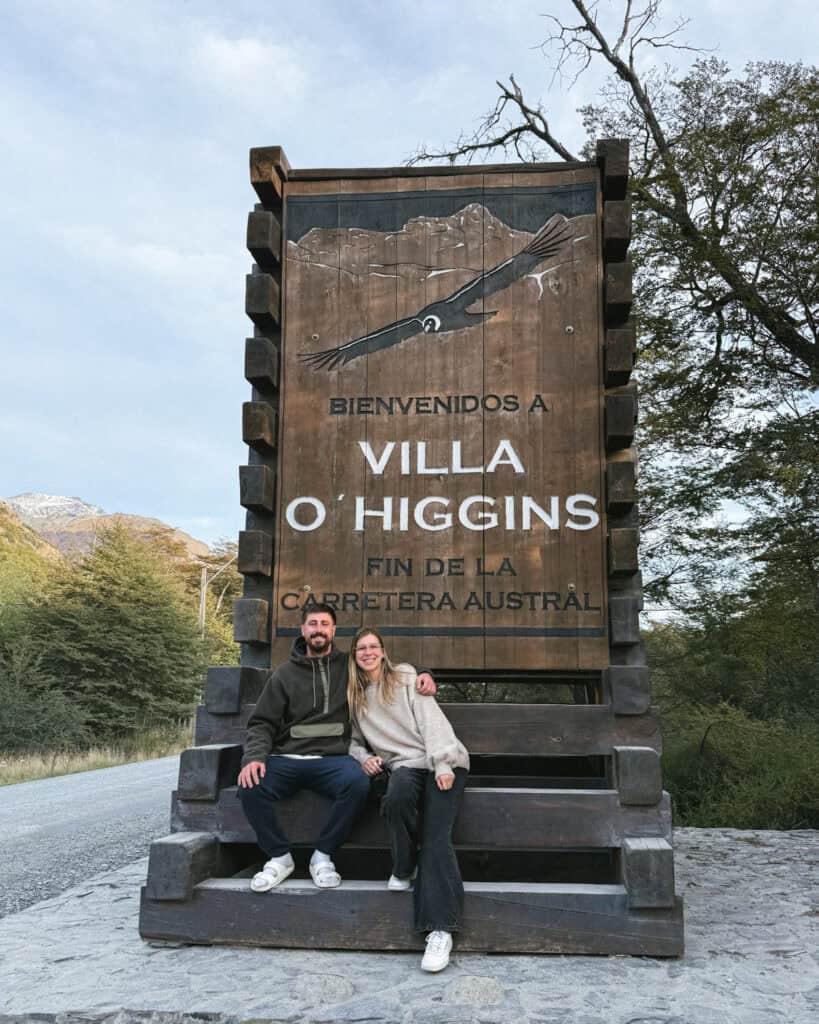
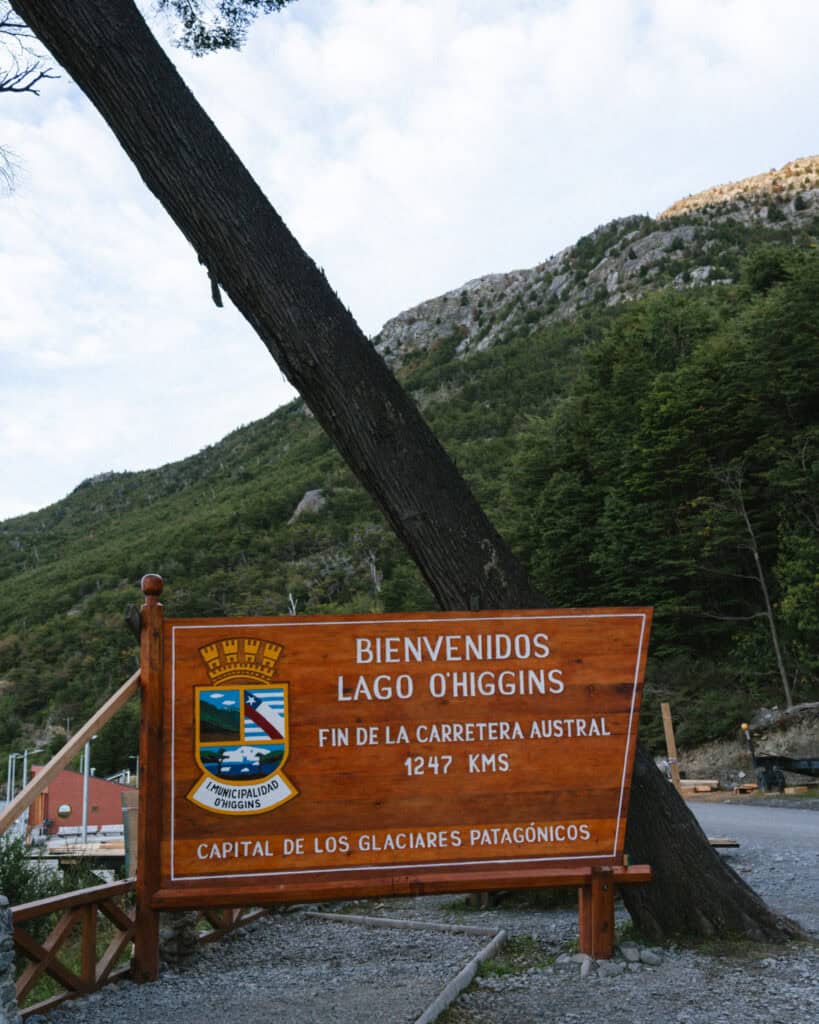
Villa O’Higgins is the end of the road, literally. Chile’s famous Southern Highway, the 1,247 km Carretera Austral, ends just outside the town.
Taking a photo with the sign marking the end of the highway is a rite of passage for anyone tackling this epic road trip, but Villa O’Higgins is a gem in its own right.
Located in the middle of nowhere, surrounded by stunning Patagonian scenery, we had to wonder who decided to build a town here. Whatever the reason, I’m glad they did, and our few days in what has to be the most remote village in Patagonia were very special.
Here’s everything you need to know about Villa O’Higgins, from the best things to do, where to stay and eat, how to get there and around and important information about road conditions and amenities in town.
About Villa O’Higgins
Ushuaia gets all the press for being ‘el fin del mundo’ in Patagonia, but their marketers have clearly never been to Villa O’Higgins. It is truly the end of the world!
To get here, you either need to drive more than 1,200 km down the entire Carretera Austral, take a 41+ hour ferry ride from Puerto Natales to Puerto Yungay, another 40 minute ferry across the Mitchell Fjord and then drive 99 km on the very bumpy final stretch of the Carretera Austral, OR a combination of hiking, biking and boating across two lakes from El Chalten in Argentina.
What I’m trying to say is, Villa O’Higgins is one of the most remote towns in Patagonia, and it feels like you’ve moved heaven and earth to get there, no matter which way you come.
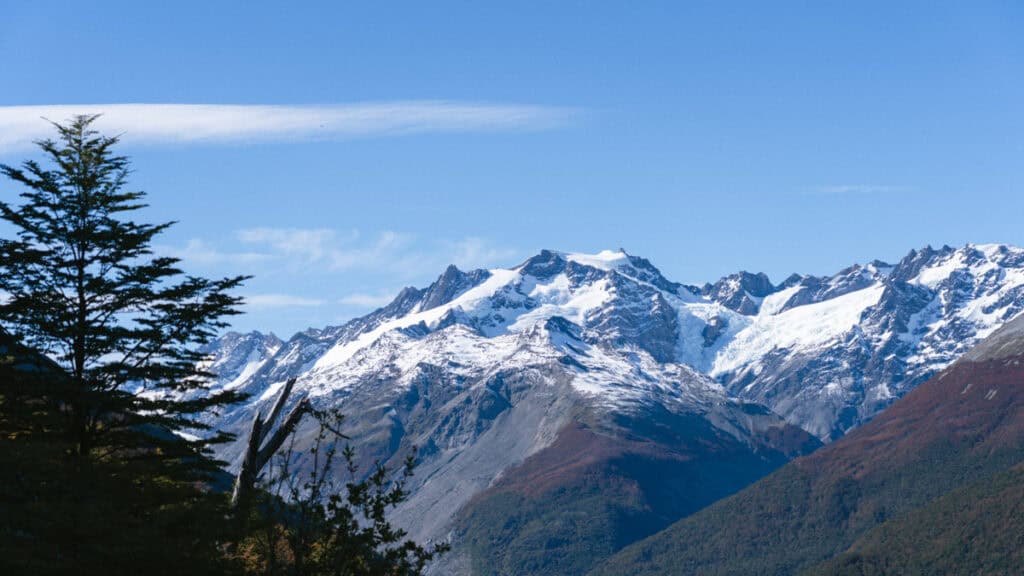
Putting this aside, the town is absolutely gorgeous, and the scenery here is simply spectacular. There are 360° views of snow-capped mountains, glaciers, forests and lakes.
But what made this hidden hamlet even more special was the realisation that you truly were in the middle of nowhere. Such breathtaking beauty so, so far flung from any other civilisation, it was incredible.
We had a few very peaceful, humbling moments looking at our surroundings, reminding ourselves where we were and how far we had come.
The town was created in 1966 as part of Chile’s efforts to colonise the area, as the border in this part of Patagonia is hotly contested between Chile and Argentina. They plonked a town here to claim this land as their own, similar to what Argentina did on the other side of the border in El Chalten.
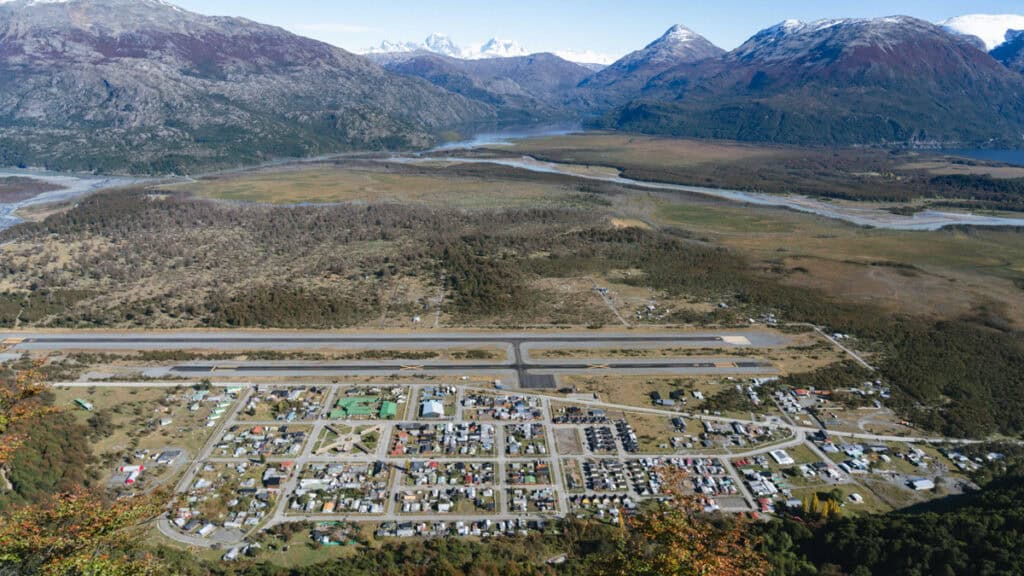
In the last census in 2012, there were about 600 inhabitants living in the town. There is an airstrip to provide quicker connectivity than the bumpy highway, and there are all the amenities a town could need, like a school, medical care, a post office and even a police station (though I don’t think they’d be very busy here!).
🛻 Villa O’Higgins was one stop on our road trip along the Carretera Austral in Chilean Patagonia. Don’t forget to browse all our posts about the Carretera Austral, or if you want to skip the multiple tabs and scribbling notes from my blog, I’ve got you covered with my Carretera Austral Road Trip Handbook. A 365-page eBook compiling everything I know about the highway into one beautifully designed place, available offline in your pocket while you’re on the carreterra!

PLANNING YOUR CARRETERA AUSTRAL ROAD TRIP CAN BE CONFUSING… I KNOW, I’VE BEEN THERE!
I spent months planning our Carretera Austral road trip – jumping between tabs, scribbling notes, and trying to remember ferry times. It’s a confusing region, and it’s easy to get it wrong!
That’s why I created the Carretera Austral Road Trip Handbook: all the info you need in one beautifully designed guide, available offline while you’re on the highway. Pair it with our Custom Google Map (500+ pins!), and you’ll have a clear, stress-free plan for the road trip of a lifetime – before you leave and while you’re on the highway.
Villa O’Higgins map

How to get to Villa O’Higgins
- 🚗 By car: Villa O’Higgins is located at the very end of the Carretera Austral, and the final stretch is entirely unpaved and pretty sketchy in parts!
To get to Villa O’Higgins by car, you have to take a ferry across the Mitchell Fjord from Puerto Yungay to Rio Bravo (about 1 hour).
The ferry is subsidised by the government so it’s free. There is no pre-booking, it’s first-in-best-dressed, and both times we took the ferry, lots of people missed out (including us the first time!).
The times are very confusing as there are two companies running ferries, but the signage at the ports is only for one. There is Padre Antonio Ronchi and Pitipulla.
The ferry runs 4 – 10 times per day in each direction, depending on the season. They classify it as low season (April – September, 4 times), medium season (October – December, 8 times) and high season (January – March, 10 times).
I’ve got more information, including links to the best timetables I could find online for each season, in my Carretera Austral ferries post.
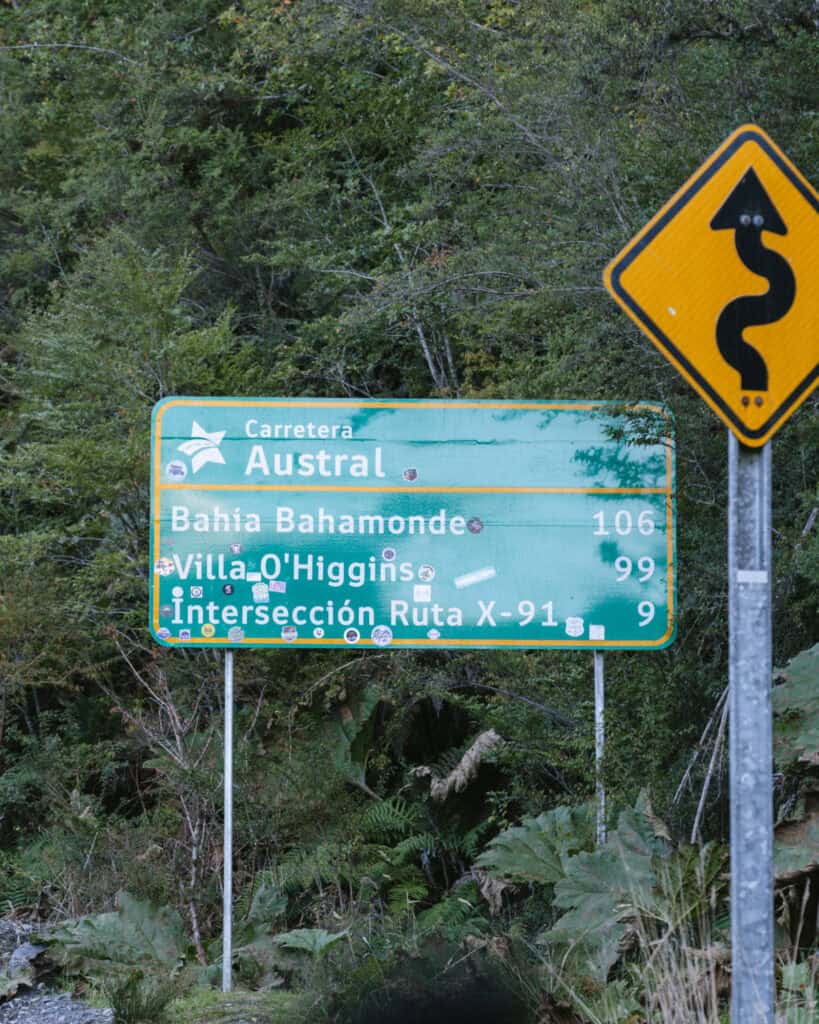
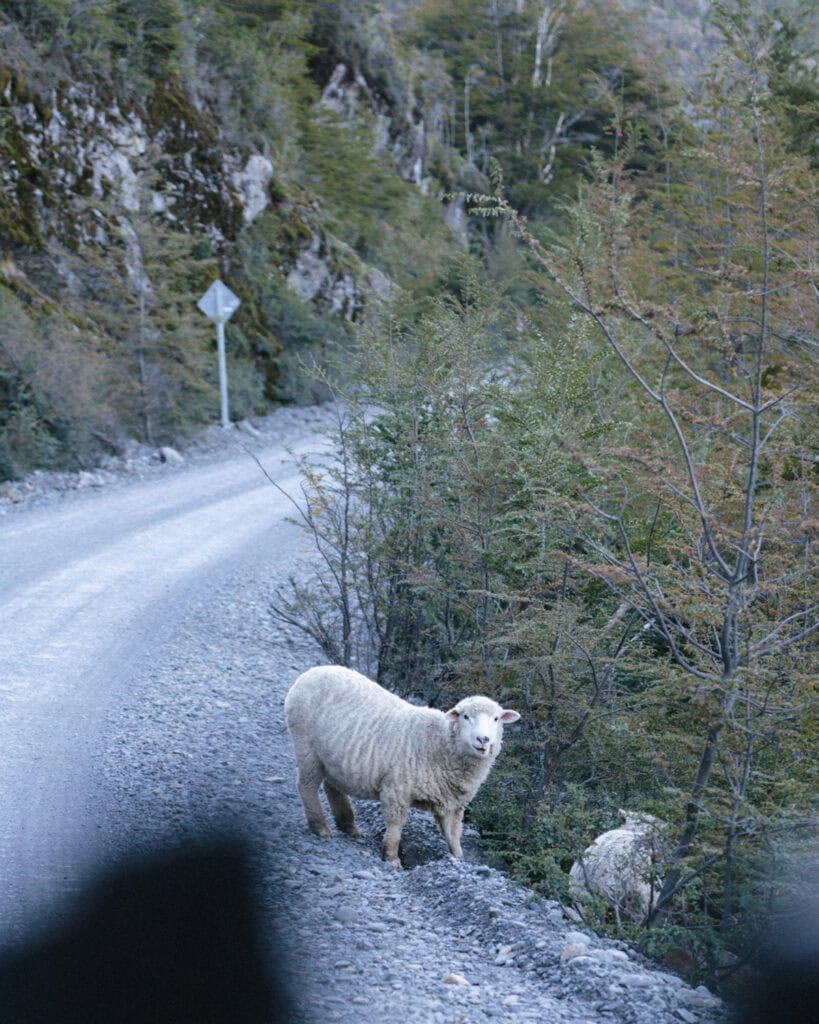
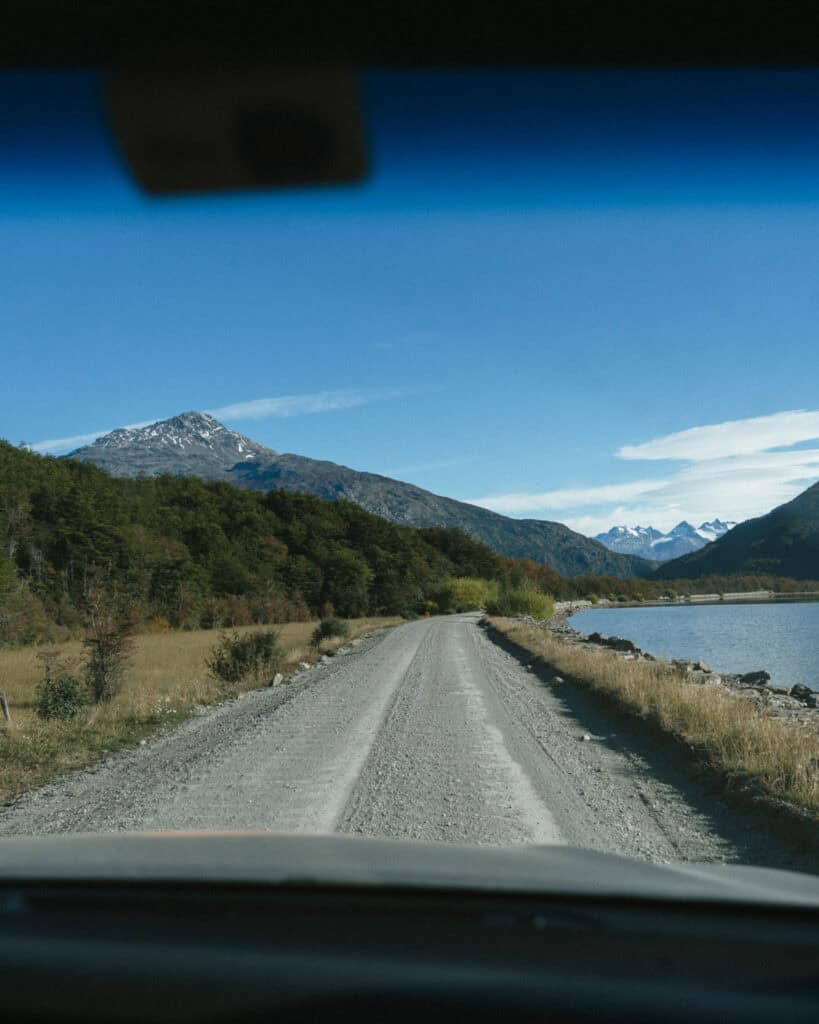
From Rio Bravo where you disembark the ferry, it’s 99 km to town. The entire way is unpaved. Some stretches are flat and pretty smooth, but there are some hair-raising climbs and turns through the mountains with steep drop-offs.
We thought this would be the worst stretch of the Carretera Austral, but it was surprisingly okay (we had much more annoying corrugations in other stretches!). We saw plenty of small cars doing it, and it’s not that bad, so long as you’re prepared for gravel, narrow roads and some potholes.
📍 I’ve pinned lots of miradors and scenic stops en route between Rio Bravo and Villa O’Higgins on my Carretera Austral map
- ⛴️ By boat: it is possible to approach Villa O’Higgins and the southern end of the highway on the TABSA Ferry from Puerto Natales. It’s a 41+ hour journey and the boat docks in Puerto Yungay (for foot, bike and vehicles), where you can continue to Villa O’Higgins following the above instructions.
- 🚌 By bus: there is a bus to Villa O’Higgins from Cochrane that runs a few times per week. Buses Gardy is the company, and you can check the latest timetables on the Villa O’Higgins tourist information website. These times were verified at the tourist information centre in town, I saw a sign on the door with the same days (always good to see a timetable at least 2 – 3 times to know it’s right!).
There are also buses to Villa O’Higgins from Caleta Tortel, 1 – 2 times per week.
This website is another great resource for checking bus schedules on the Carretera Austral. The bus terminal is in the centre of town.
- 🇦🇷 From Argentina: if you are travelling on foot or bicycle, it’s possible to cross the border from El Chalten in Argentina to Villa O’Higgins via a series of boats and hiking / cycling.
Ruedas de la Patagonia offers a package trip involving a transfer from El Chalten to Lago del Desierto, a boat ride across the lake to the border at Candeleria Mancilla, where you must hike or bike to Lago O’Higgins to board a boat to Puerto Bahamondes near Villa O’Higgins.
We didn’t do this, but I’d highly recommend researching to get the latest information from someone who has done the crossing. It’s popular with cyclists. This post isn’t new, but it is informative.

How to get around in Villa O’Higgins
Villa O’Higgins (and basically all of the Carretera Austral) is a place where you need your own vehicle or bicycle to get around comfortably.
The town itself has paved roads in a tidy grid, which was a welcome relief after the bumpy roads to get there!
If you don’t have a car or a bike, I’m not really sure how you would get around beyond the town centre. This isn’t really an issue as the town is tiny, and you can start all the hikes in Parque Glaciar Mosco right in the centre.
However, if you wanted to go down to Bahia Bahamondes to see the official end of the Carretera Austral, you may have to hitchhike. The tourism office might have some information if you want a ‘taxi’ or driver for a few hours to see some sights, but you won’t find a regular taxi on the street here!

Where to stay in Villa O’Higgins
🏨 ACCOMMODATION
There are a handful of cosy accommodations in the town centre. Don’t expect luxury (although Rumbo Sur looked absolutely stunning!), but there are definitely enough options to be comfortable.
🏕️ CAMPING
If you are camping on the Carretera Austral, there are lots of paid campgrounds in and around town if you need somewhere with amenities (bathrooms, electricity, etc.). Camping El Mosco is particularly well-rated.
If you’re self-contained and can free camp, there are lots of free spots to park, mostly on the southern side of town en route to Bahia Bahamondes (aka the end of the road).
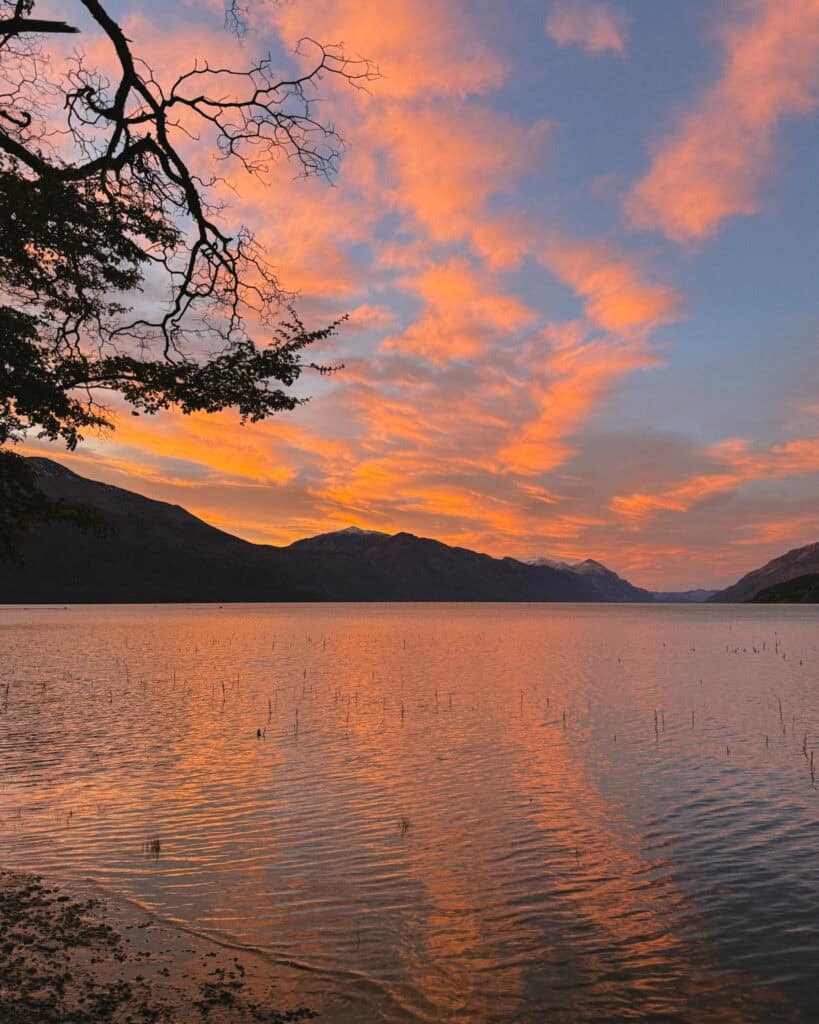
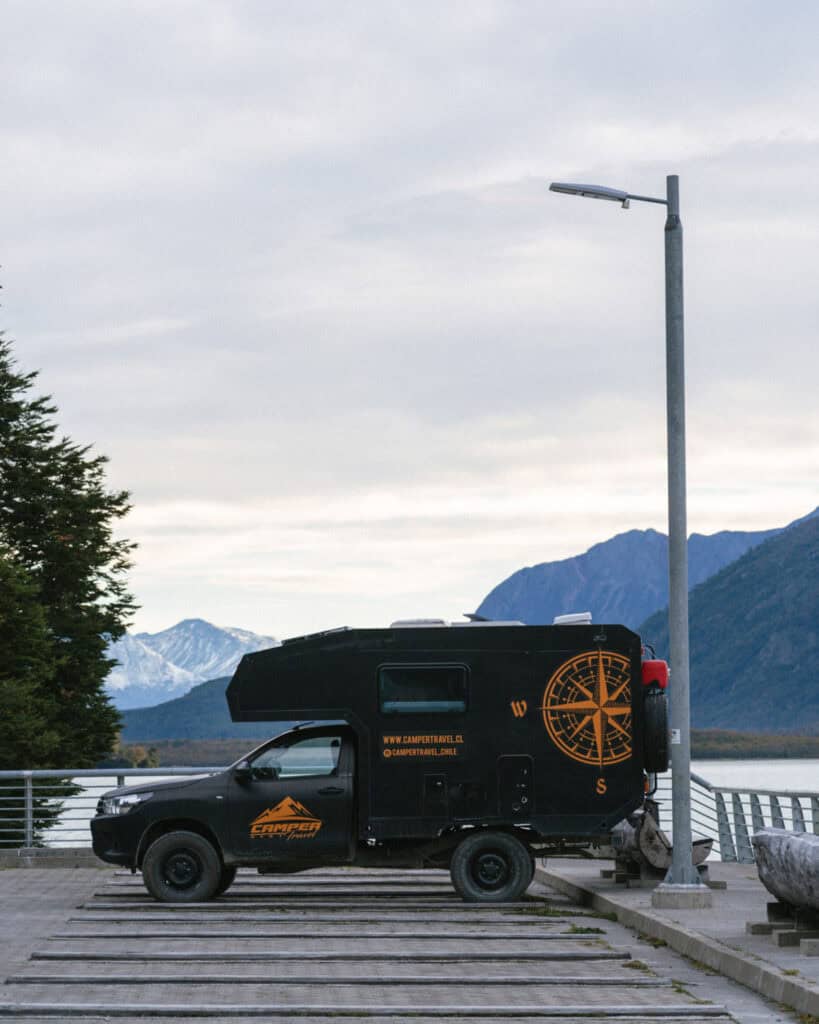
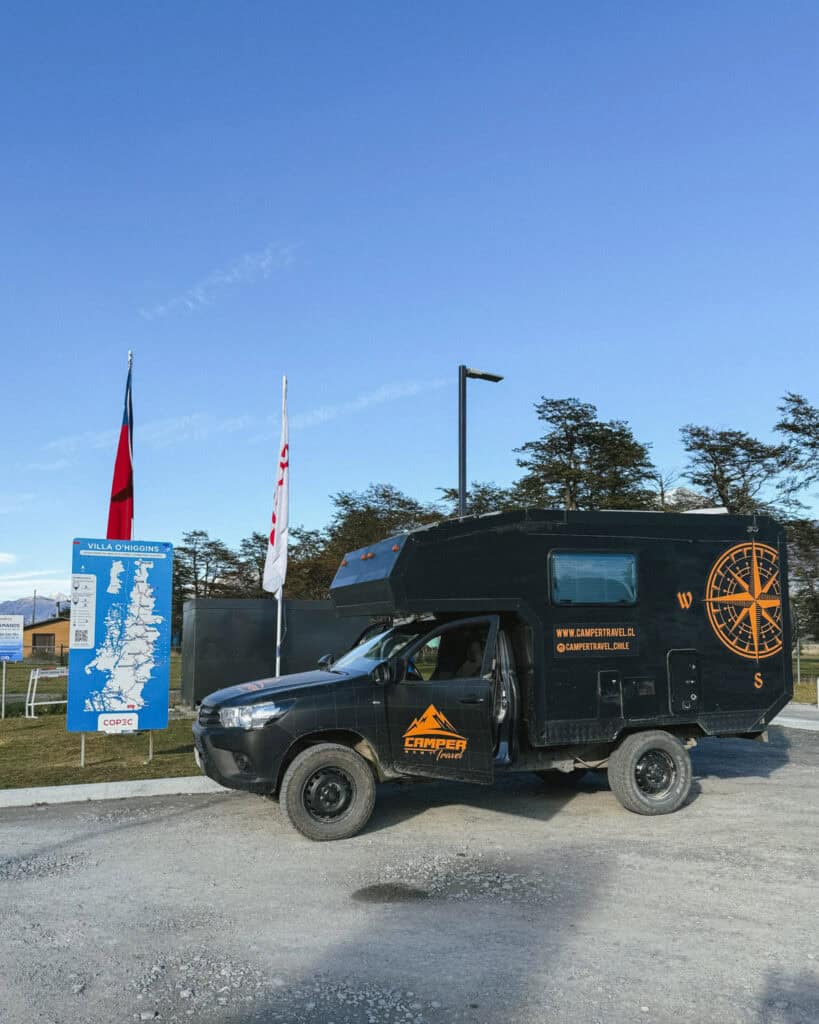
Because we were in our amazing camper from Camper Travel Chile with a power system, hot water, toilet and shower, we were able to comfortably free-camp all along the Carretera Austral. We parked here for the night in Villa O’Higgins, right on the lakeshore.

Things to do in Villa O’Higgins
1. Explore the town
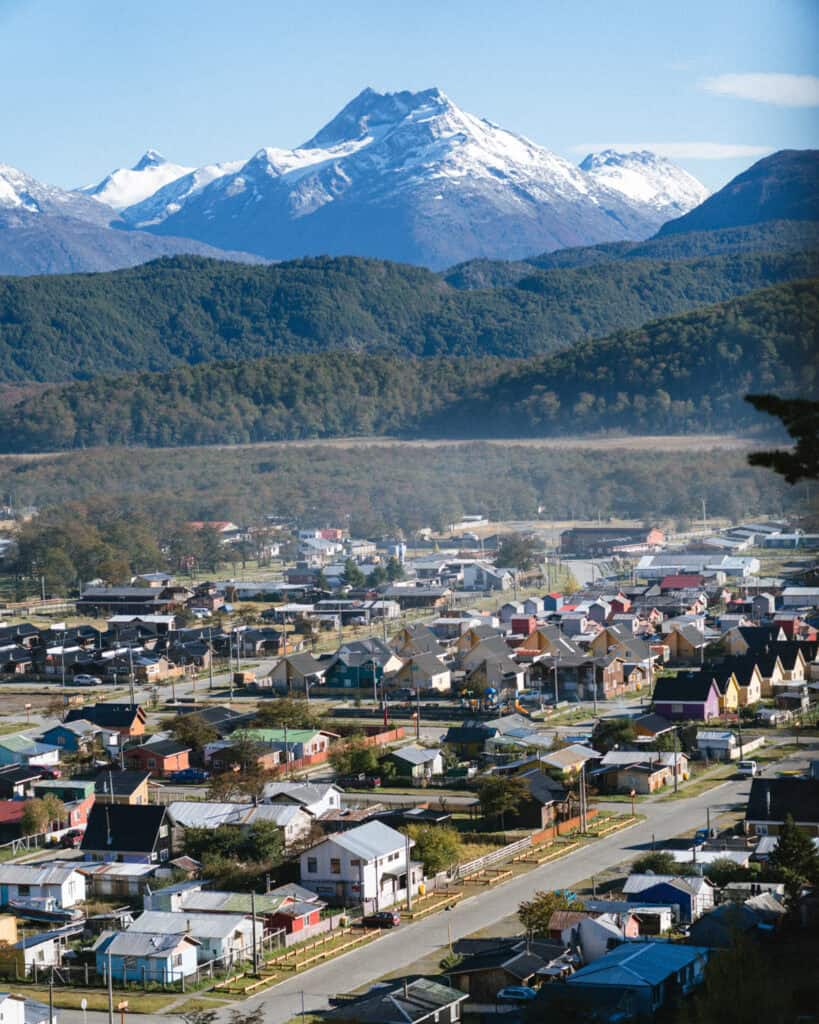
There’s not much to it, but Villa O’Higgins is absolutely adorable and worth wandering around.
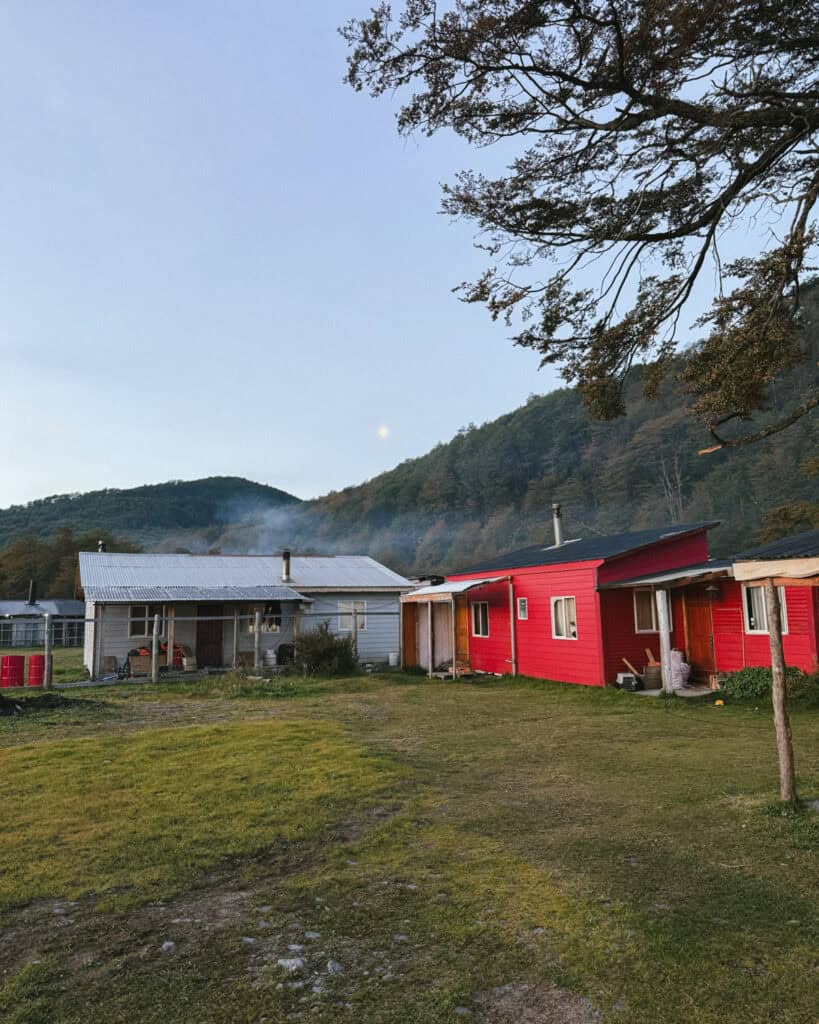
The houses are such cosy little cabins, I loved seeing the chimneys all blowing out smoke against a backdrop of forest in one direction and snowcapped mountains in the other.
There are plenty of cute cats and dogs running around. There was a moment when we were strolling through town and had a realisation that the only other beings around us were dogs!
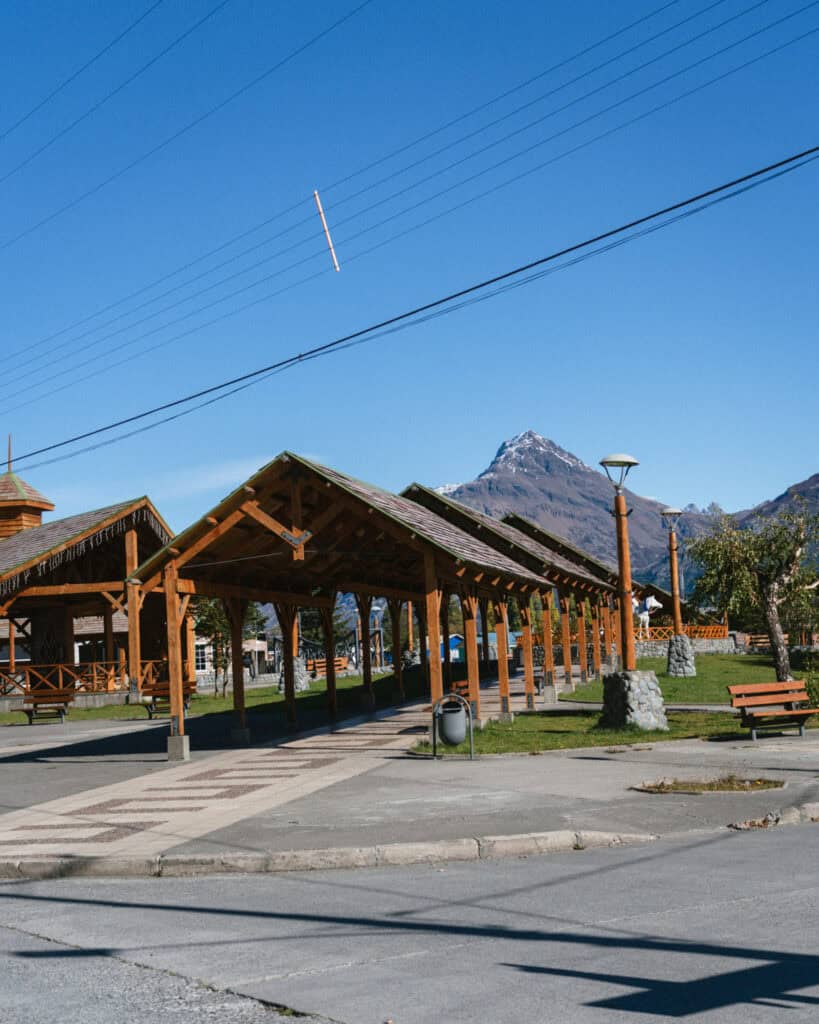
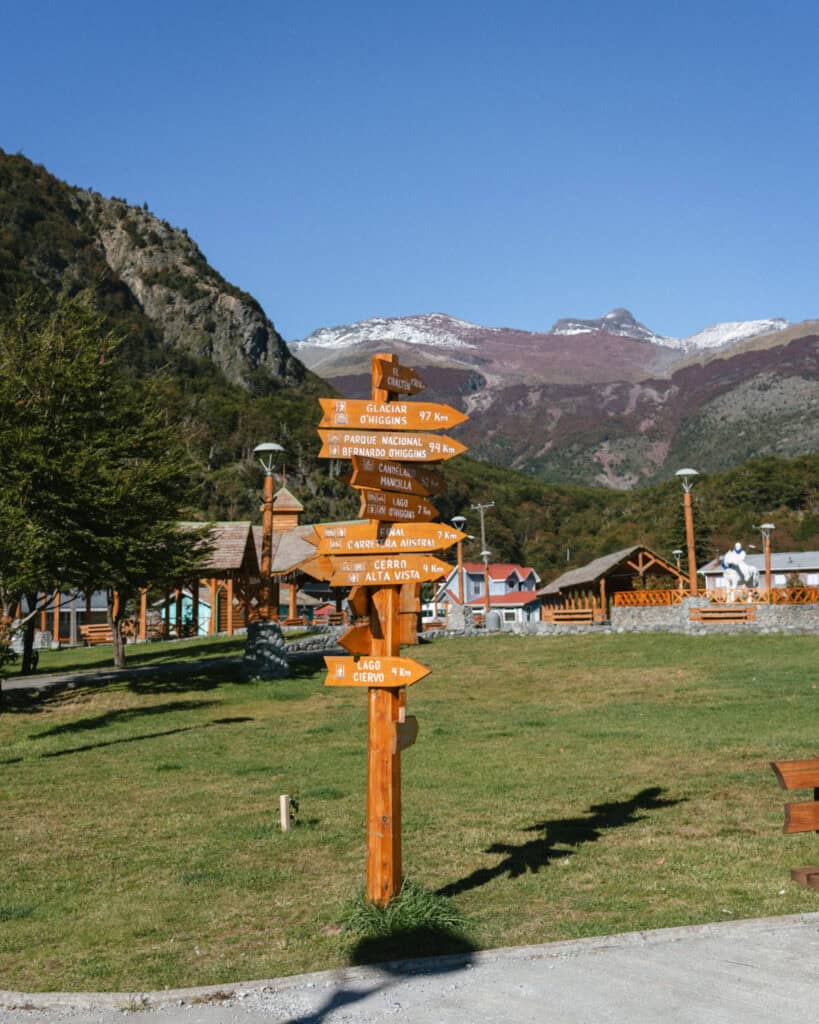
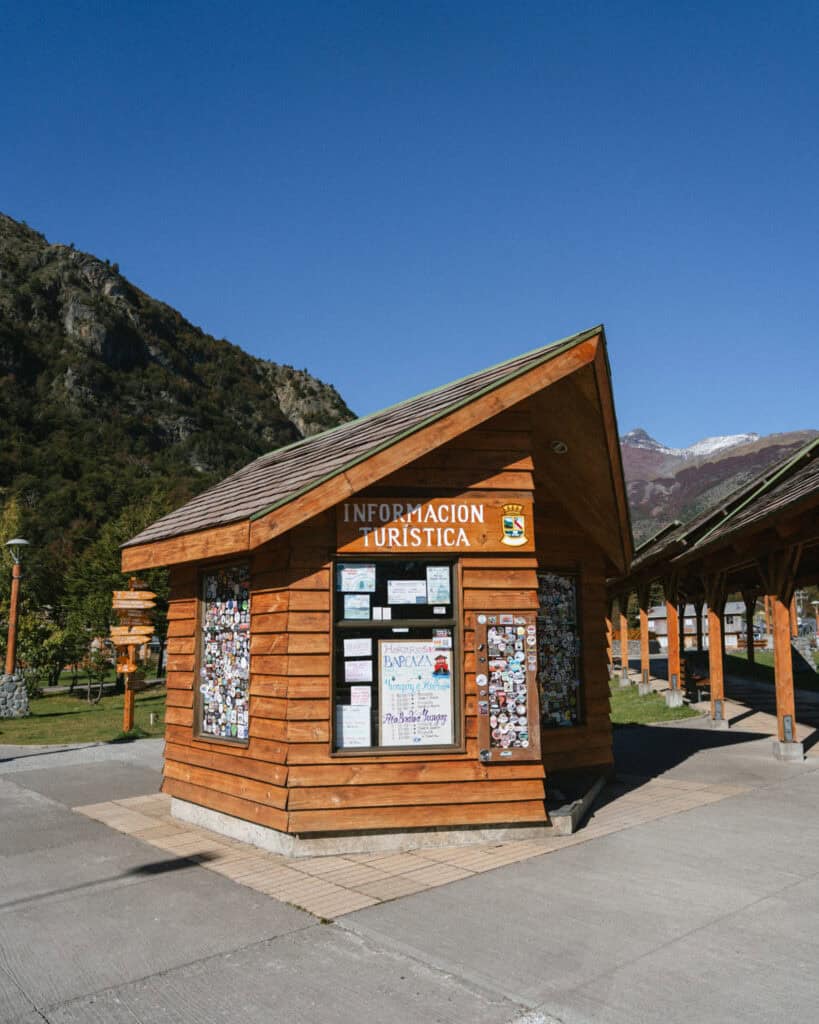
The plaza, Plaza de Armas de Villa O’Higgins, is just lovely! It’s been built with love and is very neat and tidy. The tourist information office is here, there are some nice statues and lots of bench seats.
2. Hike in Parque Glaciar Mosco
This park is a very well-run natural area created by the town to preserve the Huemel deer habitat.
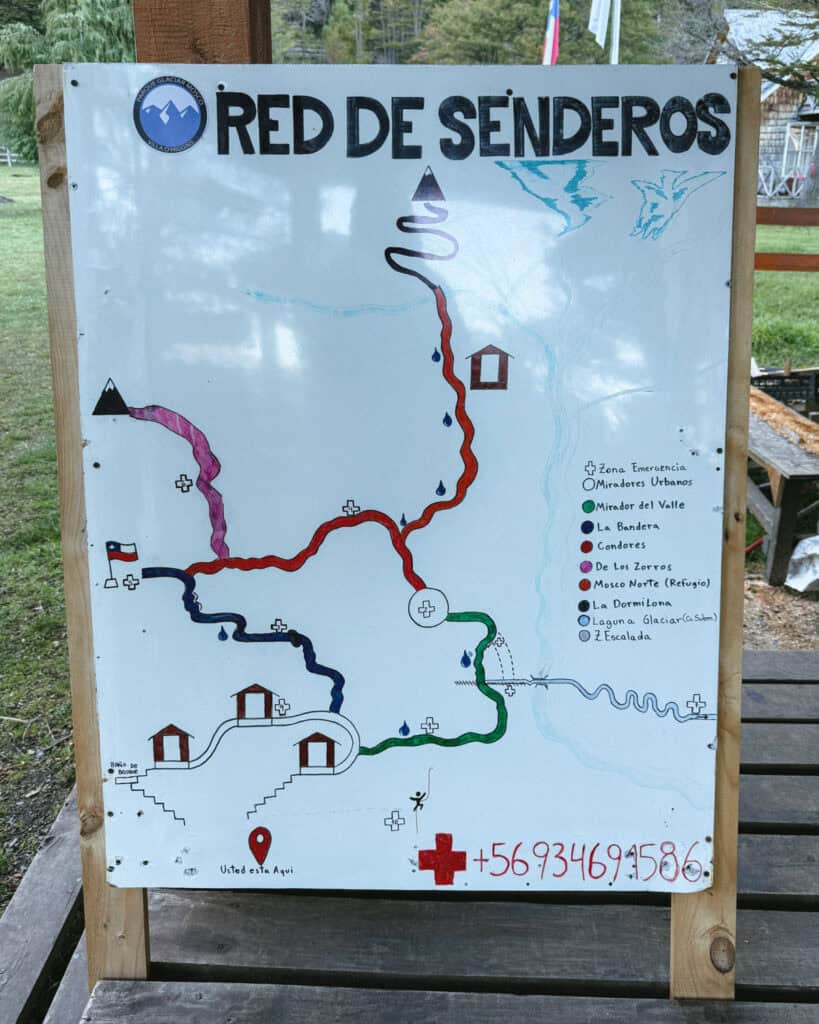
There are a few trails online, but it’s best to go to the office at the trailhead right in town. They have maps of all the trails, and it’s usually staffed, so they can explain the different options and help you choose the right trail(s).
You need to register in a little book, so make sure you do that even if the office isn’t staffed.
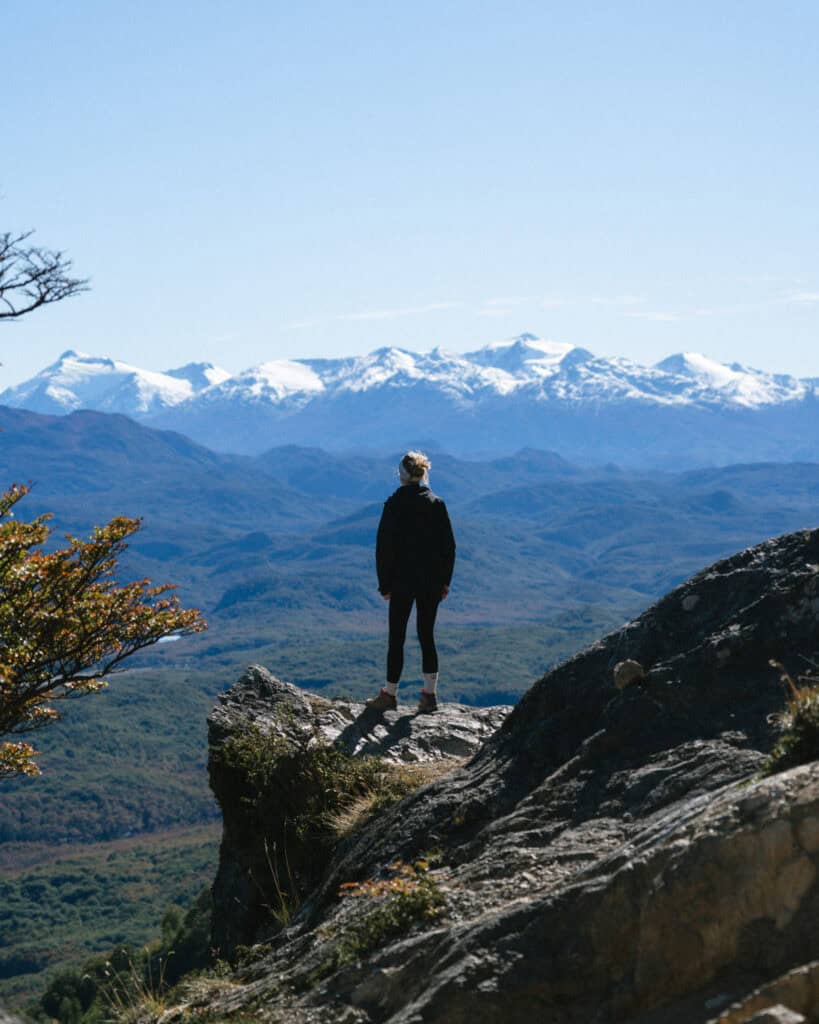
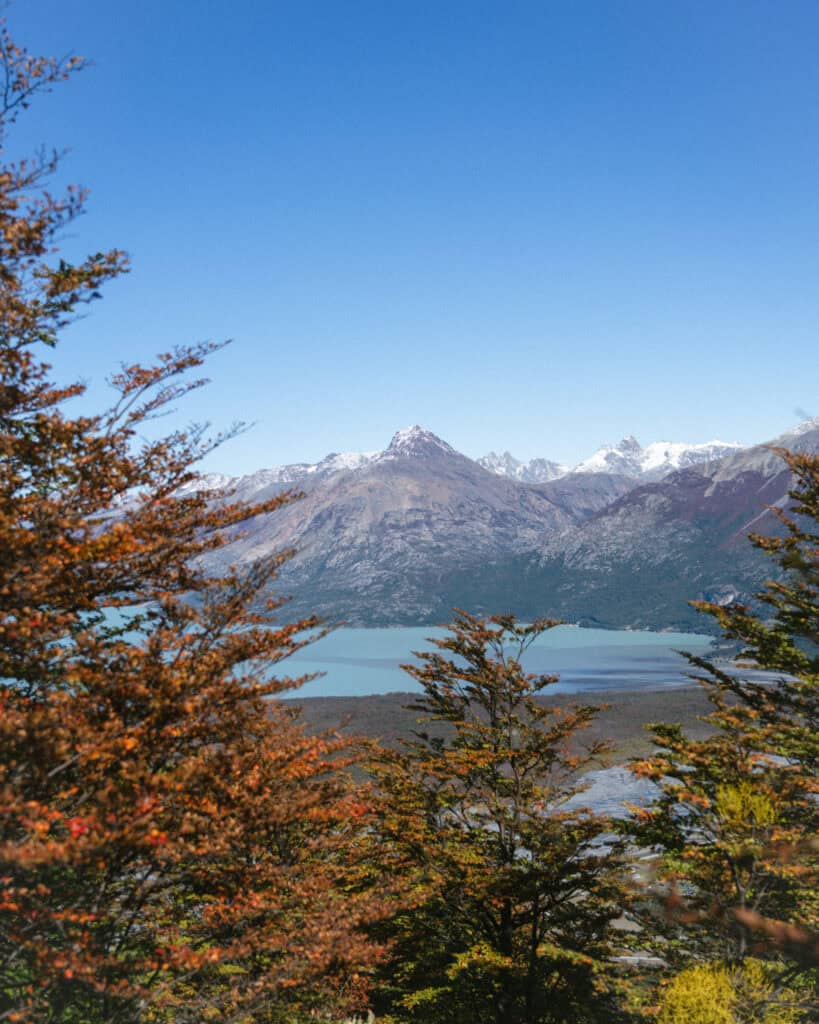
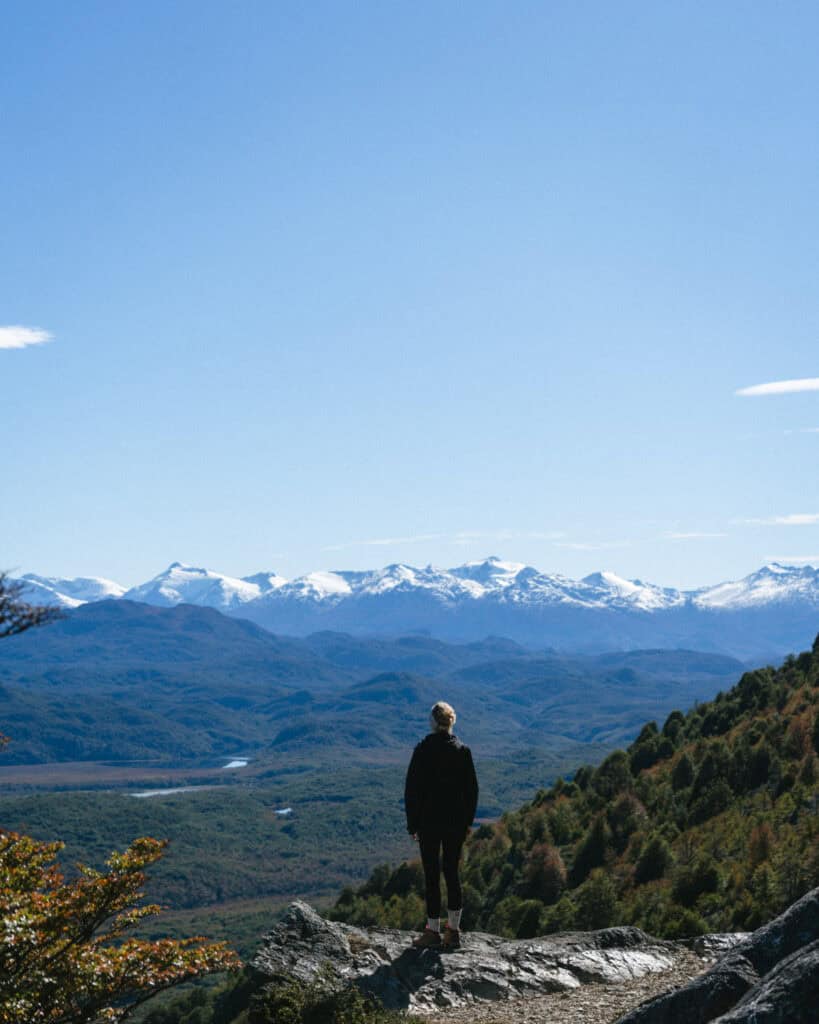
We did the ‘circuito’, which was about 5.5 km (3.4 mi) and combined the Mirador la Bandera, a small section of the Condores trail and Mirador del Valle.
🚨 Warning: the trails are STEEP! We did not expect such a difficult hike given the short distance, but climbing up to Mirador la Bandera was really tough and also extremely steep on the way down. Trekking poles are recommended, and I really really wished we had ours!
3. Fin de la Carretera Austral in Bahia Bahamondes
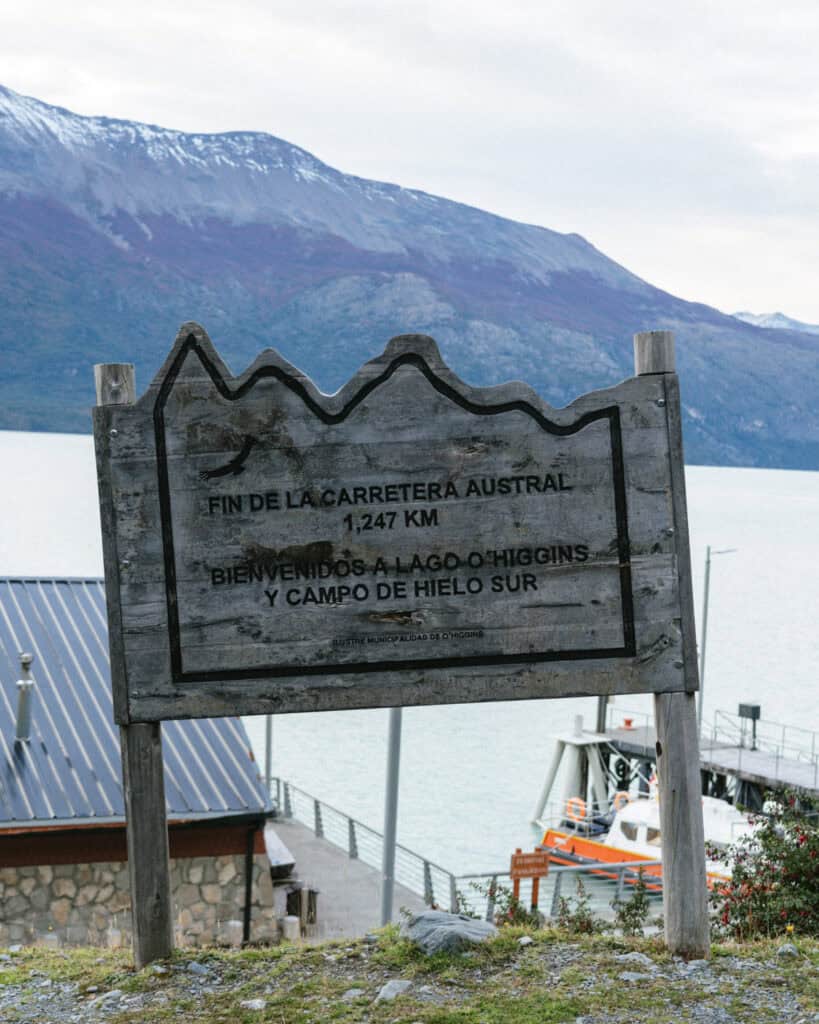
The classic thing to do in Villa O’Higgins is to drive to the official end of the Carretera Austral and get a photo with the sign!
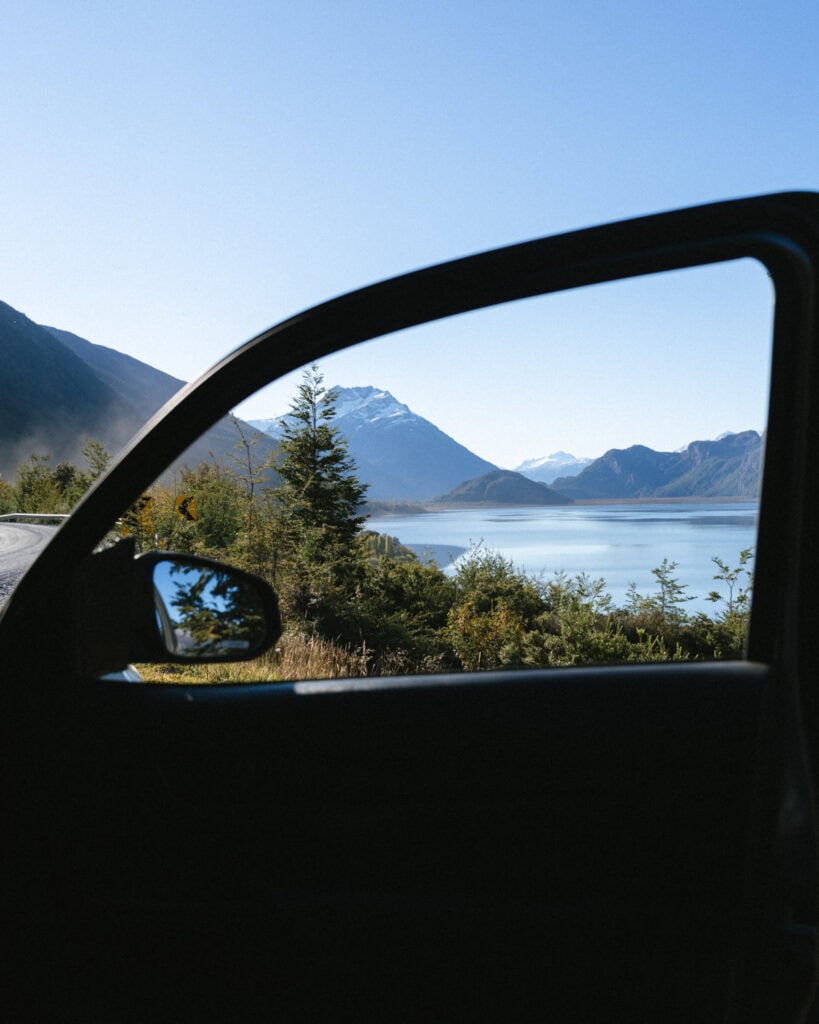
The road ends at Puerto Bahamondes on the shores of Lago O’Higgins. It is very scenic and there are several miradors to stop at along the way out of town.
There are two signs, one is kind of hidden up near the mini navy base, and the other is clear on the road.
If you go to the tourist information office in the plaza in town and show them your photo, they’ll write you a cute certificate saying you completed the Carretera Austral (closed weekends).
4. Navigation to Glaciar O’Higgins
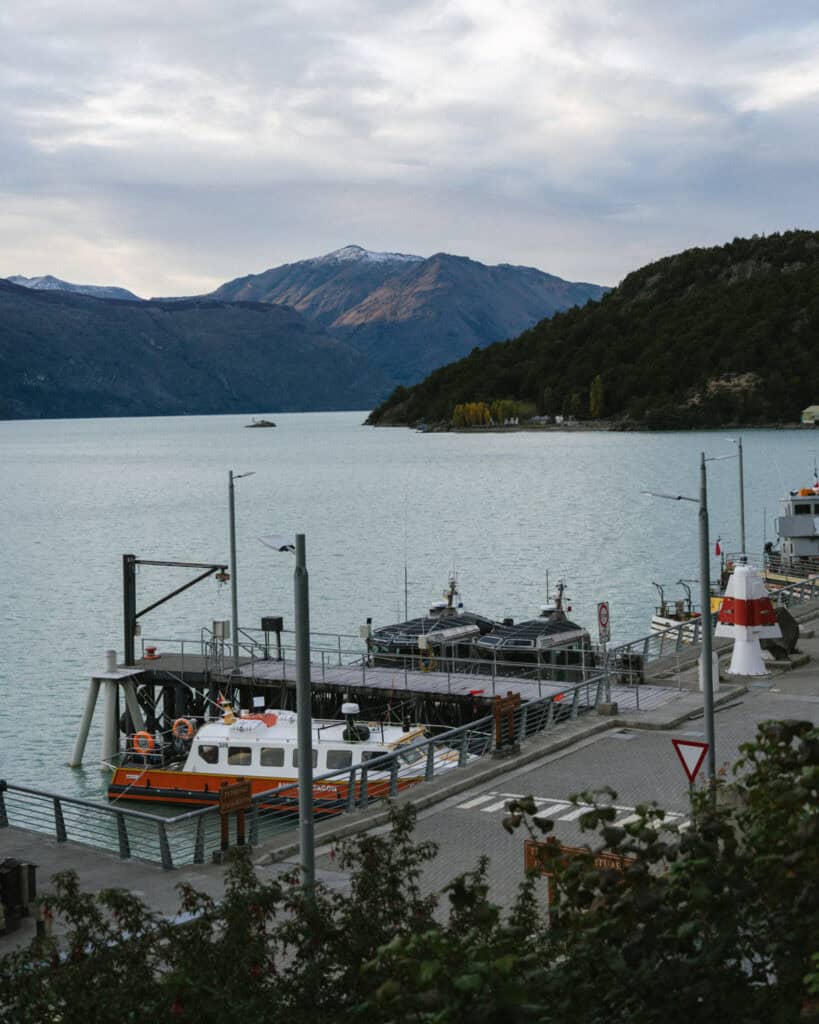
This is an all-day boat excursion through Lago O’Higgins to see Glaciar O’Higgins, located in Bernardo O’Higgins National Park. Phew, what a mouthful!
Tours depart from the port in Bahia Bahamondes and last about 7 hours.
At the moment, I can find one company that runs ‘regular’ tours – regular meaning you probably want to book well in advance, as they won’t run without minimum numbers!
In the high season, this might be a few times per week, in the low season, it might be once a fortnight!
Ruedas de la Patagonia has a tour for 160,000 CLP per person.

5. Sendero Alta Vista
This is another popular hiking trail on the southern side of town.
We didn’t have time to do it, but it looks stunning.
It’s 15.4 km (9.5 mi) out-and-back, but judging by the reviews on AllTrails, you probably don’t need to take it all the way to the end to appreciate the views.
If you’ve got another spare day in town, it could be a nice activity.
Note it’s called ‘Sendero Rio Negro’ on AllTrails, but the signs are for Alta Vista.
6. Take road X-905 to Lago Christie
If you’ve got time for an extra side trip (we didn’t), this road runs out of town to another beautiful lake, Lago Christie.
It doesn’t lead anywhere, so it’s an out-and-back adventure. There are a few nice places to stop along the way:
- ⛪️ Antigua Capilla Padre Antonio Ronchi: a little church/memorial to an Italian missionary who dedicated his life to helping the less fortunate in remote villages in this part of Chilean Patagonia, connecting them with radio and television.
- 💦 Salto Perez: a nice little waterfall along the way.
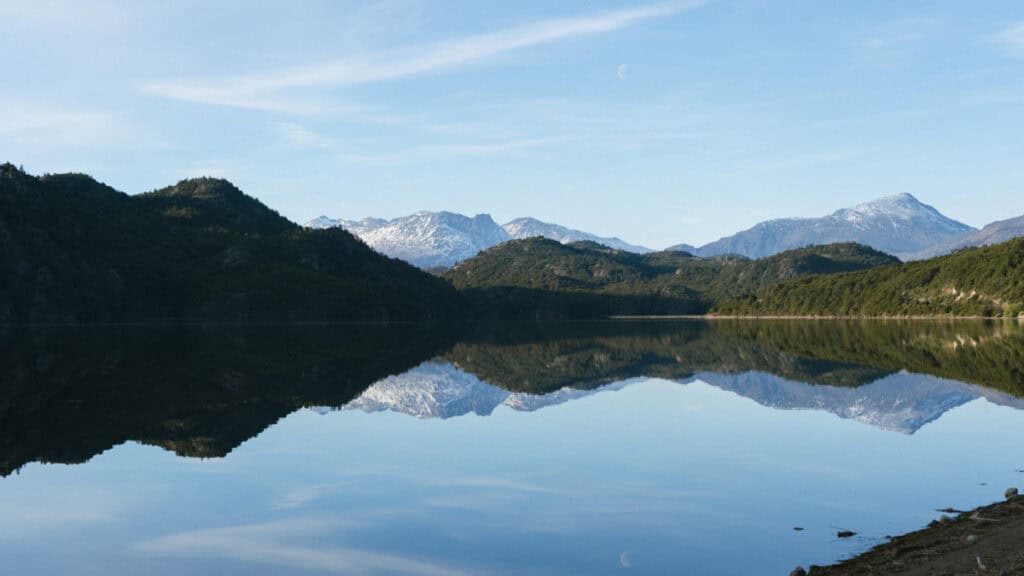
- 🌳 Lago Christie: a stunning lake surrounded by forest and snow-capped mountains that you will most likely have all to yourself! If you’re camping and self-contained, you could probably spend a night here.
Where to eat in Villa O’Higgins
There are a handful of restaurants in town, but finding any of them open is the problem! We did visit at the start of the low season (April), which might have had something to do with it, but we only came across one open restaurant the whole time we were in VOH!
- 🌭 Karukinka: a small food truck stand that has HEAPS of good food, sweets and is super cheap! We really wanted to eat here but unfortunately it wasn’t open when we visited. If you’re on a budget, check this spot out first!
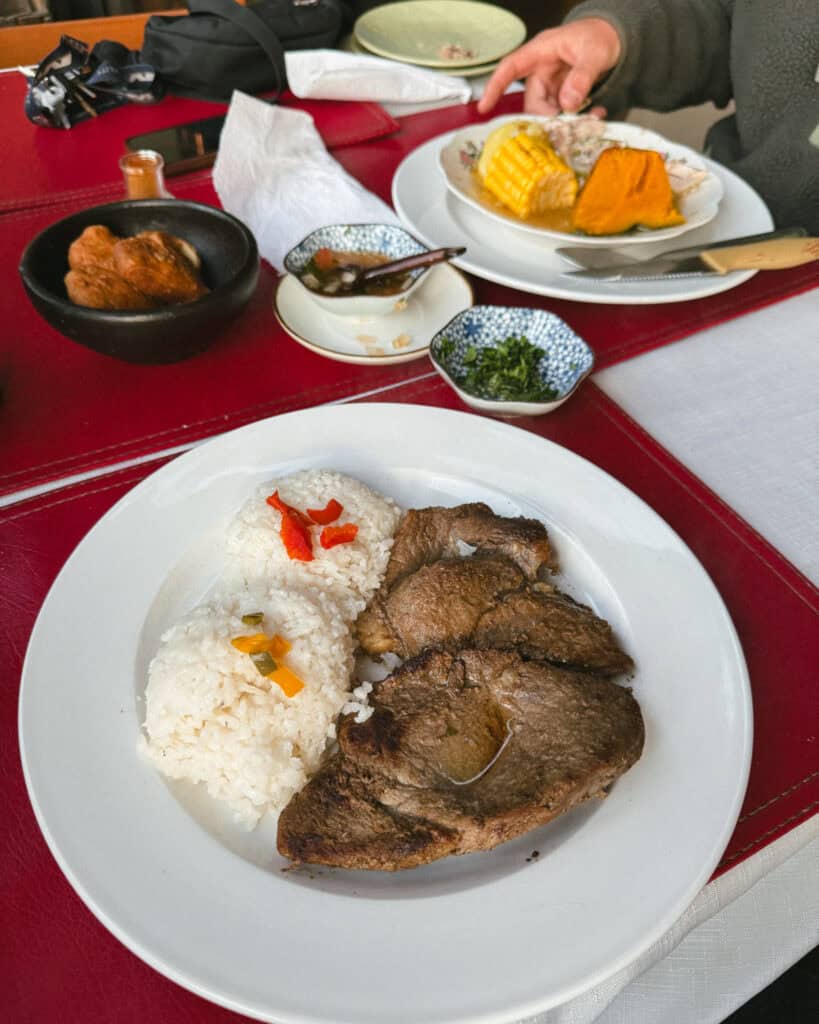
- 🥩 Quiyango Patagonia: a decent and reliable restaurant in town attached to accommodation. Big serves of main dish meat with sides. The meat is most likely all frozen, but the mains come with your choice of rice or potatoes, some bread and sopaipillas. About 15,000 – 18,000 CLP for mains, we could pay by card.
- 🍻 Ventisca Cerveceria Patagonica: very cool brewery at the top end of town. Unfortunately was closed when we visited. They brew a range of beers on-site and serve up tasty burgers. Looks like a warm and cosy spot to hang out on a cold evening.
- 🍕 Hito X-91: a pizzeria cum cervezeria with very tasty pizzas in the most unlikely of locations!
- ☕️ Café Norweste 340: we saw this cafe, but it wasn’t open. Coffee and cakes at the quality you’d expect in a location like this, nice for a cold rainy day!
📍 All of these restaurants are pinned on my Carretera Austral custom map
Things to know before visiting Villa O’Higgins
- 🌤️ Best time to visit: like all of Patagonia, the best time to visit Villa O’Higgins is generally in the warmer months between October – April. Although you should expect wild weather at any time of the year, with rain, wind, snow and sun always possible – this is Patagonia after all!
In spring (October and November), the weather is starting to warm up, although you should still expect a fair amount of snow around, but things are thawing, and flowers are blooming.
Summer (December, January and February) is peak season, although ‘crowded’ in Villa O’Higgins is hardly busy compared to more popular destinations in the south. You’ll find the most businesses open and tours running at this time of the year, so ‘peak season’ isn’t a bad time to visit the Carretera Austral.
While summer has the warmest months with the longest daylight hours, the famous Patagonian winds are at their wildest at this time and can result in boats being docked for days on end.
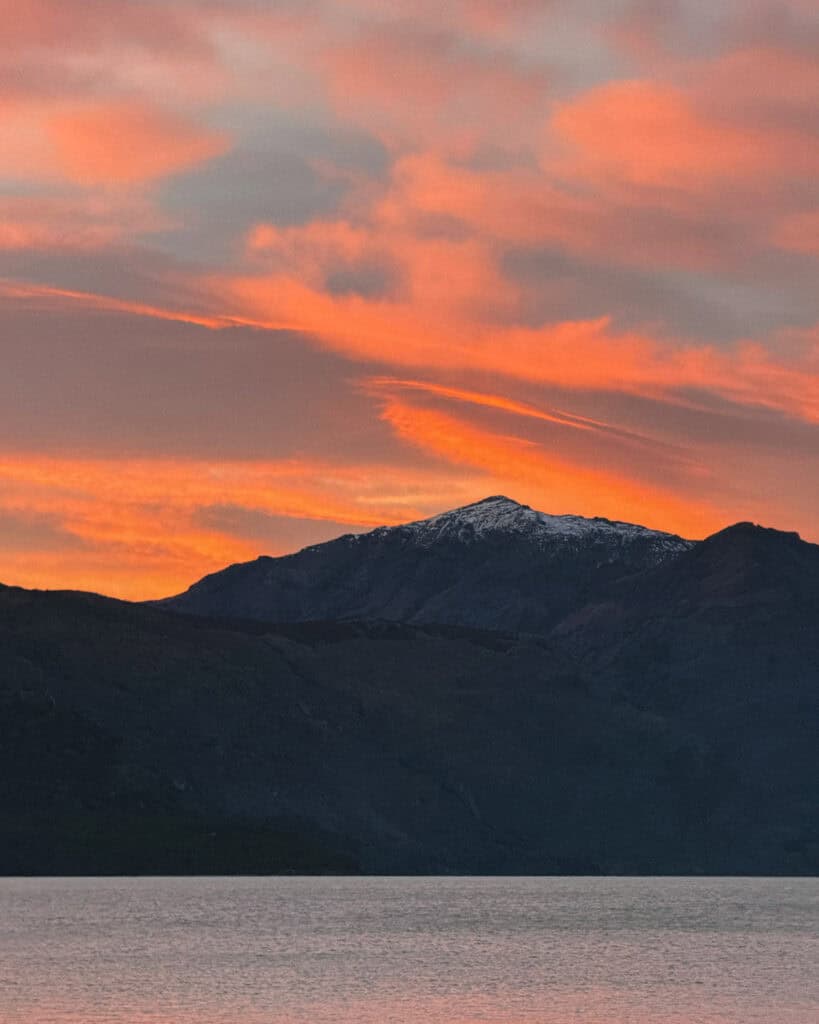
Early fall (March and April) still has beautiful sunny days, less wind, fewer crowds and stunning autumn colours. We visited Villa O’Higgins in April and were blessed with some perfect sunny days and a sea of fiery red and orange trees.
- 🗓️ How long to stay: it depends what your plans are in Villa O’Higgins. If you plan to visit Glaciar O’Higgins (a full-day experience), you’ll want to stay 2 – 3 nights. If you’re just going to explore town, see the end of the Carretera Austral and do some shorter hikes, 1 – 2 nights is fine.
- ⚠️ Safety: we felt completely safe in Villa O’Higgins, as we did everywhere on the Carretera Austral. These tiny towns are incredibly welcoming and people are friendly.
- 🗣️ Language: Spanish is the official language in Chile, and there is barely any English spoken in the remote towns of the Carretera Austral. Chilean Spanish is notoriously hard to understand, so even if you’ve got a decent level of Spanish, be prepared to struggle with their unique vocabulary, fast speaking and mumbling!
- 💰 Currency: the currency in Chile is the Chilean Peso (CLP). While in some more touristy areas of the country, US Dollars are occasionally accepted for tourist activities, this isn’t the case in Villa O’Higgins.
- 💧 Can you drink the water: tap water is safe to drink in most parts of Chilean Patagonia, including Villa O’Higgins. It’s also a good idea to check with your accommodation before you drink, just to be sure.

Amenities in Villa O’Higgins
- 🛒 Supermarkets: there are a handful of small mercados around town that were surprisingly well stocked! The prices are of course higher than in the bigger towns, but it was not outrageous and there were a lot more products than we expected.
Supermercado Cabañas San Gabriel was quite big and had a huge range of products, mostly dry pantry goods. Los Coigues was smaller, but it was the only supermarket we found that had fresh bread. Supermercado y Ferretería Cordillera also looked quite large, but was closed on the Sunday we were there.
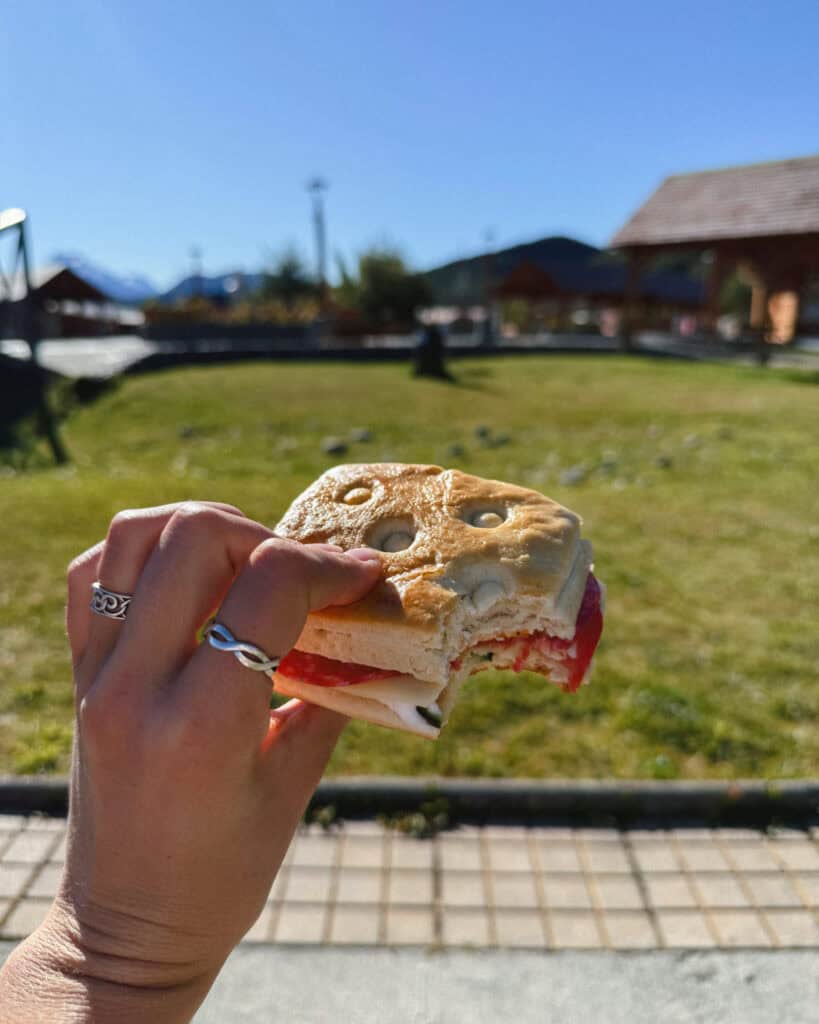
There are a handful of bakeries that run out of the locals’ houses – Amasandería Austral, Panadería LYL and Panadería Tentación De Dulzura. Don’t rely on them being open (especially not on Sunday), but it’s worth a try if you’re chasing fresh bread.
- 🏧 ATMs: there are no ATMs in Villa O’Higgins.
- 💳 Card or cash payments: we had no problem paying on card at a restaurant, the service station and supermarket. I’d come stocked with cash just in case, as there are no ATMs here and smaller businesses won’t have card facilities, but it wasn’t impossible to pay by card.
- ⛽️ Petrol stations: yes, there is a COPEC station in Villa O’Higgins, however it only has diesel (1,288 CLP at the time of our visit) and 95 (1,552 CLP). As a comparison, these prices were slightly more expensive than Caleta Tortel and Cochrane, which makes sense, given VOH is the end of the line. There is air for your tyres and a small bike service/repair area.
- 📱 Phone service and wifi: there is 3G reception with Movistar. It was slow, but it worked. I believe Entel also has service and is considered the best provider for this area, however, due to new laws that came into effect in February 2025 banning foreigners from registering SIM cards in Chile, it’s near impossible to get an Entel SIM as a tourist. We had no problem buying a Movistar one; I think they did some quick thinking to find a workaround, but Entel repeatedly told us in multiple stores it was not possible.
The restaurant we had dinner at (Quiyango) had wifi, which was surprisingly speedy, so I imagine if you’re staying somewhere with wifi, it should work.
Save hours planning your Carretera Austral road trip with our Handbook + Custom Map

Final thoughts: Villa O’Higgins
Villa O’Higgins was a truly special and charming town.
For the some 600 people who live here, tucked away from the rest of the world, they’ve got a pretty stunning slice of Patagonia mostly to themselves!
It’s definitely worth the backtrack down the bumpy 99 km stretch of the Carretera Austral to get a taste of life at the end of the road. This charming little town was a highlight of our Carretera Austral road trip and I’m glad we made the effort to visit.
📍 Where to next? If you’re travelling along the Carretera Austral, your next stop will most likely be Caleta Tortel if you’re heading north or boarding the TABSA ferry to Puerto Natales if you’re travelling south.
MORE CARRETERA AUSTRAL POSTS
- Caleta Tortel, Chile Guide: The Boardwalk Town
- Cochrane, Chile Travel Guide: Patagonia’s New Hiking Hub
- Puerto Rio Tranquilo, Chile Travel Guide: Marble & Ice
- Villa Cerro Castillo, Chile Travel Guide: Hiking & Huemuls
- Coyhaique, Chile Travel Guide: Capital of The Carretera