
This article contains affiliate links that may earn me a small commission at no extra cost to you. As an Amazon Associate, I earn from qualifying purchases. For more information, see our affiliate disclaimer.
Granada is the gem in the crown of Nicaragua’s tourism industry. Its vibrant yellow cathedral is a marketing icon and the surrounding lava-filled volcanoes, jungle-clad islands and stunning crater lakes hold a lot of tourism appeal.
But for some reason, Granada just didn’t stick for us. Despite its polished and shiny facade, there is a lot of hardship in this city, and we found it confronting at times and deeply saddening.
That’s not to say you shouldn’t visit, this is a travel guide for Granada after all, and the city is undeniably charming, with plenty of things to do in and around.
But our honest impressions of this city were mixed, and our time here felt emblematic of our overall experience in Nicaragua – up and down.
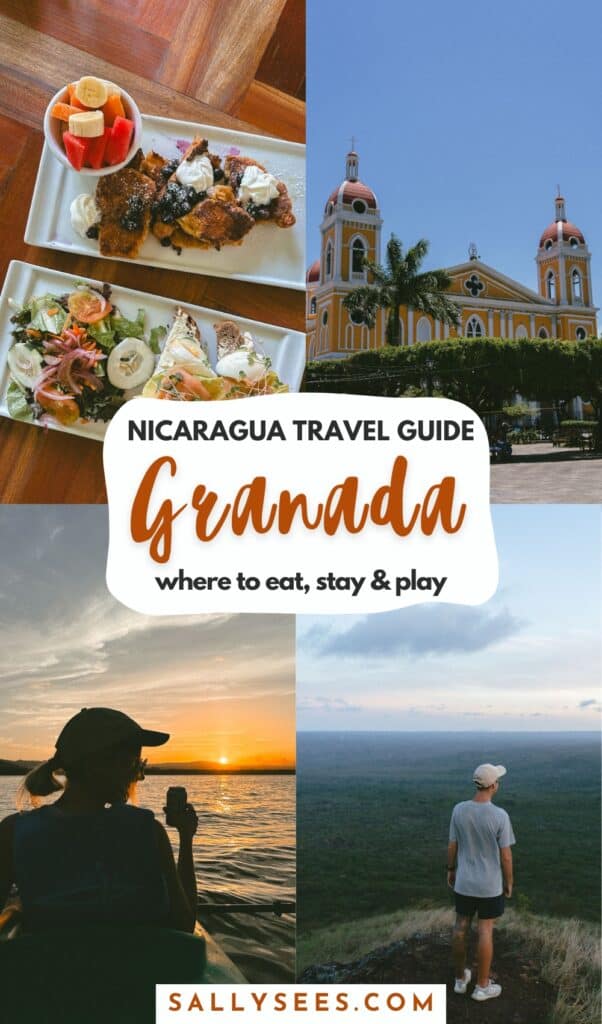
Read on for everything you need to know about Granada Nicaragua – where to stay, the top things to do in and around the city, the best eats, transport info for getting there and around, and some tips to hopefully help you enjoy your time in this charming colonial city more than we did.


About Granada Nicaragua
Granda is the oldest city in Nicaragua and one of the oldest in the New World. It was founded in 1524 by Francisco Fernández de Córdoba and has had a very colourful history.
Sitting on the shores of Lake Nicaragua, the city has a direct route to the Caribbean Sea via the lake and the Rio San Juan, making it a very important and prosperous trading city. Despite not being on the coast, pirates, none less than the famous Henry Morgan, ransacked the city multiple times!
Leon and Granada have been fighting for power for centuries, and when Granada made a play for leadership in the 1850s, it didn’t end well for them.
Leon brought in some help to fight the civil war, recruiting crazed American mercenary William Walker. He defeated Granada but in a twisted series of events, declared himself president of Nicaragua. He was later overthrown, but he burned Granada to the ground on his way out.
Granada was rebuilt and today is a textbook example of a Spanish colonial city, comparable to Antigua in Guatemala or Casco Viejo in Panama.
Where Leon is whitewashed, Granada is a rainbow of colours. The cobblestone streets are lined with buildings in shades from pink to blue to green, and the bright yellow cathedral is eye-catching from anywhere in the city.
Its architecture might be Spanish, but in true Nicaraguan fashion, Granada is surrounded by lakes and volcanoes. The forest-covered Volcan Mombacho looms over the city, and the lava-filled Volcan Masaya is one of the best excursions. Lake Nicaragua is just a stone’s throw from downtown, filled with hundreds of jungle-clad isletas and extinct crater Laguna de Apoyo is just a short drive away. Although the city wasn’t our favourite, we loved all the nature on its doorstep.


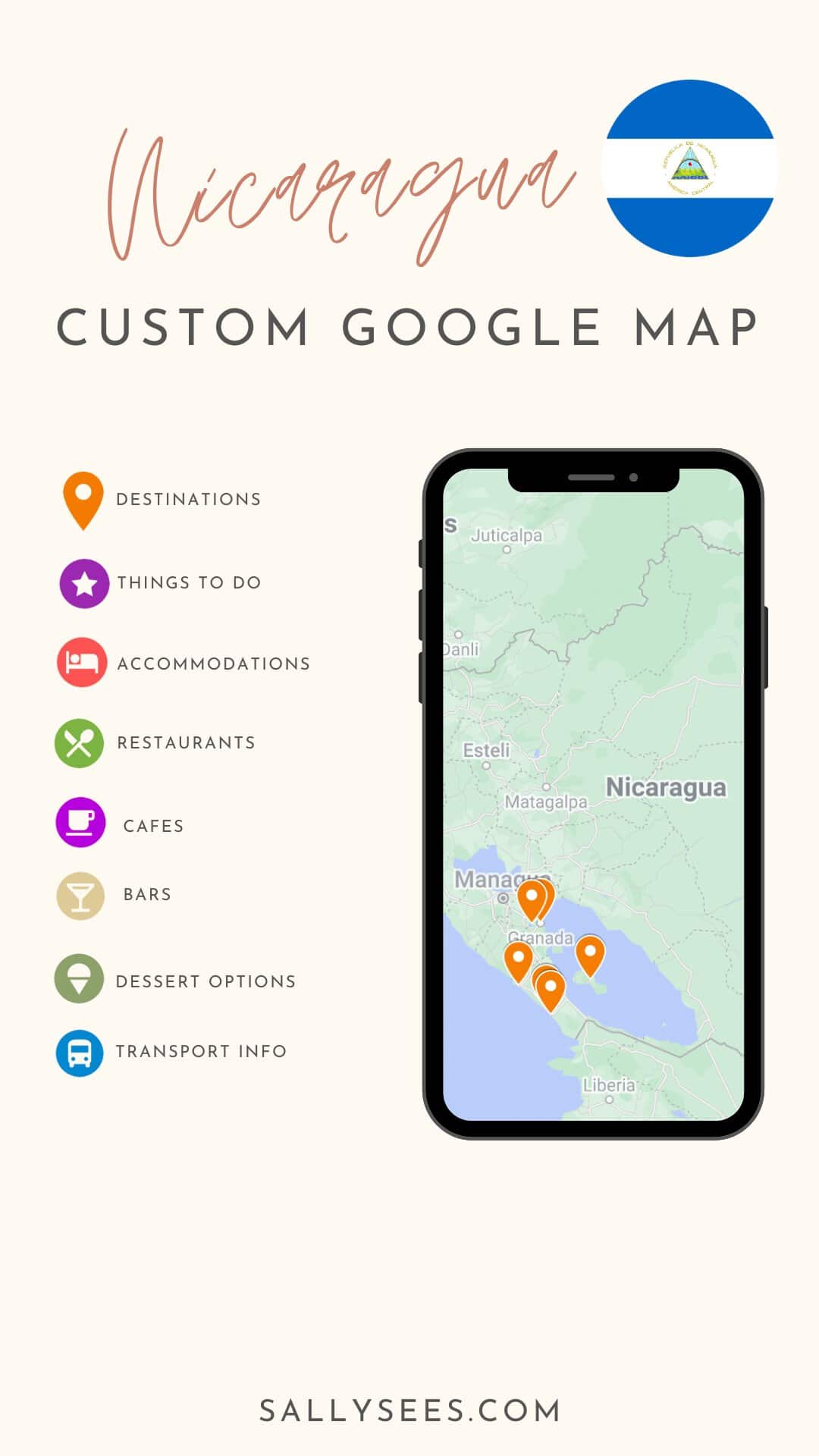
Nicaragua map

Our honest thoughts on Granada
While on paper Granada ticks all the boxes, we’re not alone in feeling something is off in this city.
The obvious poverty and desperation around the city were confronting. Without minimising the plight of the locals and the devastating political and societal problems in this country, we found Granada challenging to visit.
You can’t walk too far down its cobblestone streets without being begged, or at times harassed, with children sticking origami flowers in your face and intoxicated men holding their hands out. It was very sad and hard to know how to process and respond.
I also found the horse-drawn carriages very distressing. It’s hard to argue with a way of life that’s been happening in the city for decades, with workhorses playing a huge role in the local’s livelihood, but I can argue with horses being used for tourism.
The streets around Parque Central are lined with horses chained to Cinderella-style carriages, dolled up for tourists to take a ride around town. The horses are extremely thin, they stand in the stifling heat all day and are overworked and underloved.
Please do not participate in this cruel practice.
As an animal lover, this made it even harder to enjoy our time in Granada. There is also a big population of street dogs in the city, which is not unusual, but we couldn’t help but feel desolation and misery from all angles.
This is not intended to dissuade you from visiting the city. On the contrary. It’s an essential part of any Nicaragua itinerary and there are some unmissable cultural and natural attractions in this area. I always appreciate going to a new destination with realistic expectations, and I want you to do the same.
I hope you find the charm in Granada and I would love to read any comments entirely discrediting all my thoughts!

Getting to Granada
- 🚌 Bus: Granada is well connected to other cities around Nicaragua via public buses. Sometimes they are big chicken buses, but often they are small vans locally known as ‘microbuses’. If you’re coming from Leon, you’ll need to go via Managua via the UCA Terminal. The UCA Terminal is temporarily closed (as of July 2026) while road works are being completed. I THINK the new terminal is located here. Regardless, if you are transiting via Managua, the bus you get off should stop (or drop you off) at the new terminal to connect to Leon.
If you’re coming from the south (Ometepe, San Juan del Sur etc.), you’ll most likely pass via Rivas, where there are direct buses to Granada.
- 🚐 Shuttle: the easiest, but most expensive way, to travel around Nicaragua is via tourist shuttle. You can get direct shuttles to Granada from Managua (including from the airport), Leon, Popoyo, San Juan del Sur etc. You can book shuttles to Granada online via Bookaway, alternatively, most hostels or accommodations can organise shuttles.
- ✈️ Airport: Granada is a common first stop after landing at the international airport in Managua. Skip the capital and head straight for Granada. If you haven’t pre-booked a shuttle, you can jump in a taxi on arrival. Expect to pay upwards of $50 USD for the 1-hour journey. It’s possible to get a taxi to the UCA bus terminal in Managua (or the new temporary one) and then a bus to Granada, but taxis can charge up to $20 just to get to the bus stop! For convenience and time-saving, I’d just get a taxi all the way to Granada and not muck around with the bus, it’s hectic and not really what you want when you first land. There’s no Uber in Nicaragua, but InDrive and Ray are available rideshare options and will probably be slightly cheaper than a taxi.
🚐 Book shuttles to or from Granada on Bookaway and get a 5% discount with our code SALLY5

Getting around Granada
- 👣 On foot: once you arrive in Granada, it’s easy to get around the downtown on foot. It’s mostly flat and the streets are laid out in a tidy grid.
- 🚲 By bike: you don’t really need a bike to get around the core historic centre, but if you want to explore the Malecon and the area around Lake Nicaragua, a bike is a fun way to do it. We rented them from Maximus Bicycle Rentals on Calle La Calzada.
- 🚕 Taxi: taxis are constantly zooming around the city beeping their horns. Most operate as ‘colectivo’ taxis, so will stop and pick up other passengers. There is a fixed price for trips within the city, when we visited it was 50 Cordobas. We were consistently charged this for multiple trips, which is always comforting!
- 🚌 Chicken bus: to get to attractions around town, and away when you leave, there is a network of very scammy buses (some routes use chicken buses, others vans, known as microbuses). There are two main bus terminals in Granada. One adjacent to the park, for buses bound for Masaya and Managua, and and another in the south of the city for buses to southern destinations like Rivas and beyond. Both terminals are pinned on my Nicaragua Google Map. Be prepared to be charged a higher rate simply for being a tourist, and/or a fee for your luggage.
- 🚐 Tours: many of the activities around Granada (e.g. volcano hikes) are best done with a tour, which will always include transport from the city. Hostel Oasis has shuttles to Laguna de Apoyo.

Where to stay in Granada
If you’re on a tight(er) budget, consider looking for accommodation with kitchen facilities. You’ll see my comments in the ‘where to eat’ section below, but we found eating out in Granada very overpriced, and we were happy we chose an apartment with a kitchen. We made very good use of it, much more than we normally would. Also because we just weren’t vibing with the city, so we actually quite enjoyed a few quieter nights at home cooking and watching a movie!
BUDGET 💰
- De Boca en Boca: of the many hostels in Granada, this one is a favourite. It’s the departure point for the famous Friday Treehouse Rave, so it can get a bit rowdy at times, but if you’re looking for a social spot it’s a great choice. They have a lovely rooftop, a kitchen and free breakfast.
- Hostel Oasis: the other top contender, Oasis has a pool, free breakfast, free drinks at happy hour every evening and very helpful and knowledgable staff with good tours (very affordable, we booked them even though we didn’t stay here).
- Hostal Azul: this hostel ticks a lot of boxes! A swimming pool for the heat, a well-equipped and clean communal kitchen, free breaky and coffee every day, social but not too party-heavy and friendly, helpful staff. Oh, and it’s in a great central location.
MID-RANGE 💰💰
- Casa Calala: this is where we stayed. These are simple but charming colonial-style apartments. They’re very spacious and well-equipped with kitchens in the centro area. If you want privacy and the ability to cook without breaking the bank, this is the perfect option.
- Hotel Casa San Francisco: a very lovely boutique-hotel-style property, but some rooms come with small kitchenettes. You get the best of both worlds, with friendly staff, a swimming pool and a hotel feel, but the amenities to self-cater.
- Los Patios Hotel: colonial architecture meets minimalist styling at this small boutique property. With a big pool, huge communal kitchen, helpful staff and a delicious daily local breakfast, it’s a peaceful haven from the hectic city.
BOUTIQUE LUXURY 💰💰💰
- Casa Bubu Guest House: this is a high-end, luxurious experience with the casual, friendly feel of a guesthouse. A beautifully restored colonial house, with spacious and tasteful rooms around a central pool area. With a rating of 9.9/10, it’s clear the owners provide an exceptional experience (and a 3-course, individually cooked breakfast daily!).
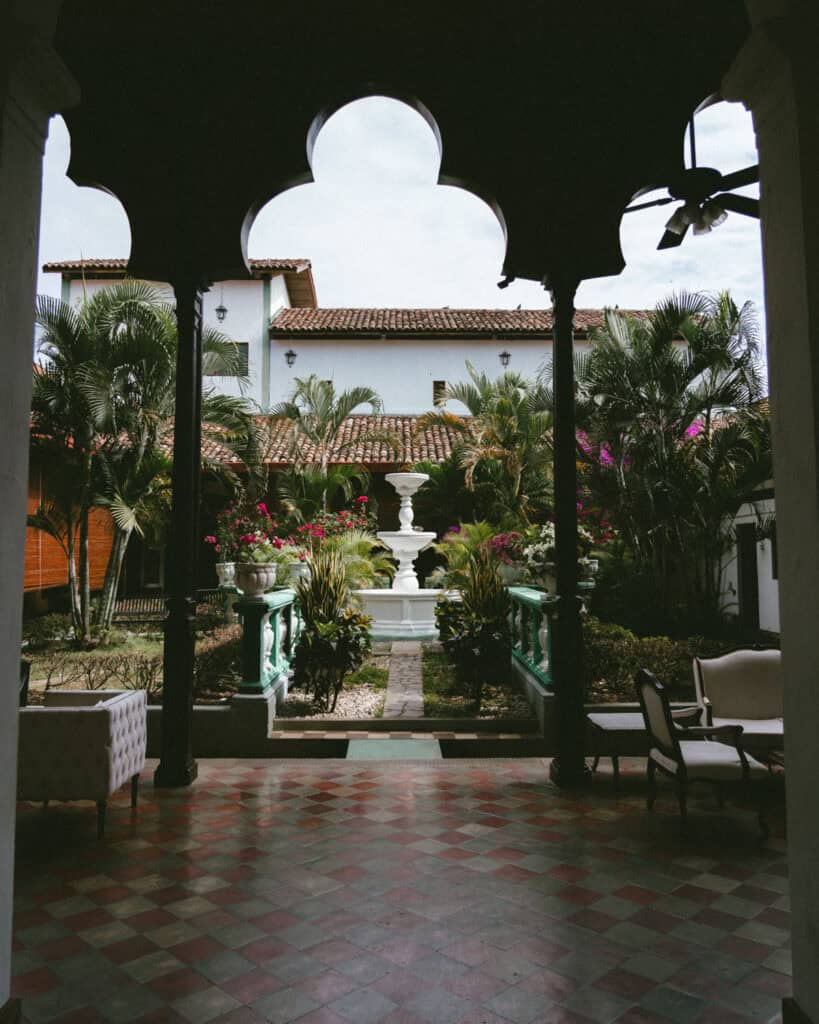
- Secret Garden Boutique Hotel: a boutique, colonial dream with a hint of boho. Think tiled floors, earthy decor, and a garden-filled courtyard with a lush swimming pool. Excellent service, daily breakfast and a central but peaceful location.
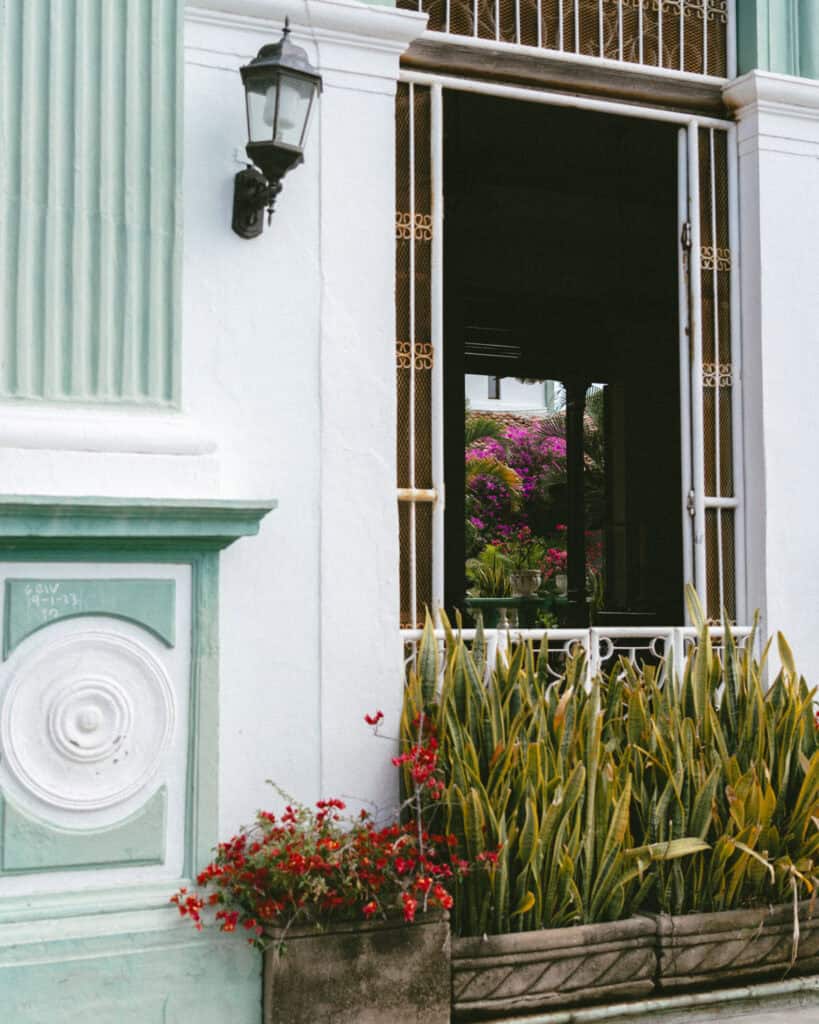
- Hotel Dario: this historic hotel is on Calle La Calzada and we wandered past and admired the colonial grandeur every day. The internal courtyard gardens are stunning. The rooms could use a slight freshen-up as they’re a bit dated, but the service is excellent.

ISLETAS DE GRANADA 🏝️
For a unique, natural experience, there are a handful of high-end properties on private islands in the Isletas de Granada on Lake Nicaragua.
I would recommend staying here as an addition to your time staying in the city centre, especially if you don’t have time to visit, Ometepe, Nicaragua’s nature paradise.
This isn’t somewhere you’d like to leave every day to go and sightsee. Instead, allocate a few nights at the end of your time in the city to soak up this remote experience, surrounded by jungle, wildlife and stunning lake views.
- Isleta el Espino: the pick in the isletas. A stunning private island with no comfort spared! Enjoy the pool, yoga, kayaking, and massage treatments in this tranquil slice of paradise, surrounded by jungle.
- Jicaro Island Lodge: luxurious, waterfront bungalows are complimented with full-board, a swimming pool and water sports included. This sustainability-focused ecolodge is an excellent option.
- Hotel El Reith Lake: a more traditional, albeit very grand hotel. On sprawling grounds with lush gardens, a pool and a restaurant, some of the higher-category rooms include private plunge pools.

Things to do in Granada
There are so many great things to do in Granada, I’ve got a dedicated post to the top 12 things to do.
As a quick preview, these are my absolute must-do things in Granada:
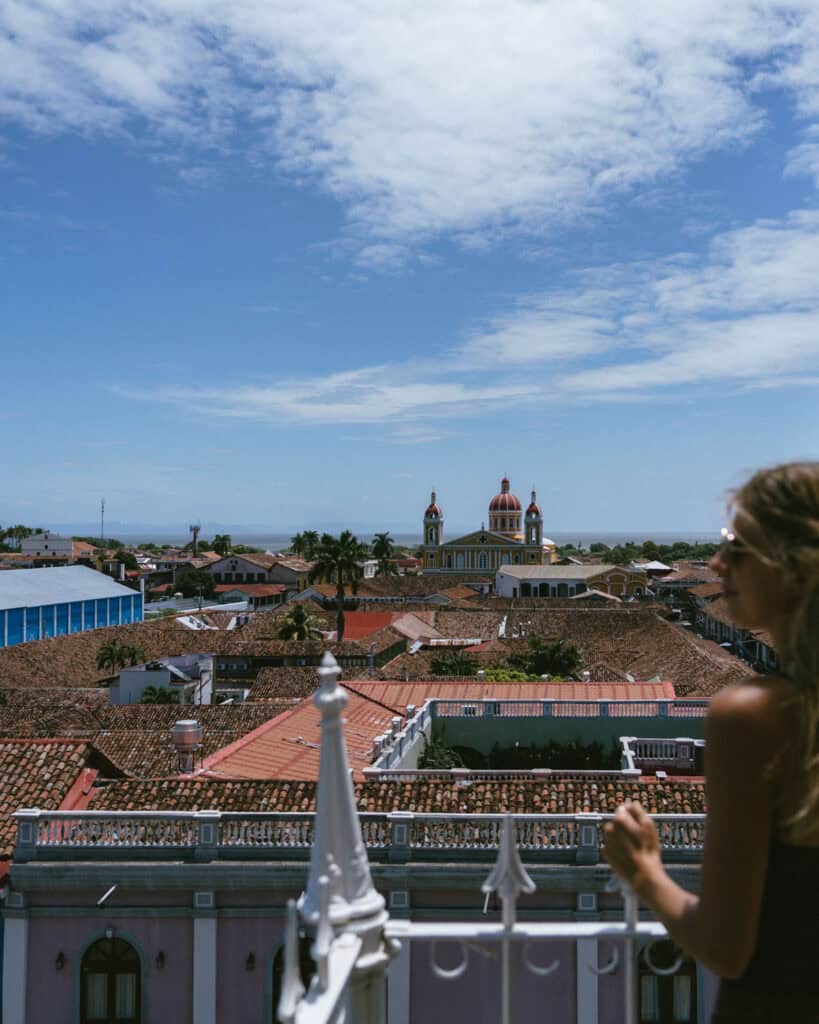
- 🔔 Climb the bell tower at Iglesia de la Merced: for some stunning views over the city and Lake Nicaragua, climb the tight spiral staircase up to the bell tower of this crumbling colonial beauty.
- 🌋 See lava at Volcan Masaya: perhaps one of the most sought-after experiences in all of Nicaragua, Granada is the jump-off point for evening tours to Volcan Masaya, home to a smoking crater full of glowing, red lava.
- 🛶 Go kayaking on Las Isletas de Granada: an enormous eruption of Volcan Mombacho some 20,000 years ago created 365 islets in Lake Nicaragua. A kayaking tour to explore the jungle-clad waterways is one of the best nature experiences in the area. Expect to see monkeys and lots of birdlife.
- 🔅 Admire the vibrant yellow Catedral de Granada: the icon of Granada, this stunning yellow church is never far from sight, looming over the leafy Parque Central and popular pedestrian street, Calle La Calzada. You can climb inside the bell tower for some aerial city views.
- ☁️ Hike through the cloud forests of Volcan Mombacho: dominating Granada’s skyline, Mombacho Volcano is an entirely contrasting experience from Masaya. The majority of this volcano is covered in dense cloud forest.
🌋 Read our complete guide to the best 12 things to do in Granada, Nicaragua


Where to eat in Granada
We found eating out in Granada incredibly expensive. Most of the popular restaurants have prices listed in USD and don’t include the 15% IVA tax in the prices on the menu. We couldn’t believe the difference from Leon, just a few hours away.
Consequently, we cooked a lot of meals while we were here, especially dinner as the city didn’t feel that nice at nighttime. We still had a few decent meals out, so I’ve got a few recommendations, but don’t get your hopes up for food, especially if you’re on a budget.
CAFES & BREAKFAST
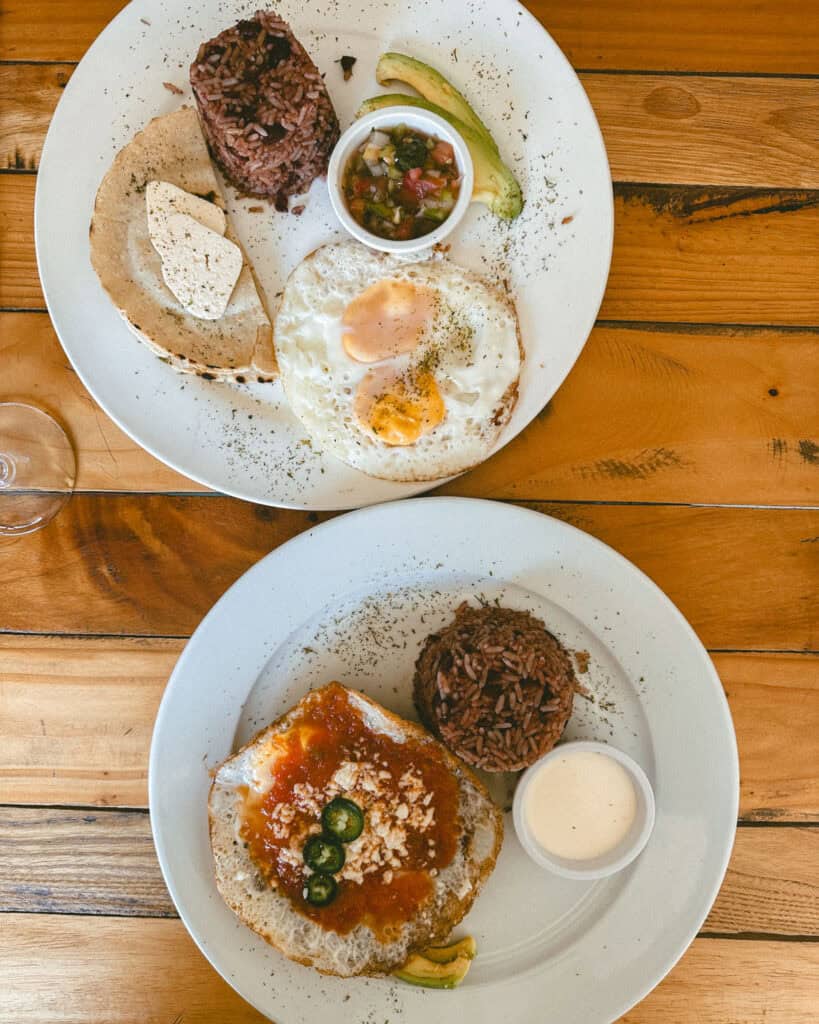
- ☕️ La Sultana y el Cafe: this was our favourite cafe in Granada. They had big, tasty and affordable local breakfast options (the tipico Nica breakfast is the best!), their coffee was good and the prices were in Cordoba, without added tax.
- 🪴 Garden Cafe: the most popular gringo, expat cafe. Yes, it’s got a beautiful garden in its lovely internal courtyard, and the food, juices and coffee we tried were nice, but it’s expensive and quite busy.
- 👂🏼 Cafe de las Sonrisas: a fantastic social enterprise cafe, it is staffed by the local deaf community. There are menus with pictures and cards with sign language on each table, so you can try your best to communicate without talking. They also have a store on-site selling hammocks handmade by the community.
- 🍓 Batidos Pitaya: a popular smoothie bowl shop chain in Nica, this branch has recently opened in Granada. We tried them in Leon, and they’re not the most amazing smoothie bowls we’ve ever had, but they’re a light, healthy change from gallo pinto!


RESTAURANTS
- 🍔 Tostometro: tucked away on the outer edges of the market, Tostometro serves up a unique local dish – tostone burgers! Tostones are smashed and fried plantains, and in this case, they’re used as the bun. There are meat or veggie options (we preferred the veggie) and the staff are super friendly. You get some extra little snacks before and a sweet treat after.
- 🌯 Burrocks: on our quest for affordable food in Granada we found Burrocks. A nice little Mexican restaurant, the burritos were really tasty, filling and cheap! Lots of veggie options too.
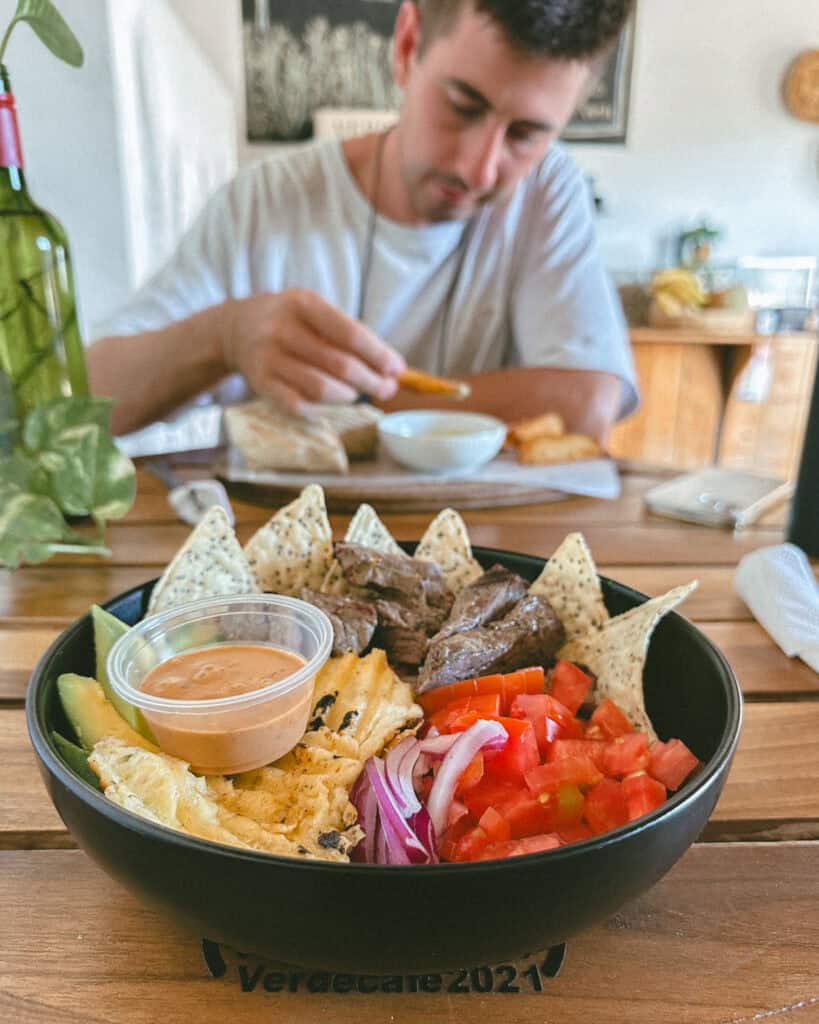
- 🥗 Verde: this was a nice cafe-style spot near where we were staying with light salad and rice bowls, juices and smoothies. The prices were in USD which we didn’t love, but they didn’t add any taxes. The space is cute too.
- 🧆 Pita Pita: this is more of a suggestion to avoid than an actual recommendation. Pita Pita is very popular, and the food was nice. Having Middle Eastern falafel and hummus was a nice change, but the prices were exorbitant. The menu is in USD plus 15% tax plus 10% service, we were gobsmacked when we got the bill.
🍦 For dessert, Moyo is a nice frozen yoghurt shop


Granada Nicaragua travel tips
🇳🇮 Get more Nicaragua travel tips in our Nicaragua travel guide
- 🌤️ Best time to visit: Granada isn’t quite as hot as Leon, but it’s still pretty warm year-round. The dry season, from November – April, is the best time to visit to avoid the rains and humidity. The city gets a bit of breeze off Lake Nicaragua which made it slightly more pleasant than Leon.
- 🗓️ How long to stay: although we didn’t love Granada itself, there are a lot of great things to do in and around the city. How many nights you spend will depend on what day trips you want to do, and in particular, whether you’re planning to visit Laguna de Apoyo for one day only, or stay a couple of nights (recommended!). We spent 5 nights in the city plus a stay at the laguna separately. We probably would have been comfortable with 4 nights, less if we weren’t hiking Volcan Mombacho.
- 🫶🏼 Safety: unsafe is not the right word, but we definitely felt uncomfortable in Granada. The poverty and desperation around the city are evident. In no way do I want to minimise these very real and serious societal problems, but from a visitor’s perspective, it was hard to face.
We were constantly harassed the second we walked out of our accommodation, with people trying to sell us things, children sticking origami flowers in our faces and people begging. There were a lot of unsavoury characters, and it seemed like a lot of drug and alcohol abuse. It felt at odds with the shiny, colourful colonial streets we were walking around.
We never felt unsafe, but we didn’t feel any desire to be out and about at night (plus the high prices of the restaurants deterred us from going out for dinner), and you should be very aware of your surroundings and valuables. Avoid the Malecon area at night too, we were repeatedly told we would get robbed there.
- 🗣️ Language: Spanish is the official language in Nicaragua and is, of course, widely spoken in Granada. Nicaragua overall isn’t a huge tourist destination so you should brush up on your Spanish. Granada is firmly on the tourist trail though, so you will find some people involved in tourism who speak some English, don’t expect everybody to though.
- 💰 Currency: the official currency of Nicaragua is the Nicaraguan Córdoba, however, most prices in Granada are listed in USD. I think this is because it is such a touristy destination, but it was very frustrating. You can pay in USD, but if you want to pay in Cordobas, check carefully the exchange rate you’re getting (we were often worse off paying in local currency – you tell me how that makes sense!). It was possible to pay by card in bigger businesses in Granada e.g. tour companies, nice cafes and restaurants and supermarkets.
- 🏧 ATMs: most ATMs in Nicaragua have the option to withdraw Córdoba or USD. Outside of Granada, I recommend paying in Córdoba where possible as the rate is usually better, but in Granada, you might actually like to get some USD.
We weren’t able to find an ATM that didn’t charge fees, and we were always charged the equivalent of $6 USD (either 220 Córdoba if we were withdrawing local currency, or $6 if we withdrew USD). Apparently, some people have luck getting free withdrawals from Banco Lafise or ATMs in the BancaRed network which include BDF, Avanz and Ficohsa. Do note that some ATMs only accept Visa, not MasterCard.
BAC and Banpro are the most common across the country. You will find all of these banks with ATMs in Granada, most are conveniently clustered around Parque Central.
- 📱 Phone & SIM Cards: like many Central American countries, Claro and Tigo are the most popular phone providers in Nicaragua.
There is a Claro and a Tigo store in the centre of Granada, which is the easiest place to buy and set up a SIM card if you’re just arriving in Nica. Bring your passport.
You can also get SIM cards or top-ups from local tiendas or phone stores. Just look for a Claro or Tigo logo in the window.
If all that sounds way too complicated, you can get an eSIM. I recommend Nomad as their data inclusions are much higher than other companies.
- 🥑 Groceries: the biggest and best supermarkets in Granada are a 20-minute walk from the centre or a quick taxi ride. La Colonia and La Union are both next to each other, and they were the best supermarkets we had seen for months! We spent a lot of time there enjoying wandering the very stocked shelves haha!
- 💧 Can you drink the water: it’s safest not to drink the water in Granada or anywhere else in Nicaragua. Your accommodation should have large garrafónes or jugs with purified water. Please don’t buy single-use plastic bottles.
GET OUR NICARAGUA GOOGLE MAP
Save hours with our FREE custom Nicaragua Google Map!
With almost 500 locations pinned, giving you our best tips and recommendations in your pocket.

Final thoughts: Granada travel guide
Our feelings for Granada were like a rollercoaster.
Our first impressions were not great, but we softened after an amazing experience kayaking on Las Isletas and seeing lava at Masaya Volcano. Only to plummet back down to frustration when being hassled for the hundredth time or ripped off yet again.
It’s certainly not our favourite city in Nicaragua (Leon gets that prize), but I can see the appeal. It’s an undeniably gorgeous city and there are some fantastic things to do in and around Granada. We don’t regret our visit, it’s a core part of any Nicaragua trip and we had plenty of highlights.
If you’re following our Nicaragua itinerary, your next stop after Granada will most likely be Laguna de Apoyo if you’re travelling south, or the Corn Islands if you’re heading north.
MORE GRANADA POSTS
- 12 Best Things to Do in Granada, Nicaragua
- Complete Guide to Laguna de Apoyo, Nicaragua (Stay > Day)
- Seeing Lava at Masaya Volcano National Park in Nicaragua
- Hiking Mombacho Volcano in Nicaragua: Is it Worth it?

The Comments
andrew
You need to know something.
Animals in all third world countries are treated like slaves and nothing like they are treated in first world countries.
Sally Rodrick
andrewI’m well aware of that, but it doesn’t mean tourists should support that.
Loyd
I have been to Nicaragua six times and have spent 1-2 months in Granada. Your impression of Granada is somewhat jaded in my opinion. Children asking for money is hardly considered harassment, perhaps you may find it bothersome. Poverty is a problem and visible, but in no way is as harsh as you present. Not all is how you present as “hassled and ripped off yet again” and is missing any true understanding of the people and culture. I would encourage visitors to go past the 2-3 blocks of the main tourist areas. And also to experience other towns across the country not on the Gringo trail.
Sally Rodrick
LoydHi Loyd, I completely respect your opinion and it sounds like you’ve spent a lot longer in Granada than I have. I never want to discourage anyone from visiting places and I hope that my recount of our personal experience in Granada didn’t come across that way. But, after all, this is my blog and I like to be honest and share our real experiences and opinions of places. Travel is not always rosy and positive as many people portray it online and I wish I’d read an honest piece about Granada before we visited, so I had managed expectations. I still would have visited, just as I encourage my readers to do, but going in with the right expectation can actually improve people’s experiences in places, in my opinion. Granada is a beautiful city, but it wasn’t a favourite after an extended period of travel in Central America and I would be dishonest if I painted it as totally wonderful. All the best, Sally
An American expat
I think you’re very wrong about Granada. If you stay in a touristy hotel you should expect people to try to earn a living by selling you things. You don’t find people trying to sell you stuff outside the touristy hotels. (I live here, so I know.)
You do know you were in one of the poorest countries in Central America? I’m sorry that endemic poverty ruined your sense of entitlement. Have you been to Managua? Every main intersection is filled with people trying to earn a living by selling things.The Nicaraguans are a very enterprising people. Why not buy something from them, or even give them 50 cordobas (less than $2)?
Granada is a beautiful city — safer than most American cities. It has excellent restaurants, beautiful churches, and interesting museums. Oh… and, it wasn’t burned to the ground by the filibuster William Walker (though he did try and wound up in front of a firing squad in Honduras after he abandoned the country).
Sally Rodrick
An American expatHi there,
I completely respect your opinion and agree. I know Nicaragua is the poorest country in Central America, and what I was trying to say is that it is difficult to see. I don’t say that from a ‘sense of entitlement’, just a sense of responsibility for owing my readers my honest opinion.
Nicaragua is a beautiful country, but it is deeply complex, and I feel immense sympathy for the people who live there and have to endure their awful government and poverty. It’s very sad, but I wouldn’t be telling the truth if I said it was easy as a traveller. It’s confronting and challenging, and we found it really difficult to be faced with that daily.
We have travelled all over the world, and being ‘sold stuff’ isn’t a problem. It’s a way of life and we totally understand it and respect people’s need to earn a living. But having children hang off you constantly every time you walk down the street, not respond to no, and turn quite aggressive after the fifth ‘no’, is something travellers should be aware of and that’s what we experienced. We stay local, buy local, try and choose local operators when we can to try and leave at least some small positive impact. But I won’t hand out cash to kids on the street who should be at school but are sadly stuck in a cycle of begging for tourists. That is not the right thing to do for them in the long run.
Maybe my post wasn’t worded properly and I apologise if I came across in that way. As you will see, I didn’t want to discourage anyone from visiting Granada, we did lots of great things there and I wrote about many of them. But if everyone on the interet says nothing but the same touristy marketing ‘I had a great experience’, it wouldn’t be honest or genuine. This was OUR experience in Granada, and I hope it was framed that way.
Thanks for your thoughts.
Sally