
This article contains affiliate links that may earn me a small commission at no extra cost to you. As an Amazon Associate, I earn from qualifying purchases. For more information, see our affiliate disclaimer.
One thing that may shock you when planning your trip to Patagonia, especially the Chilean side, is how few roads there are!
Outside of the popular tourist destinations of the south, this raw and rugged region is full of fjords, islands, glaciers and a lot of inaccessible land.
There are roads, but they’re often cut off by a mountain range or an icefield. Where roads get too tough, that’s where boat travel steps in!
Ferries are a way of life in this part of the world, and if you want to explore Chilean Patagonia more deeply, then you’re going to spend some time on a boat!
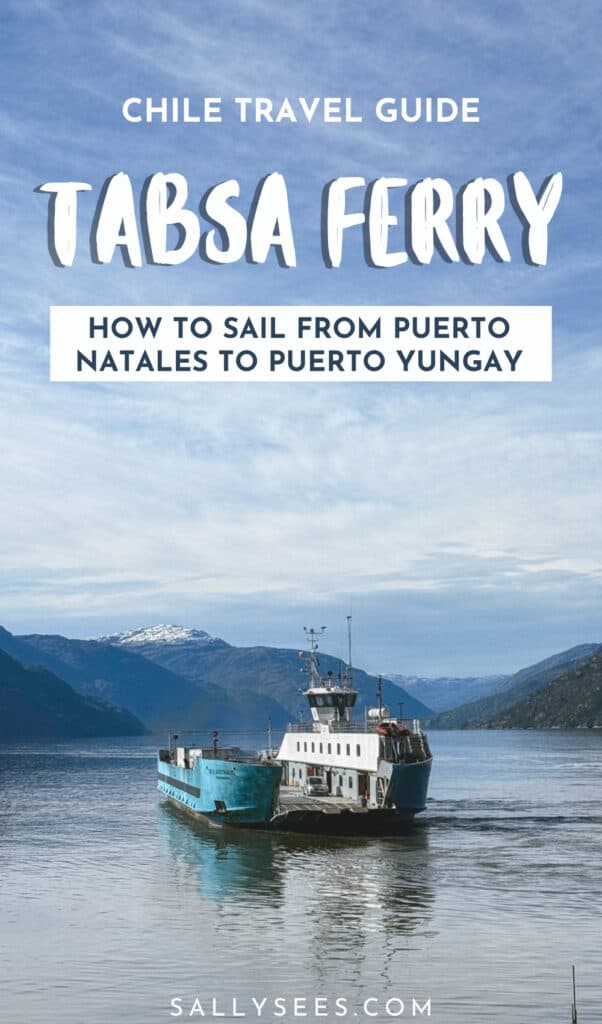
The TABSA ferry from Puerto Natales to Puerto Yungay is a popular route that connects two of Patagonia’s iconic sights – Puerto Natales and Torres del Paine National Park, and the Carretera Austral, Chile’s famous Southern Highway, which provides access to the most remote towns in Chilean Patagonia.
Besides being a necessary form of transport if you want to drive the entire length of the Carretera Austral as we did, cruising Chile’s fjords on a relatively inexpensive boat is a unique experience, with mind-blowingly beautiful scenery.
Here’s everything you need to know about the TABSA ferry from Puerto Natales to Puerto Yungay (and Caleta Tortel).

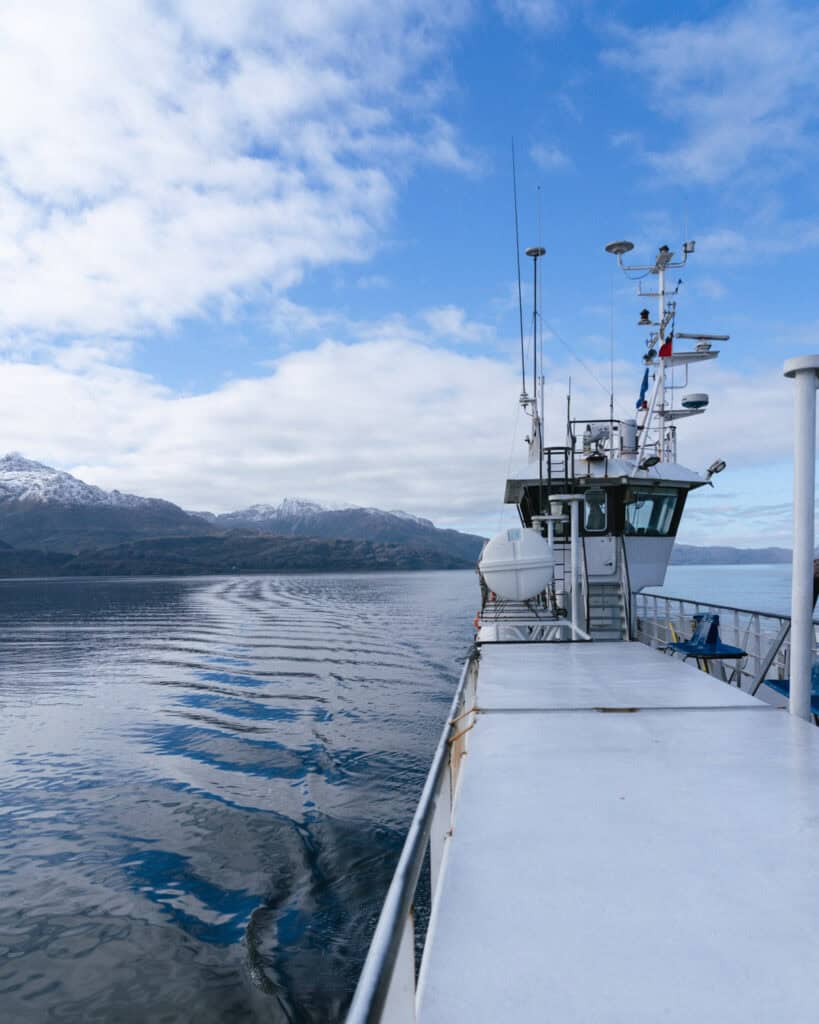
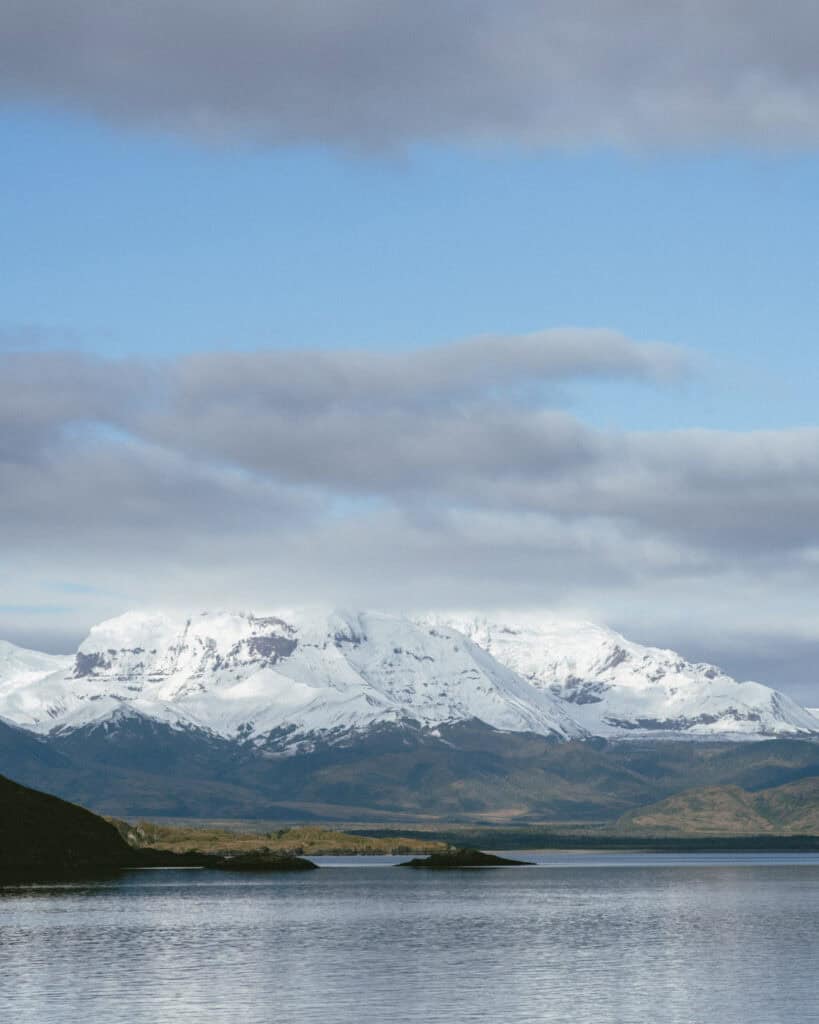
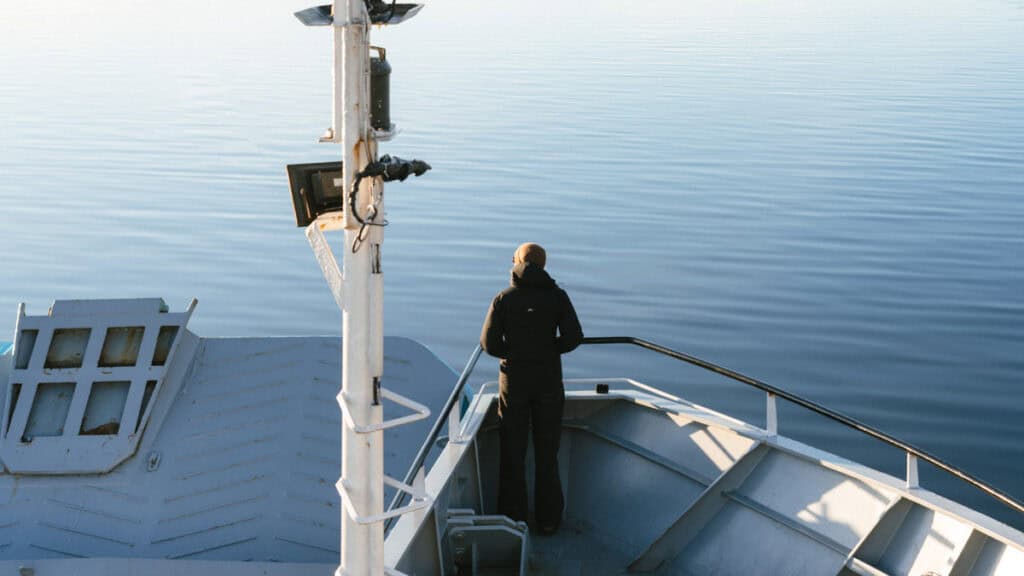
About the TABSA ferry
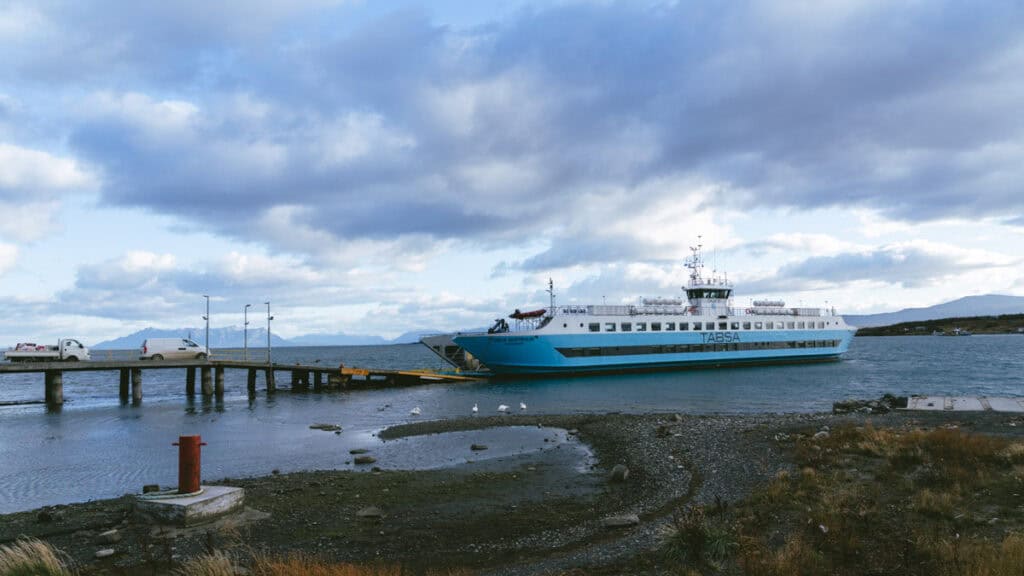
Transbordadora Austral Broom, aka TABSA, is a ferry company with several routes around Chilean Patagonia. Their boats move people, cars and cargo all over the maze of waterways in southern Chile.
The route from Puerto Natales to Puerto Yungay (and vice versa) is particularly important, connecting two of the most famous parts of Patagonia. The Torres del Paine National Park and Puerto Natales in the south, with the Carretera Austral (aka the Southern Highway) in Puerto Yungay.
The route is run with the ship Crux Australis, which has a capacity for ~150 passengers plus ~15 cars.
This is first and foremost a ferry transport service, NOT a tourist cruise. It’s not luxurious by a long shot, but the experience of sailing through some of the most remote parts of South America with breathtaking scenery makes it all worth it.
Puerto Natales to Puerto Yungay route
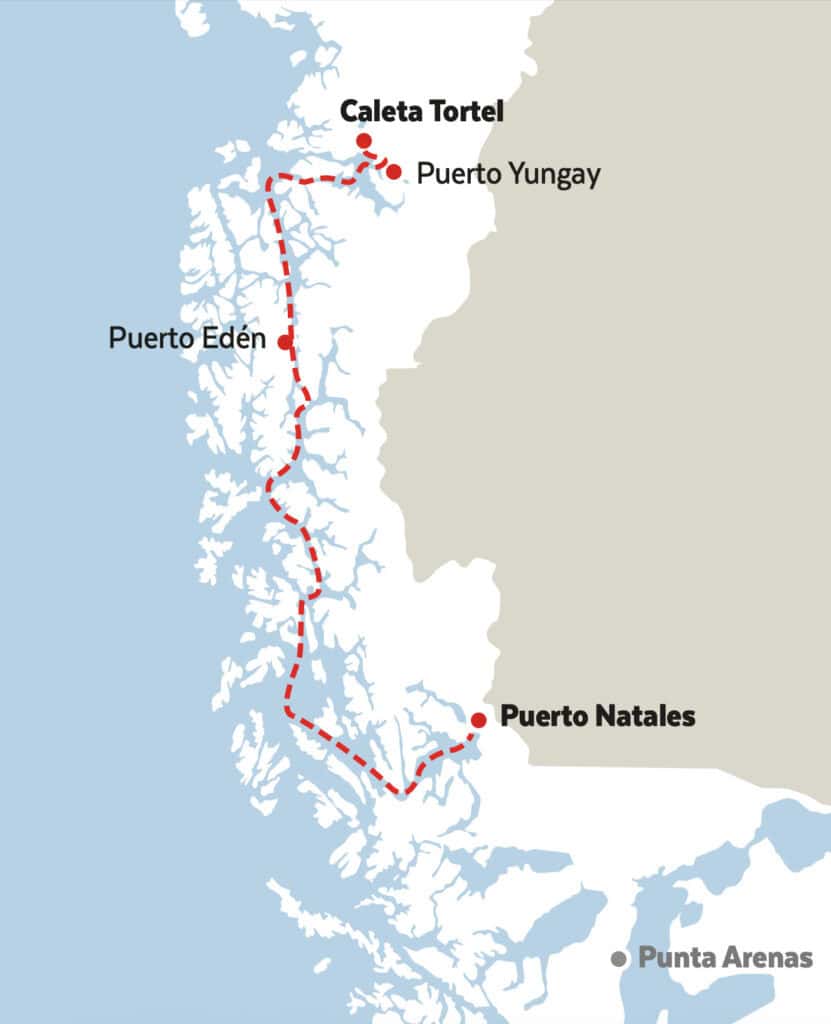
There are a few stops along the route from Puerto Natales – Puerto Yungay (or vice versa):
- ⛴️ Puerto Natales: a town you’re most likely already familiar with, it’s the gateway to Torres del Paine National Park and a very popular stop on most travellers’ Patagonia itinerary.
- ⛴️ Puerto Eden: the ferry stops in Puerto Eden, an extremely isolated village on Isla Wellington. Most passengers won’t disembark here (given it’s almost entirely disconnected from the rest of the world, besides this boat!), and the ferry primarily stops for supply drops.
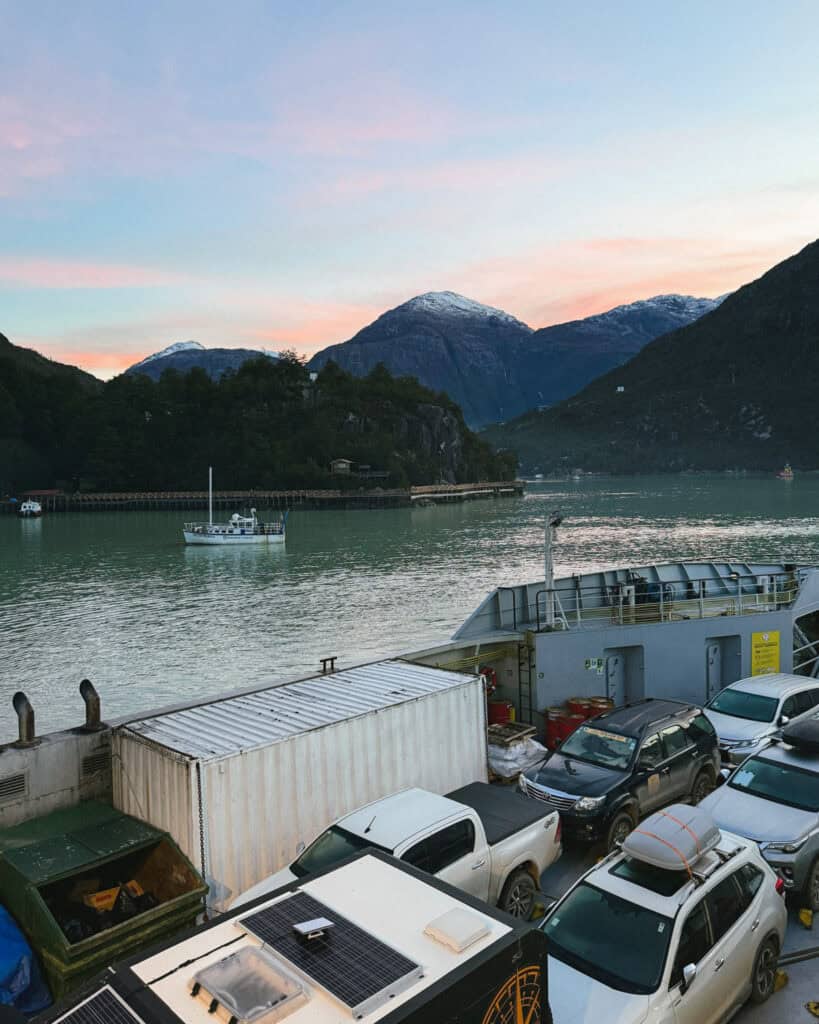
- ⛴️ Caleta Tortel: a village made almost entirely of wooden boardwalks! This town is connected by road to the rest of the Carretera Austral and is a popular stop in the area. We did visit Caleta Tortel, but we didn’t disembark the ferry here. Only foot and bicycle passengers can get off here, as the dock is not suitable for vehicles.
- ⛴️ Puerto Yungay: if you’ve got a vehicle, this is where you will disembark/embark. There is a port here and not much else, but you can easily connect with Villa O’Higgins (~3 hours south, once you’ve taken another ferry across the Mitchell Fjord!), or Caleta Tortel (~1 hour north).
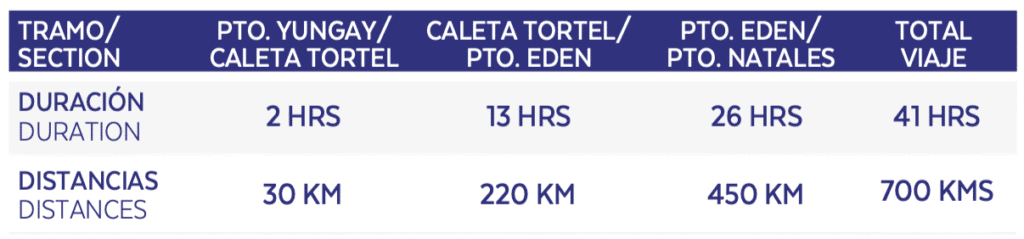
The journey is listed as taking 41 hours from point to point, but it is often a lot longer than that.
If you are boarding in Puerto Natales as we were, the ferry is usually scheduled to depart around 5:00 am, and all cargo and passengers must board the night before, so you’re already spending an extra 8 – 9 hours on board.
If you board in Puerto Yungay, you won’t have this extra night on board, as the boat is usually scheduled to depart at 7:00 pm, with boarding that afternoon.
Tides, swell and weather can also delay the trip. Our 41-hour journey ended up being over 60 hours, driving on in Puerto Natales at 8:00 pm on day 1 and disembarking in Puerto Yungay at 11:30 am on day 3.
Why take the TABSA ferry?
If you want to explore Chilean Patagonia outside of the big ticket highlights (Punta Arenas, Torres del Paine, etc.), then you’ll most likely end up on the Carretera Austral.
The Southern Highway is a 1,240 km mostly unpaved road connecting a string of remote towns. It is the most rugged, undeveloped, far-flung area of Patagonia, which, until the highway was completed in the early 2000s, was almost entirely disconnected from the rest of Chile, despite being on the mainland.
The highway starts in Puerto Montt in the north, a big city that is well connected by road and air to the rest of the country.
It ends in the south at Villa O’Higgins. When I say end, I literally mean end – the road stops, and there is nowhere else to go by vehicle. You hit the Andes and the Southern Ice Field.
If you’re on foot or with a bicycle, you can complete a complicated, multi-day boat-hike-camp crossing to El Chalten in Argentina. But if you’re in a vehicle, you have to make other arrangements!
Option one is turning around and driving back the way you came, backtracking for hundreds of kilometres at least, to a road crossing into Argentina, or driving all the way back along the highway.
This is where the TABSA ferry comes in! Approximately 3 hours’ drive north of Villa O’Higgins, along the Carretera Austral, is the tiny port, Puerto Yungay, where the TABSA ferry runs to and from Puerto Natales.
This maritime route has provided the only real connection between the deep south of Chile and the rest of the Patagonia region. It allows you to road trip the entire Carretera Austral and continue to places like Puerto Natales and Torres del Paine without backtracking (or vice versa, in our case).
This ferry is the missing piece in Chile’s road connections, and with this boat route, you can drive all the way from Punta Arenas in the south to the Atacama Desert in the north.
🇨🇱 Don’t forget to browse all our posts about the Carretera Austral for more help planning your trip. If you want to skip the multiple tabs and scribbling notes from my blog, I’ve got you covered with my Carretera Austral Road Trip Handbook. A 365-page eBook compiling everything I know about the highway into one beautifully designed place, available offline in your pocket while you’re on the carreterra!
Save hours planning your Carretera Austral road trip with our Handbook + Custom Map

Costs
There are a few different costs to factor in, and the fares are different for residents of the region, Chileans and foreigners.
If you are a foreigner taking the route from Puerto Natales – Puerto Yungay or Caleta Tortel (or vice versa), the fare is 159,090 CLP (~$165 USD). This fare includes your passage and three meals per day on the boat.
If you are travelling with a bicycle or a vehicle, this is an extra fee.
To take a bike, it’s an extra 13,270 CLP (~$14 USD).
For vehicles, it’s a per m³ charge – carga a piso (m³) – which is 23,860 CLP per m³. Our 4×4 Hilux camper cost us an additional 585,671 CLP (~$610 USD).
You need to reserve your vehicle as part of your booking and provide as many details as possible, but you won’t actually pay the fee for this until you check in.
They measure your car in the line to board, and then you pay the fee separately in the ticket office, once they’ve verified your measurements and the correct fare.
These costs were accurate as of 2025, but you can find the latest price schedule in a PDF document on the TABSA ferry website.

Schedules
At the time of writing, the TABSA ferry from Puerto Natales – Puerto Yungay and vice versa runs once per week in the low season (April – October) and every 6 days in the high season (November – March).
In the low season, the schedule seems to consistently be as follows:
- ⬆️ Puerto Natales – Puerto Yungay: departing 5:00 am Thursday morning (boarding Wednesday evening, often departing earlier)
- ⬇️ Puerto Yungay – Puerto Natales: departing 7:00 pm Saturday evening (boarding same-day)
In the high season, the departure times are the same, but it’s every 6 days, not once a week. So the first week it departs on Thursday, the next week it departs on Wednesday, the next Tuesday and so on.
The schedules are published on the TABSA website here. You cannot book a route until it has been published on their site and opened for reservations.
At the time of writing (late September), they have published the schedule all the way until the end of February. When we travelled (early April), the schedule didn’t become available until January of the same year, and we booked straight away.
Booking tickets
Tickets can be booked online on the TABSA website. It’s a really simple and user-friendly website, and we had no problems paying with a foreign card.
As I mentioned above, you can only book routes that have been published. It won’t show any availability for dates that they haven’t ‘opened’ for booking.
I would highly recommend booking this ferry as far in advance as possible, especially if you have a vehicle. It’s not that big, and it’s the only route of its kind, which can be popular and booked out in the peak summer months.
I have read about people turning up the day of without a booking to try and squeeze on, as people often don’t show up for their reservation. Sometimes it works, sometimes it doesn’t. If you’ve got a vehicle, it’s a lot tougher. It depends on how much spare time you’ve got to wait around for another week (or longer) for the next one.
You must book for every individual passenger, even if you have a camper/van that you are going to sleep in. TABSA policy is that every passenger must have an allocated seat on the boat, even if you’re not planning to use it. (Although they might give you a different answer if you turn up on the day, hoping for a last-minute spot with a camper or van you can sleep in).
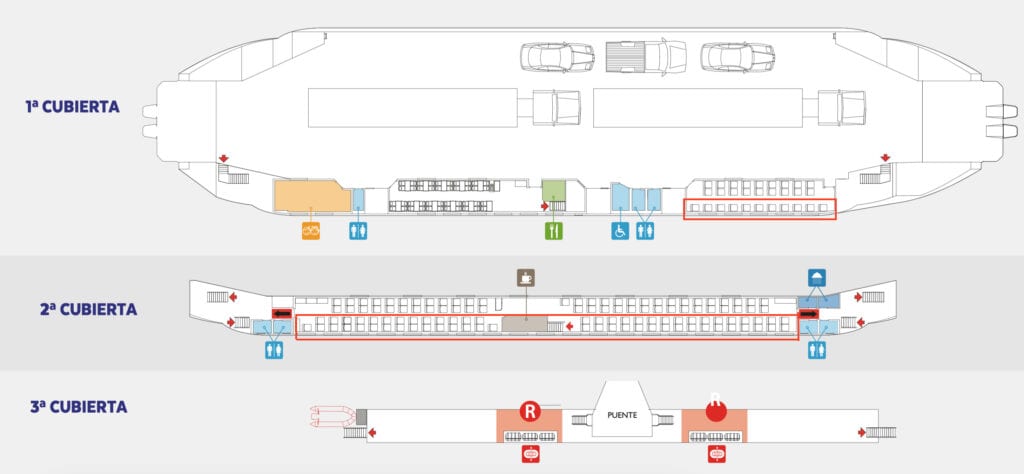
You have to select a seat when you do your booking online, but the map they show of the boat really confused us! We thought we were booking a window seat, but the map was back to front, so we didn’t end up with one – oops! We were planning to spend most of our time in our camper anyway, so it didn’t matter, but I can help you avoid making the same mistake.
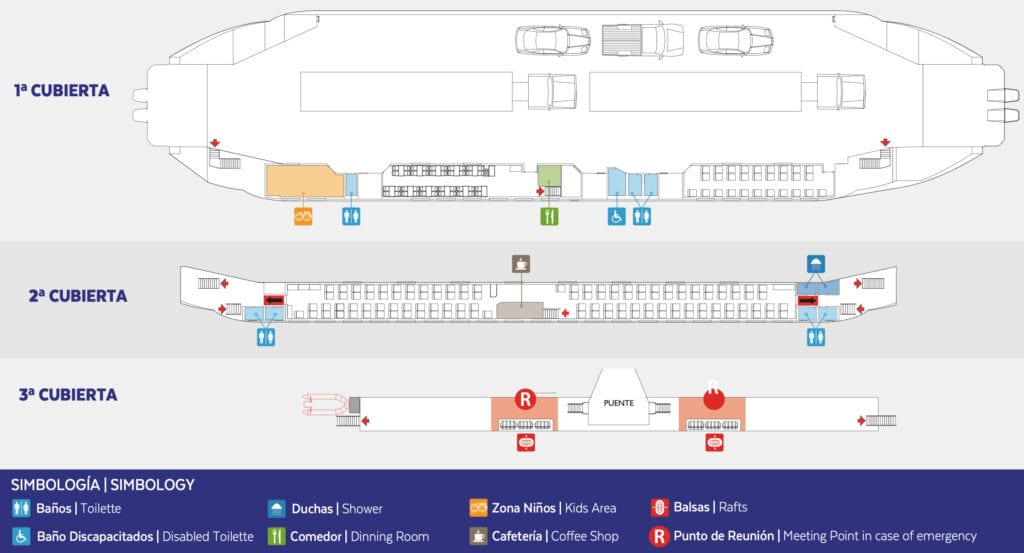
I’ll talk more about the ship’s layout below, but I would recommend booking the seats circled in red downstairs. This is a smaller and much quieter room, and the rows I’ve circled are window seats.
Alternatively, the seats on the upper level inside the red line box are also window seats.
Onboard experience
Ship layout
There are three levels on the boat.
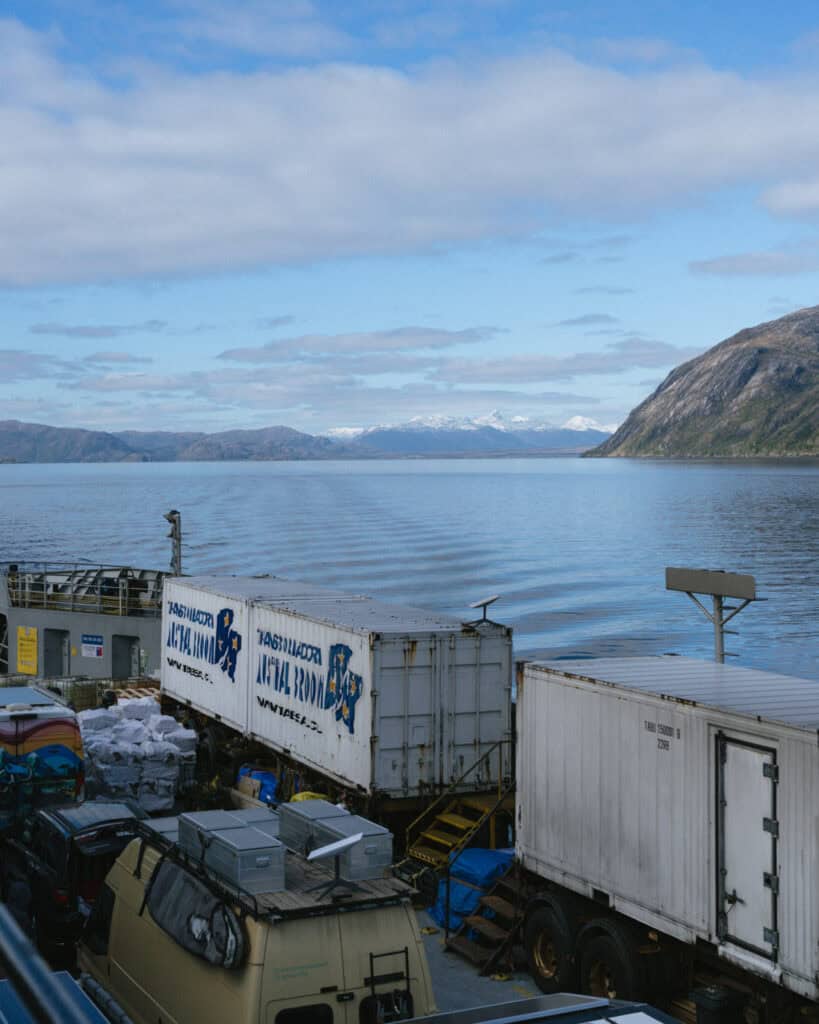
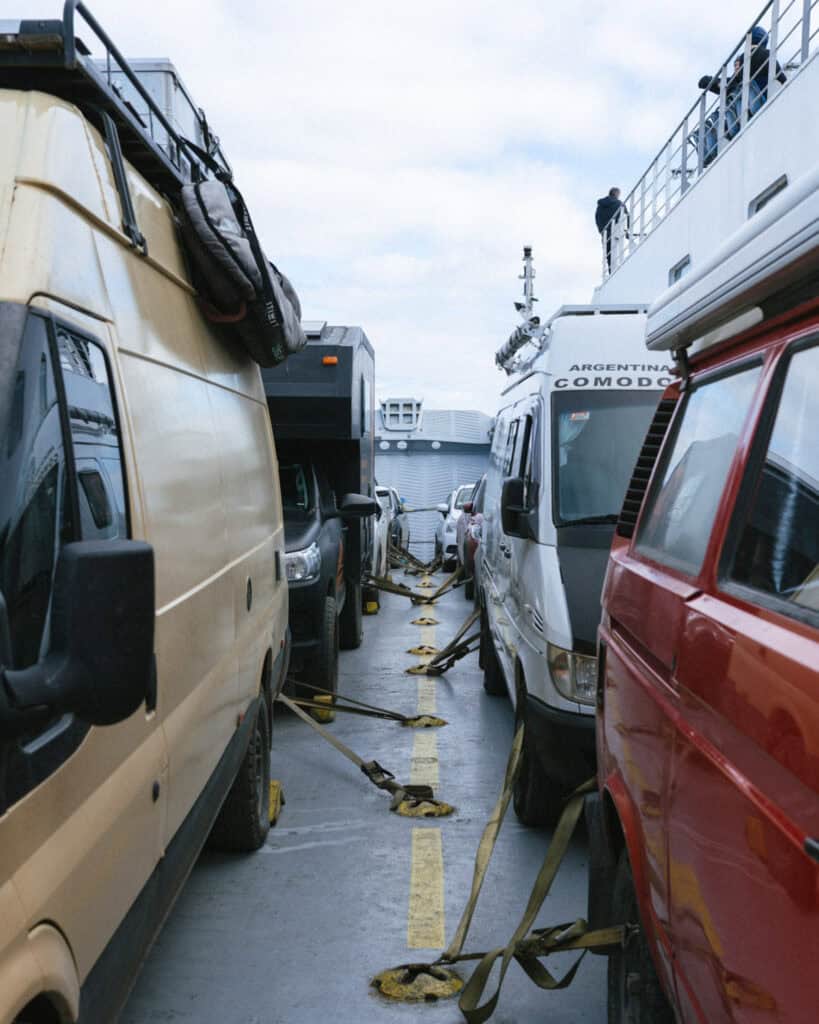
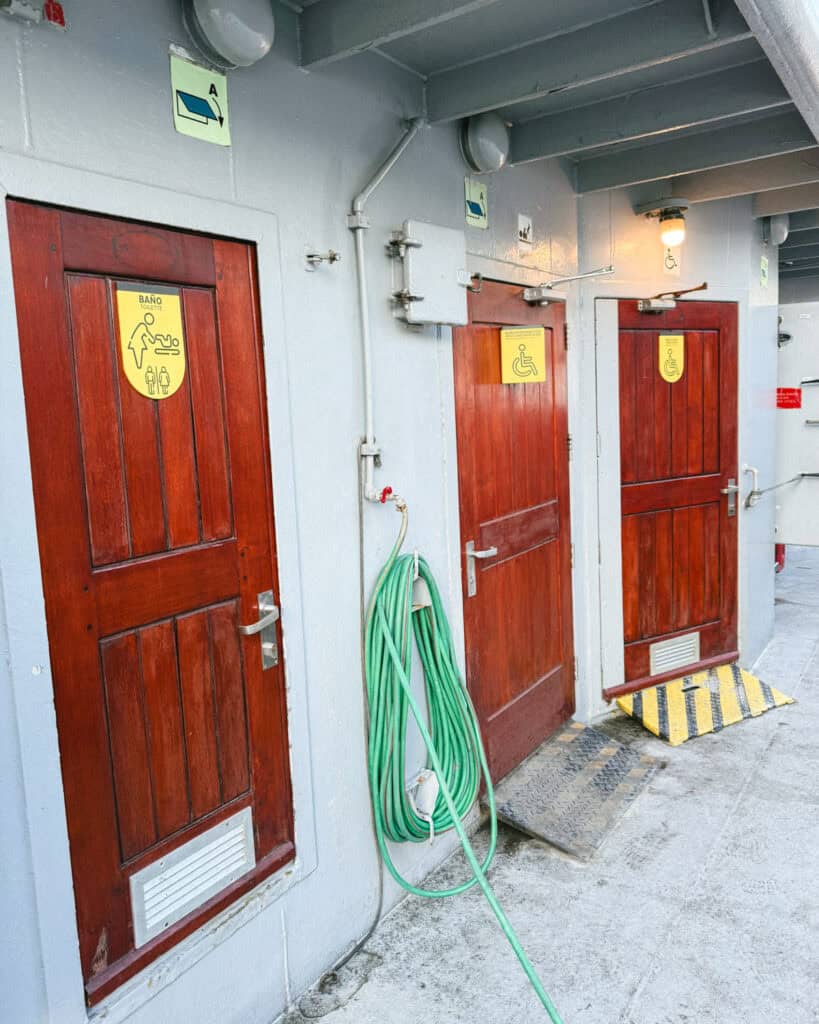
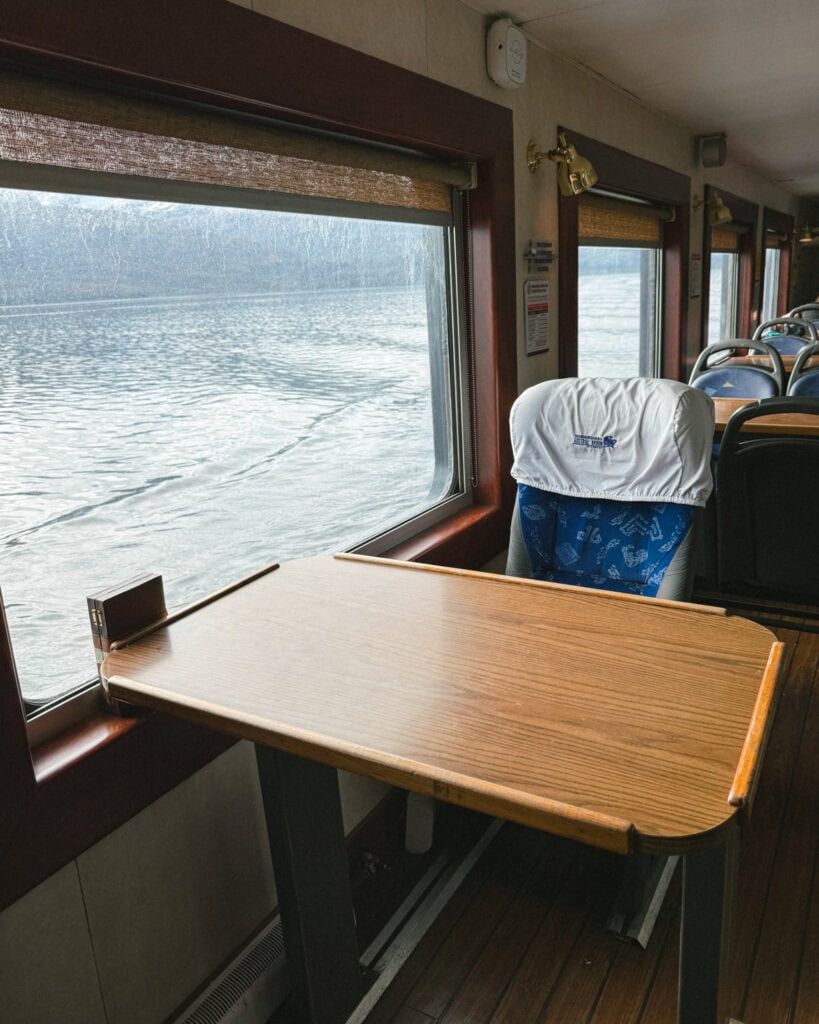
The first is the cargo deck, where the cars drive on to the ship. This is also where you will find the dining room, four toilets spread across the deck and one of the passenger lounges.
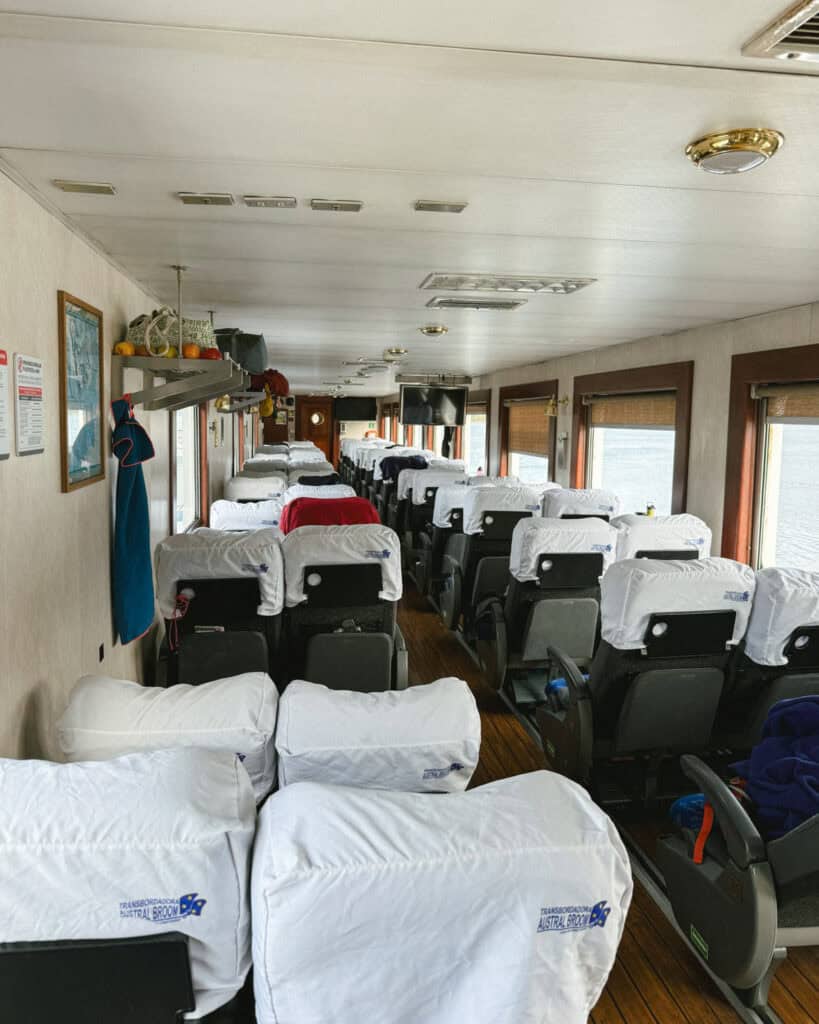
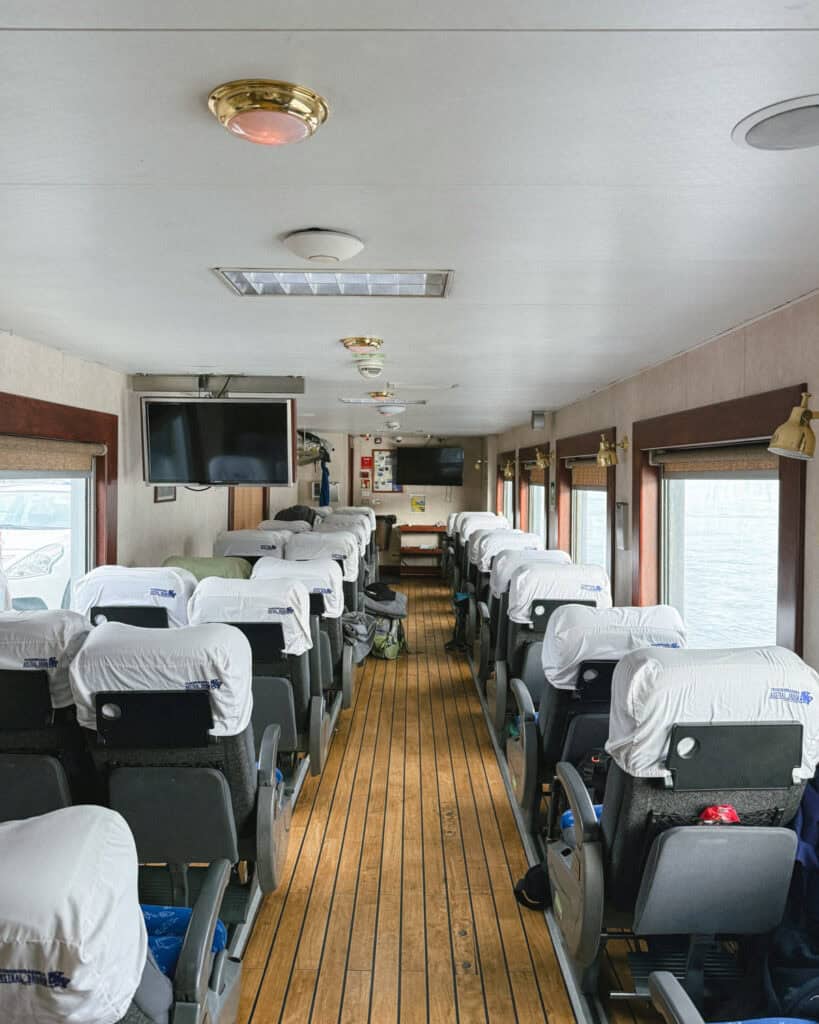
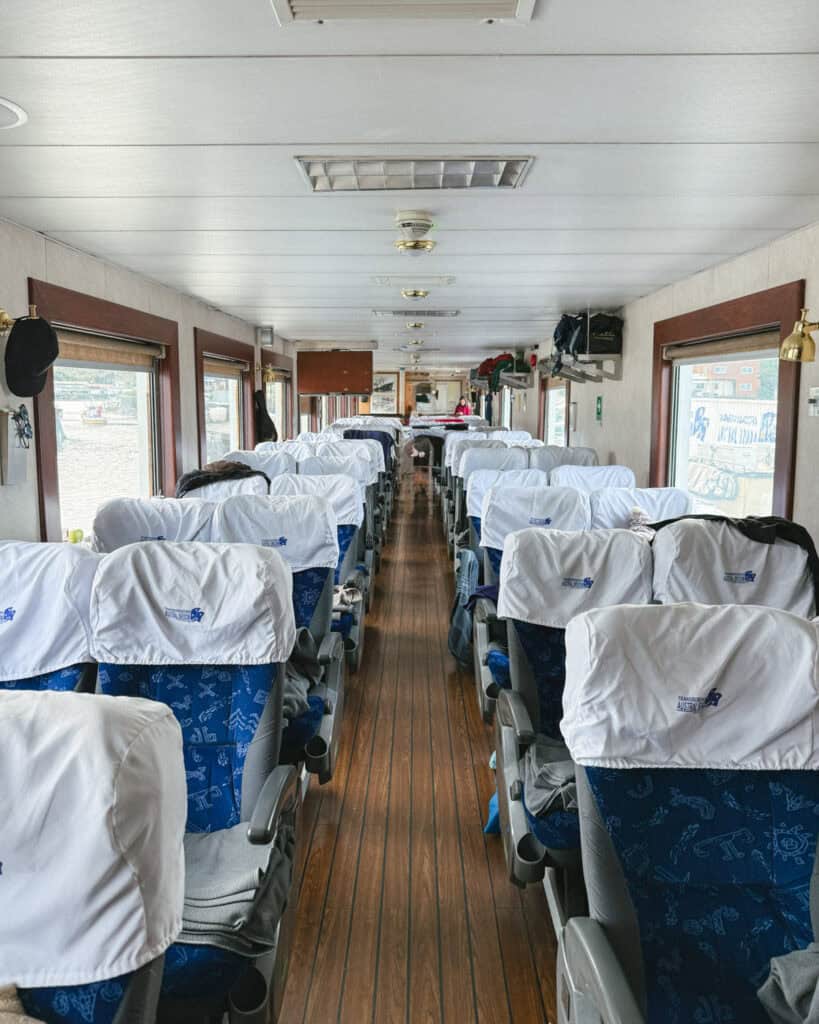
If you have the choice, I would recommend booking a seat in this lounge as it is much smaller than the one upstairs, and therefore much quieter! There are 30 seats in this lounge.
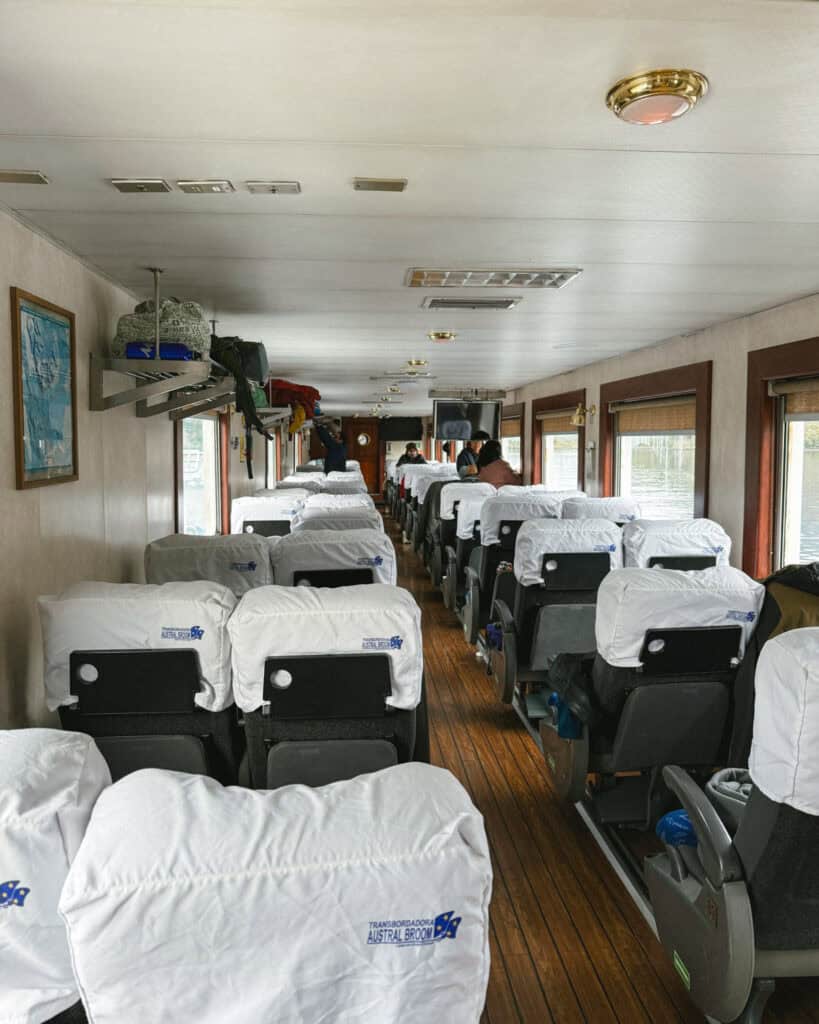
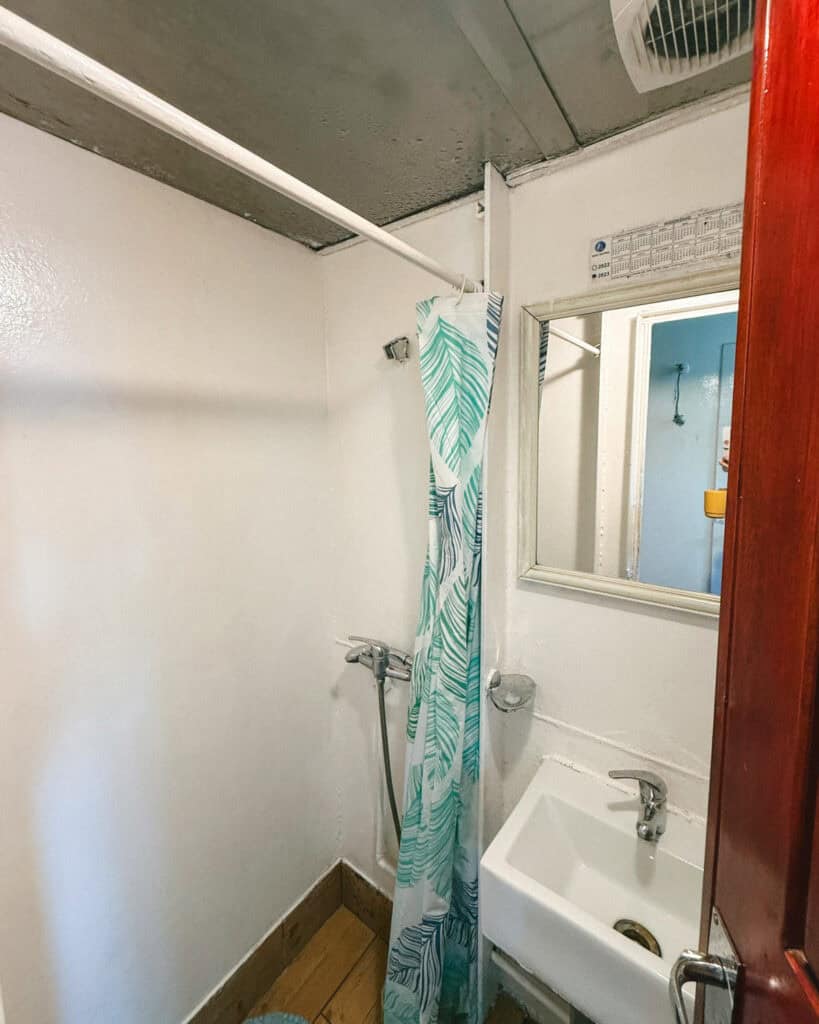
The second floor is the main passenger lounge, with more than 100 seats in a long, open area. There are two sets of male and female toilets on this level, one at either end. This is also where you will find the two shower cubicles.
There is a cafeteria on this floor too. We didn’t see it open when we were on board, but theoretically, this is where you buy additional drinks and snacks outside the included meals.
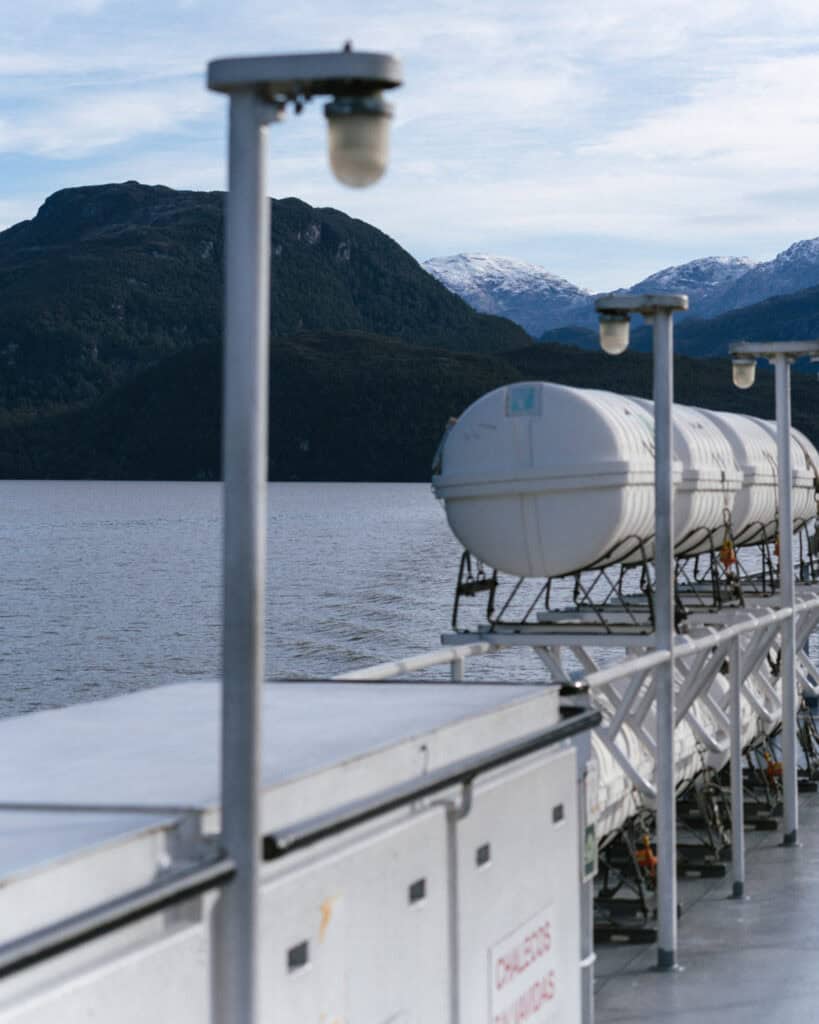
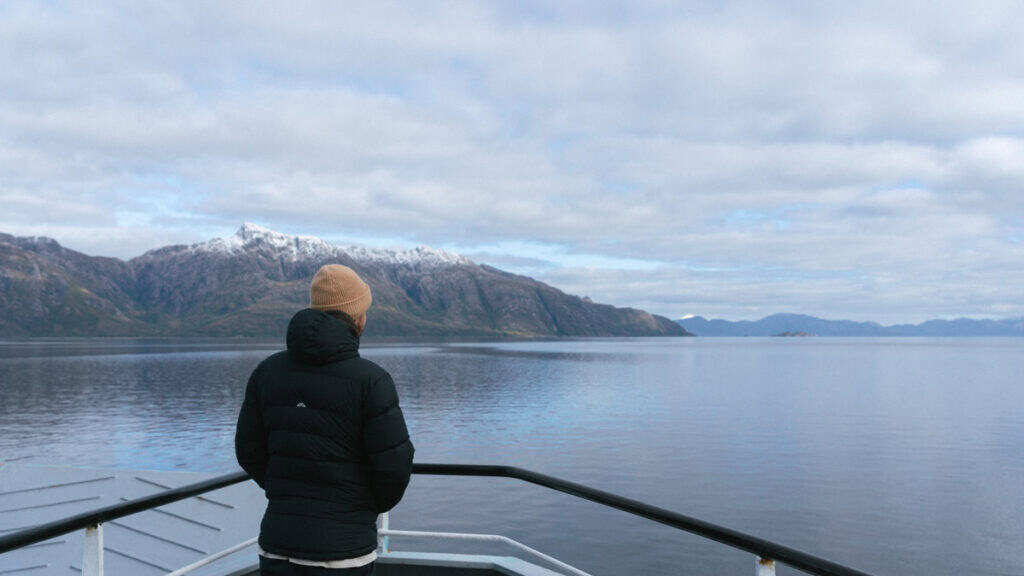
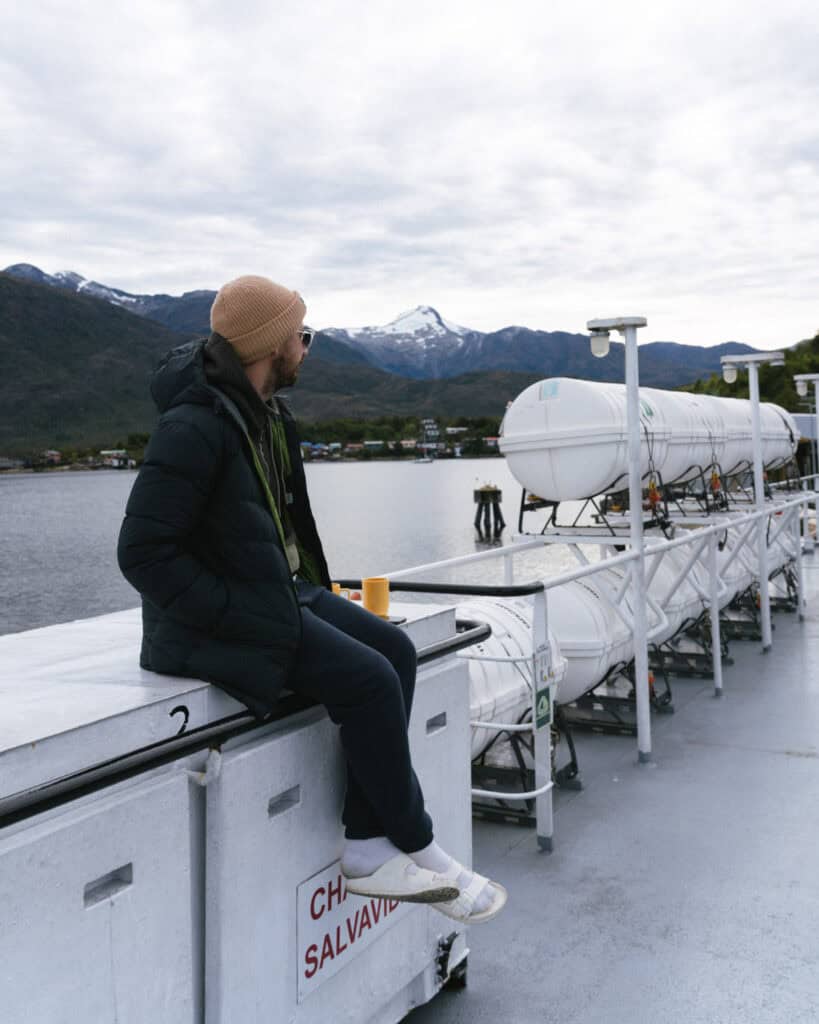
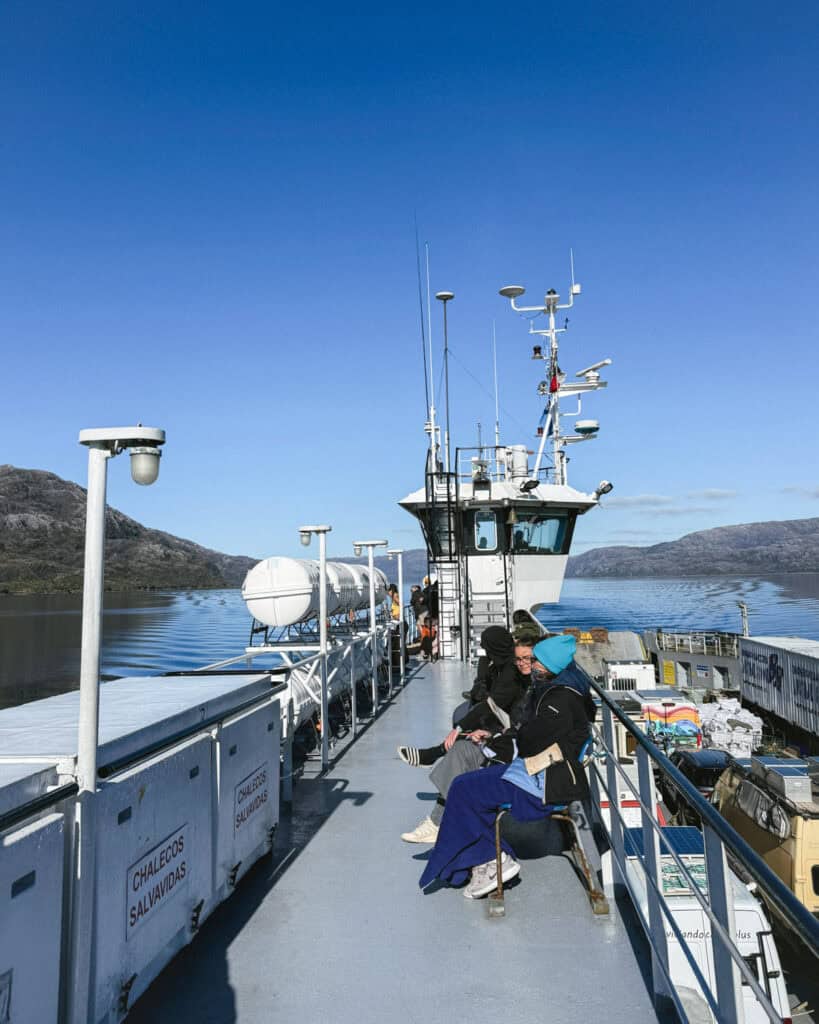
The third floor is the boat’s open top deck, where you will spend a lot of time soaking up the scenery (assuming the weather is favourable!).
There are a few seats up there, but most people were happy to plonk down on the ground, either leaning on a wall or swinging their legs over the railing.
Sleeping
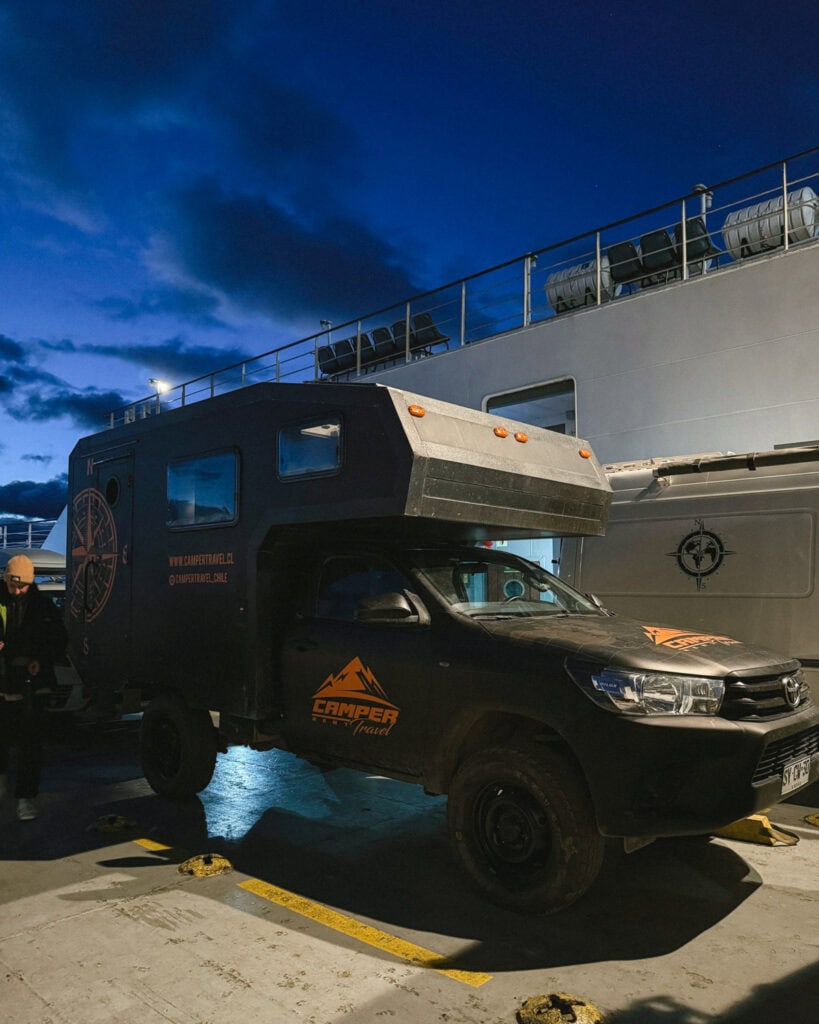
If you are travelling Patagonia in a van or camper like we were, you can sleep in your vehicle on board the boat.
This was obviously way more comfortable for us, and we had a very enjoyable time hanging out in our camper for a few days before we started our camping experience on the Carretera Austral.
If you don’t have that luxury, you’ll be sleeping in your seat. They recline a pretty decent amount. It’s not flat, but it’s much more than a plane, like what you’ll find on most of the buses around South America.
They provide blankets in each chair. The lights and TV are turned off at night (I’m not sure exactly what time), so it is supposedly quiet.
You will still have to deal with the noises of 30 – 120 people, depending on the deck you choose, shuffling around, coughing, snoring, sneezing, etc. and as is typical in Latin America, listening to their phones without headphones haha!
We saw a lot of people unravel their camping mats and lie down on the floor, which would be more comfortable. There isn’t a ton of room to do this, but there are a few open spaces in the areas between seats.
Bathrooms
I am not a hostel, shared bathroom kind of gal and I always get the ick when it comes to public bathrooms.
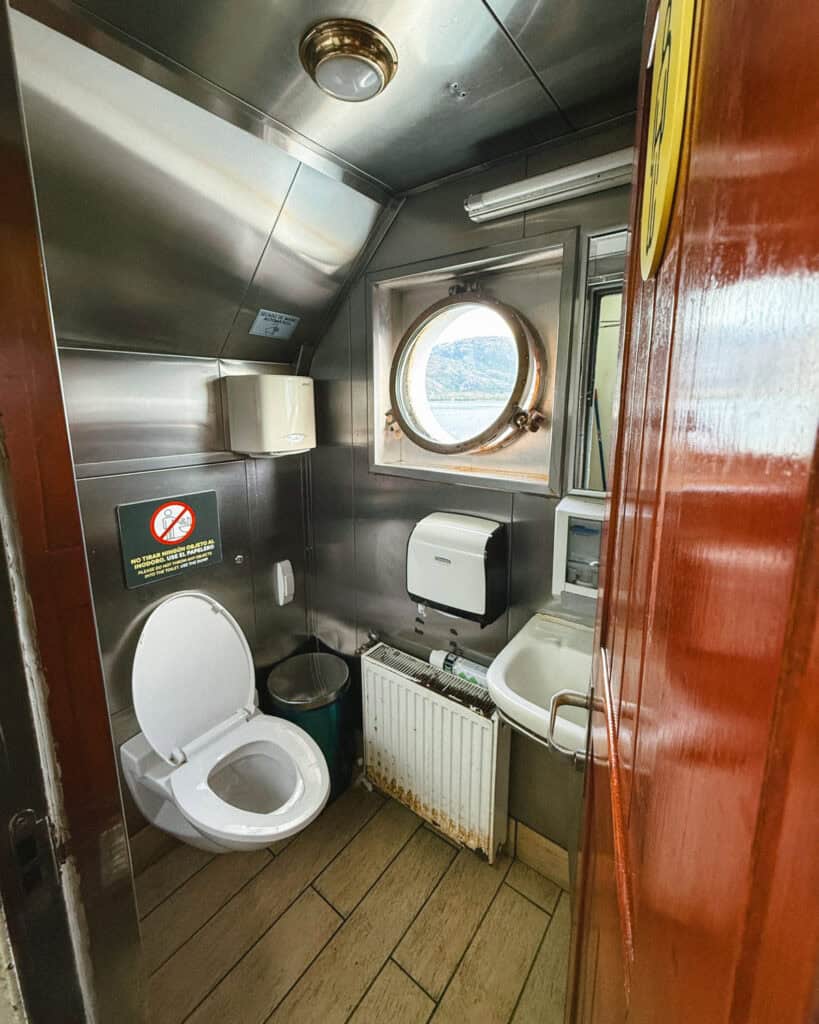
Toilets on the boat were totally fine. There are 8 toilets, and they were always very clean, with toilet paper and always available without lines.
The showers were less nice. There were only 2, and they were very, very small and cramped.
The water was hot, which was great, and they were as clean as they could be, but they didn’t drain properly, so it was often flooded, which made drying off and getting dressed a little tricky.
If you’re less precious than I am, then you won’t have a problem.
If you feel similarly about public showers, I’d suggest surviving without one. Or at least from the second day onwards. A baby wipe clean would probably do the trick!
If you want a shower, get up very early and go first thing while it’s clean, before the lines form.
Food
Three meals a day are included in your fare:
- ☕️ Breakfast: from 9:00 am
- 🥪 Lunch: from 1:00 pm
- 🍝 Dinner: from 7:00 pm
Meals are served in the dining room, and they are on a rotation based on your seat number. There are only limited seats in the dining room, so they serve meals in batches. If you’ve got a vehicle that you can take your food away to eat in, they’ll serve you earlier.
If you have any dietary requirements, are vegetarian, vegan etc., make sure you advise TABSA in advance. They are responsive via email (reservasnatales@tabsa.cl), otherwise you can tell them in the office at the port before you board.
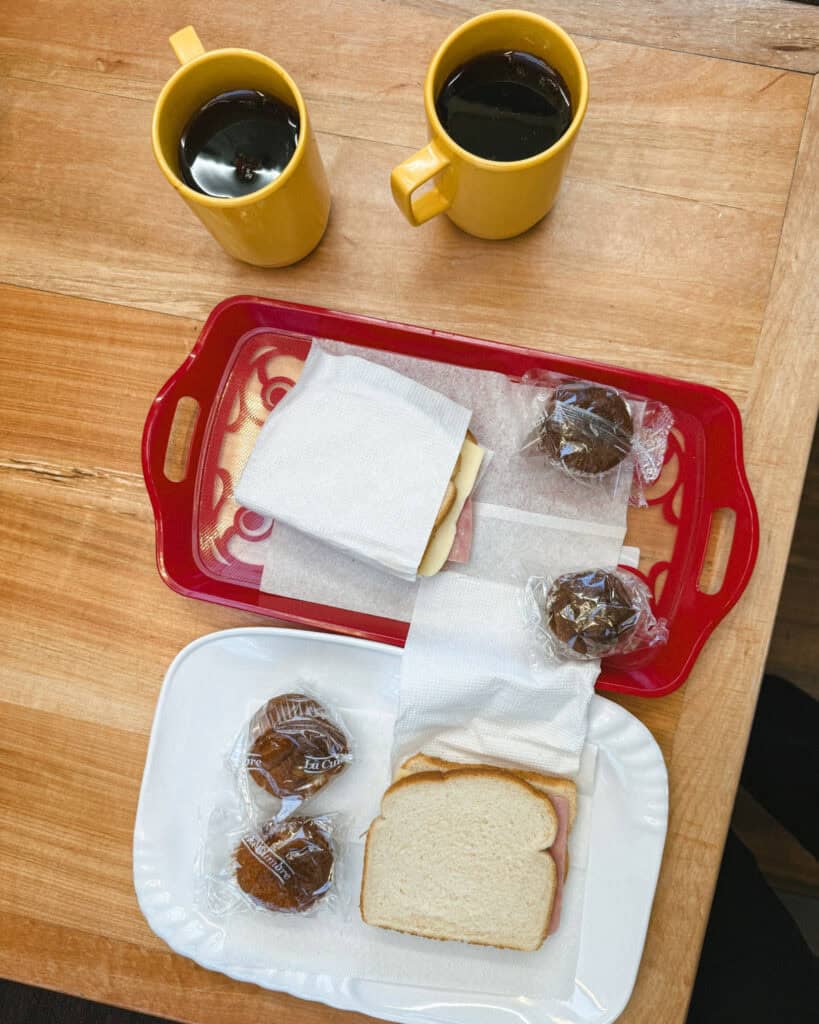
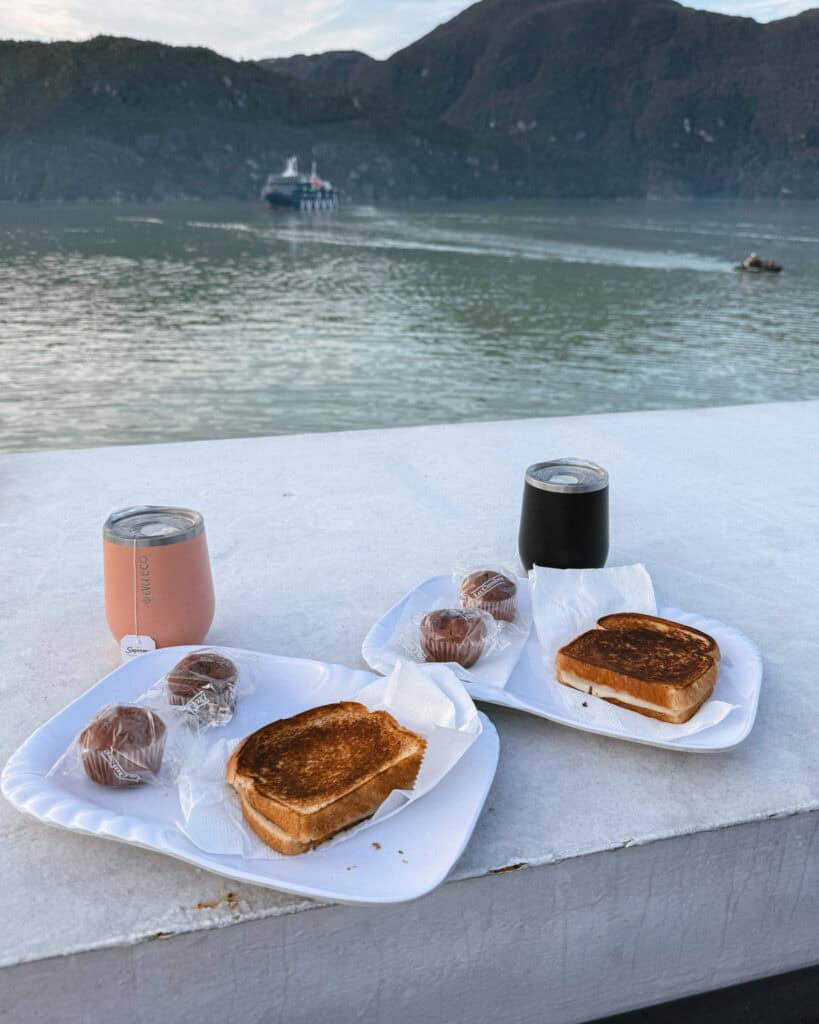
We had three breakfasts on the boat, and they were all the same. A ham and cheese sandwich, two small pre-packaged muffins and self-serve coffee/tea. We took our sandwiches to our camper, toasted them, jazzed them up with a bit of hot sauce, and it was delicious!
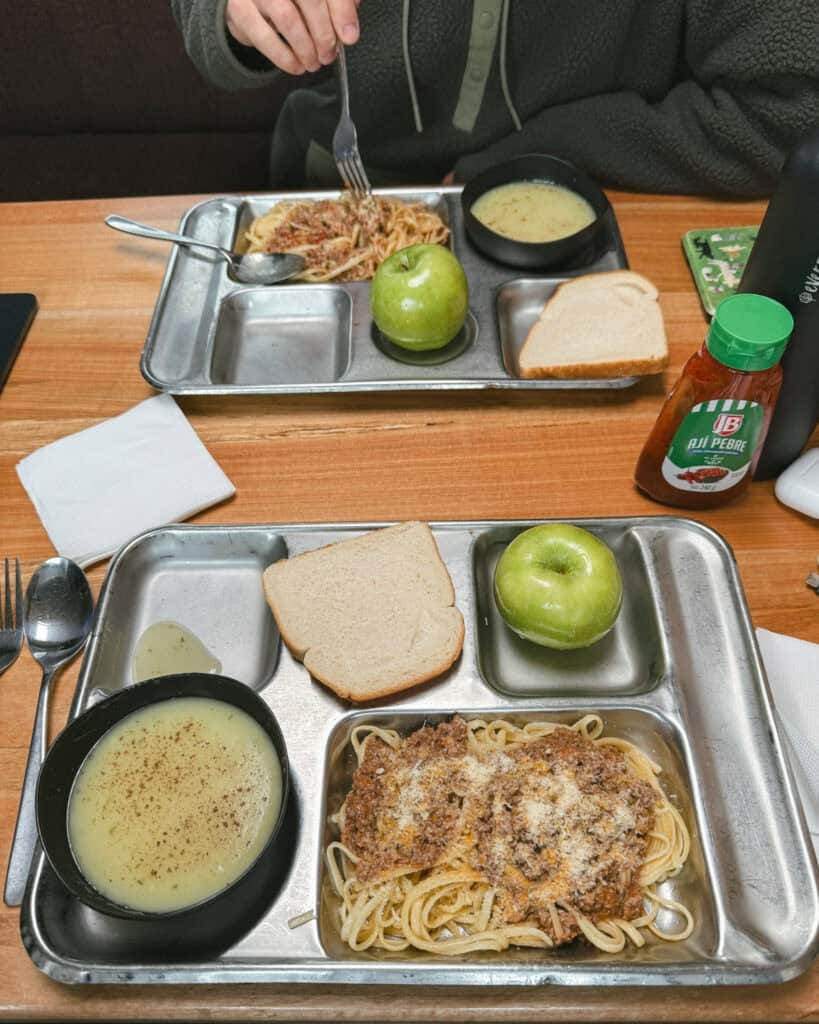
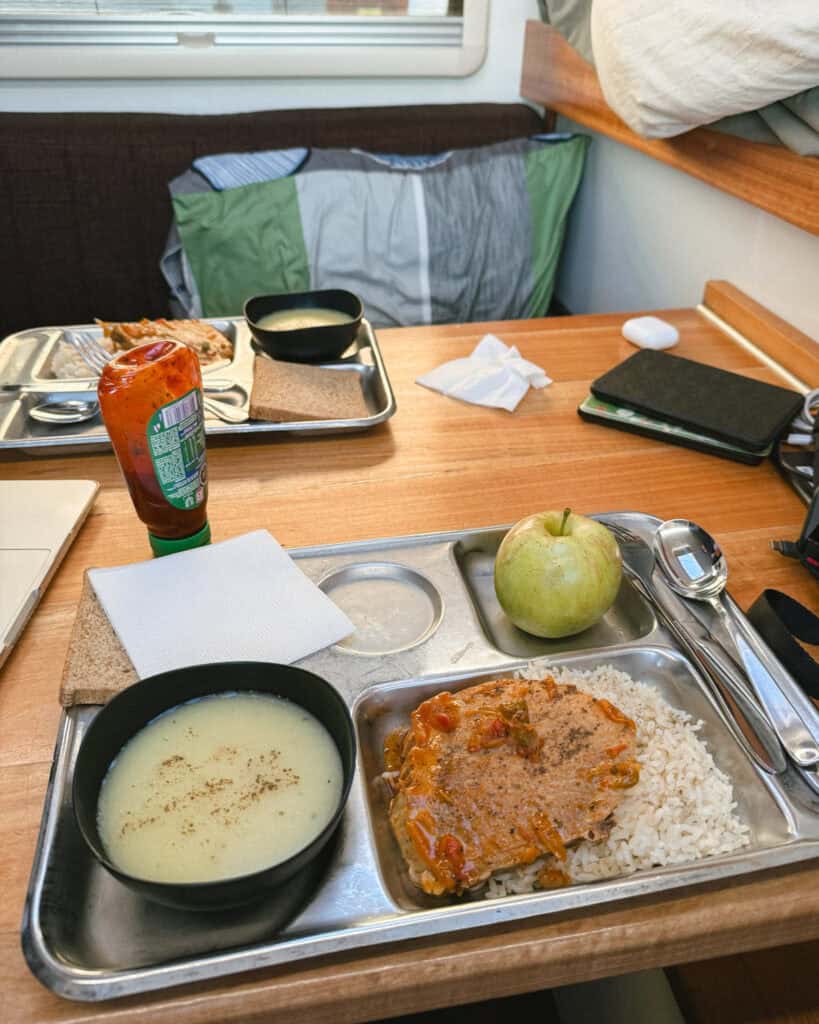
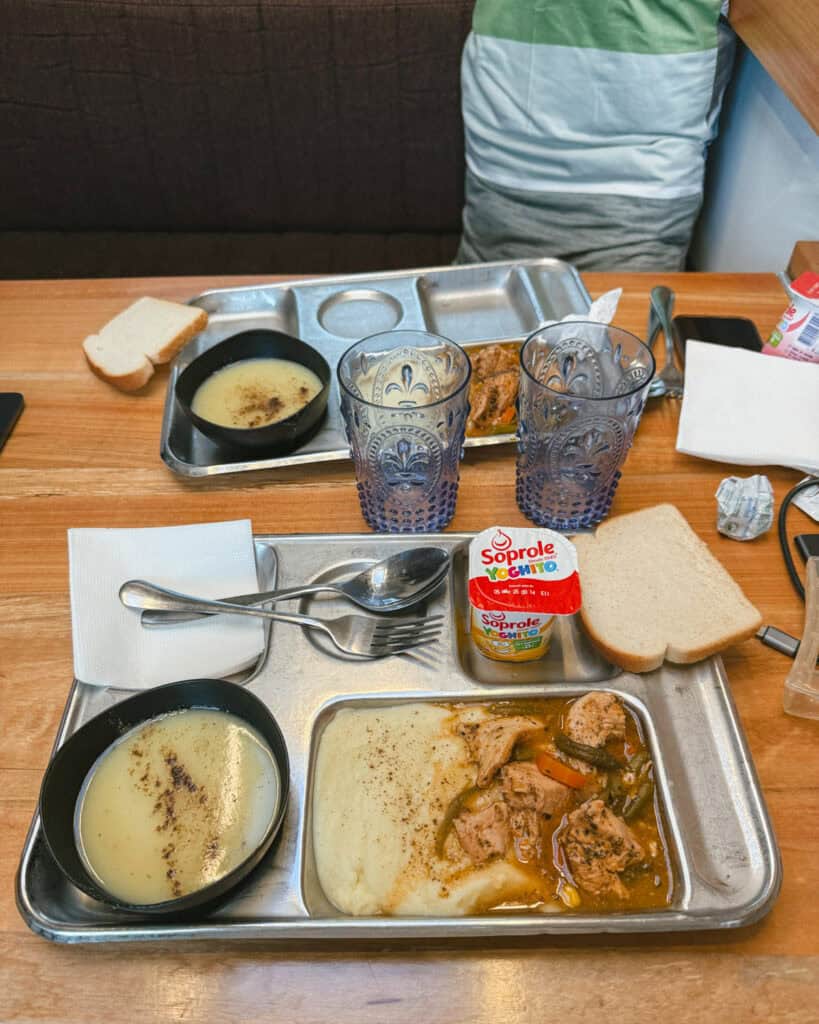
Lunch was a proper meal with a small soup, a piece of bread, a piece of fruit and a main meal. On our first day, it was lentils with sausage and veg, and on our second day, it was spaghetti bolognese.
Dinner was a similar affair to lunch, with soup, bread, fruit and a main. Our first dinner was a pork chop with rice, and the second was a chicken casserole with veg and mashed potatoes.
We didn’t eat dinner on board our first night on the boat. We boarded our vehicle at around 8:00 pm, and we were able to walk off the boat on foot in Puerto Natales and have dinner out, as long as we returned by 10:00 pm.
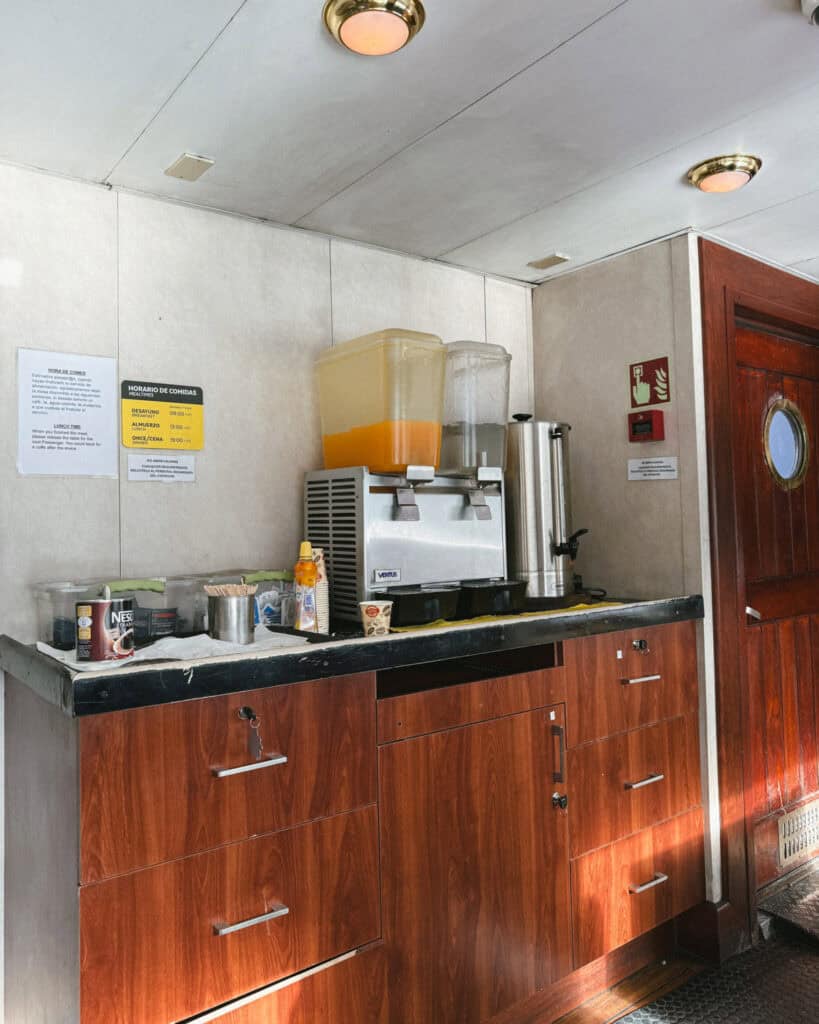
In addition to the three meal services, they had a drinks area always set up in the dining room. There was an urn with hot water and tea and coffee bits, purified drinking water and juice available all day.
You can also purchase additional snacks and drinks, like chocolate bars, chips, muesli bars, soft drinks etc. The prices were pretty reasonable.
I would suggest packing a few snacks to bring on board for between meals. It’s more for boredom purposes than anything, as the food was decent and pretty filling, but I’m glad we had some chips to munch on, and some biccies for our endless cups of tea.
Sea sickness
Your experience may be totally different to ours as it’s entirely dependent on weather, wind, tide, swell, etc., but we barely felt the boat move.
It was SO smooth, there wasn’t even a dull rock to fall asleep to at night.
The entire passage is in the fjords, sheltered by islands, so I think the weather would have to be pretty wild for the boat to rock in any substantial way.
If you get seasick, make sure you have tablets, as it’s better to be safe than sorry, but unless our experience was highly out of the ordinary (which I don’t think it was), you shouldn’t need them.
Activities
Both of the passenger lounges have big TV screens where they play movies (in Spanish). We didn’t spend any time in our allocated seat as we were in our camper, but I think they do turn them off at a reasonable hour at night.
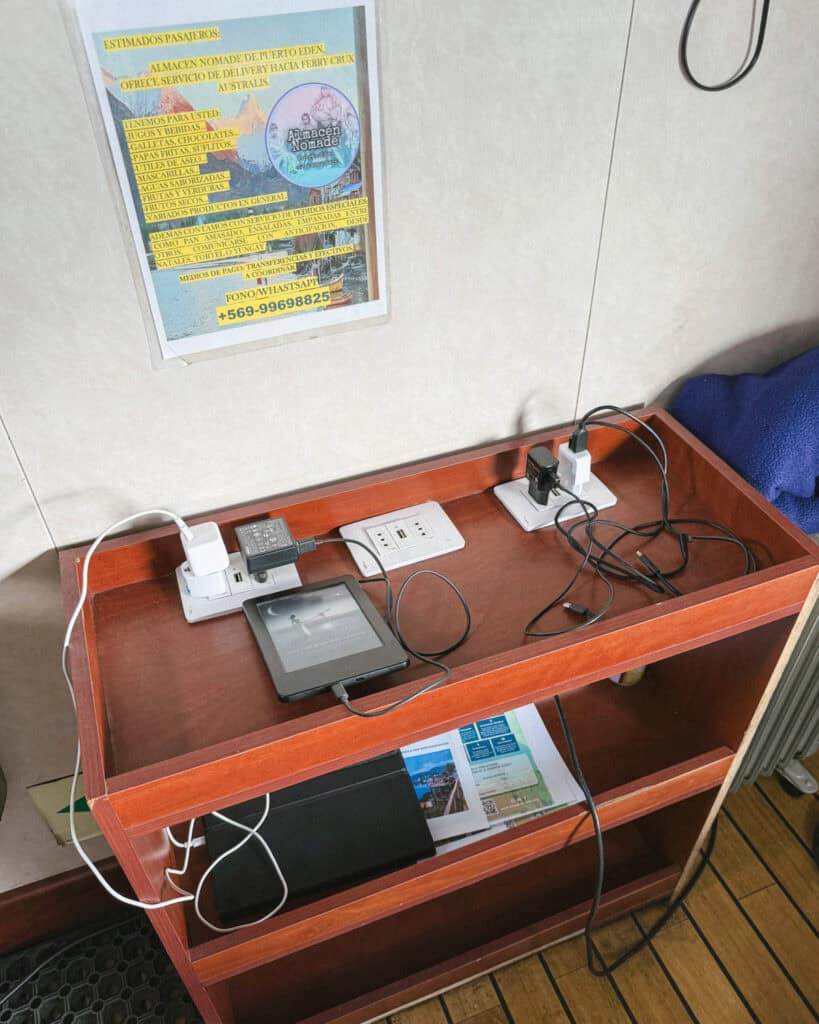
There are also areas to charge your devices via a 220V plug. There are no USBs or anything like that in your seat.
There is no internet and no phone service.
We did see signs for a ‘TABSA Navigate’ app where you could access movies and shows, but we didn’t test it out.
We had our Starlink Mini in our camper, so we were happily connected and could use the downtime to do some work and stream TV shows.
I would suggest pre-downloading any movies or shows you want to watch on your phone, as well as music. Pack headphones! Have a book to read, and/or a notebook for drawing or journaling. Charge your camera too if you’re a photographer as you will be on the deck constantly snapping away!
You’ll spend a lot of time enjoying the scenery (more below), but when it’s dark and/or rainy, you’ll want something to occupy yourself.
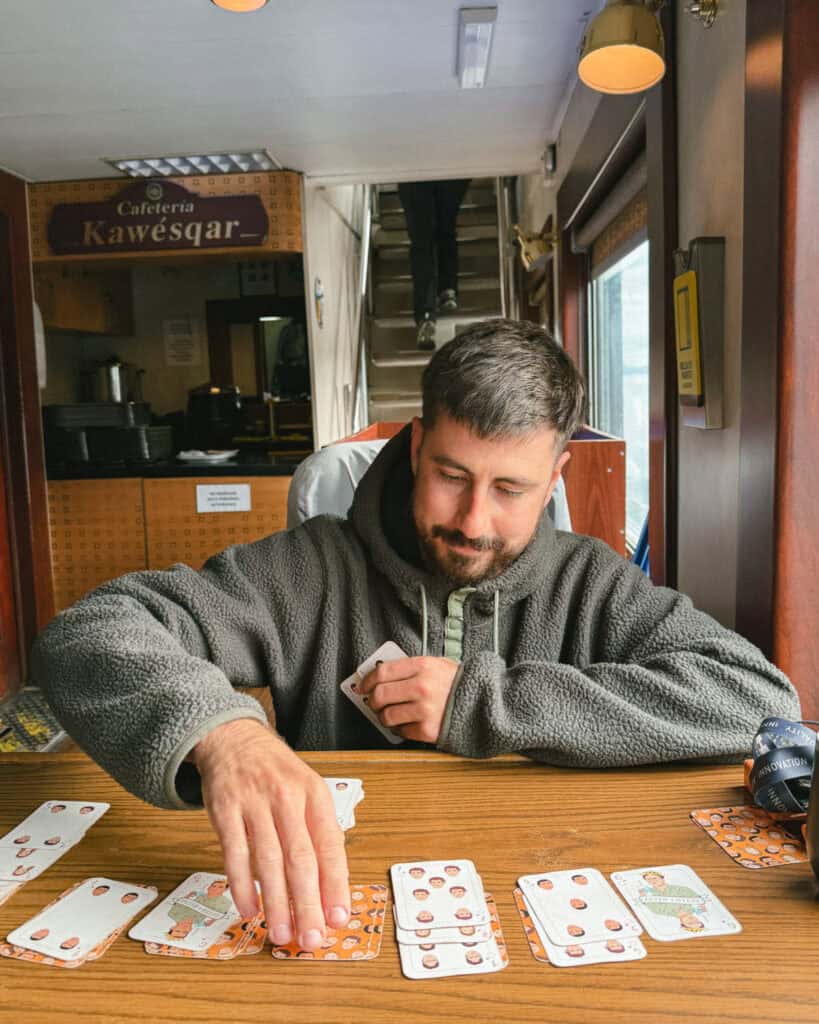
There is also a lot of socialising between the passengers, especially on the top deck. We had lots of great chats about our travels in South America so far, and got plenty of good tips for the next leg of our journey.
Sights and scenery
The best for last – the scenery.
Forget the bad sleep, icky showers and cafeteria meals, the landscapes you will experience on this journey are absolutely breathtaking.
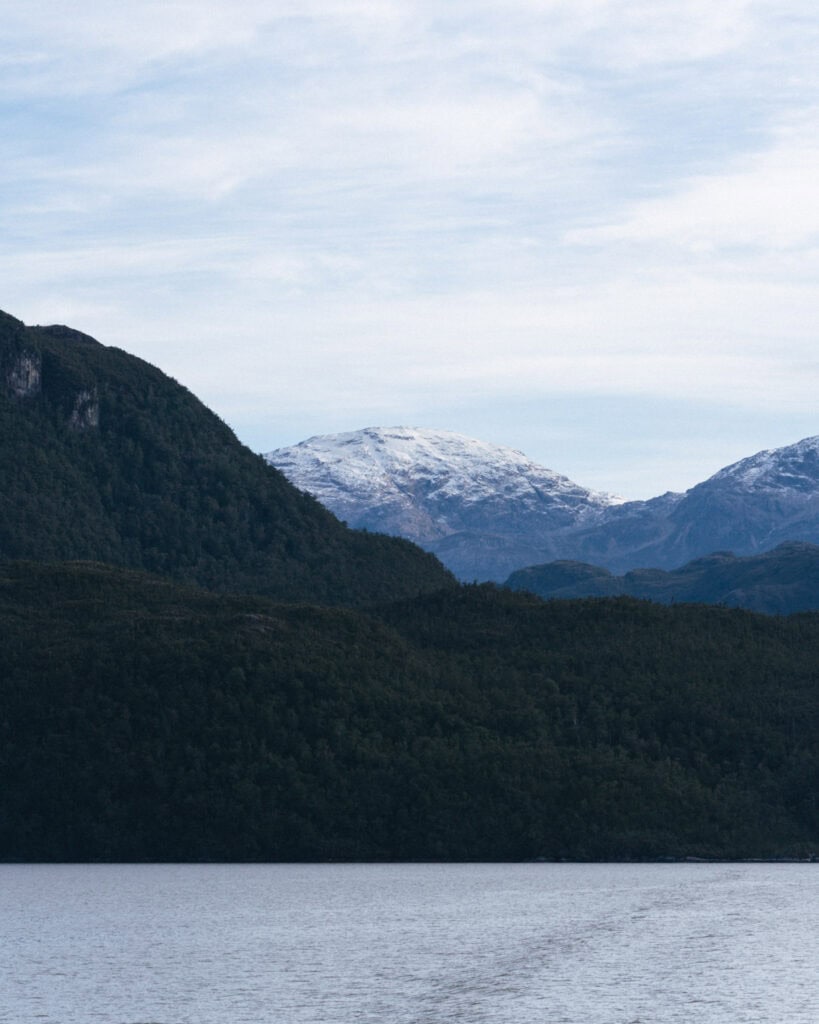
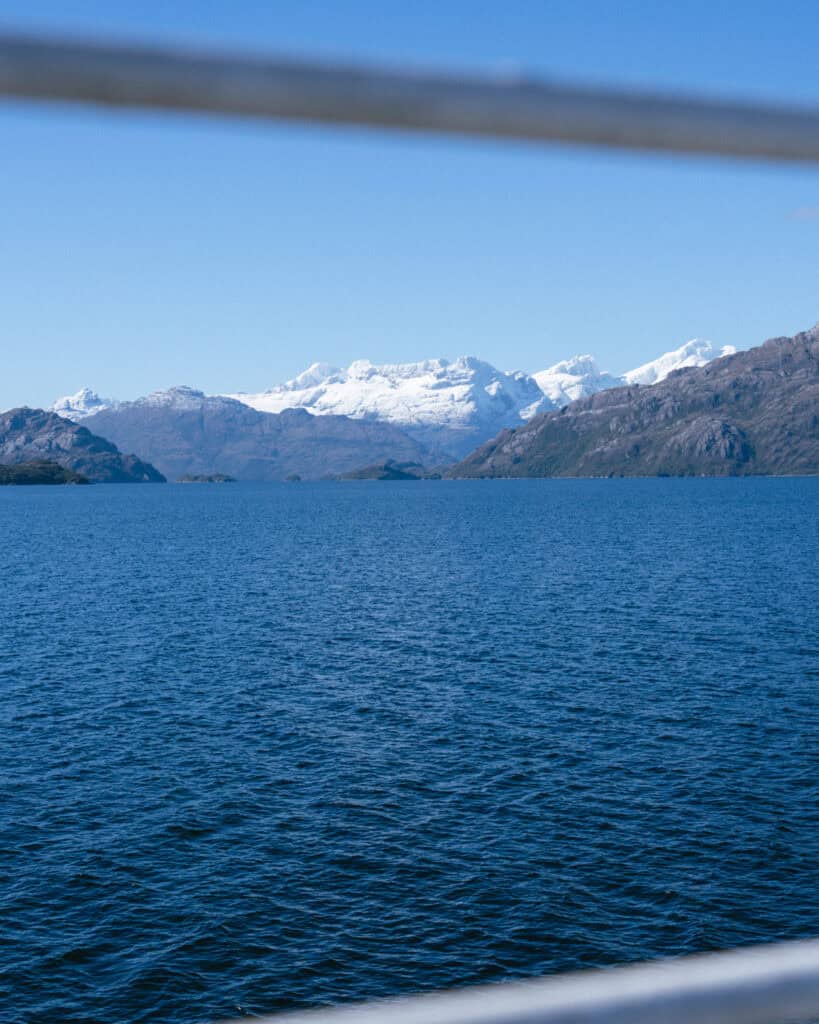
Sailing through the Chilean fjords is an experience like no other. Mountains, glaciers, waterfalls, forests, islands, you will see it all. There are birds, sea lions, dolphins, and whales if you are lucky.
It was truly magical to be cruising through places that are virtually untouched. Besides the odd boat (I think we passed maybe 5 total?), there was nothing. No development, no humans, no roads or buildings, no noise, just raw, pure and wild nature.
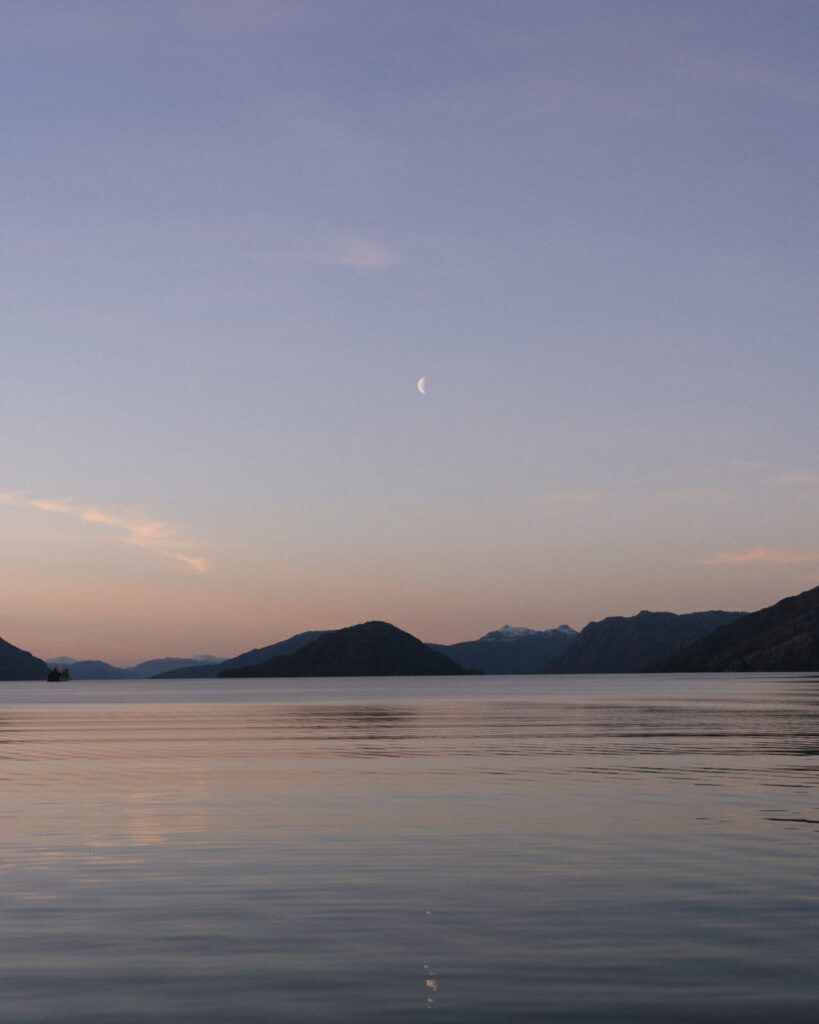
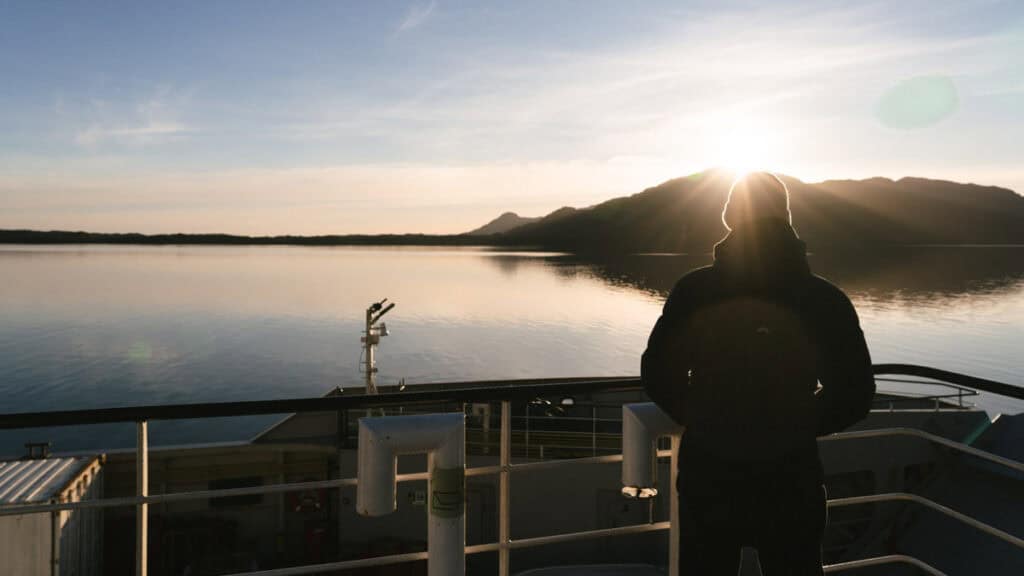
The sunrises were like fairyfloss skies, and watching the water go all silky in the fading light of sunset was the perfect end to each day.
We spent hours just lazing on the deck, watching the world go by. Sometimes we’d read, sometimes we’d chat to other travellers, and sometimes we’d simply sit and soak up the beauty.
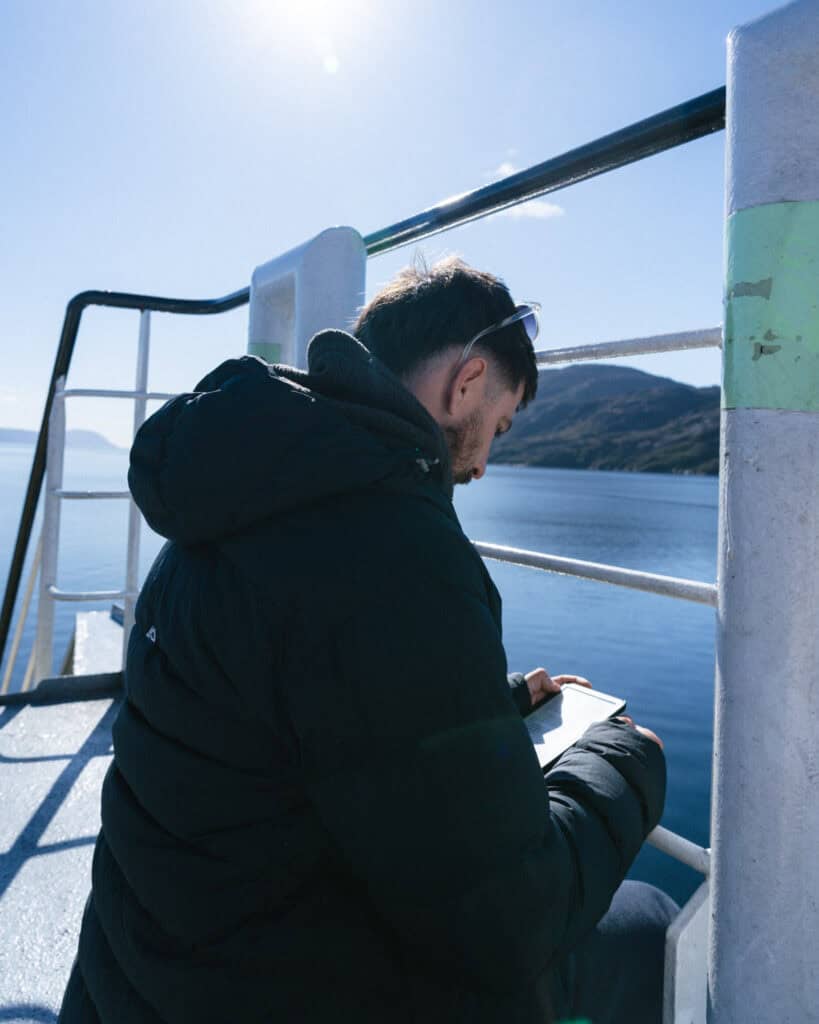
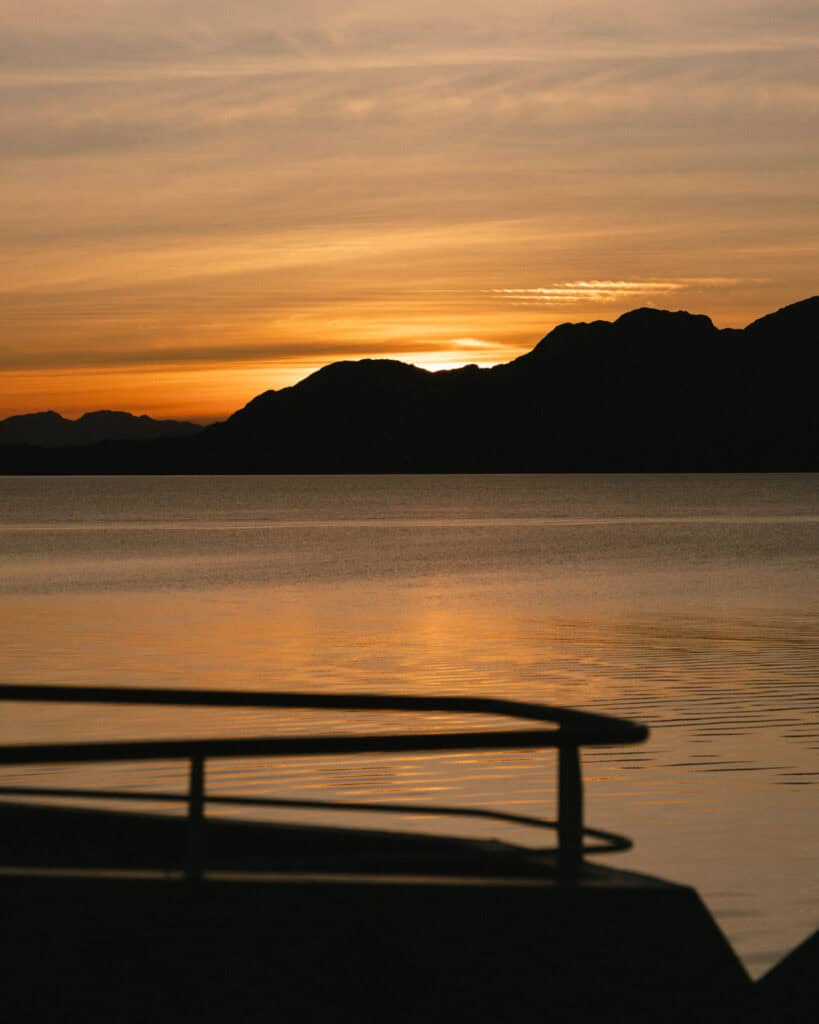
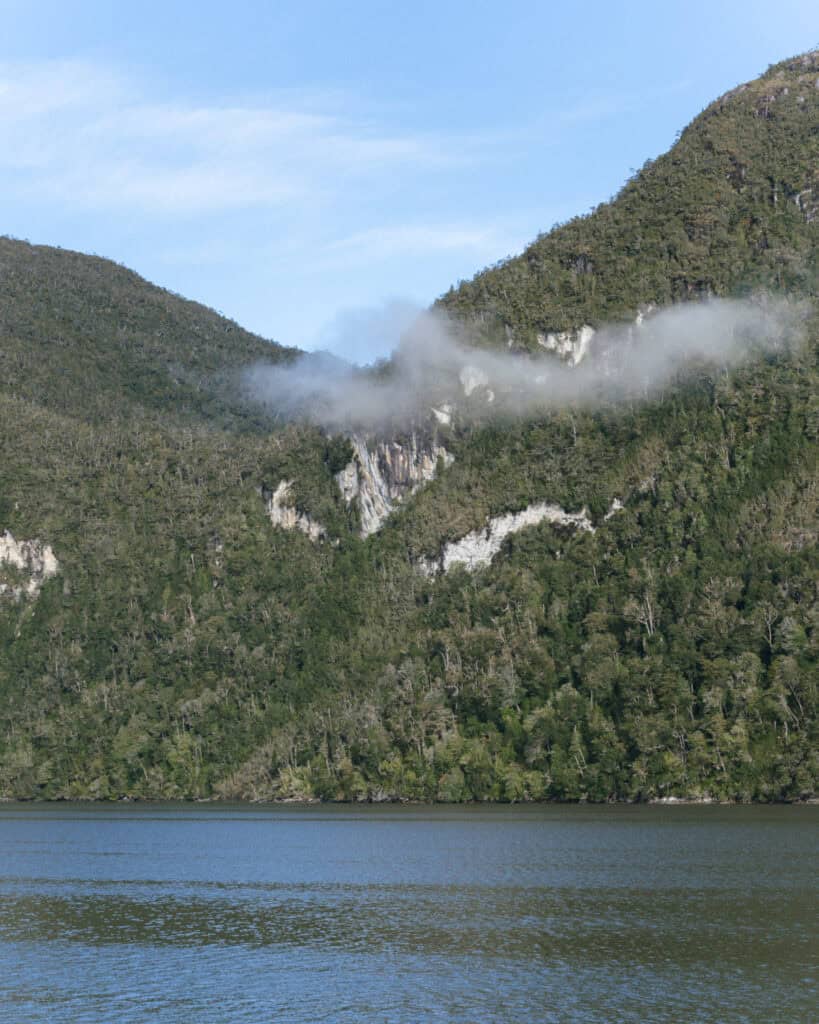
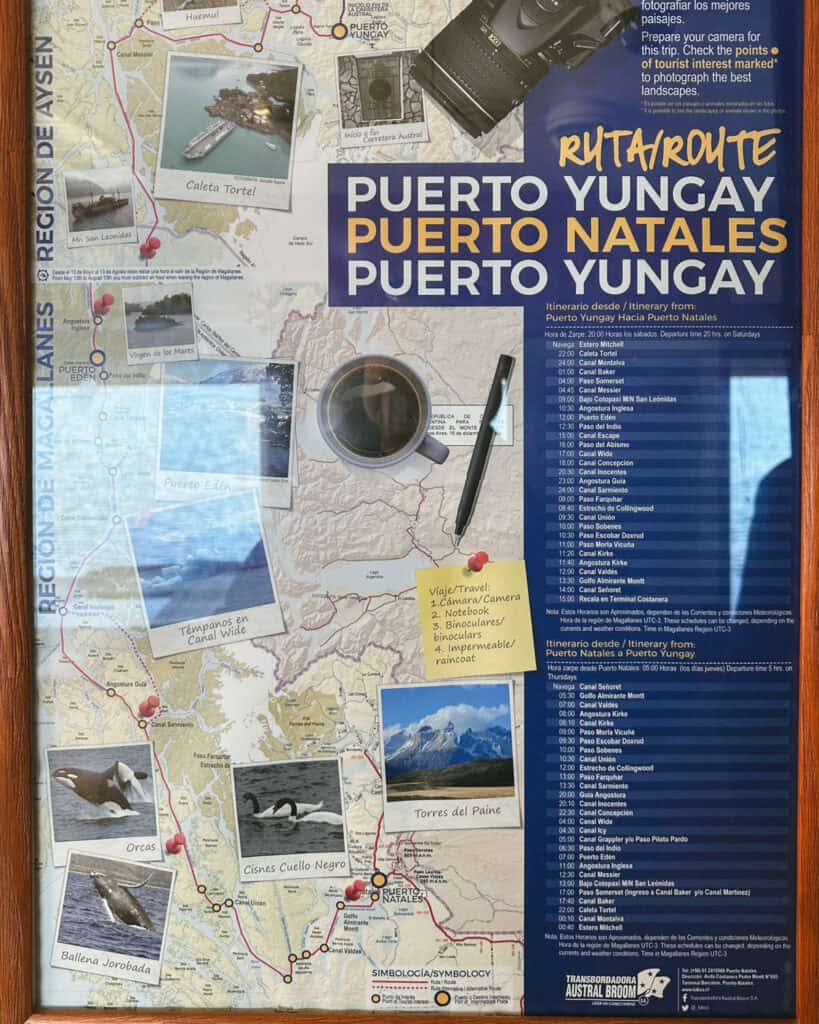
There is an info sign on the boat that outlines the times that you will pass by notable attractions, but it depends how on-schedule you are as to how easy this is to follow.
The captain will sometimes honk the horn when there is something to see. We couldn’t really work out the system for this, probably because we were often in our vehicle, not the lounge, so you may get more info inside.
We didn’t care – anytime we were on the deck, it was beautiful.
Cross your fingers for clear and calm weather so you can spend your time on the top deck. This definitely offers the best views, but it’s often not feasible to be outside when there is rain, wind and very cold temperatures. Even when it was clear, we were rugged up with every layer that we had on, it was FREEZING!
We got lucky and had about 50% outside time and 50% inside time. We had an afternoon of rain, and because it was so moist and humid, all the windows fogged up inside, and you couldn’t really see anything, so the deck is the place you want to be if possible.
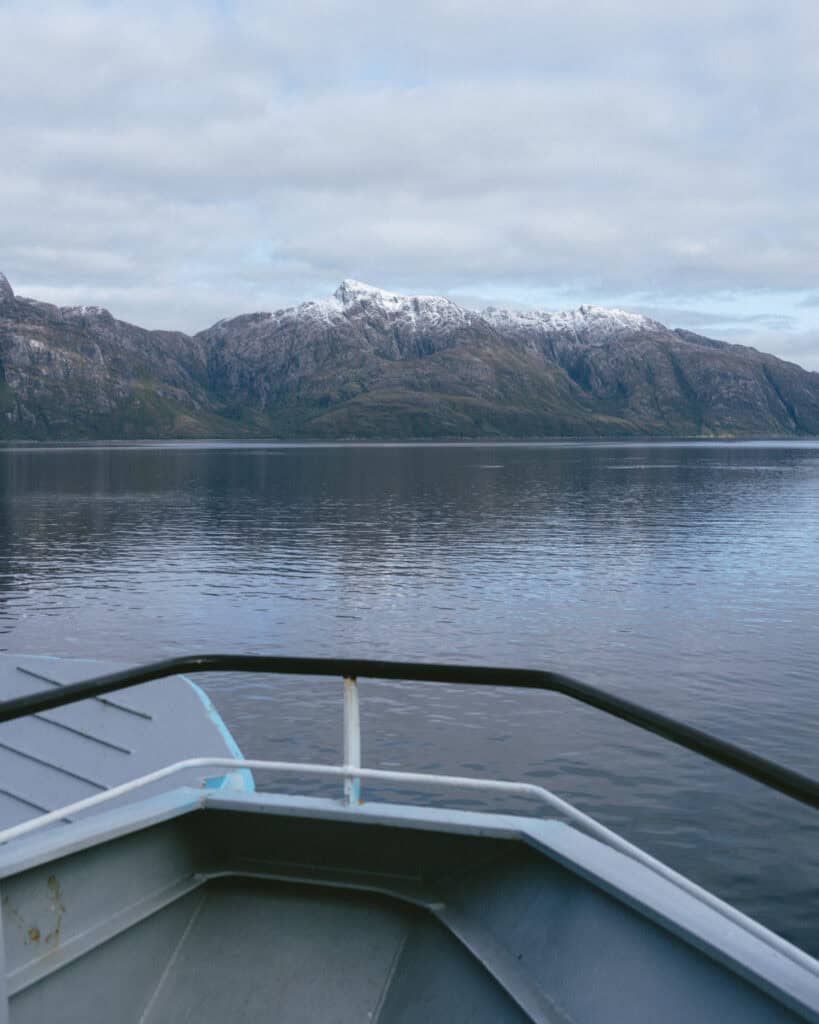
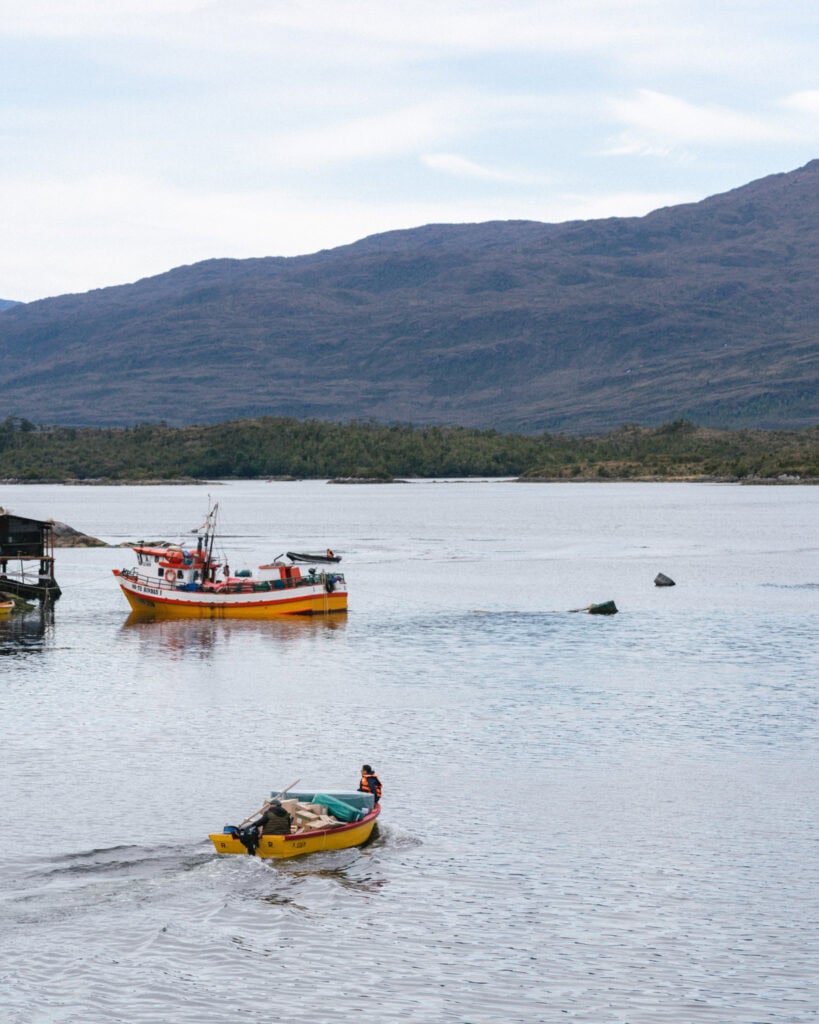
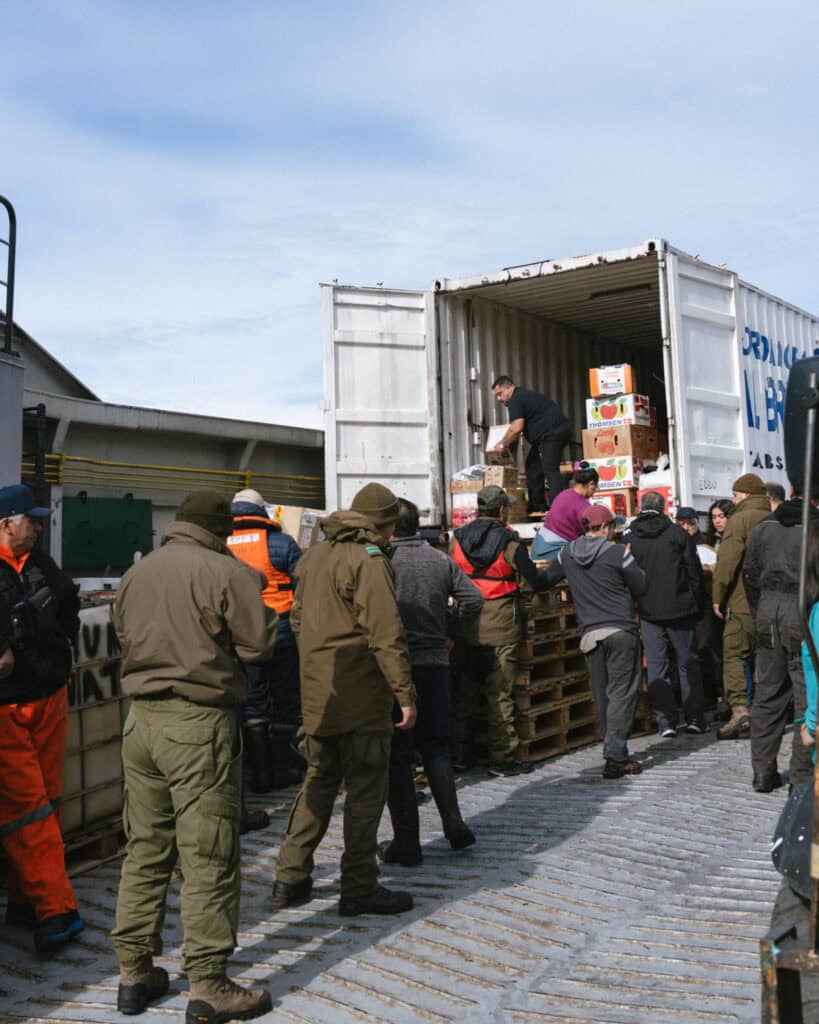
The most notable attractions are when the boat stops in Puerto Eden and Caleta Tortel. Pulling into port and seeing almost an entire village (humans and dogs!) waiting to receive their weekly supplies was an amazing experience.
Puerto Eden was probably the most remote place I’ve ever experienced, hours by boat from any other civilisation. You are allowed to disembark here, but if you want to explore the village that is primarily made up of wooden boardwalks (there are no vehicles here), you need to join a tour.
I get it, the locals don’t want strangers wandering around their island with no benefit to them, so they run short tours showcasing their remote village. There is information on the boat and a sign-up sheet. It was 12,000 CLP (~$12 USD) for a 90-minute tour.
We opted against the tour as we were enjoying watching the supplies get unloaded. There was a small dock area that we could walk to independently, and there were locals selling souvenirs, crafts and snacks! Lots of freshly baked cakes, empanadas and other yummy goodies.
The next notable stop is at Caleta Tortel. Lots of foot and bicycle passengers will disembark here. Similar to Puerto Eden, the whole village was ready and waiting for their supplies, and we had lots of cute four-legged stowaways running around on board while they unloaded.
I think we could have gotten off the boat here for a look around, but it was very early in the morning, and we were returning to the area a couple of days later anyway, so we just played with the dogs!
Onward travel
If you’re travelling south, you just drive off in Puerto Natales and you’ve got all of Southern Patagonia at your fingertips. This is a much easier region to plan for.
If you’re travelling north, once you dock in Puerto Yungay, you have two options:
- ⬇️ Drive south to Villa O’Higgins
- ⬆️ Drive north to Caleta Tortel (if you have a bicycle or are a foot passenger, you may have disembarked here)
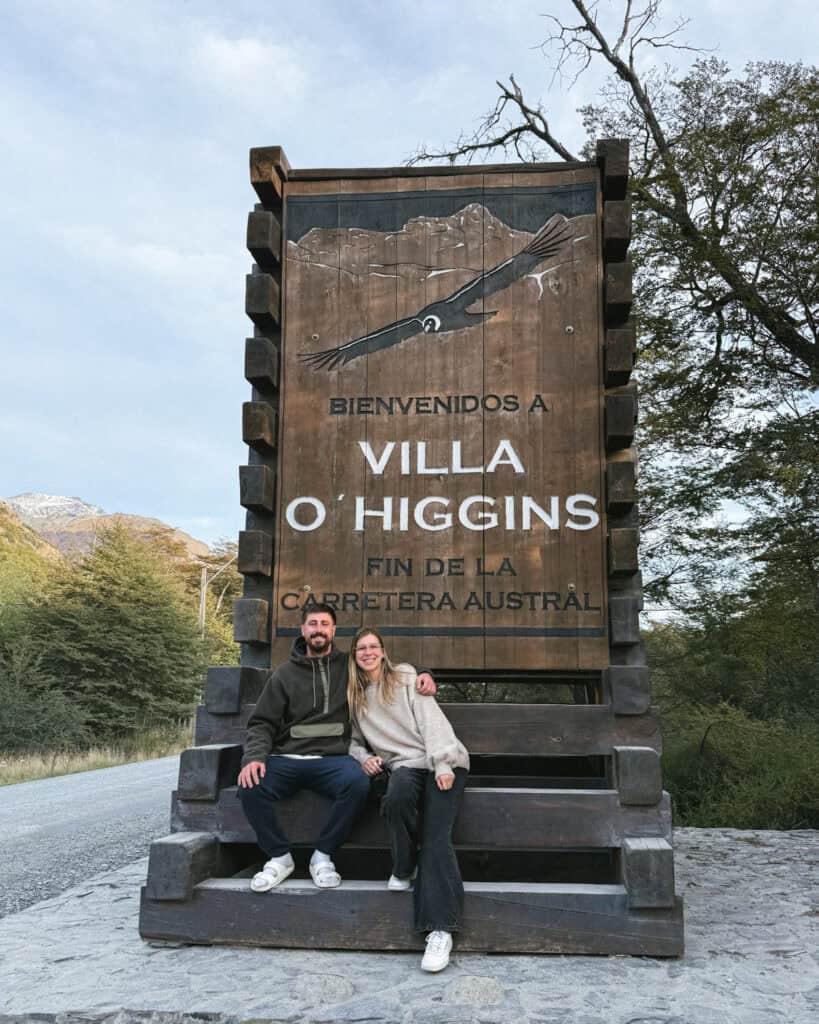
My dream was to drive the entire Carretera Austral from end to end, and the primary reason we took the ferry was to reach Villa O’Higgins, see the end of the road and turn north and travel the entire length of the highway.
So, when the boat docked in Puerto Yungay, our sights were set south. Unfortunately, after you have just come off a 40 – 60 hour ferry, you need to immediately get on another one. Sigh.
You better get used to it though, as this is just one of three ferries you need to take to drive the entire length of the Carretera Austral!
The highway has a brief pause at Puerto Yungay, and you need to catch a ferry across the Mitchell Fjord to Rio Bravo to meet the road again and drive the ~3 hours to Villa O’Higgins.
The ferry is subsidised by the government so it’s free. There is no pre-booking, it’s first-in-best-dressed, and both times we took the ferry, lots of people missed out (including us the first time!).
The times are very confusing as there are two companies running ferries, but the signage at the ports is only for one. There is Padre Antonio Ronchi and Pitipulla.
In peak season (October – March), the ferry runs every 1 – 2 hours, but by April (low season), it’s only 4 times per day in each direction.
We found the latest timetable that included both companies on this government Facebook page. The Google Maps listings for each port might also have the latest timetables (it seemed ever-changing!).
From Rio Bravo where you disembark the ferry, it’s 99 km to town. The entire way is unpaved. Some stretches are flat and pretty smooth, but there are some hair-raising climbs and turns through the mountains with steep drop-offs.
Totally worth it though, as Villa O’Higgins is unlike any other town I’ve seen before. It’s plonked literally in the middle of nowhere, surrounded by stunning mountains, glaciers, lakes and forest. The short backtrack required to go from Puerto Yungay – Villa O’Higgins, then back to Puerto Yungay to continue along the carretera was definitely worth it in our opinion.
And that marked the beginning of our Carretera Austral road trip, and we spent the next 3 weeks driving north, all the way to Puerto Montt.
Other ferries
You may hear about a similar ferry, the Navimag. This ferry is from Puerto Natales – Puerto Montt, and is a nicer, more touristy experience with proper cabins (shared).
It looks like an excellent, slightly more comfortable experience, enjoying the beautiful landscapes of the fjords.
However, if your primary purpose is to drive the Carretera Austral, this route won’t help. You’ll be dropped at the start of the highway in Puerto Montt, but you’ll have the same issue when you get to the end in Villa O’Higgins, with nowhere to go (at least with a vehicle).
For that reason, the TABSA ferry was the right choice for our route and allowed us to visit the deep south, and then drive the entire length of the highway from south – north in our Camper Travel Chile camper.
TABSA ferry: Worth it?
This experience was 10000% worth the 60 hours spent on a boat. Admittedly, we had a pretty comfortable trip in our camper, not sleeping in a room with 100+ people, but I still think it would be worth it.
The scenery was some of the most beautiful we saw in all of Patagonia, and the feeling of being so remote and isolated in the world was special.
The TABSA ferry from Puerto Natales to Puerto Yungay really pieced our Patagonia itinerary together perfectly, and was the missing piece of our route, travelling all the way along the Carretera Austral from start to finish (technically finish to start), from Villa O’Higgins to Puerto Montt.
I hope this post has helped you understand how the TABSA ferry operates and what to expect on board! Don’t forget to check out my other Chile posts to plan your time in Patagonia and the Carretera Austral.
MORE CARRETERA AUSTRAL POSTS
- The Carretera Austral, Chile: Everything You Need to Know
- Our Epic 3-Week Carretera Austral Road Trip Itinerary
- Carretera Austral Ferries Guide: Mandatory + Optional Routes
- Camping on the Carretera Austral, Chile: Our Tips & Tricks
- Camper Travel Chile 4×4 Camper Review: Our Experience



The Comments
Delilah
What a SUPERBLY detailed account of your journey on the Tabsa ferry. Thank you so, so much!! Having just booked my ticket this is exactly what I was looking for, and I’m really excited for my trip having read this entry.
Sally Rodrick
DelilahHi Delilah, so so glad to hear this was helpful 🙂 We were looking for similar information before booking and there wasn’t a lot out there, so I figured I’d share our account 🙂 It’s a beautiful journey, but for us it was really the missing piece we needed in our itinerary to road trip the Carretera Austral, so we probably would have done it even if it wasn’t so gorgeous 😂 The Navimag definitely looks more comfortable for sleeping but of course you’re missing all the beauty on the highway! I hope you have a wonderful trip. All the best, Sally
Delilah
Oh, also: your page was particularly helpful when it came to deciding between Tabsa and Navimag. The information on Navimag written by customers is quite fragmented, out of date, and with limited photos, so to have this all in once place is invaluable. (I’ve gone for Tabsa for cost reasons, and to avoid crossing the Golfo de Penas haha…)
Many thanks!