
This article contains affiliate links that may earn me a small commission at no extra cost to you. As an Amazon Associate, I earn from qualifying purchases. For more information, see our affiliate disclaimer.
If you’re visiting Guatemala, there’s a pretty good chance you’re visiting Lake Atitlan.
Lago de Atitlán as it’s known in Spanish is the crown jewel of Guatemala’s tourist industry, and after visiting, we can see why.
A deep, blue crater lake created by a gigantic explosion, Lake Atitlan is surrounded by three looming volcanoes that are never far from sight and a collection of small Maya villages bursting with culture and creativity.
It only took us one glance at the spectacular vista and we immediately understood why Lake Atitlan is ranked as one of the most beautiful lakes in the world.
It’s not necessarily an easy place to visit though. The lake is huge, and there are close to a dozen towns around its shores. There’s a huge range of things to do, tough decisions on where to stay and the necessary challenges of getting there and getting around (with some notoriously scammy boat captains!).
This Lake Atitlan travel guide will answer all these questions and more to help you plan your time at Guatemala’s most magical lake!

About Lake Atitlan, Guatemala
Lake Atitlan was formed by an enormous volcanic explosion over 85,000 years ago, that spread ash as far as Panama and Florida. The earth’s surface collapsed, creating a huge crater that soon filled with water: Lake Atitlan.
Three volcanoes rose up from the earth in the southern section of the lake, and today you can see Volcan Toliman, Volcan Atitlan and Volcan San Pedro looming over the lake. It is honestly one of the most beautiful vistas I’ve ever seen and a must on any Guatemala itinerary.
Situated in the Western Highlands of Guatemala, the lake sits at an altitude of 1,562 m (5,125 ft), which helps with its temperate climate, known as ‘the land of eternal spring’. It holds the title of the deepest lake in Central America, at over 300 metres (984 ft) deep.
Lake Atitlan is BIG, stretching 8 km (5 mi) across from north to south and 18 km (11 mi) from east to west. There are almost a dozen towns spread around its shoreline, and that’s why it’s so important to dig a little deeper when it comes to planning your time at Lake Atitlan, understanding each of the towns and how to travel between them.
OUR LAKE ATITLAN TRAVEL GUIDES 💙🌋

The towns of Lake Atitlan
The first thing you need to realise about Lake Atitlan is that it is not one destination. It’s actually a collection of more than a dozen small towns.
There are 11 towns that are generally accepted as the towns of Lake Atitlan and are accessible right from the lake:
- 🛺 Panajachel: the bustling tourist hub ⭐️
- 🌋 Santa Cruz la Laguna: the best volcano views and peaceful accommodations ⭐️
- 🛶 Jaibailito: the secluded village
- 🌿 Tzununa: the permaculture hub
- 🧘🏼♀️ San Marcos la Laguna: the spiritual hippy haven ⭐️
- 🌈 San Juan la Laguna: the prettiest town on the lake ⭐️
- 🎒 San Pedro la Laguna: the backpacker hub ⭐️
- 🛍️ Santiago Atitlan: the biggest local town
- ☕️ San Lucas Toliman: the forgotten town
- 🏺 San Antonio Palopo: the pottery town
- 🌀 Santa Catarina Palopo: the blue town ⭐️
Of these 11 towns, there are 6 towns that are much more popular than the rest, and more commonly visited by tourists. I’ve put a star next to these towns.
I’ve got a more detailed guide to the towns around Lake Atitlan, with an introduction to each, what it’s known for and the best things to do there.
Realistically, unless you have weeks at the lake you’re not going to be able to visit all these towns. You’ll probably stay in one or two and do day trips to an additional three or four. It’s worth visiting as many as you can, but it’s also good to accept that you probably can’t see them all.

How to get to Lake Atitlan
Being such a common destination in Guatemala, it’s relatively easy to get to Lake Atitlan from a number of other places around the country.
There are two common entry points to the lake:
- Panajachel: the traditional ‘gateway’ town to the lake, situated on its northern shores. Pana has the best road connections to the rest of Guatemala, with most chicken buses and tourist shuttles arriving here. You can then jump on a boat to connect with the rest of the lake if you’re not staying in Panajachel. This is the best entry point if you’re staying anywhere in the north of the lake (Pana, Santa Cruz, Jaibalito, Santa Catarina etc.).
- San Pedro: this town has become an increasingly popular base on the lake, and there are now a lot of direct tourist shuttles to San Pedro. If you’re basing yourself there or in another town in the south of the lake (San Juan, San Marcos), it’s easier and cheaper to get a shuttle directly to San Pedro and move from there vs Pana.
Tourist shuttles are the easiest and quickest way to get to Lake Atitlan from neighbouring destinations, but depending on where you’re coming from, you can also take a chicken bus, expect multiple changes though.
- ⛪️ From Antigua: you can get a shuttle to San Pedro or Pana from Antigua. To San Pedro, most companies offer a morning departure (8:30 or 9:00 am) and an afternoon departure (2:00 pm), which takes about 3.5 – 4 hours. To Panajachel, there are more frequent departures throughout the day, and the journey takes 2.5 – 3 hours.
- 🏙️ From Guatemala City: If you’re landing in Guatemala City or coming from further destinations like Flores or Rio Dulce where you’ll likely be getting off a coach bus in the city, there are shuttles to both Pana and San Pedro. There are more options to Panajachel, and the trip takes 4 – 5 hours, due to city traffic. There a few daily options to San Pedro, taking about 5 hours.
- 🏄🏽♂️ From El Paredon: it’s possible to go from El Paredon to either Panajachel or San Pedro. To Pana, it’s about 3.5 – 4.5 hours and shuttles mostly leave in the morning at 8:00 am. To San Pedro, it’s 4 – 5 hours, and the shuttles leave at 9:00 am.
- 🌿 From Semuc Champey: Semuc Champey to the lake is a looong journey, and you can get a shuttle to Panajachel or San Pedro. There is one shuttle per day at 8:00 am, expect it to take 10+ hours. If you’re staying in San Pedro, it’s worth it to spend a bit longer in the shuttle, because you will most likely arrive at the lake too late in the evening to take a boat from Panajachel, so you’d need to spend the night there.
- 🥾 From Xela: there is a unique and much more special way to travel from Xela to Lake Atitlan than a bus or shuttle – a 3-day hike through the highlands with Quetzaltrekkers. We travelled to Xela with the plan to do this hike, but unfortunately, I ended up in hospital with dengue fever instead! But it looks amazing and is a great option worth considering if you have the time. Otherwise, you can take a shuttle from Xela to Panajachel (2 – 3 hours).
🚐 We used Bookaway to book our tourist shuttles all over Guatemala, you can get 5% off with our code SALLY5

Getting around Lake Atitlan
By boat
The easiest and most common way to get around Lake Atitlan is by boat, which is locally known as a lancha or water taxi.
There isn’t one road that runs around the lake, and many of the towns don’t even have road access. Travelling across the lake is much quicker, and a journey that might take 30 minutes by boat could take 2+ hours by road.
Local colectivo or shared lancha boats run from around 6:00 – 7:00 am until around 6:00 – 7:00 pm depending on the route. Sometimes they are earlier, sometimes they are later, but the general rule of thumb is that the public boats only run in daylight hours. If you’re counting on going somewhere very early in the morning or very late in the afternoon, I’d ask around at the dock in advance to confirm the exact times.
If you want to go somewhere outside these times, you will most likely find boats at the docks, but you’ll have little bargaining power on the price and probably have to pay for a private service (100Q +) which will put a dent in your Guatemala budget.
The boats generally run every 15 – 30 minutes, but the timing is loose and the captain will wait until the boat is full before taking off.

There are a few main routes the lanchas follow:
- Panajachel – Santa Cruz – Jaibalito – Tzununa – San Marcos – San Juan – San Pedro and vice versa
- Panajachel – San Pedro (direct) and vice versa
- Panajachel – Santiago and vice versa
- San Pedro – Santiago and vice versa
- Panajachel – Santa Catarina Palopo – San Antonio Palopo (less frequent, usually only offered as private boats) and vice versa
Every town has one or more docks, some specific to certain destinations, and you wait for a boat to pass heading in the right direction. There is always a flurry of people there to direct you and ask where you’re heading. The lanchas will also stop at the docks of the lakeside hotels if you wave them down.
I’ve pinned the docks in my Guatemala Google Map, but in Panajachel, there is a dock for the San Pedro route and a separate dock for the Santiago route. The same applies in San Pedro, where there is a Pana dock and a Santiago dock. Most of the other smaller towns only have one dock.
The longest trip across the lake is from Panajachel to San Pedro, which takes around 45 minutes – 1 hour, depending on the stops. If you find a direct service, it takes around 30 minutes.

The Lake Atitlan lanchas have a reputation for being a bit scammy, as there isn’t really a regulated system and there are dozens of different captains running their own boats.
Prices vary depending on your route, the longer the trip, the more expensive it will be. Supposedly there are accepted prices between towns, but these are not always enforced.
The pricing doesn’t make any sense to me, and although we always paid consistent prices, it didn’t always seem logical. For example, we paid 25Q to go from Panajachel to Santa Cruz, a 10-15 minute trip, and also paid 25Q to go from Santa Cruz to San Pedro, a 30+ minute trip. Riddle me that one.
You can expect to pay anywhere between 10 – 30Q per ride. I thought 25Q was the maximum you would pay, but I have read recent articles saying the longer trips (Pana – San Pedro or vice versa) are sometimes charged at 30Q. Short hops between neighbouring towns (or from hotel docks to nearby towns) should be 10Q.
I don’t want to give you set prices for different routes as it is so wildly inconsistent and I won’t always have the most up-to-date info. It’s best to check in with your accommodation before you arrive, and they can let you know the current accepted price for different routes.
It’s a good idea to try and find out what you should pay before you get on, so you know exactly how much money to hand over. If in doubt, ask before you get on so that if the captain tries to dramatically overcharge you, you can get off and find another boat.
Some examples of what we paid, just to give you an idea:
- Panajachel – Santa Cruz (Atitlan Sunset Lodge private dock) 25Q
- Santa Cruz – San Pedro 25Q
- San Pedro – San Juan 10Q
- San Pedro – San Marcos 15Q
- Panajachel – Santa Catarina Palopo 25Q (we may have taken a ‘private’ boat for this route as it’s not super common and we had to wait a while to come back)
Tips for surviving the Lake Atitlan lanchas 🚤
- Locals pay a cheaper price than tourists. It is what it is, they live there and need to get around every day, so just accept it and don’t complain. Don’t use what the local’s pay as a gauge for what you should pay. Tourist prices will always be different.
- Lanchas are cash only, so come prepared. Ideally with exact change or smaller bills so you can quickly pay, as you may not get change.
- Don’t pay for tickets anywhere outside of the dock. There will be tons of guys sprucing destinations and trying to sell you tickets in the streets leading towards the docks, particularly in Pana. Just wait until you get to the docks, see the boats and hopefully pay the right price onboard.
- You pay for your passage as you get off at your destination. There is usually an ayudante aka a helper working on the boat in addition to the captain and you will pay him.
- Don’t accept the offer to buy a return ticket. The captains try and get you to do this and claim it’s cheaper, but then you have to wait for that particular boat when you want to come back. It theoretically shouldn’t be any cheaper, the prices are supposedly fixed for one-way journeys.
- Sit towards the back for a smoother and dryer ride. The lake can be choppy (particularly in the afternoon) and people have been known to get totally drenched.
- If you’re travelling with your big backpacks or luggage, put the waterproof cover on and try to avoid the bags getting put on the roof.
- Plan to be back in your hometown or accommodation before sunset. From around 5 – 5:30 pm, the boats start to slow down. If you get stuck, there aren’t many other options to get back to your accommodation, especially if you need to get all the way to the other side of the lake!

By land
You can travel by land between some of the towns of Lake Atitlan, with tuk-tuks, colectivo pickup trucks, chicken buses or walking. This can sometimes be cheaper than the boat, but far less scenic and much slower!
- 👣 Walk: once you’re in a town, the most common way to get around is on foot. Most of the towns around Lake Atitlan are pretty small, and you can usually walk to most accommodations, attractions, restaurants etc. You can also walk between a few towns, such as San Pedro – San Juan, or along the Lower Mayan Trail which runs from Santa Cruz – Jaibalito – Tzununa – San Marcos. Be aware when walking between towns as robberies have occurred in the past, or you may be asked to pay a small fee if the trail crosses private land.
- 🛺 Tuk-tuk: tuk-tuks are available in most of the towns around the lake, so if you get off a boat and can’t be bothered walking, or you want to get to attractions on the outskirts of town, tuk-tuks will be your best bet. Rides are generally between 5 – 20Q, but are up for negotiation. Be sure to ask if the price is per person. You can also use tuk-tuks to travel between towns, most commonly San Pedro – San Juan or Tzununa – San Marcos.
- 🚛 Camioneta (pickup truck): these colectivo 4×4 vehicles (sometimes called ‘carros’ or ‘colectivos’) are the most common way to travel between Panajachel – Santa Catarina Palopo – San Antonio Palopo. They depart from around the Despensa Familiar supermarket.
- 🚌 Chicken bus: there are some local chicken buses that run routes between certain towns around the lake. It’s unlikely you’d use them as the more common routes are between local towns like Santiago – San Lucas Toliman, or from Panajachel to inland destinations like Solola or Chichicastenango.

Where to stay in Lake Atitlan
A tough decision to make!
Each town has a very different personality, attracts a different kind of traveller and has pros and cons in categories like volcano views, types of accommodations available, amenities such as restaurants, nightlife, ATMs etc., ease of access and transport and how busy and noisy they are.
I’ve got an entire post dedicated to where to stay in Lake Atitlan, breaking down the pros and cons of the most popular towns to stay in, and recommending the best hotels and hostels in each.
As a summary, I’d suggest dividing your stay at Lake Atitlan into two towns:
- 🌋 A relaxing stay: somewhere peaceful with amazing volcano views and lakefront accommodation, with no need for lots of amenities. You use this as your chill time. We chose Santa Cruz for this stay as it has excellent views and a range of very good accommodations for all budgets. Atitlan Sunset Lodge was an absolute dream and one of the best accommodations we had throughout our month in Guatemala! You could also be led by the accommodation for this section of your stay, as there are tons of great options in remote corners of the lake. Tiny towns like Tzununa and Jaibalito have some great places to stay, even if the towns themselves aren’t traditionally popular choices.
Where to stay in Santa Cruz
- 🎒 A ‘hub’ town: from which you can jump off and do all your activities and explore the other towns. For this portion of your stay you want to have more amenities (you’ll need to reload on groceries, or want to eat out more, go to the ATM, book tours and transport etc.). You might not be staying lakefront with magical views, but it doesn’t matter as you’ll probably be out and about most days. I recommend San Pedro for this. It’s got all the amenities you could want, but it’s not as busy or noisy as Panajachel. It’s also the best access point for the Indian Nose hike, which is one of the best things to do in Lake Atitlan.
Where to stay in San Pedro
- 💰 Amigos
- 💰 Mr. Mullet’s
- 💰💰 Mikaso Hotel
- 💰💰 Millennium Apartments
- 💰💰💰 Sababa Resort
- 💰💰💰 Casa Lobo Bungalows


Atitlan Sunset Lodge
Things to do in Lake Atitlan
There are so many wonderful things to do in Lake Atitlan, it can be a little overwhelming to work out how to do them all! Each town has its own attractions and activities, but there are also a handful of broader experiences and big-ticket sights around the lake that you’ll want to do too.
I’ve got an extensive list of the 21 best things to do in Lake Atitlan that I think you’ll find helpful, but my absolute top things to do are:
- 🌞 Indian Nose sunrise hike: my favourite morning on the lake, a steep but pretty short hike up to the Indian Nose viewpoint for a magical sunrise overlooking the lake, all the towns with their sparkling lights and the volcanoes in the distance. Don’t miss!
- 🌈 Explore the colourful town of San Juan: in my opinion, the prettiest town on Lake Atitlan, San Juan looks like a colour bomb went off! There are beautiful murals and street art, colourful decorations hanging overhead, a street full of umbrellas, one full of hats – everything is so damn gorgeous! Don’t miss Mirador Kaqasiiwaan – yep, it’s also colourful!
- 🛶 Go kayaking or paddleboarding: the best way to soak up the amazing volcano views, get out on the water. Preferably first thing in the morning for a magical sunrise. If you’re staying lakeside in Santa Cruz/Jaibalito, your accommodation probably has rentals available for free, otherwise join a sunrise SUP tour from San Pedro, Santa Cruz or Pana.
- 💧 Swim and cliff jump at Cerro Tzankujil Nature Reserve: the cleanest place to swim in the lake, this small nature reserve in San Marcos is a nice place to spend an afternoon swimming, sunning and chilling. Take a yoga class at Eagle’s Nest while you’re in the hippy town.
- ♨️ Hang out in San Pedro: I think this town gets a bad rap as a party, backpacker town, but really we found it quite charming. The streets are full of amazing street art, there are some excellent cafes and restaurants and don’t miss the Los Termales hot springs, where you can get a massage and soak in a hot tub overlooking the lake.


Where to eat in Lake Atitlan
Normally I am all about chasing the best restaurants and cafes and usually have ‘to eat’ lists as long as my arm, but Lake Atitlan isn’t really a culinary destination.
First and foremost, where you eat will depend on where you’re staying, and some of the smaller, more remote towns have very limited choices. If you’re staying in places like Santa Cruz, Jaiablito, Tzununa, Santa Catarina etc. you’ll most likely eat a fair chunk of your meals at your accommodation, or cook for yourself if you’ve got a kitchen.
In bigger towns like Pana, San Pedro and San Marcos, you’ve got a lot more choices and this is where you’ll find a better range of restaurants and cafes (but don’t be expecting the same amazing variety as the restaurants in Antigua).
In my guide to the towns of Lake Atitlan, I’ve included some of the top food options in each town and all those options are pinned on my Guatemala Google Map. But these were some of our most memorable meals around the lake:
- Cafe Sabor Cruceño 📍Santa Cruz: go for the views if not the food, a great cafe run by a local NGO
- Circles Cafe 📍San Marcos: amazing bakery with delicious loaded toasts and pastries
- Pita Sabij 📍San Pedro: excellent Israeli and Middle Eastern cuisine overlooking the lake
- Jakuu 📍San Pedro: great local restaurant, we loved the milanesa
- The Little Spoon 📍Panajachel: fresh and healthy brunch and lunch options


Can you swim in Lake Atitlan?
Good question. Yes, you can swim in Lake Atitlan in some areas but don’t assume you can swim everywhere.
The lake has been known to have really bad pollution and even sewerage in some areas, with boat exhaust and oil, and runoff from towns.
The best places to swim are around the smaller towns that are less populated and receive less boat traffic. Cerro Tzankujil Nature Reserve in San Marcos is the most common place to swim, but we also swam around our accommodation at Santa Cruz and didn’t get sick.
If you’re staying near the lakefront, I’d check in with your accommodation first. Take a minute to look at the water before you jump in, if it looks dirty, it probably is.
Anywhere you swim, just be mindful of not swallowing any water, and if you can help it, don’t stick your head under. Some travellers have gotten sick with parasites and ear infections from swimming in the lake, so you can minimise your risk by not jumping in.
Who am I kidding, that didn’t stop us, and Brayden jumped in from the big cliff jump in San Marcos and was fine!

Lake Atitlan travel tips
🇬🇹 Get more travel tips in Guatemala travel guide
- 🌤️ Best time to visit: Lake Atitlan and the Western Highlands of Guatemala are known as ‘the land of eternal spring’ with a lovely temperate climate year-round. That said, the lake does still experience a wet and dry season, although the wet seasons are far less severe than in the jungly, tropical areas of the country. November – April are generally the dry months, with cool temperatures in the mornings and evenings, and warm, sunny days.
- 😴 How long to stay: it totally depends on how much of the lake you want to see. I think a week is a good amount of time to do it justice, and that’s what we did. Any less than 5 nights would be very rushed or incomplete and you’ll have to make some decisions and sacrifices. Some people stay for weeks or months, it’s not a place you’ll want to move on from too quickly! I’ve got a Lake Atitlan itinerary for 7, 5 and 3 nights that will help you plan your time.
- 🫶🏼 Safety: Lake Atitlan is generally a very safe destination. The main concern is the hiking trails around the lake, which have had reports of theft. Sometimes this is just a misunderstanding and the ‘theft’ is land owners asking for payment for trails that cross their land, but there have also been legitimate robberies. Check in with your accommodation if you want to walk anywhere, or if you’re really concerned, take a guide.
- 🗣️ Language: like everywhere in Guatemala, Spanish is the official language in Lake Atitlan, however, it is far more common to hear Maya languages. The population around the lake is very indigenous and Spanish is less spoken. San Pedro is a popular place to take Spanish classes if you have time for an extended stay.
- 💰 Currency: Guatemala uses the Guatemalan Quetzal (GTQ or Q for short). Although some tourism companies will price and accept USD for expensive things, it’s not very common, and the Quetzal is the primary form of payment. Cash is king on the lake, and you’ll need it for the boats, at smaller local restaurants and for souvenir shopping. Sometimes bigger establishments take card, but often with a fee so check in advance if you’ve got a big bill to pay at your accommodation.
- 🏧 ATMs: there is a lack of ATMs available around the lake. Panajachel and San Pedro have the most reliable ones. Stay strapped with cash, and never assume a town will have a working ATM or that you’ll be able to pay by card.
- 📱 Phone & SIM Cards: our Tigo SIM cards worked pretty well in most places around the lake. The more reliable phone service and Wi-Fi are in the bigger towns like Panajachel and San Pedro, so if that’s important to you, take that into consideration before staying in any of the smaller towns.
- 🥑 Groceries: if you have cooking facilities, the best place for groceries is Panajachel, which has larger supermarkets, like Despensa Familiar. The other towns may have small tiendas or local markets, but selection can be limited.
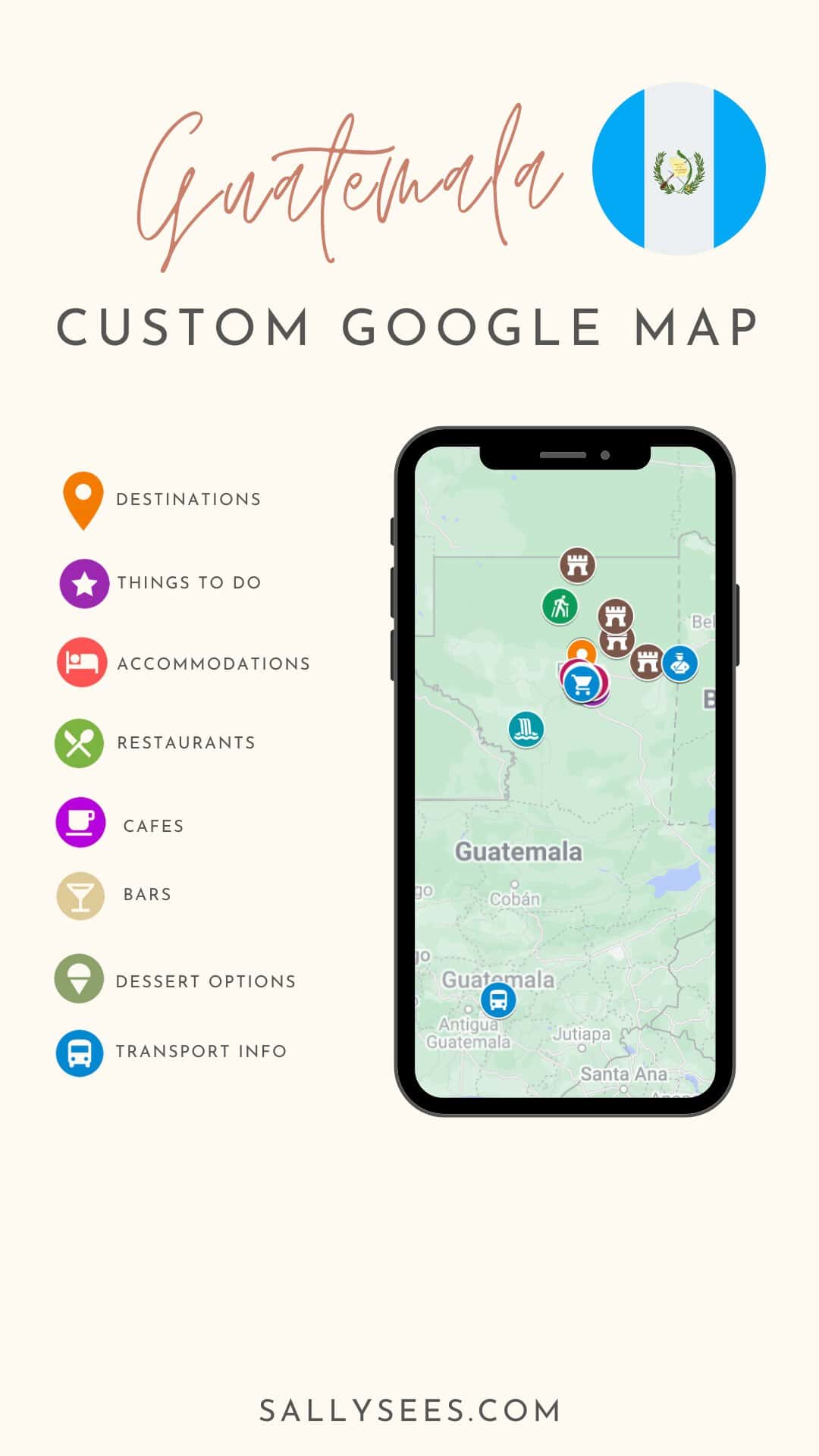
GET OUR GUATEMALA GOOGLE MAP
Save hours with our FREE custom Guatemala Google Map!
Get 200+ locations pinned, giving you our best tips and recommendations in your pocket.

Lake Atitlan travel guide: Final thoughts
There you have it, our Lake Atitlan travel guide! I hope this gives you a better feel for the lake, how to get there, navigate the somewhat intimidating lanchas and answer all those niggly travel questions.
I’ve left you with a ton of links throughout to our other posts about the lake. It’s such a huge destination with so many towns and different elements to take into consideration for where to stay, things to do etc. so make sure you read those too. Or, if you want something all planned out for you, I’ve got a Lake Atitlan itinerary for 7, 5 or 3 nights on the lake.
If you’re moving on to your next destination in Guatemala, chances are you’re heading for Antigua or possibly down to the surf town of El Paredon. Maybe to Lanquin and Semuc Champey, in which case you should buckle in for a looong journey!
MORE LAKE ATITLAN POSTS

The Comments
LaMari
Hi Sally! I am going to be staying in Antigua during Semana Santa 2026! Needless to say, I will be ready for some downtime and going to Lake Atitlan after. I am a potter and would like to visit the pottery town, which looks quite far from Santa Cruz and San Pedro (where I also want to take a weaving workshop). From which town should I plan my day trip to San Antonio Polopo, and how long might it take to get there? Thanks so much for this amazing post, so full of good info!!
Sally Rodrick
LaMariHi LaMari, that sounds like a wonderful plan. Antigua will be so beautiful with all the Semana Santa decorations and festivities, but some quiet time at the lake will be much needed! You can definitely visit San Antonio Polopo from Santa Cruz. You’ll need to get a boat to Panajachel first (just a few minutes from Santa Cruz) and then switch to another boat (not AS common but possible), or more commonly the colectivo truck, which should take around half an hour. I would do San Pedro on a separate day as it’s the other side of the lake. I hope you have a wonderful trip 🙂 Sally