
This article contains affiliate links that may earn me a small commission at no extra cost to you. As an Amazon Associate, I earn from qualifying purchases. For more information, see our affiliate disclaimer.
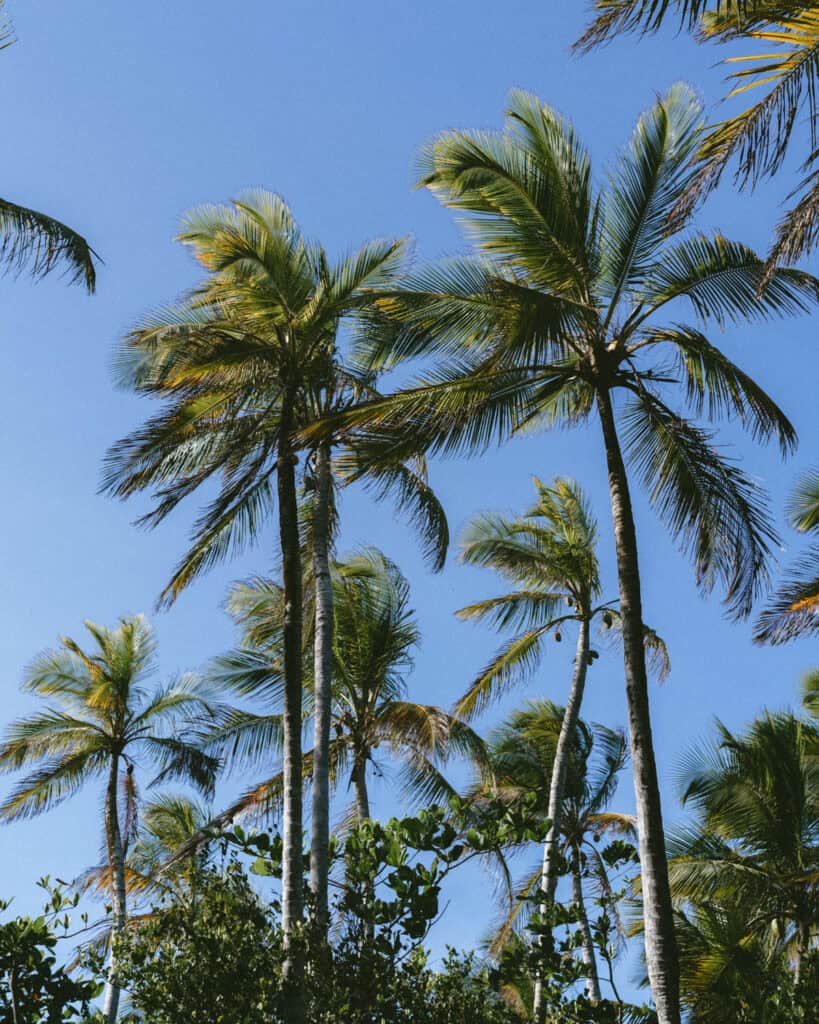
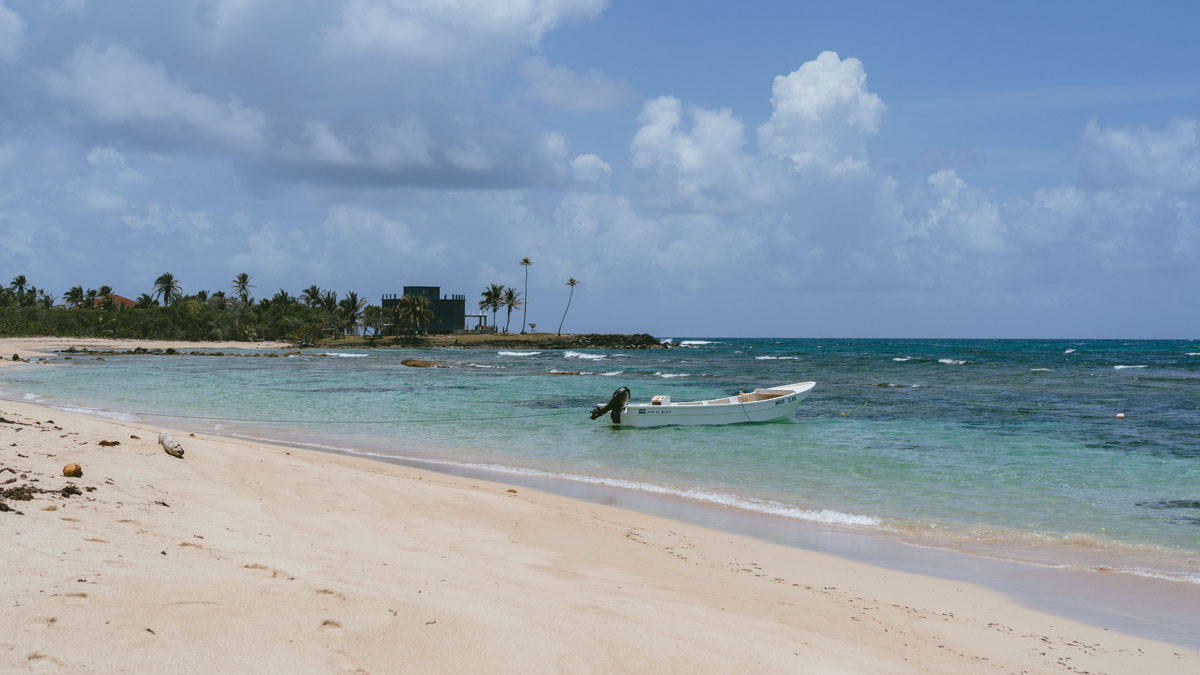
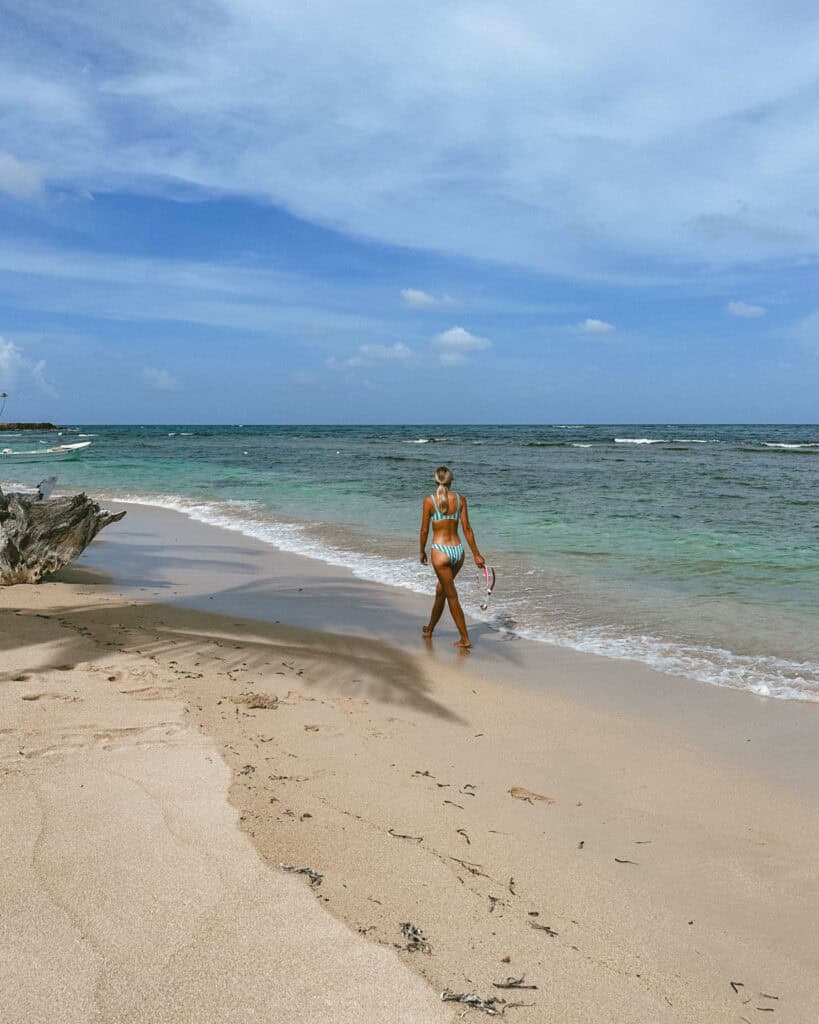
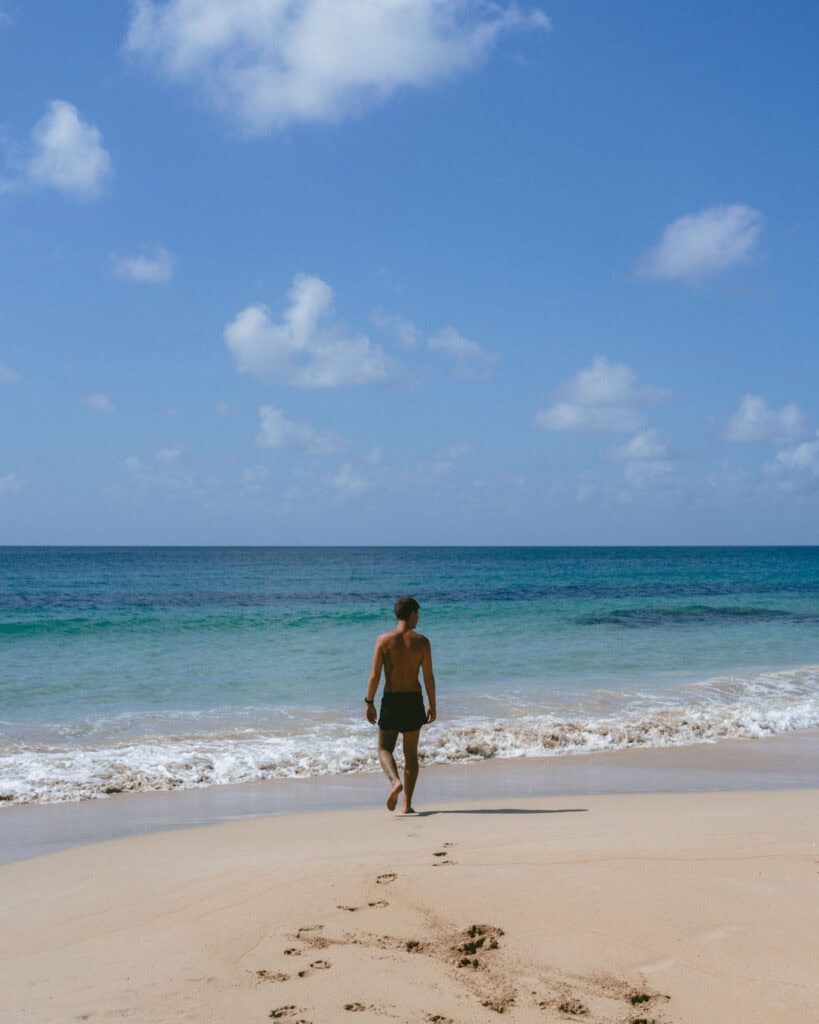
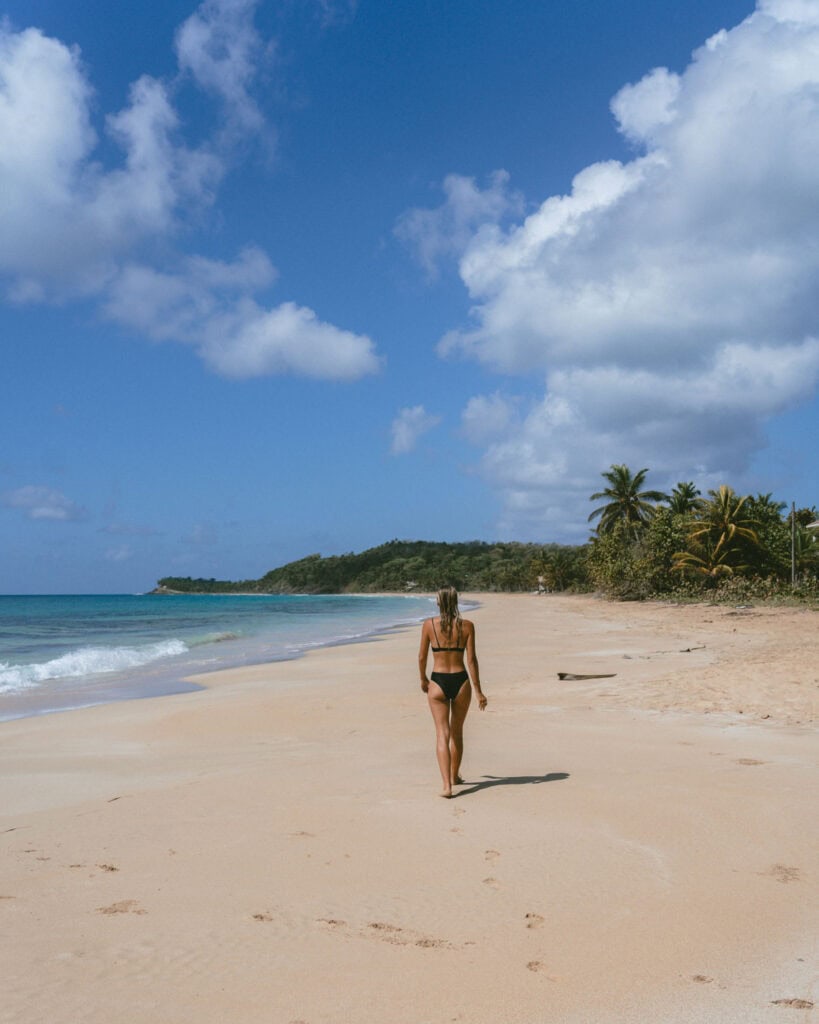
Picture this: you’re walking barefoot on a white sand beach, there are palm trees swaying along the shore to your right, and electric blue Caribbean waters gently crashing to your left. There’s no noise, no resorts, and not another soul in sight – this is the Corn Islands.
A pair of remote, tropical islands in the Caribbean Sea, the Corn Islands are Nicaragua’s best surprise! Big Corn and Little Corn are the Caribbean of 50 years ago before international resort chains and cruise ships took over.
Although the islands are geographically Nicaraguan, their soul is Caribbean. These islands are completely different from anywhere else in the country, with an Afro-Caribbean flavour, Creole culture and reggae vibes.
Hard to reach and even harder to leave, the Corn Islands aren’t for all types of travellers. What they lack in luxury and convenience, they make up for in unreal tropical scenery and a blissfully laidback atmosphere.
Whether you’re keen to dive into the Caribbean Sea and explore the thriving underwater world, swing in a hammock from your beachfront cabin, laze on a powdery white sand beach or all of the above, this is everything you need to know about Nicaragua’s Corn Islands.


About the Corn Islands
The Corn Islands, or Las Islas del Maíz, are two picturesque islands off the Caribbean coast of Nicaragua. The twin islands comprise Big Corn Island (Isla Grande del Maíz) and Little Corn Island (Isla Pequeña del Maíz).
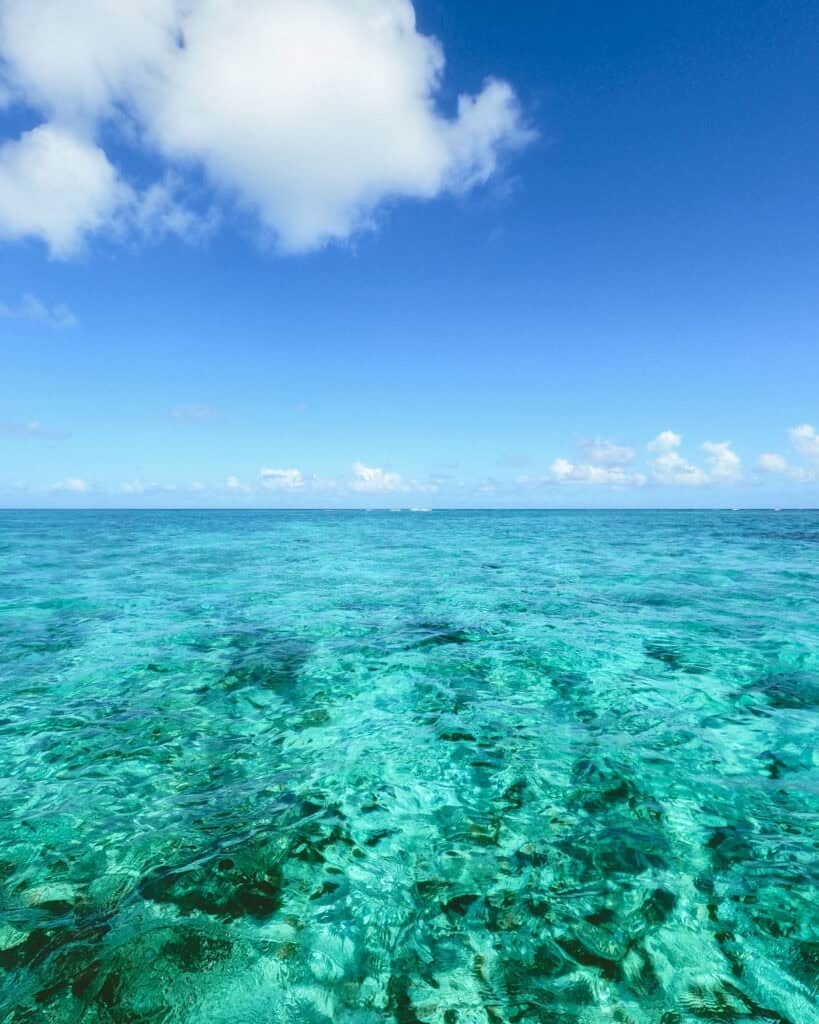
Located over 50 miles (80 km) off the Nicaraguan mainland, the Corn Islands feel like a world of their own. With their turquoise waters, white sand beaches, and swaying palm trees, these islands are paradise on earth!
But thankfully they haven’t gone the way of most Caribbean islands – overdeveloped, overcrowded and overpriced. The Corn Islands have remained blissfully laidback and, for the most part, undeveloped and free from any major resort chains or cruise ship ports. Little Corn Island doesn’t even have electricity 24 hours a day!
The Corn Islands might be part of Nicaragua’s territory, but they belong in the Caribbean and are more culturally similar to their island neighbours.
Once a haven for pirates during the 17th and 18th centuries, the islands later came under British influence before being ceded to Nicaragua in the late 19th century. The population today is primarily Afro-descendant, with deep cultural roots in the region’s Creole heritage.
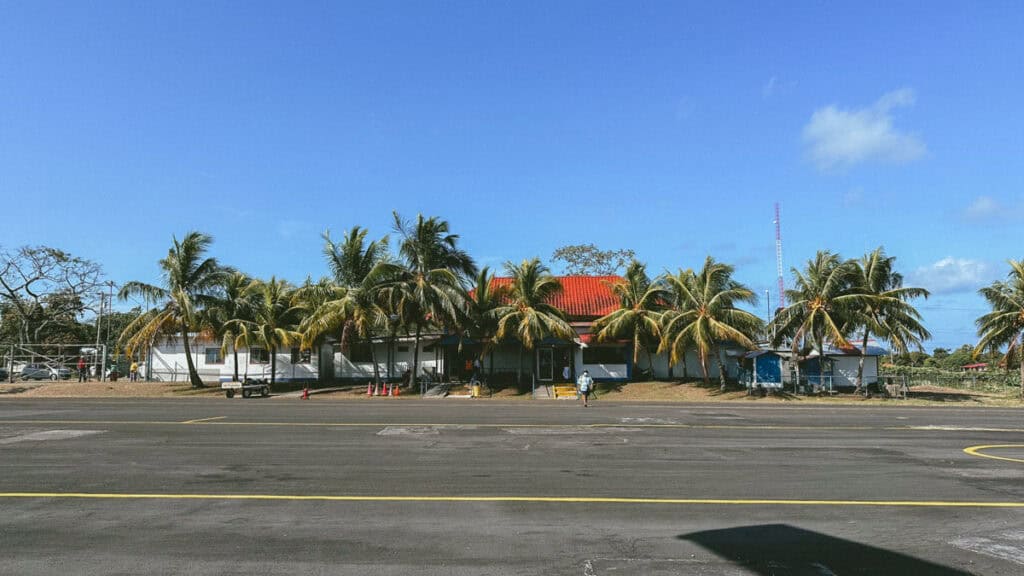
Stepping off the plane on Big Corn Island felt like landing in another country, and we were immediately charmed by the Afro-Caribbean culture, reggae beats, Creole English, and unique cuisine. It was entirely different from anything else we experienced in Nicaragua.


Nicaragua map

Best time to visit the Corn Islands
The Corn Islands, along with the rest of the Caribbean Coast of Central America, experience a slightly different wet and dry season to the rest of the region.
It’s a very tropical climate that experiences rain year-round, and the seasons are much less defined than on the mainland.
Their dry season starts a little later, around March and it’s mostly dry and sunny until May. We visited in April and it was perfect every day.
December, January and February and June, July and August are shoulder months. Rain is possible but not persistent, with wind that can stir up the ocean and impact boating activities.
September is a wildcard month that, for some reason, is almost always dry and sunny before the wettest months of the year hit, October and November. There isn’t much to do on a remote tropical island when it rains all day, so I would steer clear of these months.
- ☀️ Dry season: March, April, May, September
- 🌦️ Shoulder season: December, January, February & June, July and August
- ⛈️ Wet season: October and November

How long to stay on the Corn Islands
As long as possible! Seriously, weeks if you have the time available.
You’ve either spent a lot of money or a lot of time to get there, you wouldn’t want to do it for just a few nights.
We spent 4 nights on each island and it honestly wasn’t long enough! Not because there is that much to do, but because you’ll quickly settle into the slow-paced, island life and I guarantee you won’t want to leave!
I’d say a week split between the two islands is the minimum amount of time you should spend here.


Big Corn Island vs Little Corn Island
Both Big and Little Corn are postcard-perfect paradises, but each island has its own allure and identity.
- 🌽 Big Corn Island is the larger and more developed sibling, with a population of around 8,000 residents. At only 3.5 square miles (9 sq km), it’s still a far cry from most busy Caribbean islands, but it has paved roads, cars, and a variety of accommodations.
The beaches here are unmatched, and much nicer than in Little Corn. We think Big Corn is very underrated. It doesn’t have the remote, Castaway appeal that Little Corn has, but there is a better balance between comfort and adventure and a few more amenities. We loved Big Corn and I’m so glad we didn’t just pass through like most people do.
- 🌽 Little Corn Island, on the other hand, is a true barefoot paradise. At just 1.5 square miles (3.8 sq km) and less than 1,000 residents, it is much smaller and more remote. Little Corn is a raw and authentic island, with no cars, limited electricity, and an undeniable charm. There are no roads, no motors, very limited phone and internet service and even shops and supplies can be hard to come by.
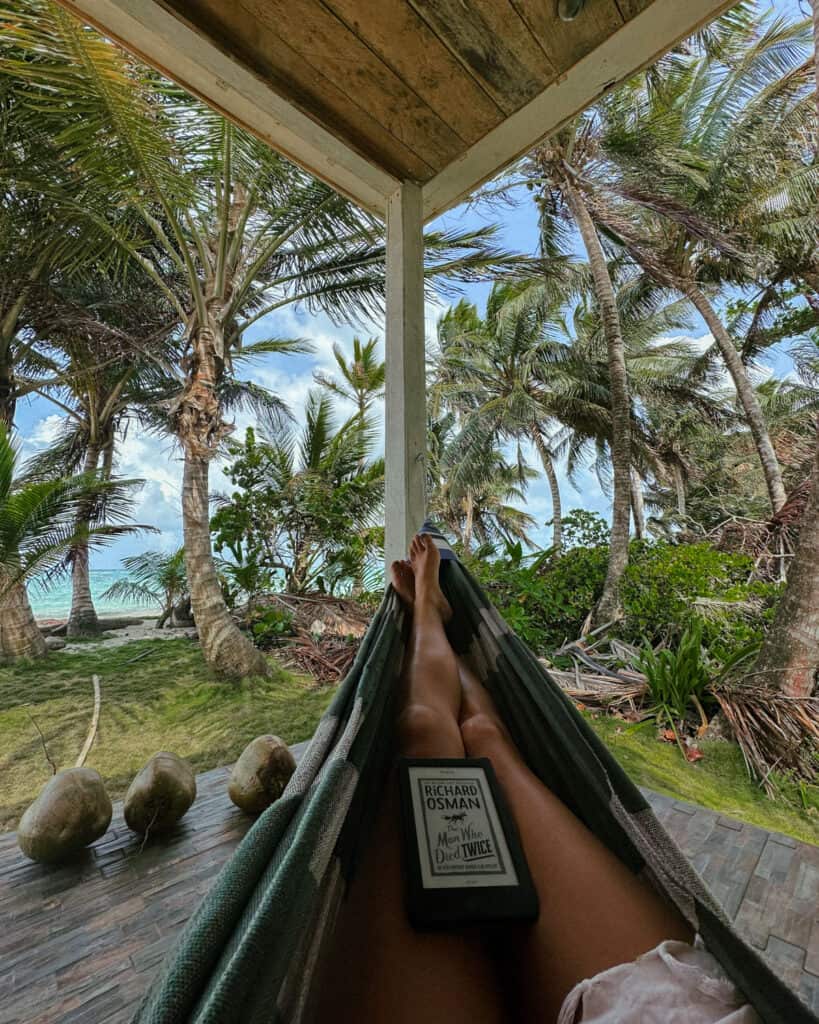
Time slows down here, and you can live out your Castaway fantasies. It is the ultimate, laidback, laze-in-a-hammock type of place, with simple pleasures like swimming in crystal-clear waters, sunrise and sunset, enjoying fresh lobster, and soaking up the tranquil vibes.
Little Corn Island is typically the most popular island for tourists because it is remote and has that off-the-beaten-track appeal. But I think any visit to the Corn Islands should include some time on both Big and Little Corn. You can’t get to Little Corn without passing through Big Corn, so you may as well!



Big Corn Island mini guide
I’ve got a detailed guide to Big Corn Island, with much more information about where to stay, how to get around, the top things to do, best places to eat and more. Here’s a sneak preview!
Top things to do on Big Corn Island
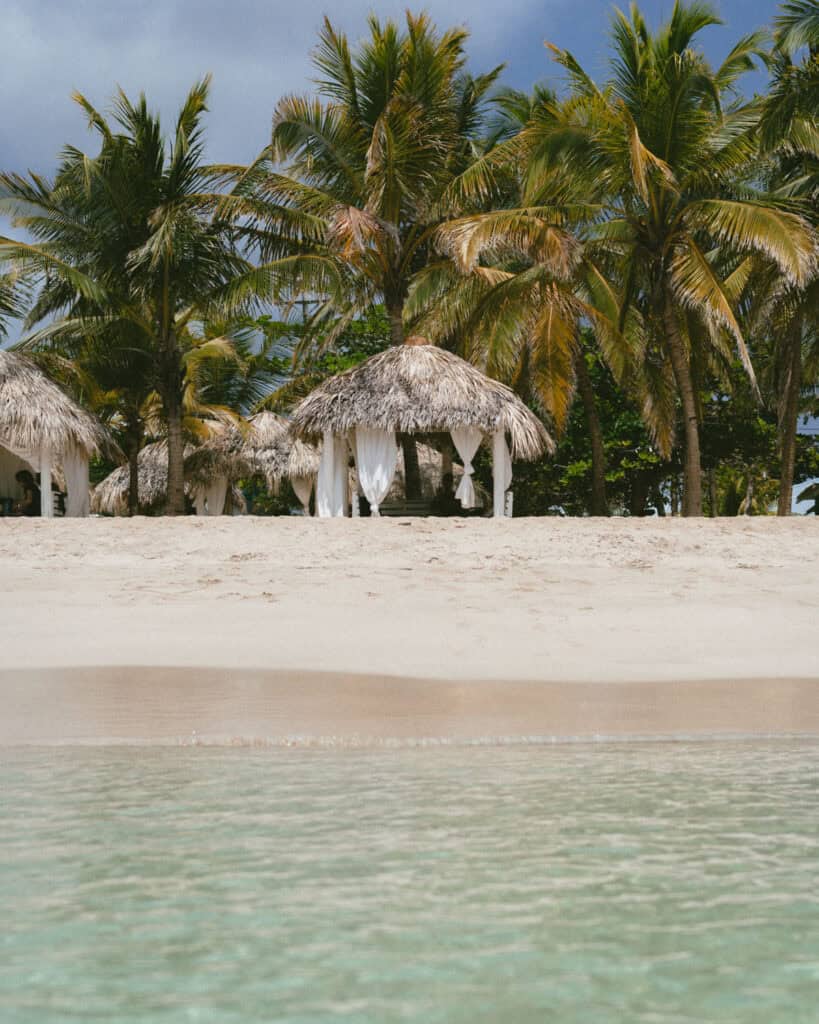
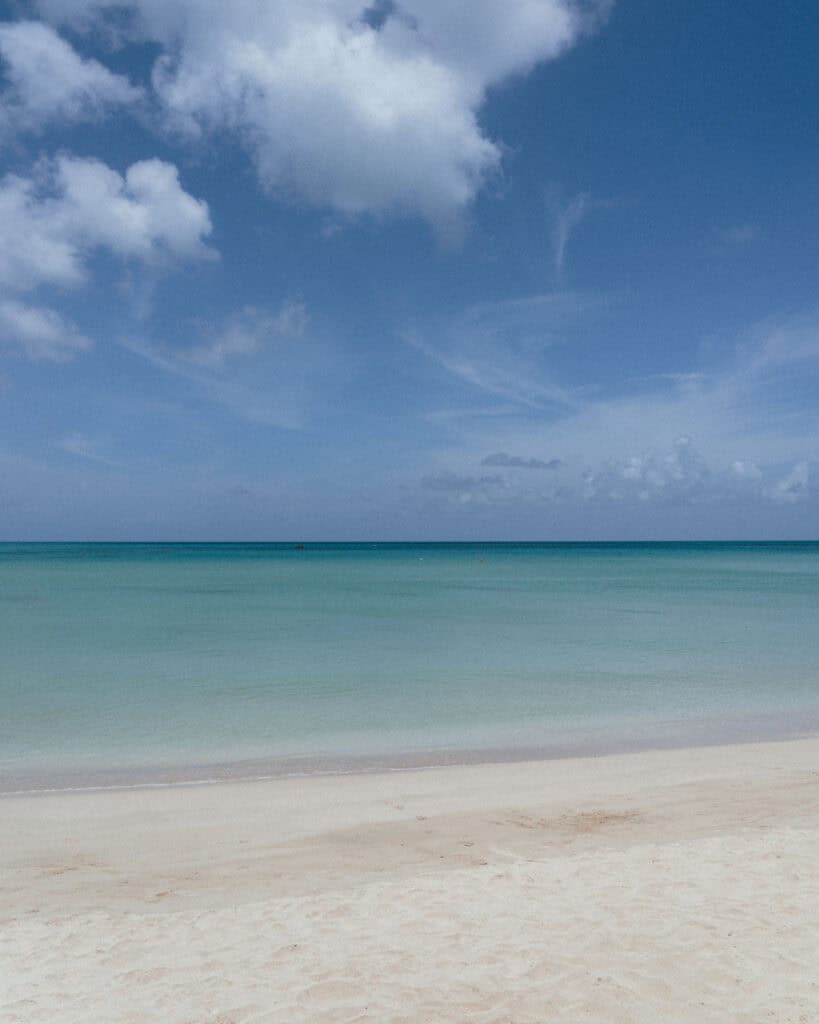
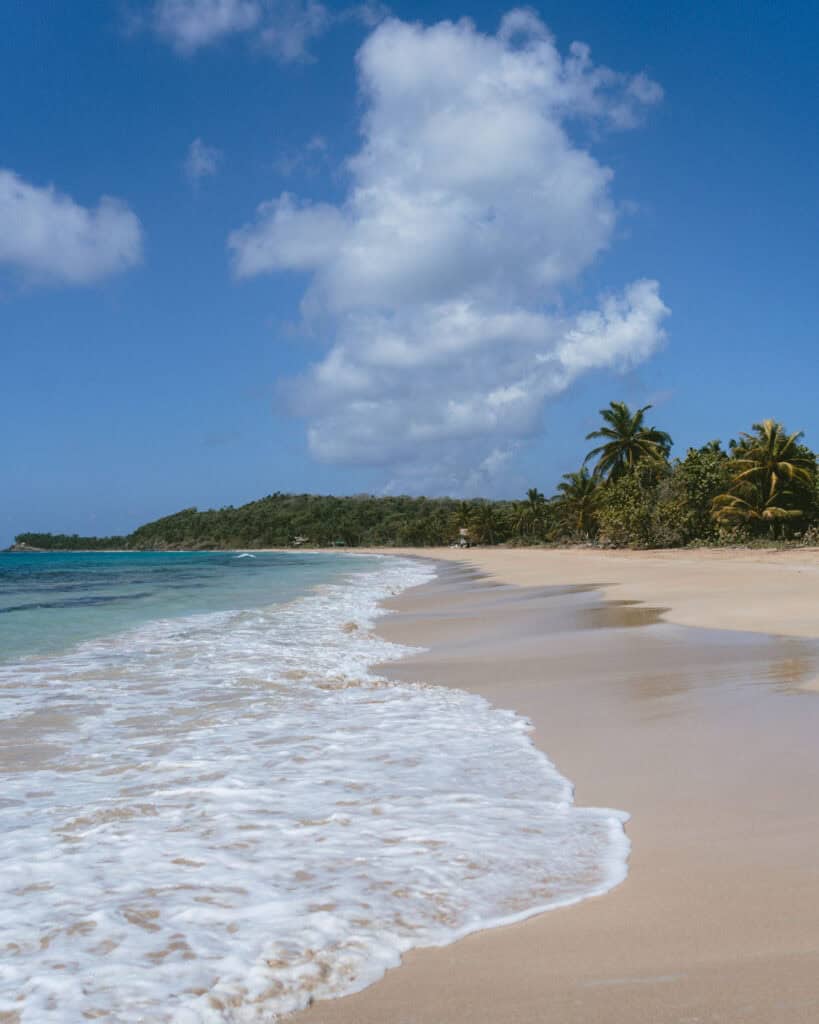
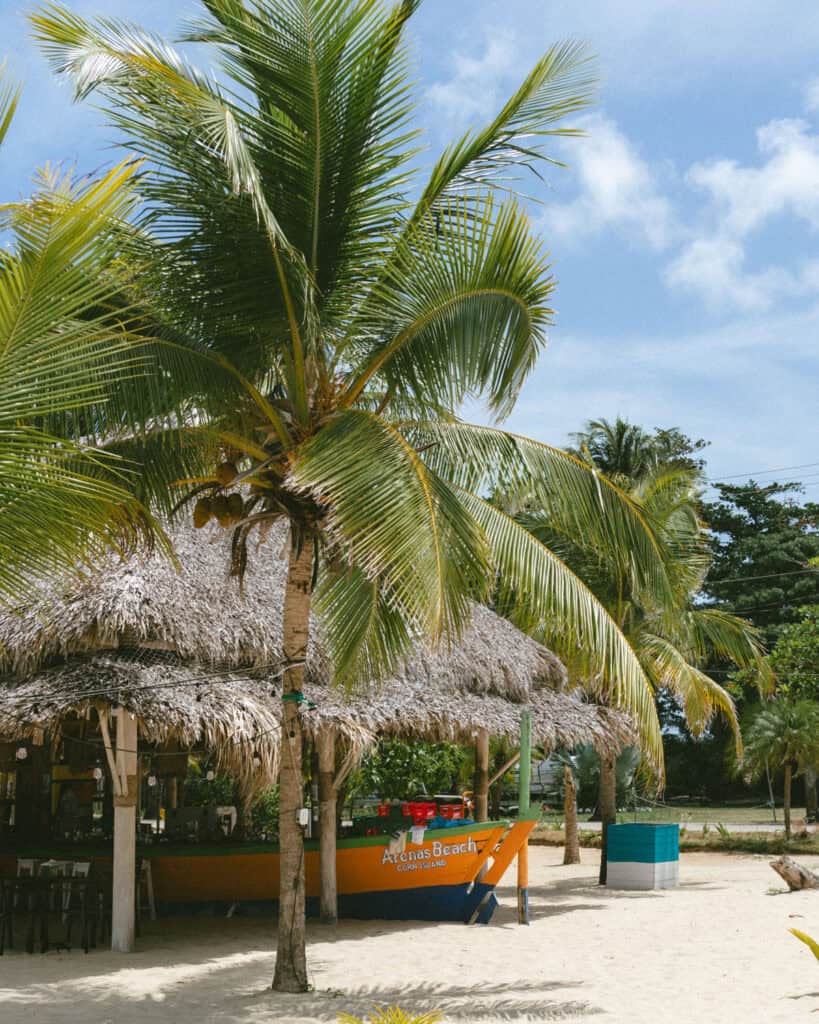
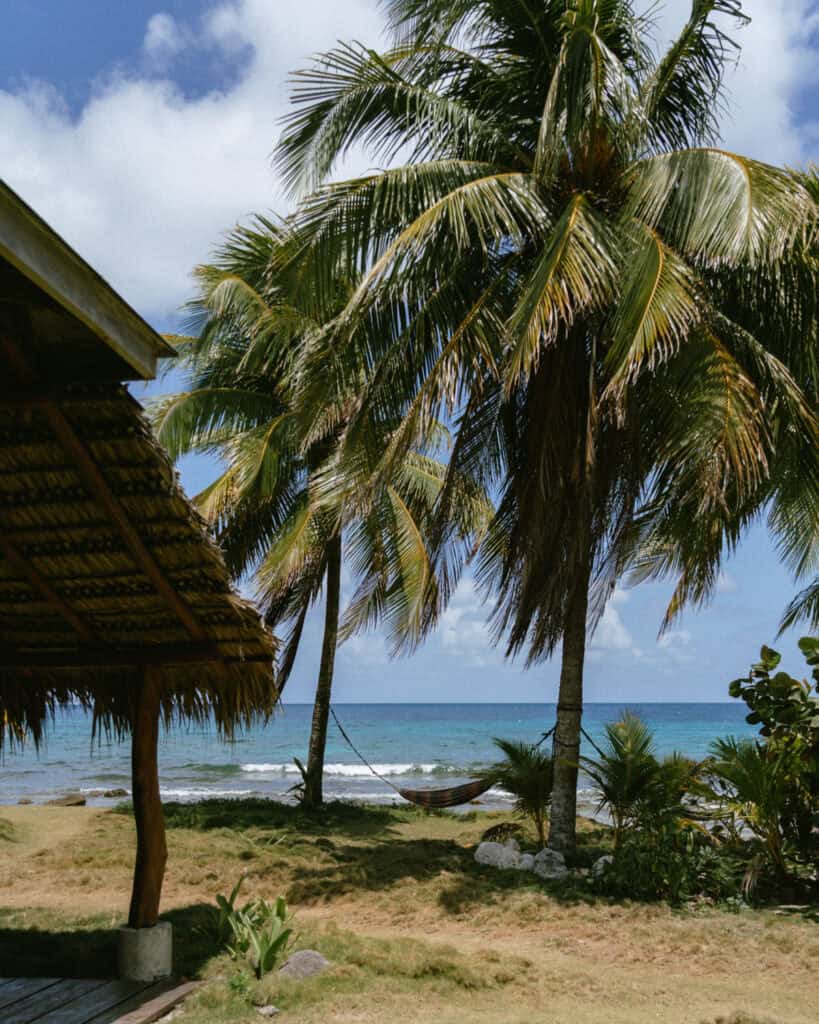
- 🏖️ Explore the beaches: it’s an indisputable fact that Big Corn Island has better beaches than Little Corn Island. We had to pinch ourselves time and time again that we were on the most beautiful stretch of powdery white sand in the Caribbean with virtually no one else around! Our favourite beaches were Long Beach and Southwest Bay (aka Arenas Beach, aka Pic-Nic Beach).
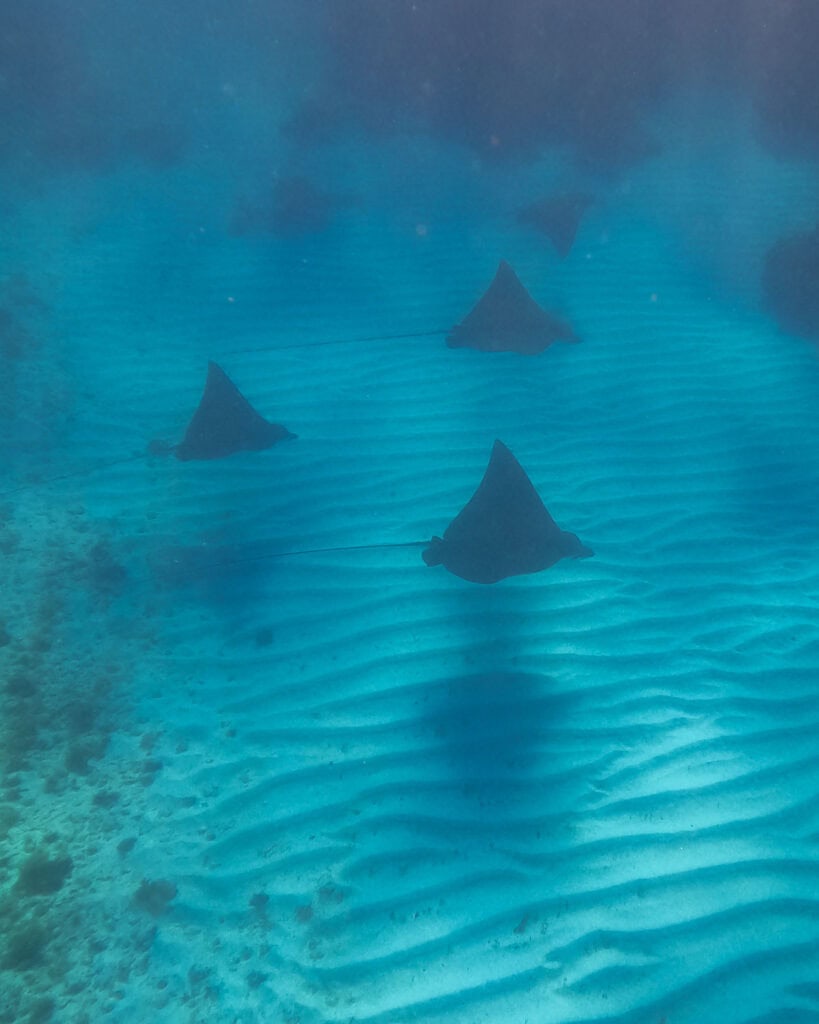
- 🤿 Go snorkelling: there is rich marine life and vibrant coral reefs on both islands, but we thought Big Corn was better for snorkelling from the beach. The reef is very close to the north side of the island, and we spent hours swimming with a huge group of eagle rays. It was magic. You can also join snorkel or dive tours on a boat.
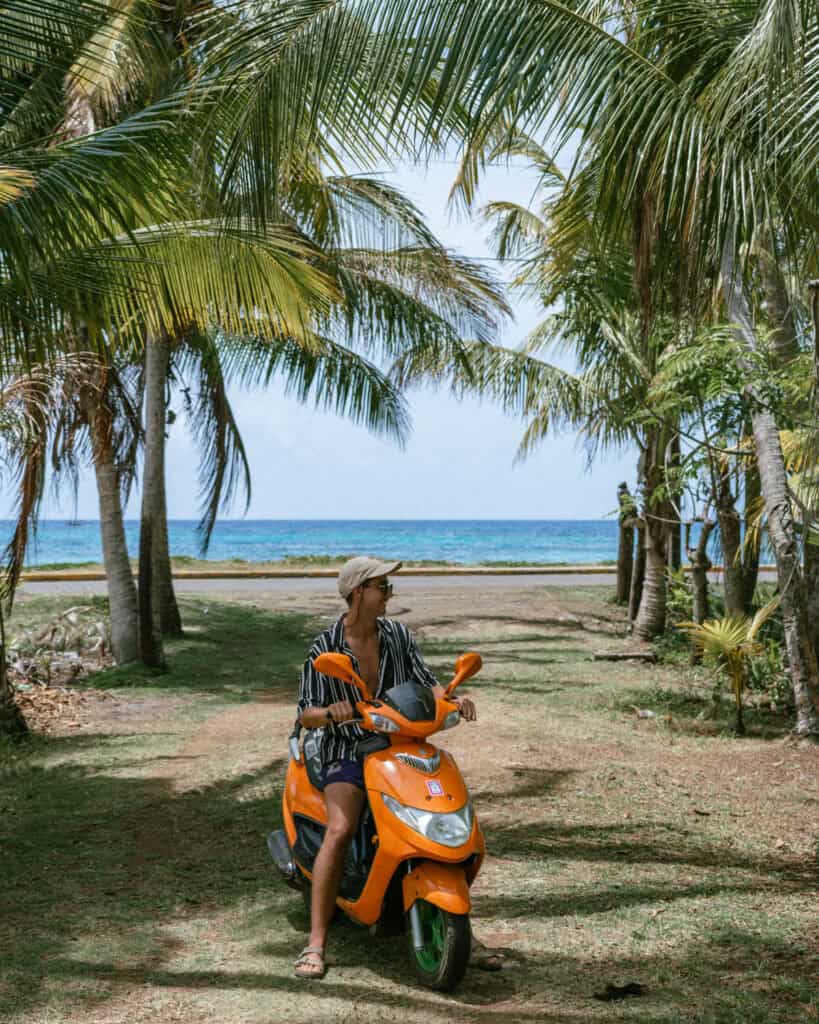
- 🛵 Cruise around the island: Big Corn has a paved road that runs around the majority of the island. Rent a scooter, golf cart or bike to cruise around the island and explore every inch of it.
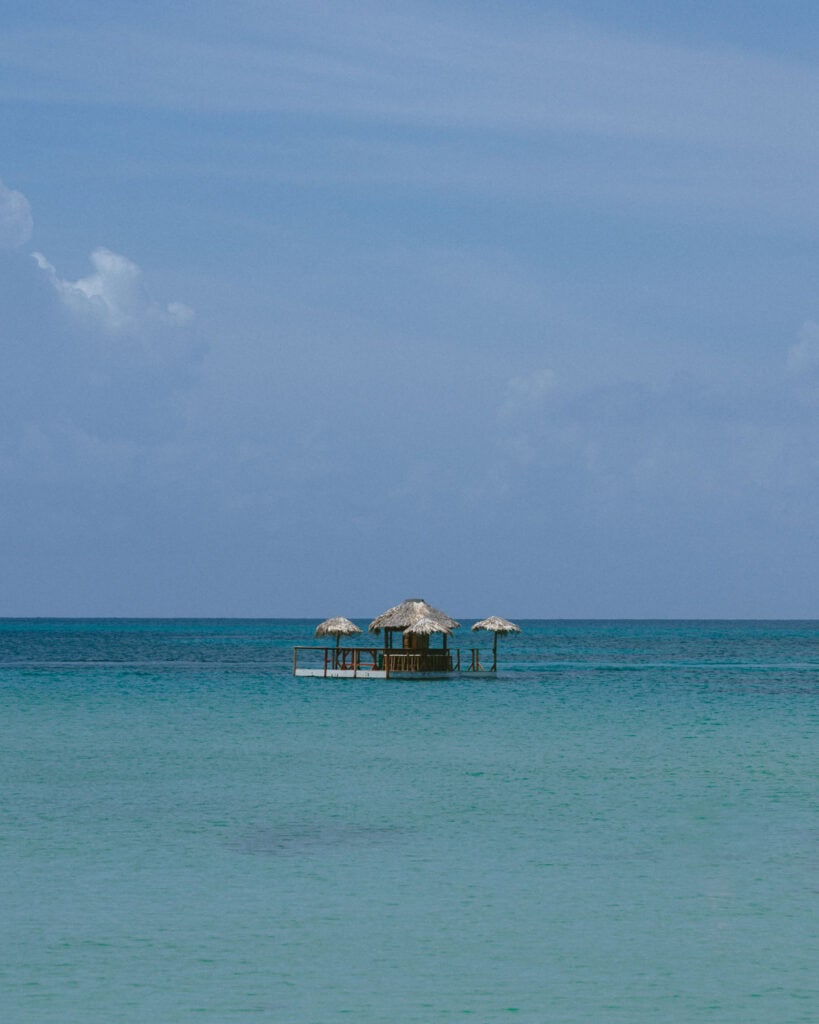
- 🛖 Have a drink at a floating bar: the Bit Coin Island Bar is a fun floating bar in Southwest Bay. Their boat captain will come and pick you up from the beach, and you can enjoy a few drinks while bobbing on the crystal clear waters. It’s a great spot for sunset.
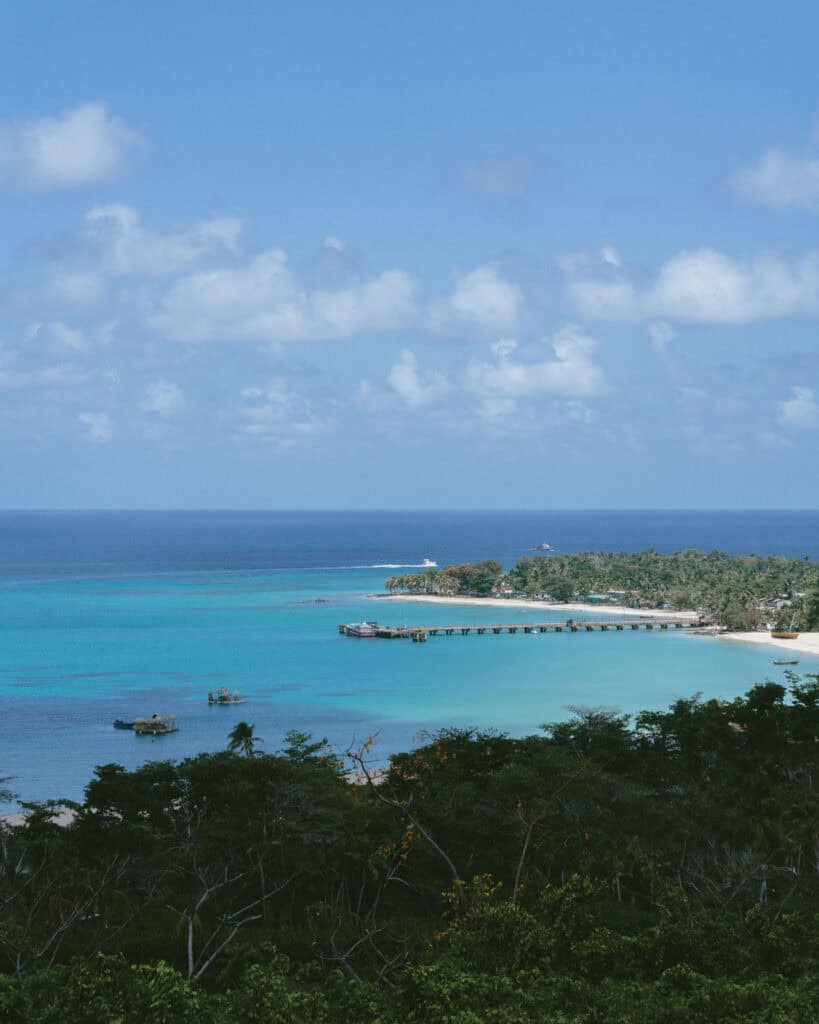
- 🌿 Hike Mount Pleasant Hill: for some epic views over the island, hike the jungle trail to the top of Mount Pleasant, the highest point on Big Corn Island.
Where to stay on Big Corn Island
There is not really one central town on Big Corn Island. Instead, there are clusters of accommodation spread across different areas around the island. So you really have two decisions to make when it comes to choosing where to stay on Big Corn Island:
- 📍 Which area of the island you want to stay on
- 🛏️ Which hostel/hotel you want to stay in
BUDGET 💰
- Silversands Retreat 📍 east
- Corn Island Hostal ALAL SUITE 📍 north
- Coral View Hostel 📍 east
MID RANGE 💰💰
- Sunset Bay B&B 📍 west
- La Princesa de la Isla 📍 west
- La Lodge at Long Bay (Treehouse Apartment) 📍 east
Where to eat on Big Corn Island
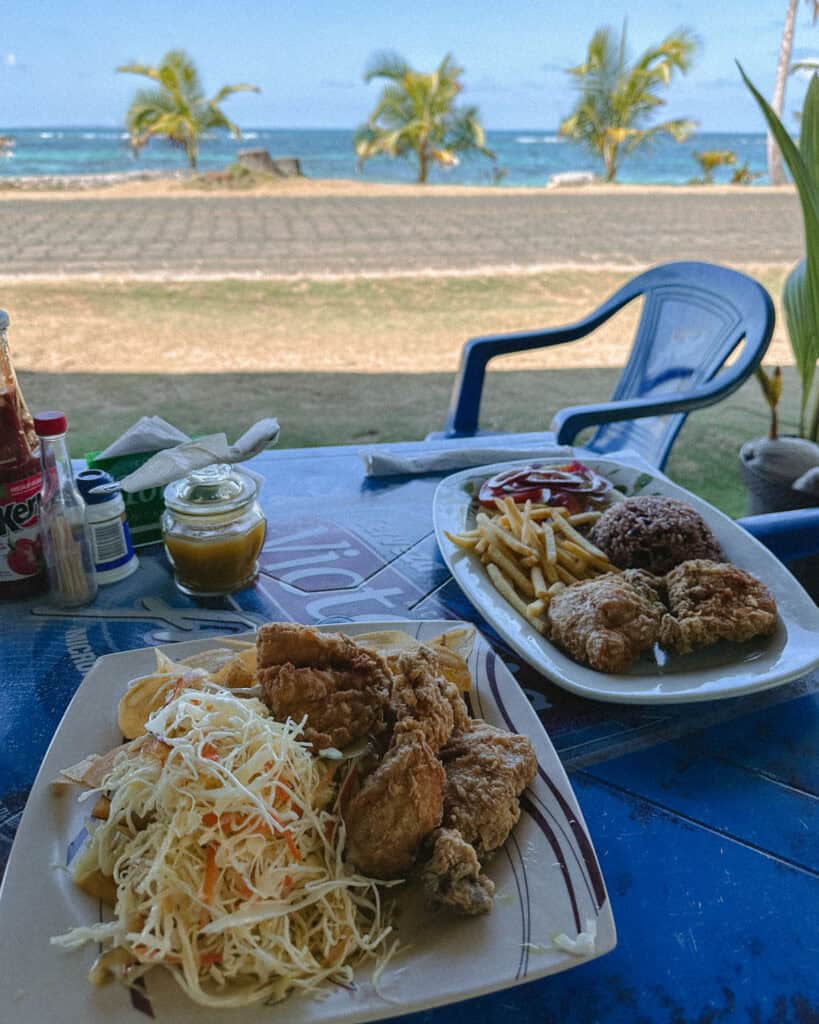
- 🍗 Bar Victoria’s: the best fried chicken I’ve ever eaten!
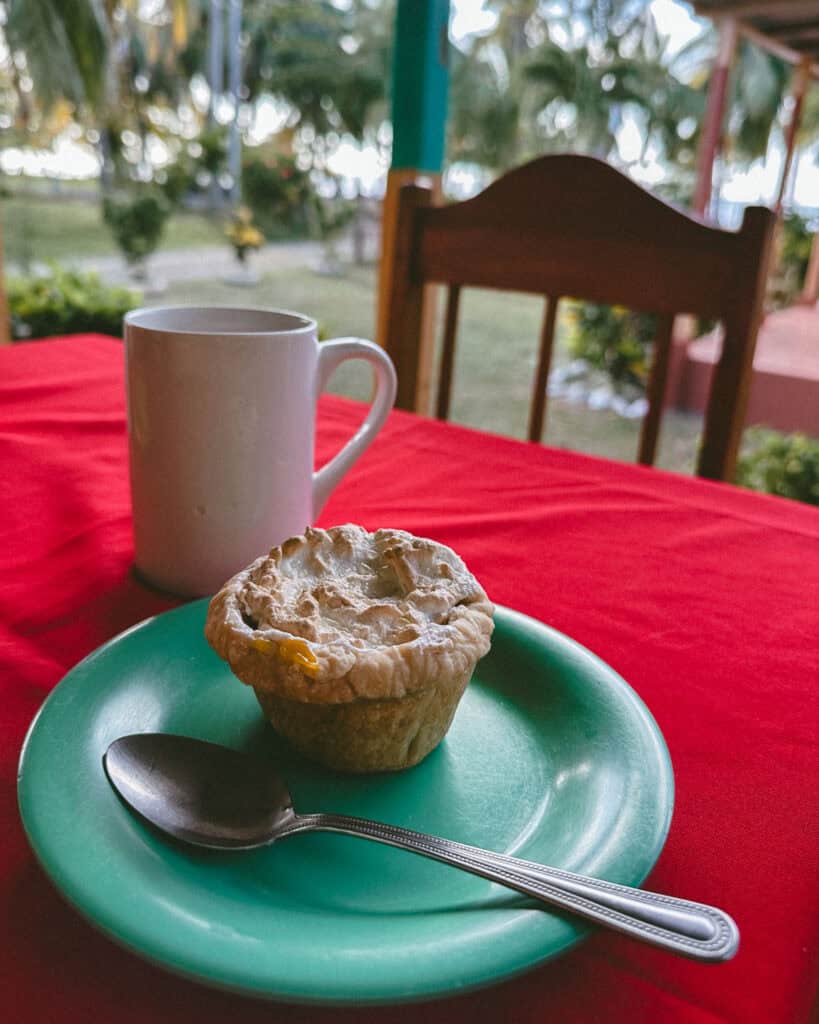
- 🧁 Island Bakery & Sweets: tasty sweet treats, try the coconut macaroons
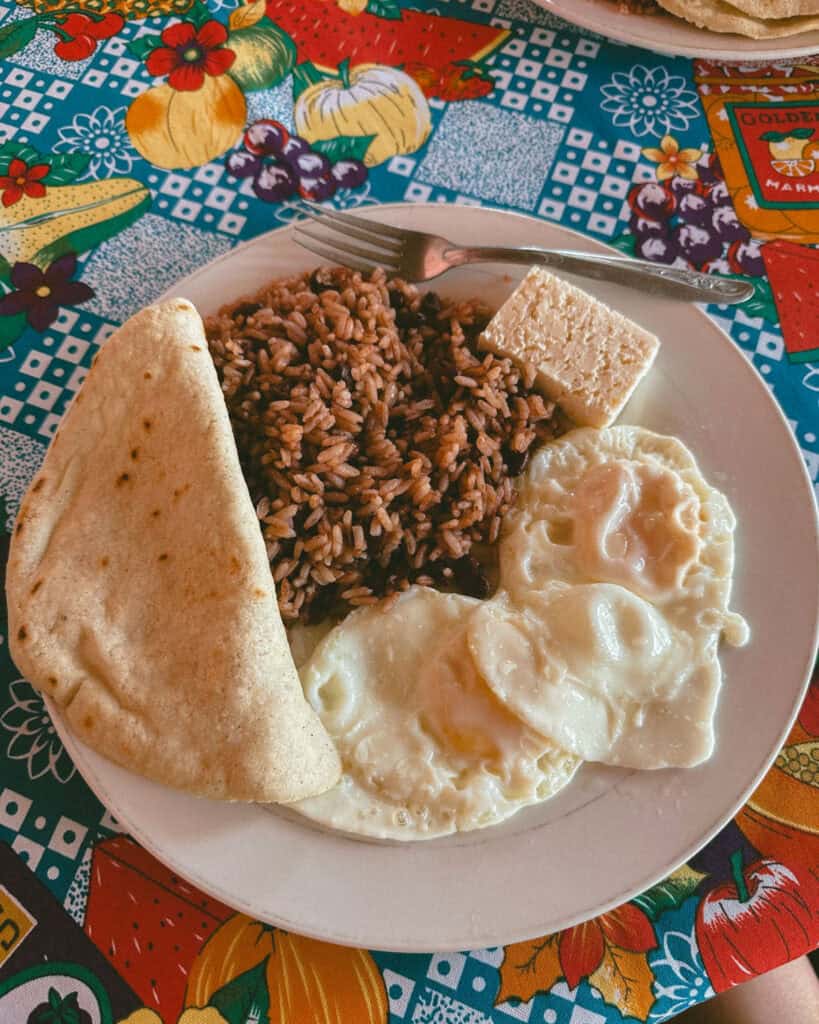
- 🍳 Restaurante Relax: very tasty and affordable breakfast options
- 🍕 Pizzeria Italia: great pizza delivered anywhere on the island
- 🍛 Comedor Doña Julia: the cheapest food we found on the island
Little Corn Island mini guide
I’ve got a detailed guide to Little Corn Island, with much more information about where to stay, how to get around, the top things to do, the best places to eat and more. Here’s a sneak preview!
Top things to do on Little Corn Island
- 🏖️ Hang out on Otto Beach: the prettiest beach on the island located on the north side. It takes 30 minutes to walk from the village.
- 🐟 Do a fishing/snorkelling combo tour: our favourite day, we spent 3 hours on the water with a local fisherman fishing and snorkelling.
- 🤿 Scuba diving: there are a handful of reputable dive shops on the island. Request to dive in the north or east for the best reef and marine life.
- 👣 Explore the whole island: there is a maze of unmarked trails, it’s so fun seeing where they take you and exploring the hidden reaches of the island.
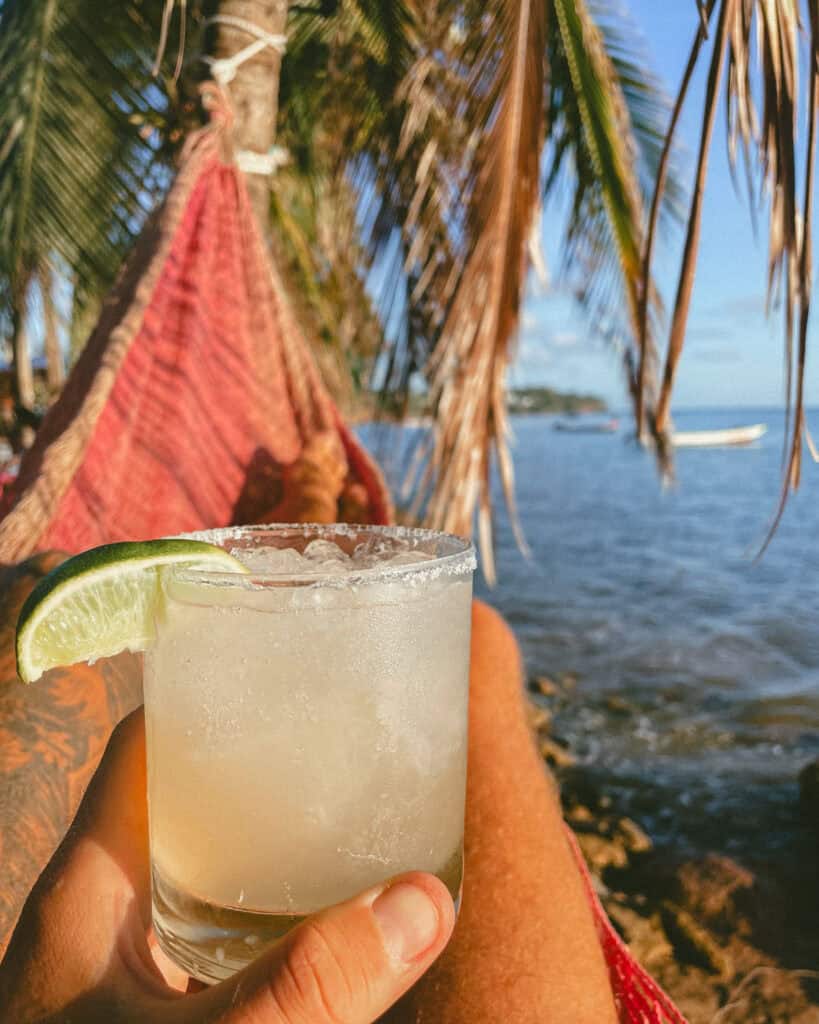
- 🌞 Watch the sunset from the village: the west side of the island has the best sunset views! Grab a happy hour cocktail from Tranquilo or Desi Social Club and swing in a hammock.


Where to stay on Little Corn Island
Little Corn Island is tiny, and it only takes 15 – 30 minutes to walk from one end to the other. Your choices of where to stay are the west side (main village), east side (beach) or north (remote, fancy).
BUDGET 💰
- Christina’s Guest House 📍 west
- Sunrise Paradise aka Carlito’s Place 📍 east
- Ensueños 📍 north
MID RANGE 💰💰
- Sunshine Hotel 📍 west
- Troy’s Place 📍 east
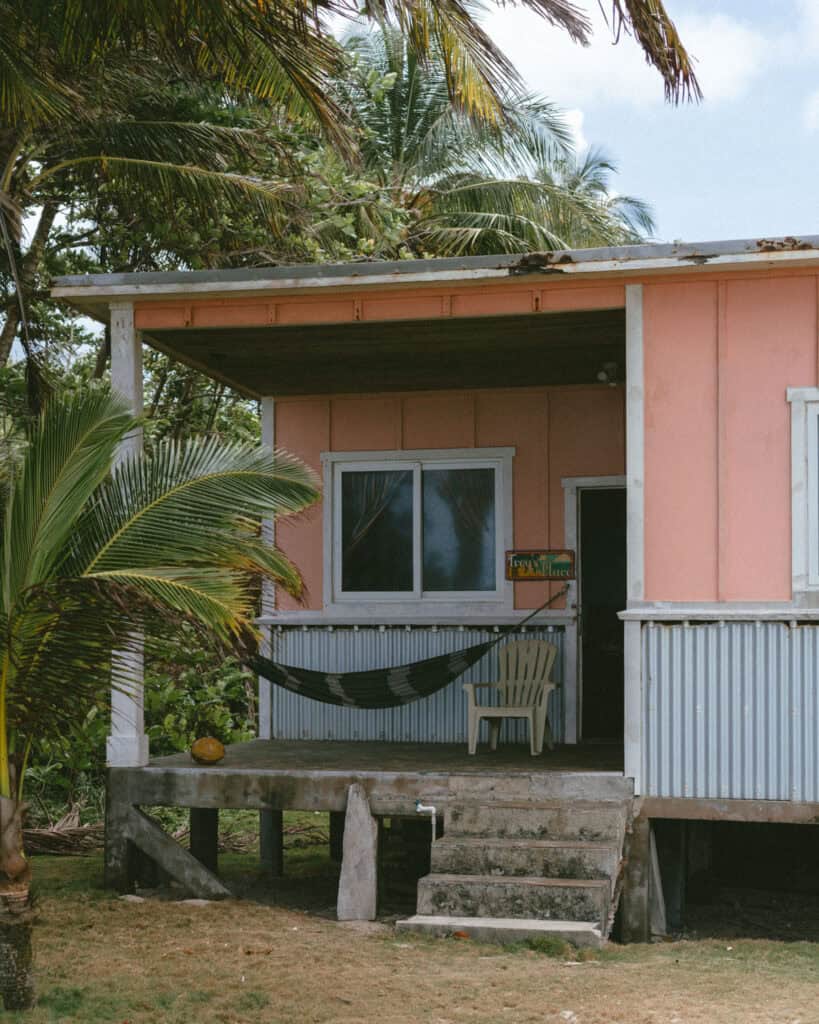
- Derek’s Place Eco-Lodge 📍 north
BOUTIQUE LUXURY 💰💰💰
- The Lighthouse Retreat 📍 west
- Little Corn Beach & Bungalows 📍 east
- Yemaya Reefs 📍 north

Where to eat on Little Corn Island
- 🍛 El Bosque: the best, most affordable restaurant on the island
- 🍹 Tranquilo Cafe: the most reliable option, open for breakfast, lunch and dinner
- 🍞 Panaderia and Restaurante Gloria: great bakery and cheap Nica meals
- 🍸 Turned Turtle Bar & Restaurant: higher-end option on the east side
- 🥞 The Shack: coconut bread French toast for breaky!


How to get to the Corn Islands
No matter which of the Corn Islands you’re planning to visit and how you’re planning to get there, you first need to travel to Big Corn Island and then transfer to Little Corn Island.
There are two ways to get to the Corn Islands:
- 💰 The easy, expensive way: flying from Managua
- 🐌 The slow, cheap way: bus to Bluefields, ferry to the islands
Flying to the Corn Islands
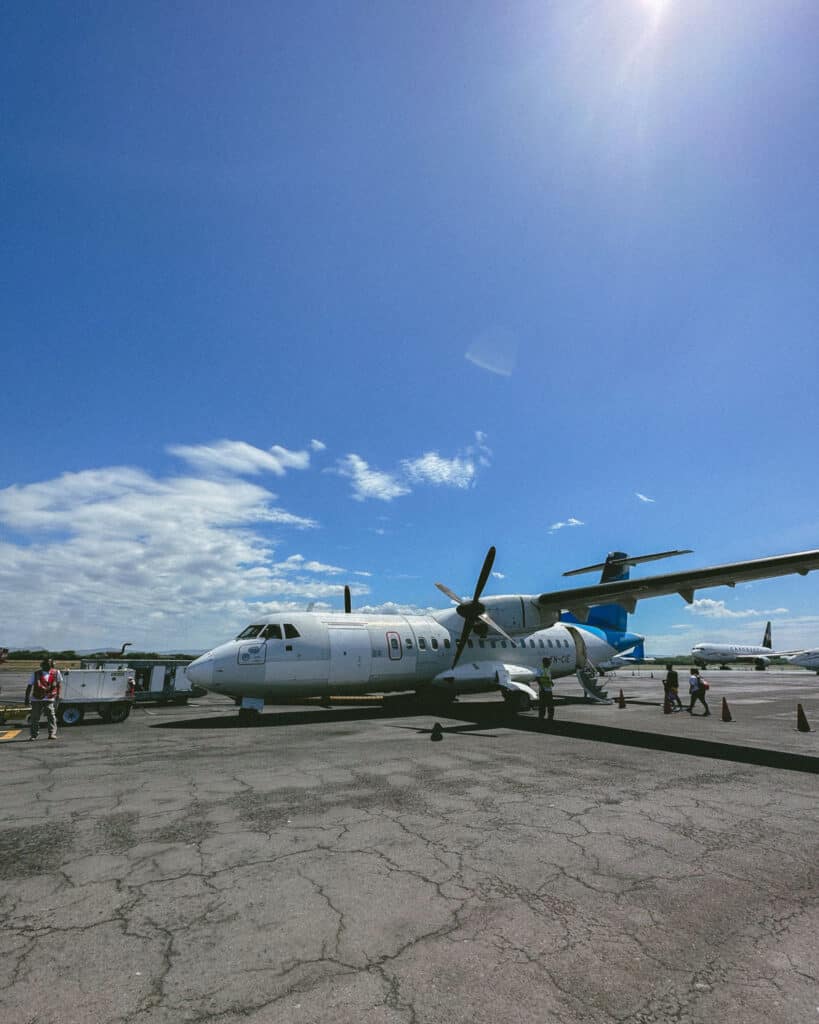
There are daily direct flights from Managua to Big Corn Island with La Costeña Airlines.
There is at least one flight per day, but throughout most of the year, there are two or three departures to choose from.
The flights do sell out, particularly in the high (dry) season and around holidays like New Year’s, Semana Santa, etc., so make sure you book in advance. We had to cut our time short by a day because we couldn’t get the flight we wanted.
The flight price ranges from around $100 – $180 USD one-way.
It is expensive for such a short flight, and it will be a big hit to your Nicaragua budget, but once you know about the alternative transport option, it’s really not that bad.
It’s cheaper to book with the airline via phone or email. Booking online has an additional fee, so it’s worth taking an extra step to save $20+ USD per person.
You can contact them via phone (+505-2298-5360) or email (aclientes@lacostena.com.ni / reservacion@lacostena.com.ni / info@lacostena.com.ni). Apparently they have recently introduced bookings via WhatsApp, which is much easier! Use the number +505-7828-1234.
Booking over the phone is surprisingly straightforward. You can ask for an agent who speaks English and you’ll get an answer quicker than via email, although they did reply to my emails surprisingly fast.
La Costeña has a separate terminal at the Managua Airport. It’s not much more than an old shed so if you’re relying on getting a decent meal, going to the ATM, buying snacks etc. pop into the main terminal first before you check in with La Costeña.
The flight takes less than an hour. Sometimes the plane will make a stop in Bluefields to unload and pick up passengers, but you won’t need to get off. It’s just a brief stop and then you’re on your way again.
None of their fare types include luggage as a standard anymore, and you have to add on one of three package options for an extra tiered fee:
- Light: 10 lbs (4.5 kg) personal item and 20 lbs (9 kg) carry-on luggage
- Standard: 10 lbs (4.5 kg) personal item and 30 lbs (13.5 kg) checked luggage
- Essential: 10 lbs (4.5 kg) personal item, 20 lbs (9 kg) carry-on luggage and 30 lbs (13.5 kg) checked luggage
The website booking also gives you the option to add an additional 20 lbs carry-on bag and/or a 30 lbs checked bag. I’m sure you can also do this if you book via phone or email.
If you’re already thinking ‘my bag is way heavier than that!’ you’re not alone! It is a very small allowance because the planes used are so small. They now seem to let you add more baggage than they used to, but the prices add up fast. Just because you can bring more, doesn’t mean you should.
When you go to the Corn Islands, it’s best to store some of your bigger luggage on the mainland. Not just for the sake of the plane ride, but to carry on and off boats, and because there are no motorised vehicles on Little Corn Island, whatever you bring you have to carry!
🎒 Where to store your luggage when you go to the Corn Islands
This took us way too long to work out! We didn’t want to stay in Managua unnecessarily the night before our flight, but we also didn’t want to backtrack to a destination we had already been to collect our luggage after we’d flown back to the mainland.
Plenty of hotels in Managua city and near the airport will store your luggage for a fee if you’re staying with them. Of course, this means you will need to spend a night in Managua before your flight, but it’s convenient to collect on your way back.
We ended up leaving our big backpacks at the accommodation we were staying at in Granada. It meant a minor detour en route to our next destination, Popoyo, but we didn’t have to pay anything and we didn’t waste a night staying in Managua when we didn’t need to.
Flying into Big Corn Island and getting to see the incredible reef, bright blue water and jungle-covered island was an added bonus, and we were 10000% happy with our decision to pay for the flight.

Bus and ferry via Bluefields
The cheaper but MUCH slower and highly inconvenient way to get to the Corn Islands is to go via the town of Bluefields.
This is the closest mainland town connecting the Corn Islands to the rest of Nicaragua. It’s a seedy city on the Caribbean Coast, and from all accounts isn’t a particularly nice or safe place to be.
There are two steps to this process
- 🚌 Bus from Managua to Bluefields
- ⛴️ Ferry from Bluefields to Big Corn Island
MANAGUA – BLUEFIELDS BUS 🚌
This bus departs from the Terminal de Buses Costa Atlantica inside the Mercado Ivan Montenegro. have also recently read of buses departing from another nearby terminal, Terminal Buses Costa Caribe Norte, so I would confirm via WhatsApp. It is a direct route that takes 8 hours. The highway has recently been upgraded.
Tickets should cost around 320 Cordobas (~$9 USD).
Several companies run the route throughout the day and night. I believe this is the most current schedule but it’s likely to change (I found a great photo in a review for the Costa Caribe bus terminal that lists the company for each departure):
⏰ 6:00 am, 9:15 am, 11:15 am, 2:30 pm, 5:00 pm, 8:30 pm, 9:30 pm, 11:00 pm
I suggest taking one of the morning buses if you’re planning to spend a night in Bluefields before taking the ferry (6:00 or 9:15 to get there before dark) or one of the evening buses (8:30 or 9:30) to arrive in the morning and go straight to the ferry terminal.
These buses do book out, so it’s worth booking ahead in advance if you can, otherwise, you might have a very long unplanned wait at the bus terminal.
Of course, reserving a ticket is not a simple process. A few phone numbers are floating around on the internet for the different companies that run this route, but they can obviously only reserve the services they run, so it’s a bit of trial and error to call/WhatsApp message the right one and book your desired time!
There are a couple of phone numbers that seem to appear in a lot of reviews and timetable photos, so I’d suggest starting there:
- ☎️ +505-8530-2301 (for departures from Managua, I think!)
- ☎️ +505-5777-6895 (for departures from Bluefields, possibly!)
Returning from Bluefields to Managua
If you’re game enough to come back again via the ferry and bus (most people don’t!), I believe this is the most current schedule from Bluefields to Managua:
⏰ 4:00 am, 5:30 am, 6:30 am, 10:00 am, 1:00 pm, 4:00 pm, 9:00 pm and 11:00 pm
I’d suggest confirming when you arrive in Bluefields and getting the number of the company you want to book with, so you can reserve a few days prior.

FERRY FROM BLUEFIELDS TO BIG CORN ISLAND ⛴️
The ferry from Bluefields to Big Corn Island leaves twice per week on Wednesday and Saturday at 9:00 am. Align your bus trip accordingly.
You were previously not able to buy tickets in advance, and this service frequently sells out, especially during busy holiday periods. However there are some reservation numbers advertised online that you could try: +505-8528-1329 / +505-5702-0506.
The ticketing system and organisation at the port are chaos. As far as I understand you can purchase your ticket once you board the ferry, but you need to make sure you’re far enough up in the line that you actually make it on board! Arrive very early, like 6:00 – 7:00 am early.
The journey should cost around 440 Cordoba (~$12 USD) and it will take anywhere from 5 – 8 hours, depending on sea conditions.
This can be a very rough ride, with a loooot of vomit. If you suffer from seasickness, you should think carefully about taking the boat.
Besides the fact that it is an epically long journey, you probably can’t secure a ticket in advance and you’ll feel awful, the other major problem with taking the boat is that it often does not depart as scheduled.
If there are bad sea conditions, the boat won’t go. We met many travellers who were stuck in Bluefields for days, going to the port every morning at 6:00 am to see if the boat was leaving that day.
No thanks!
Once you add up the cost of the bus ticket, taxis to and from the port multiple times, the ferry ticket, plus the unexpected accommodation costs, you’re really not that far ahead money-wise and miles behind in terms of time and enjoyment.
I’m all for saving money when we travel, but we also recognise that our time has value, and I would MUCH rather spend it lazing on a tropical beach than waiting for a ferry to depart in a grungy, unsafe town.
Just book the flight!
If you’re game enough to take the ferry back from Big Corn to Bluefields, it departs on Thursday and Sunday at 9:00 am.
Boat from Big Corn to Little Corn
If your final destination is Little Corn Island, there’s still one more leg on this journey, whether you’ve flown into Big Corn or arrived via ferry.
The boat ride from Big Corn Island to Little Corn Island is done on small panga boats and takes about 30 minutes depending on ocean conditions.
It departs from the main dock at least once per day, but usually twice per day in the high (dry) season:
- 🌽 Big Corn – Little Corn: 10:00 am | 4:30 pm
- 🌽 Little Corn – Big Corn: 6:30 am | 1:30 pm
*These are the core times that run year-round, the other services are extras, check in with your accommodation to confirm the latest times
If you’ve landed at the airport in Big Corn Island, you can get a taxi (35 Cordoba / $1 per person) to the port. If you’ve taken the ferry from Bluefields, you’ll already be in the right place.
You can buy tickets from the small counter at the port. The trip is 370 Cordoba or $10 USD. You can’t purchase tickets in advance, and you should arrive at least an hour early to be safe and secure your ticket.
The boat trip can be very bumpy and very wet! We had heard absolute horror stories. We were lucky and ended up having a pretty smooth journey compared to what we expected, but it was still pretty wobbly.
You need to store your valuables and electronics in a dry bag and wrap up your luggage in a waterproof cover and/or plastic bag. If you’ve got a raincoat or poncho, have that on hand. You WILL get splashed! Sitting at the back of the boat is a smoother but wetter ride.


Things you need to know before visiting the Corn Islands
It’s very important you understand that the Corn Islands are NOT luxurious or developed islands.
For many travellers (ourselves included!) this makes them even more appealing than busier resort islands, but you must set your expectations early and understand how these islands work to avoid frustration or disappointment.
🇳🇮 Get more Nicaragua travel tips in our Nicaragua travel guide
LANGUAGE 🗣️
One thing that is very easy about the Corn Islands is that most people speak English. Well, Creole English, which is an Afro-Caribbean language combining English with other African and European languages.
Spanish is widely spoken, but most people speak Creole primarily, and Spanish second.
The accents can be quite thick, but if you speak English, you’ll find it easy to communicate on the Corn Islands.
SAFETY ⚠️
We felt completely safe in the Corn Islands.
Little Corn Island is a close-knit community of less than 1,000 people, and crime is infrequent and petty and dealt with swiftly if it occurs. The main thing to be careful of is locking your doors and windows when you leave your accommodation and not leaving any valuables on display.
Big Corn Island is a bigger island, with a bigger population and a more disparate group of ethnicities. We felt safe everywhere we went and had no troubles at all, but we probably wouldn’t have wandered around the island at night.
It’s very spread out so there are big areas of nothing between the ‘towns’. We comfortably went out for dinners, drove our scooter in the evening or took taxis home. There’s no need to be concerned, just be cautious after dark.
Neither island is well-lit at night so it’s helpful to pack a flashlight or head torch.
MONEY & ATMS 💰
There is one ATM on Big Corn Island and it frequently runs out of money. Not too many businesses accept credit cards, and if they do, there is a 5-7% surcharge.
You need to come to the islands stocked with cash!
US Dollars and Cordoba are accepted, but the islands generally default to USD. Most tours, accommodations, menus etc. are in USD.
However they are incredibly picky about the condition of US bills, and if there is a slight mark or tear, they won’t accept it so keep that in mind when preparing your cash.
ELECTRICITY ⚡️
Little Corn Island only has power from 1:00 pm – 6:00 am each day. The power switches off in the morning and does not turn on again until lunchtime.
This means no AC (if you’re staying in one of the few accommodations that has one!), no fan, no hot shower (again, if you even have one!), no wifi and no meals or drinks requiring electricity (no blenders, no smoothies). You need to strategically charge your devices overnight.
Big Corn Island has 24/7 electricity, but blackouts do happen occasionally.
PHONE SERVICE & WIFI 📱
The phone service in the Corn Islands is not amazing. Claro is the best provider, avoid Tigo.
Little Corn has a weak signal that doesn’t get much stronger than 3G. Big Corn is better, but it’s not high-speed!
Only a few of the accommodations on Little Corn offer wifi, and even if they do, there’s no guarantee it will work! Wifi is more readily available on Big Corn, but don’t expect fibre optic speeds.
SUPPLIES 🛒
Groceries and basic supplies are hard to come by on the Corn Islands, and basically everything has to be shipped over from the mainland.
Little Corn only has a handful of small tiendas, and their stock varies drastically depending on how far away they are from delivery day (usually Saturday). Big Corn Island has more variety and a few bigger supermarket-style shops, but don’t expect international chains. Variety is still very limited.
It’s not a bad idea to carry a few groceries with you from the mainland. Things like ground coffee, tea bags, a spread and some dry ingredients if you’re planning to cook will save you money and time.
There is food, and there’s no need to go overboard, but if you know you want to cook it can be easier and cheaper to bring a few staples with you.
PACKING ESSENTIALS 🎒
In addition to food and cash, there are a few things you should bring with you to maximise your time on the islands:
- 🔦 Flashlight or head torch (the islands are not well-lit)
- 🦟 Insect repellent
- 😎 Sun protection (reef-friendly)
- ☔️ Rain protection (coat, umbrella)
- 🎒 Dry bags, waterproof bag cover and/or garbage bags
- 🤢 Motion sickness tablets
- 🩹 Medicines and mini first aid kit (limited pharmacies!)
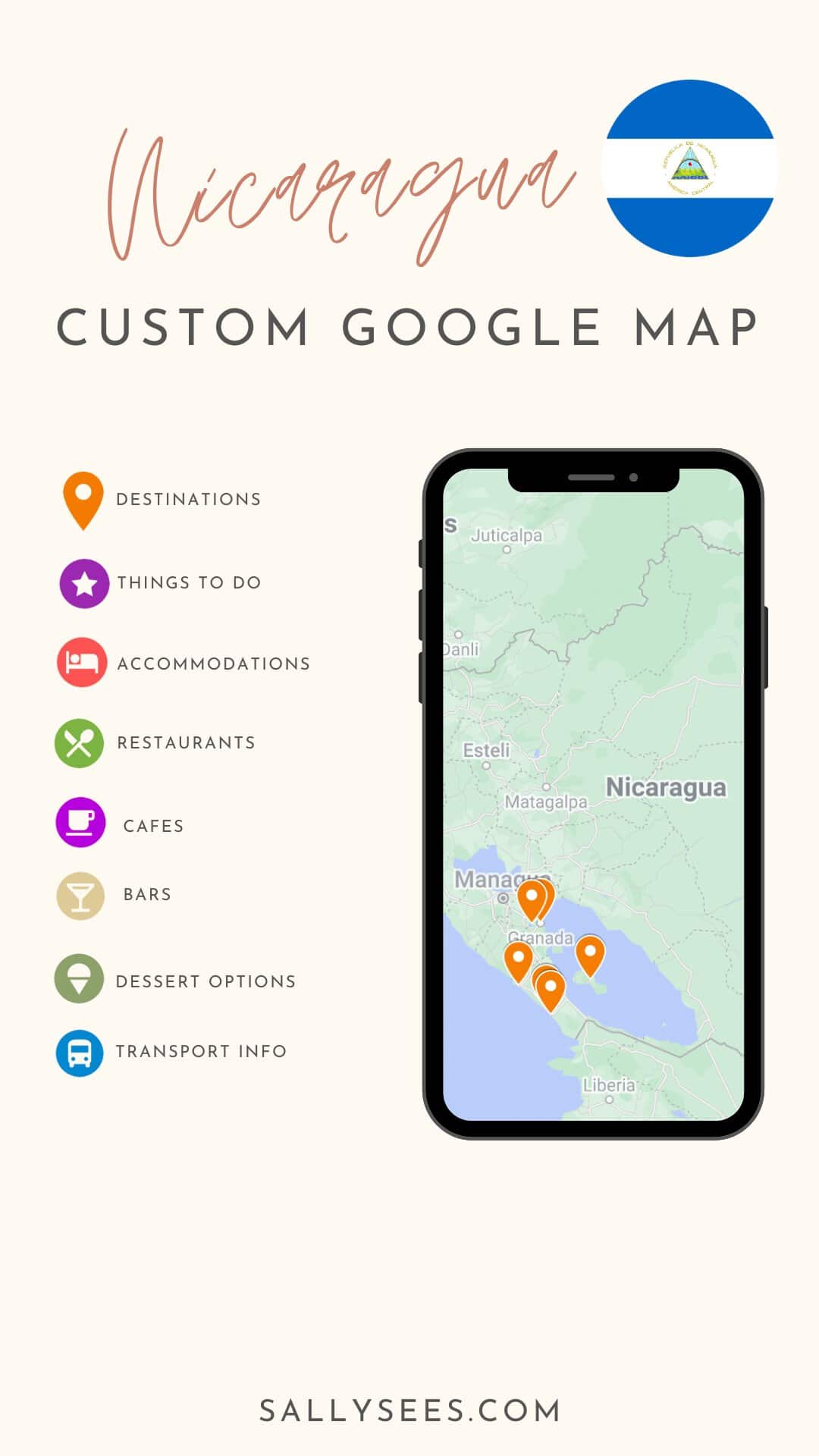
GET OUR NICARAGUA GOOGLE MAP
Save hours with our FREE custom Nicaragua Google Map!
With almost 500 locations pinned, giving you our best tips and recommendations in your pocket.


Are the Corn Islands worth it?
Many travellers in Nicaragua skip the Corn Islands due to the cost or time it takes to reach the islands, but let me tell you, these islands are 1000% worth it!
Whether you decide to splurge on the flights or strap in for a 24+ hour bus and boat journey, the Corn Islands will not disappoint. They are paradise on earth and immediately skyrocketed to the top of our ‘favourite islands in the world’ list.
If you’ve visited any other destinations in the Caribbean, visiting the Corn Islands is like stepping back in time, showcasing what most Caribbean nations should be, and what they were like 50 years ago before international resorts and cruise ships took over.
I don’t think you can say you’ve seen Nicaragua without seeing the Corn Islands. They are such a unique and contrasting experience to the rest of the country and our time there really rounded out our impressions and understanding of Nicaragua.
Do not skip the Corn Islands!
If you’re following our Nicaragua itinerary, your next stop after the Corn Islands will most likely be Granada if you’re travelling south, or Leon if you’re heading north.
MORE CORN ISLANDS POSTS
- Little Corn Island, Nicaragua: Everything You Need to Know
- Big Corn Island, Nicaragua: The Underrated Corn Island

The Comments
Beverley Humphreys
Wow this is the perfect guide to corn island. My family and I have lived here for 2 years now and run Silversands retreat on big corn. Thank you for putting all the information required all in one well thought out guide!
Sally Rodrick
Beverley HumphreysHi Beverley, what a wonderful place to live! I’m sure being so remote comes with challenges but we just adored both islands. We will be back one day without a doubt and would love to stay at Silversands. If you notice anything missing from the guide or out-dated, please do let me know! I want it to remain useful for other travellers ☺️
John
Spent a couple weeks on Little Corn in January 2025 … asked a couple guys at Carlito’s “What time is it?” while circuiting the island. They looked at each other, puzzled, and answered “February?”
The lack of motor vehicles makes the island different. The barrier between tourists and residents drops as you walk past people each day. We heard the story of “First Tourist” from Captain Elvis … a guy sailed into the bay in 1980 when only 50 people lived on the island and money was not a part of life.
Sally Rodrick
JohnSounds like you had an excellent trip John. Little Corn is a special place and I hope it stays the way it is. Tourism has surely changed things, but luckily it hasn’t suffered the same fate as some of its nearby Caribbean neighbours. Happy travels! Sally