
This article contains affiliate links that may earn me a small commission at no extra cost to you. As an Amazon Associate, I earn from qualifying purchases. For more information, see our affiliate disclaimer.
If you’re visiting Northern Patagonia to explore the stunning Lake District, you’ll want to visit both sides of the border.
Argentina’s Bariloche is the most famous lakeside destination in the region, but Chile’s Puerto Varas has some equally stunning lakes, with the bonus of volcanoes looming overhead.
Instead of a boring bus ride or a convoluted combination of flights to travel between these two charming lakeside towns, we discovered something much better: the Cruce Andino.
The Cruce Andino is an international journey crossing the Andes Mountains between Puerto Varas in Chile and Bariloche in Argentina, with a combination of boats and buses navigating three beautiful lakes.
We got to experience the best of the Lake District while also completing a border crossing, which would otherwise have been a mundane and wasted day of travel.
Here’s everything you need to know about the Cruce Andino, including our experience doing the crossing from Chile to Argentina.

What is the Cruce Andino?
The Cruce Andino is a unique border crossing experience between Chile and Argentina, managed by the company TurisTour.
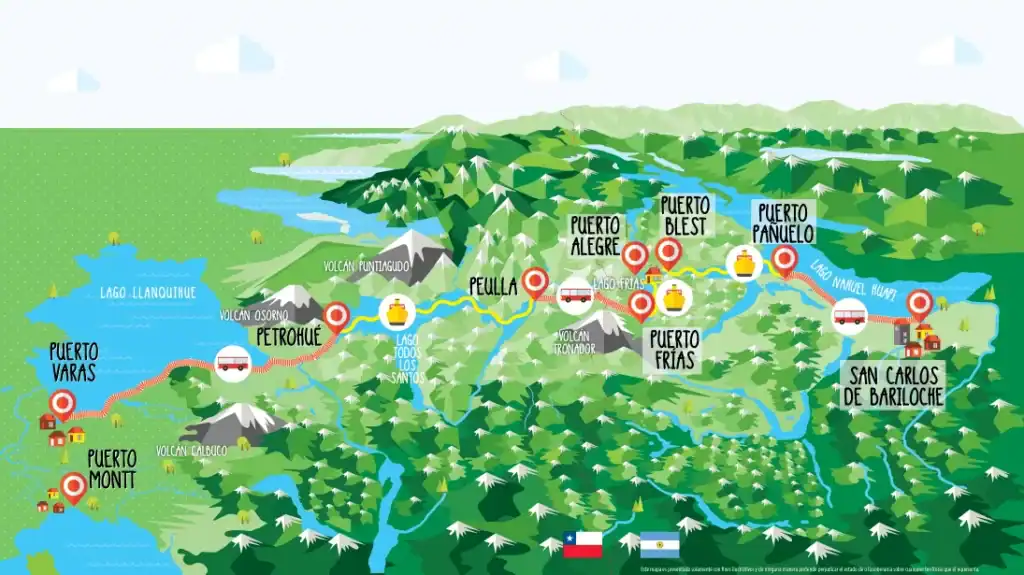
The Cruce Andino or Andean Crossing is a combination of four buses and three boats, connecting Puerto Varas in Chile to San Carlos de Bariloche in Argentina.
These two countries are divided by the mighty Andes mountain range, which runs the entire length of the border. The Cruce Andino crosses the Andes at one of its lowest points, around 1,000 metres above sea level.
The journey can be done in either direction and is available every day of the year except Labour Day (1 May).
The journey passes through three beautiful lakes in the aptly named Lake District in Northern Patagonia: Lago Todos Los Santos (Chile), Lago Frias (Argentina) and Lago Nahuel Huapi (Argentina).
The majority of the trip takes place in two beautiful national parks. Parque Nacional Vicente Perez Rosales on the Chilean side of the border and Parque Nacional Nahuel Huapi on the Argentinian side. Both these parks are the oldest in their respective country.
The coordinated journey is a fantastic alternative to a boring bus ride, and instead of bypassing the lakes to drive on a highway all day, you can fully immerse yourself in the scenery this region is known for.
It feels more like an interesting day tour than a wasted travel day.
The journey can be completed in one day, but it’s also possible to extend it to a multiple-day trip, stopping in the tiny hamlet of Puella in Chile or at Puerto Blest in Argentina. Both these destinations have gorgeous hotels immersed in nature.
⛴️ 🇨🇱 Book the Cruce Andino from Chile to Argentina
⛴️ 🇦🇷 Book the Cruce Andino from Argentina to Chile
GET OUR PATAGONIA PACKING LIST
Grab a copy of our PDF Patagonia packing list with absolutely everything we packed to prepare for the wild weather and hikes in Patagonia.

Costs and inclusions
The Cruce Andino is not a cheap experience, I’ll say that straight up. Prices start at $325 USD per person for foreigners. Argentine and Chilean residents get a discounted price.
I’ll talk more in a later section about whether I think the journey is worth it, but for perspective, day tours on Lago Nahuel Huapi in Argentina (departing and returning to Bariloche) are upwards of $200 USD. The price doesn’t seem so bad when compared with one or two single-day boat trips on either side of the border.
Included ✅
- 3 boats
- 4 buses
- Luggage transfers
- Guides throughout the experience
Not included ❌
- Entrance to Vicente Perez Rosales National Park, Chile (if you stop at Petrohue Falls), which is currently 7,800 CLP for foreigners (~$8.50 USD)
- Lunch in Puerto Blest (Argentina) or Peulla (Chile), depending on your travel direction (est. $25 USD pp)
- Coffee and snacks on board the boats (cafeteria service available on two out of three boats)
Our experience doing the Cruce Andino
We completed the Cruce Andino from Chile to Argentina.
Our journey started in Puerto Varas, where we had spent a few days exploring the lakes and volcanoes around the area. Our destination was San Carlos de Bariloche in Argentina, where we continued exploring the beautiful Lake District for another week.
DISCLAIMER 📣
We did the Cruce Andino in early May, which is well and truly into the cold, wet and wintery season in Patagonia.
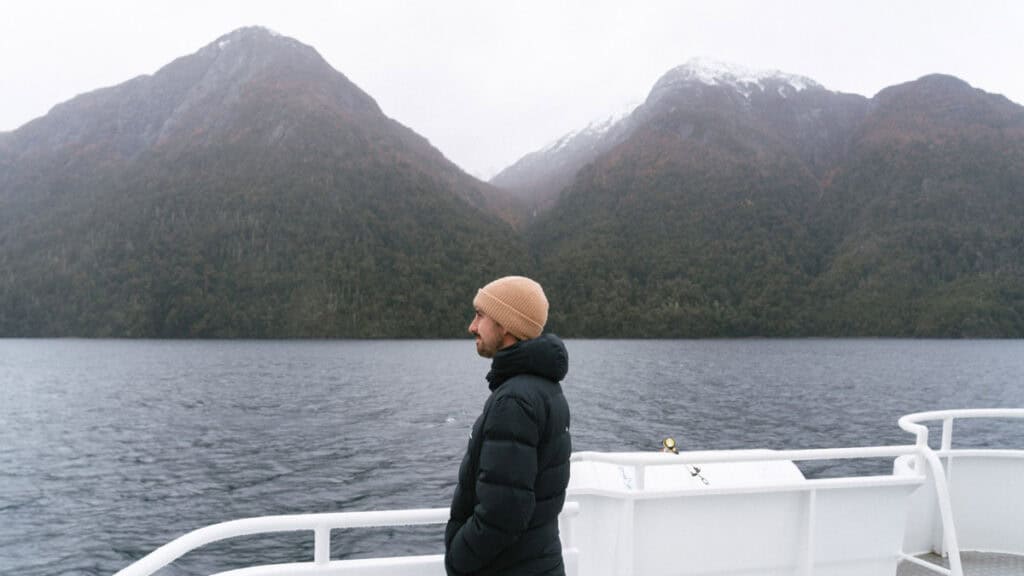
We took a punt that we would get a nice, sunny, clear day, but unfortunately, we did not. We had a very grey and rainy day, and clouds concealed some of the beautiful views.
We spent time in Puerto Varas before and Bariloche afterwards, where we were blessed with a few sunny days, so we did get to see the lakes and volcanoes in their best light.
In this post, I’m going to use a mix of photos from our cloudy crossing, as well as some sunnier photos of the same locations that we saw on other days.
I want to show you what the experience should look like on a sunny day, without misleading you about what our day actually looked like. A bit soggy, sadly!
Check In
We checked in at the TurisTour office in downtown Puerto Varas at 7:30 am. Our boarding passes for all the boats and buses were packaged in a neat little envelope, and we got luggage tags to put on our bags.
There was a big coach bus waiting outside, and we handed over our big backpacks to the driver. We wouldn’t see them again until we arrived in Bariloche and didn’t have to haul them between all the buses and boats. Winning!
Unfortunately, the weather forecast was not looking great, with thick clouds and rain. I was already pre-disappointed at the volcano views we would be missing out on and the lack of sparkly blue waters on the lake.
But it was still early in the day, and we were going to be travelling quite far. Maybe the sun would be shining in Bariloche!
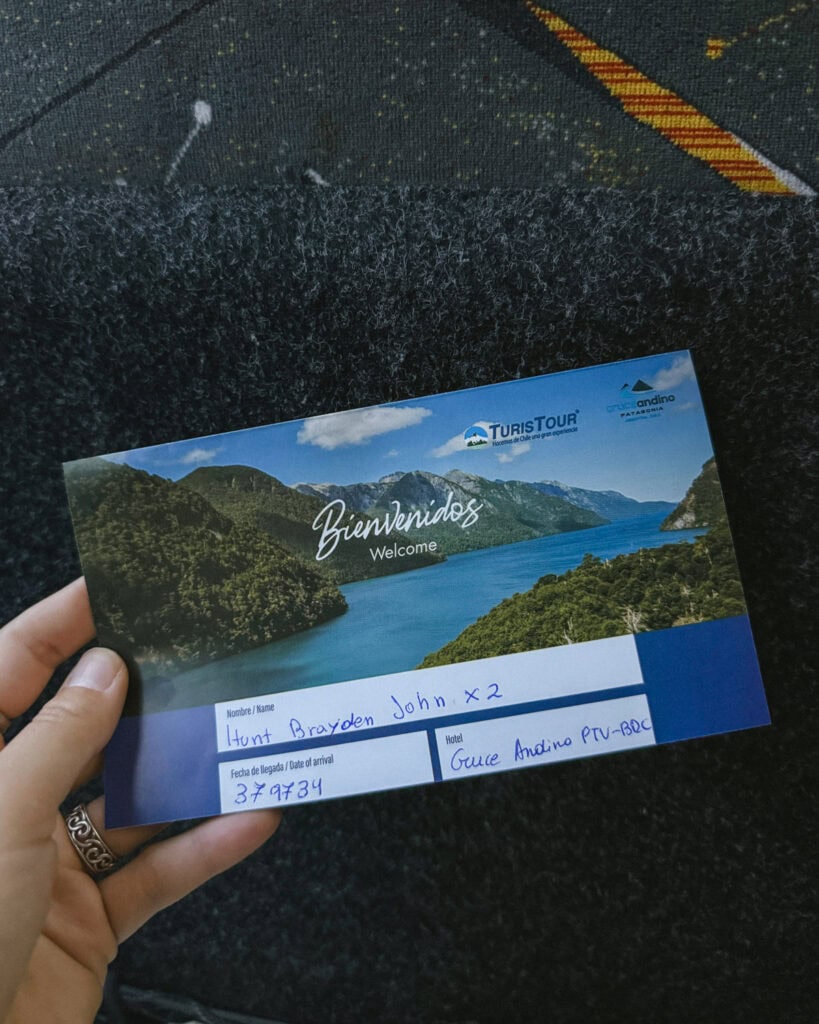
Part 1: 🚌 Puerto Varas – Petrohue
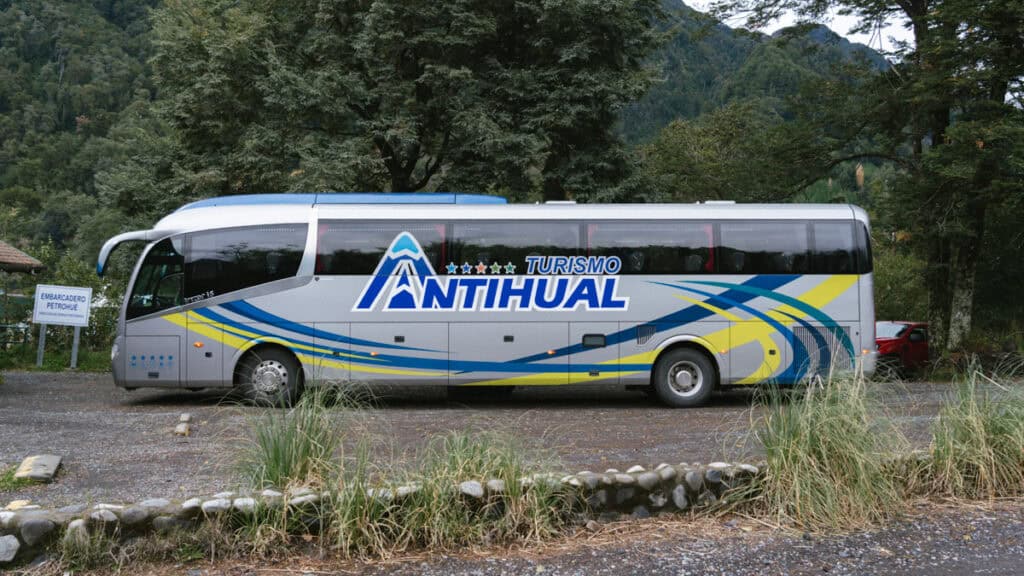
Once we had put our luggage in the stow, we jumped on the bus and found a seat (sit on the driver’s side of the bus for the best views of Lago Llanquihue!).
We were already advised in advance that due to the time of the year (start of May) and the limited daylight, our crossing wouldn’t stop at the Petrohue Falls. This wasn’t a problem as we had already visited the falls and spent time in Parque Nacional Vicente Perez the previous days.
Even if your tour does stop at the falls, I still believe you need a day or more to really enjoy the park, as it is so much more than just Petrohue! So don’t rely on this small stop being the only time you visit.
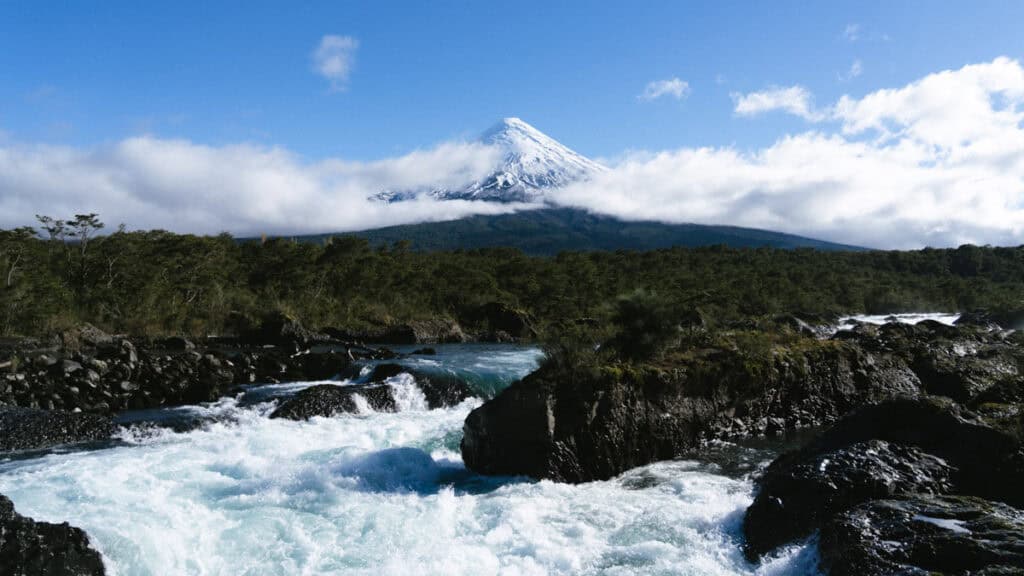
The bus pulled out right on time at 8:00 am. They say the trip takes 1 hour and 45 minutes, but really, it was just over an hour.
We had already driven this stretch of road a few times as we spent a few days staying in the lakeside town of Ensenada and exploring the national park and volcanoes, but seeing the amazing scenery again wasn’t a chore!
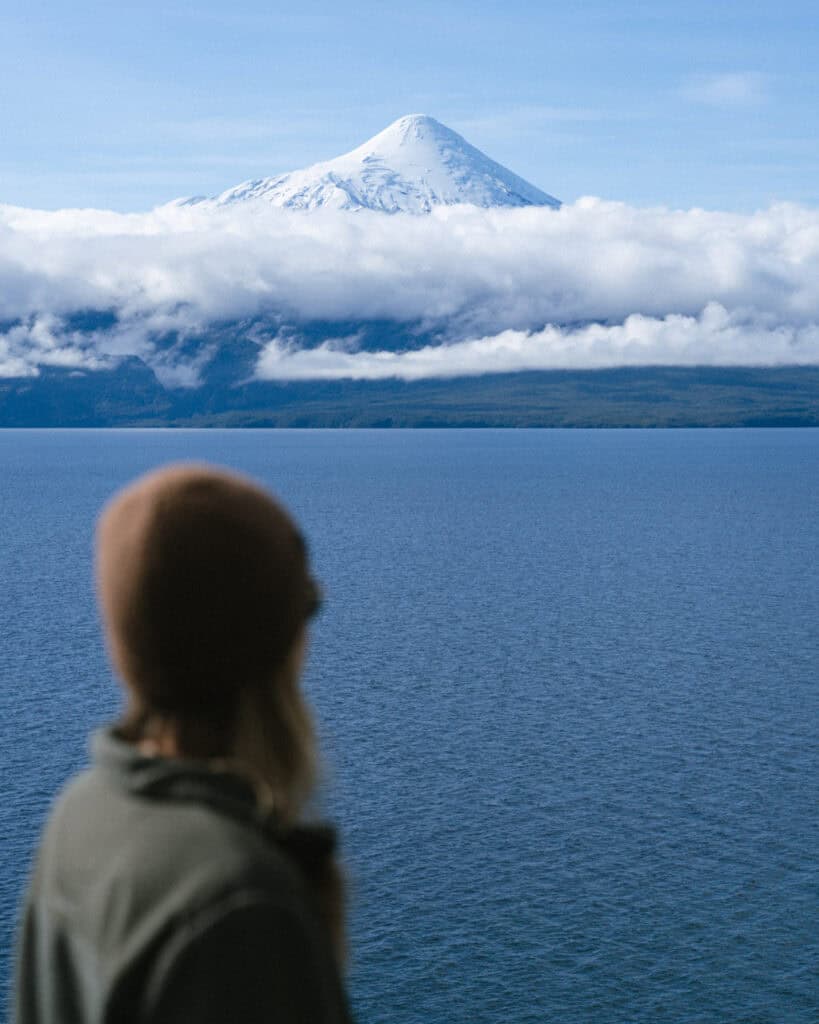
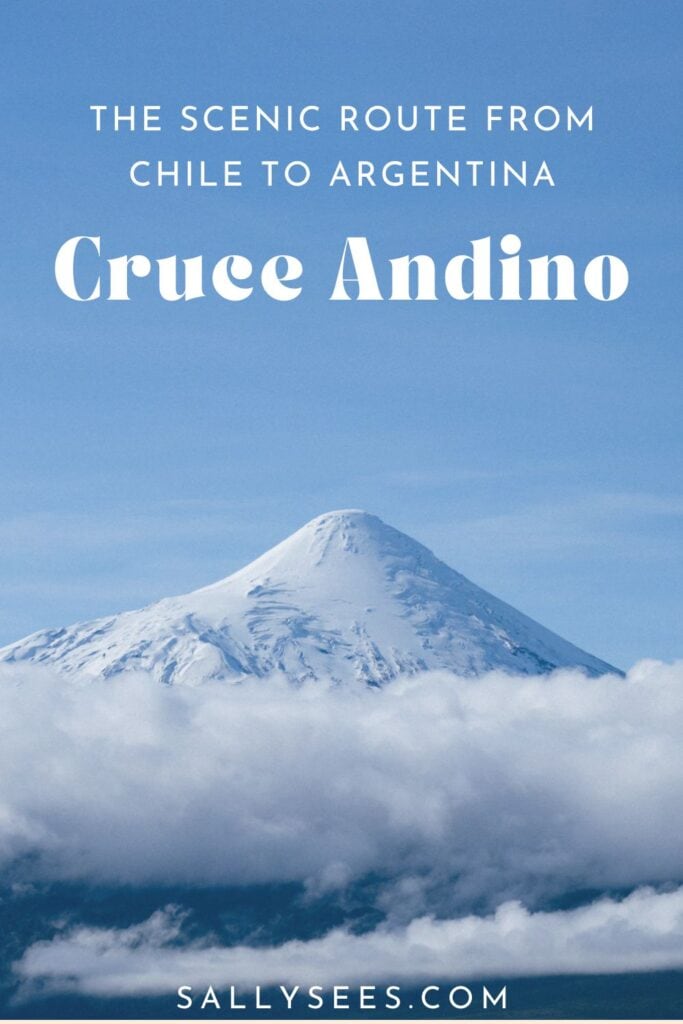
The road hugs the lake for most of the drive, and if you’re lucky (unfortunately, we weren’t), you should have the huge, conical Volcán Osorno in sight most of the way!
Our guide, Guillermo, was excellent. He was so friendly and spoke wonderful English. We were the only English speakers on board, so he specifically came and explained everything to us separately before he did the main announcements on his microphone.
Part 2: 🚢 Lago Todos Los Santos Petrohue – Peulla
We arrived at the port on the shores of Lago Todos Los Santos, where a boat was ready and waiting to whisk us across the lake to the tiny town of Peulla.
The navigation across the lake from Petrohue to Peulla takes approximately 1 hour and 50 minutes.
Lots of people on board were just visiting Peulla for the day from Puerto Varas, which is a very popular day trip.
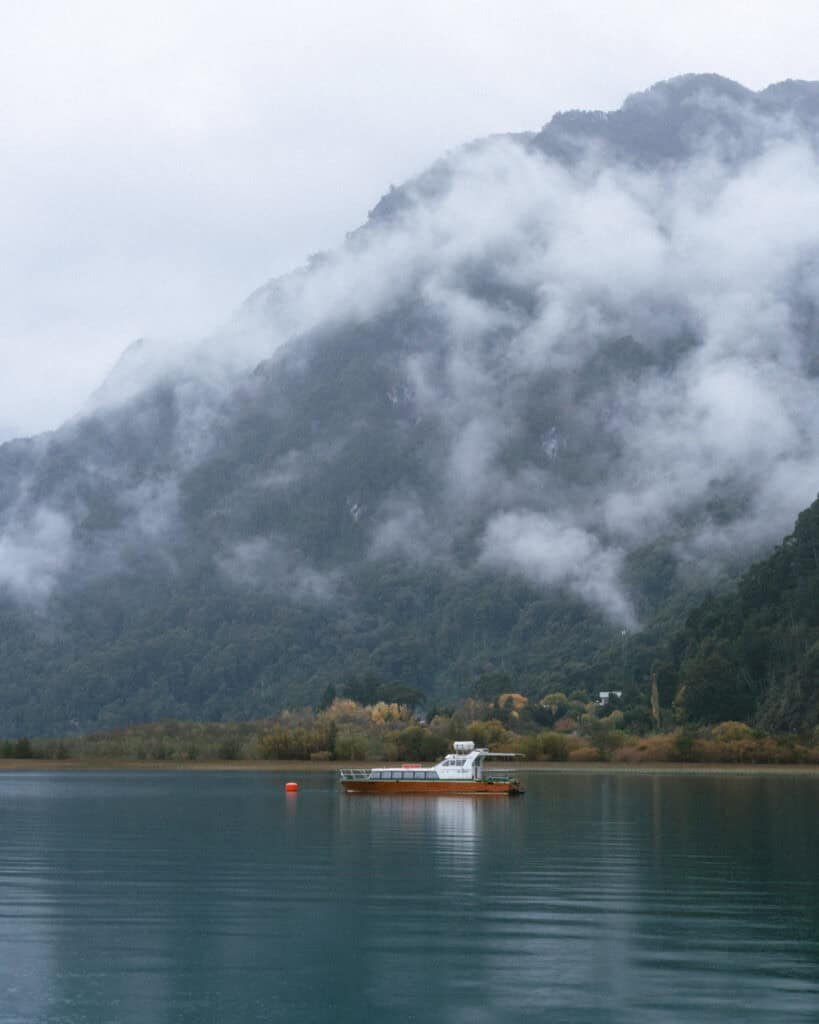
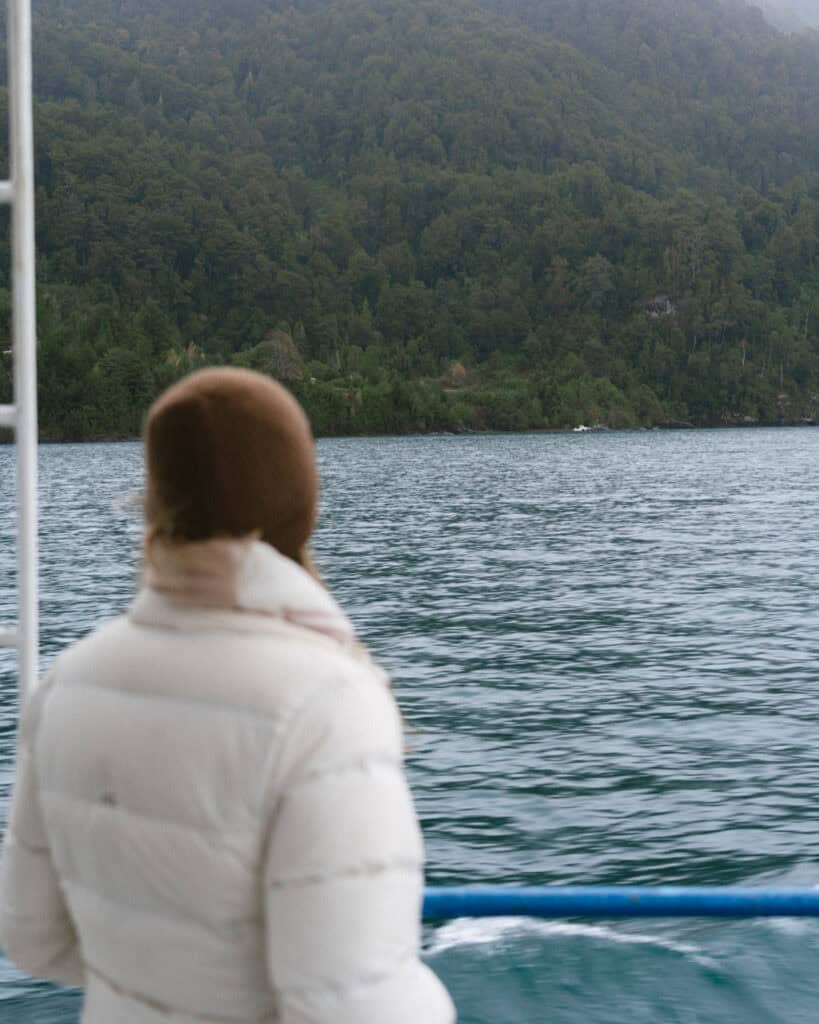
The big catamaran they usually use was being serviced, so we had a smaller boat, but it was still very comfortable and spacious for our group. We had a comfy and warm seat inside, but could also sit outside on the back deck to enjoy the views.
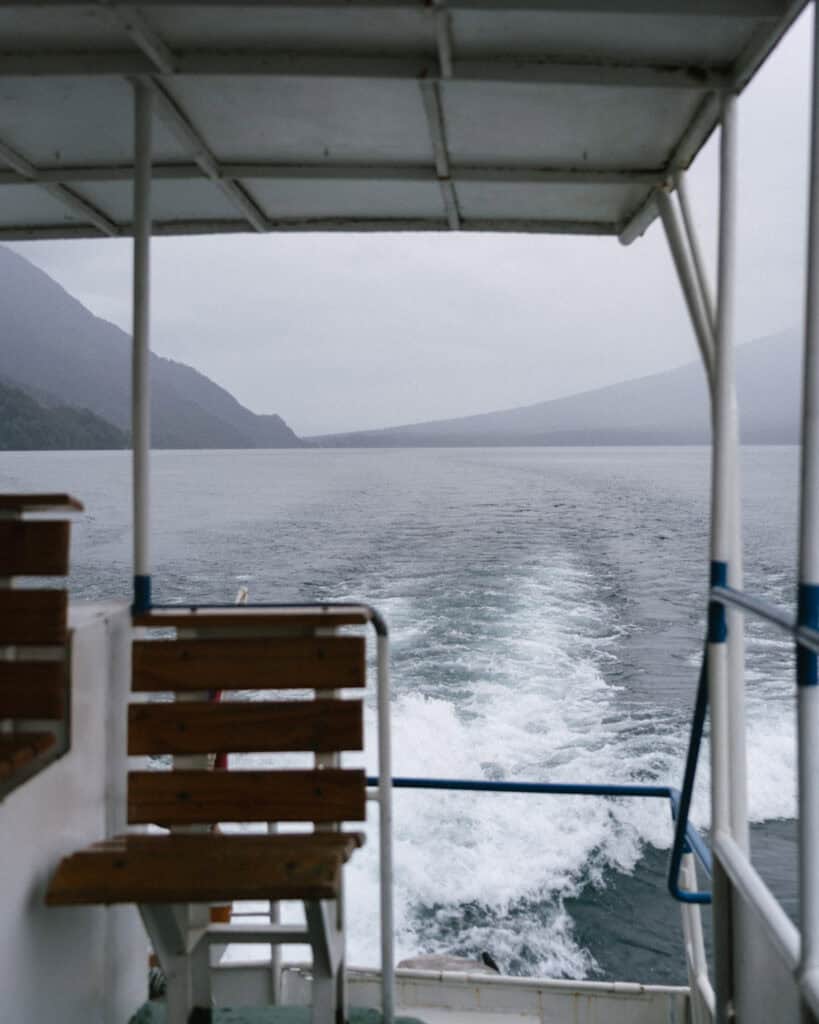
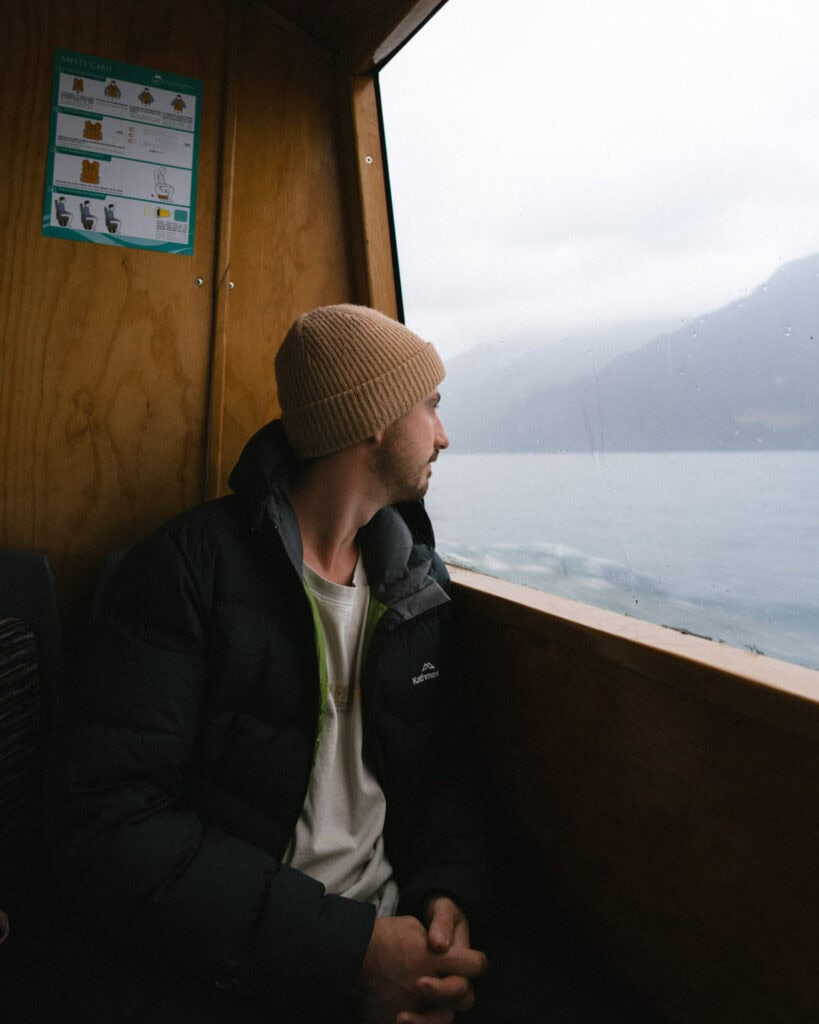
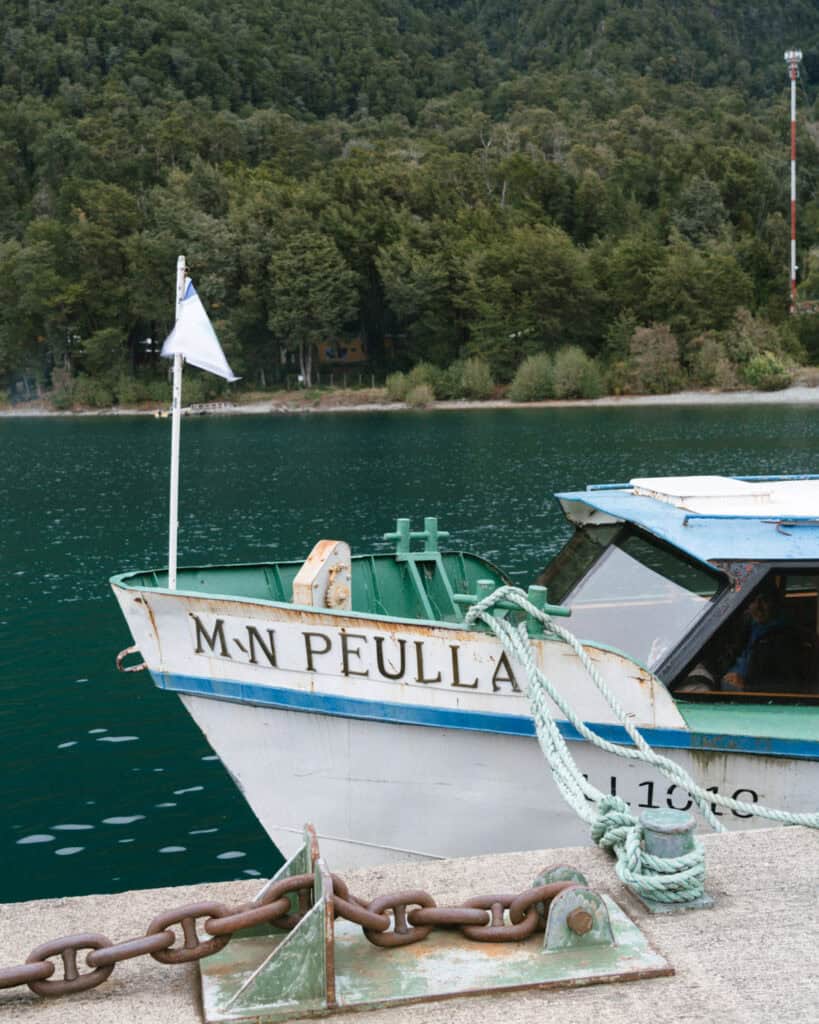
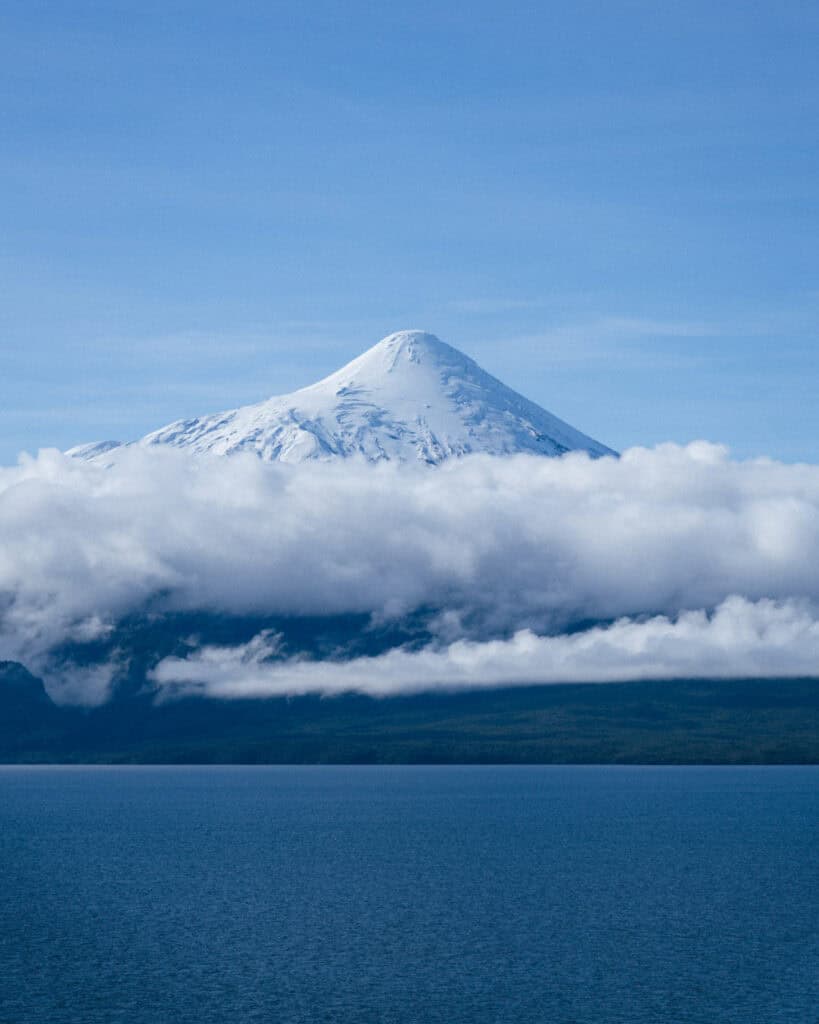
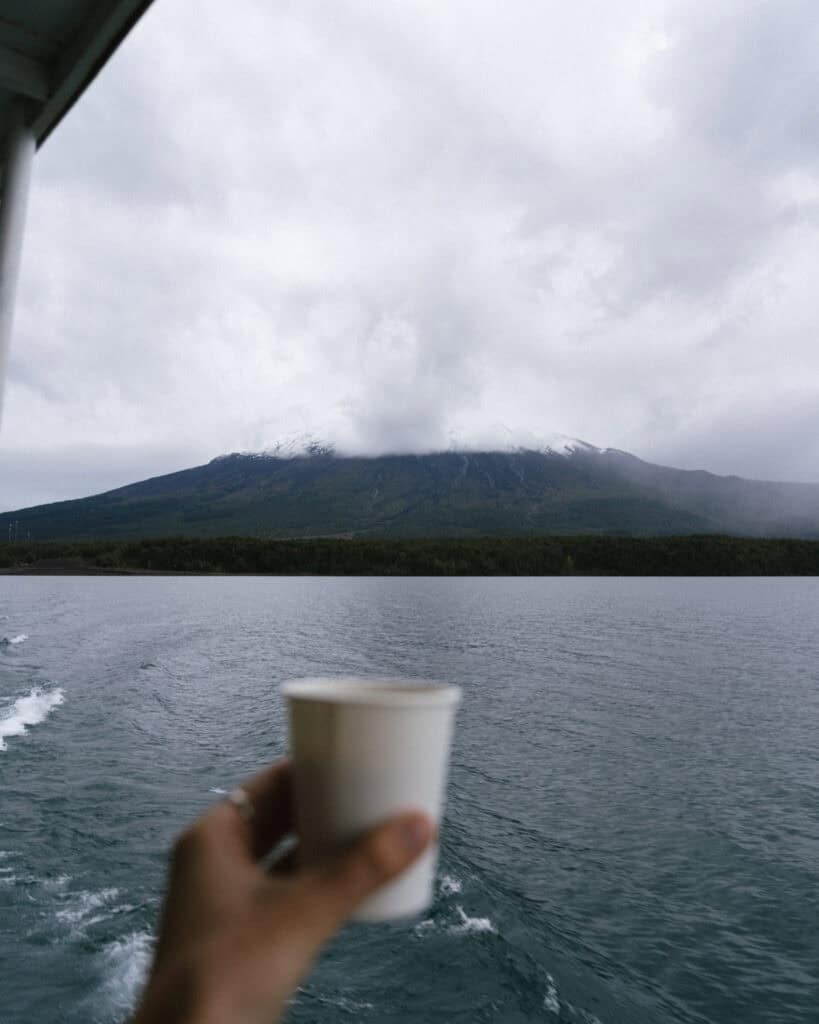
I think this part of the crossing is the most scenic. You can see the perfectly conical Volcán Osorno looming as you look back towards the port. I don’t know why, but I find volcanoes so visually pleasing, and Osorno is an almost perfect triangle.
Unfortunately, it was shrouded in clouds on the day of our navigation, but luckily a few days prior we had hiked around the lake and enjoyed a perfectly clear view.
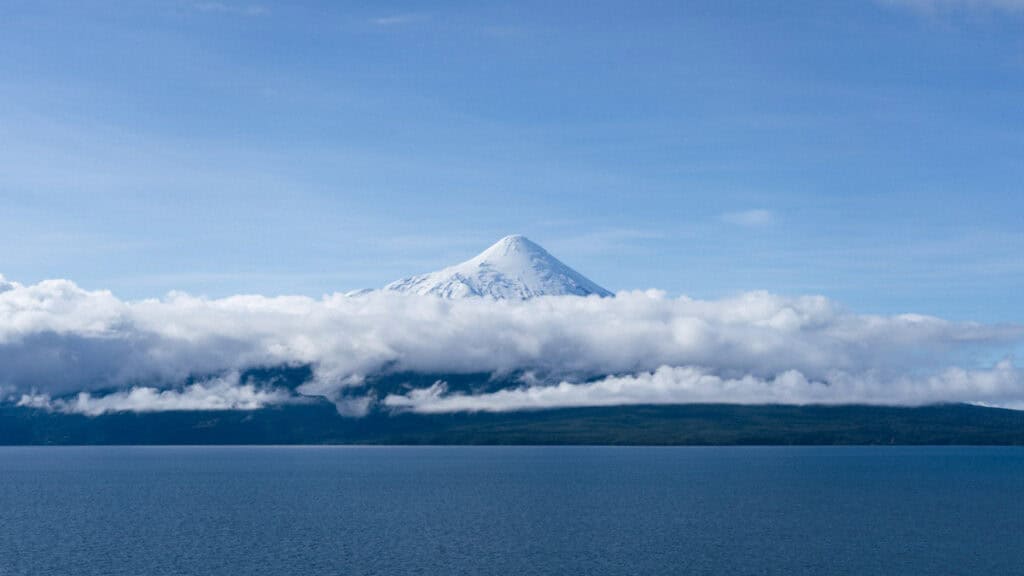
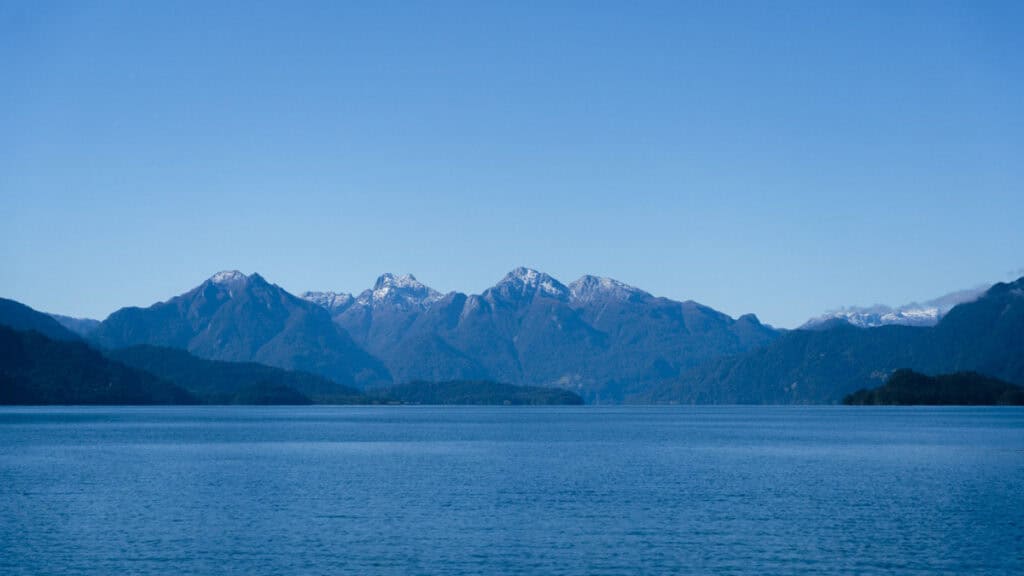
The boat passed the forest-clad shoreline, with moist, green Valdivian forest practically falling into the lake. The water of Lago Todos Los Santos is the most beautiful turquoise colour, and even on a cloudy day, we could appreciate how vibrant it was.
There are a few small islands dotted throughout the lake. Jagged peaks rise up overhead, and there are dozens of waterfalls tumbling down the mountains.
On a clear day, you should be able to see three or four volcanoes: Osorno, Calbuco, Puntiagudo and Tronador. Although I was a bit sad we didn’t get a clear view of the volcanoes, the misty fog and light rain were very moody and atmospheric.
There was free tea and coffee on board the boat and a toilet.
Part 3: 🚌 Peulla – Puerto Frias
As soon as we arrived in Peulla, there was a bus waiting for us with a new driver and guide to take us to the border.
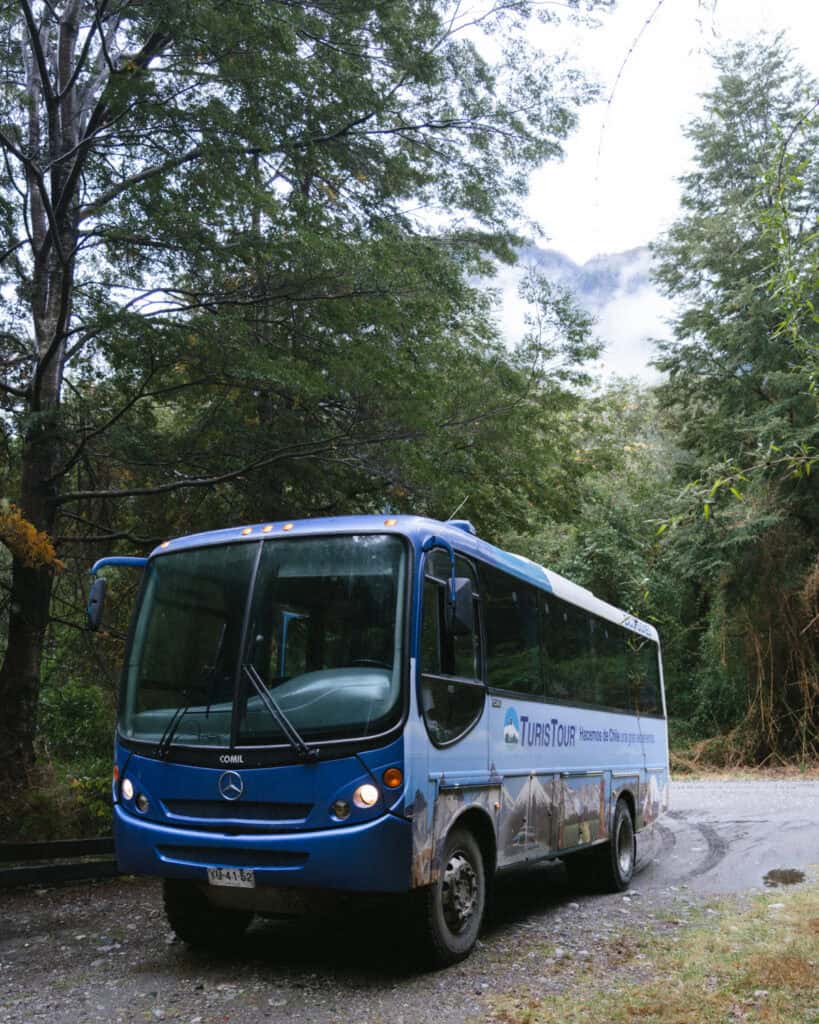
The bus wasn’t an ordinary bus. It was a purpose-built 4×4 lifted bus to navigate the narrow, winding dirt roads that climb through the Andes Mountains to the highest point of the crossing.
We drove a few minutes out of town to the Chilean immigration to complete the exit. This was very quick and easy and took less than 2 minutes.
We continued through the tiny village of Peulla. There are only 40 – 50 inhabitants, most are involved with the Cruce Andino in some capacity.
There is one large fancy hotel, Hotel Natura, which is the hotel you stay at if you choose to extend your crossing to a multi-day trip.
The town is blink-and-you-miss-it small, and soon we were driving through dense Valdivian Forest that receives over 4,000 mm of rain each year. Our guide told us all the wildlife that lives in the area, that we should keep our eyes out for.
Wild boars (jabali) are common and can be territorial and aggressive. If you’re very lucky, you can see the mysterious little deer species, the pudu. There are also pumas in the area, but they are very elusive and hard to spot, as well as foxes, skunks and all kinds of birds, including woodpeckers (carpinteros).
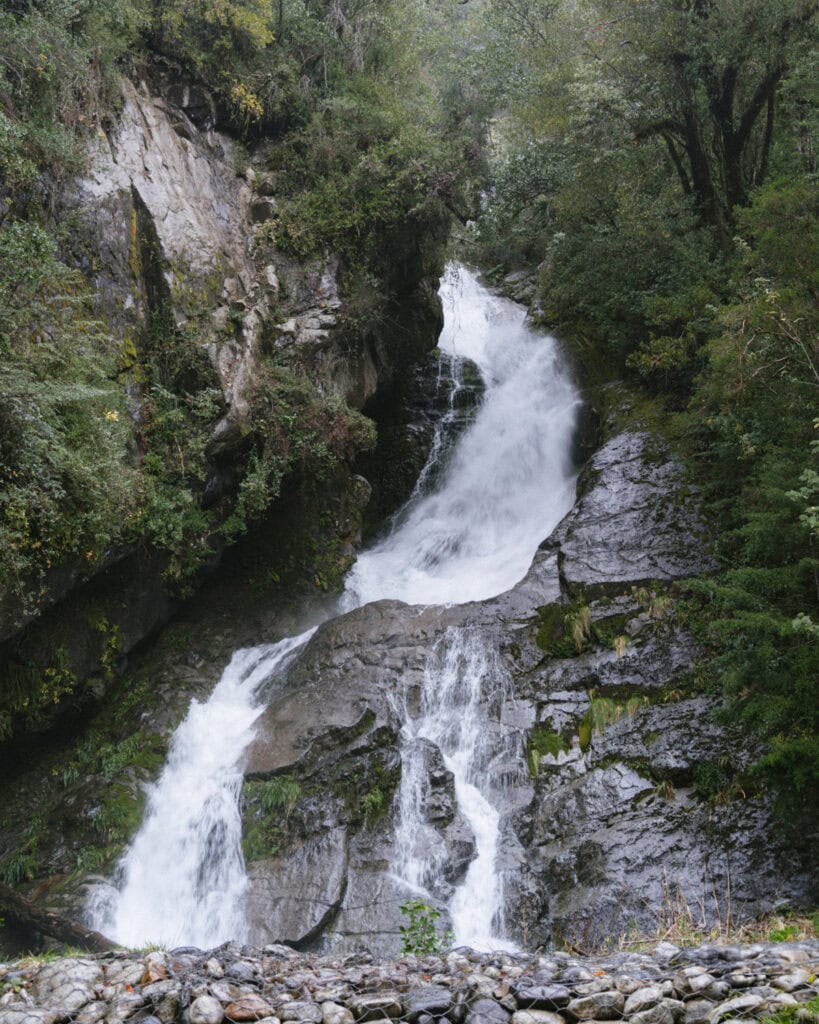
We had a brief stop at Cascada Las Mellizas, aka Twins Waterfall, which was gorgeous, and definitely highlighted how much rain this area gets!
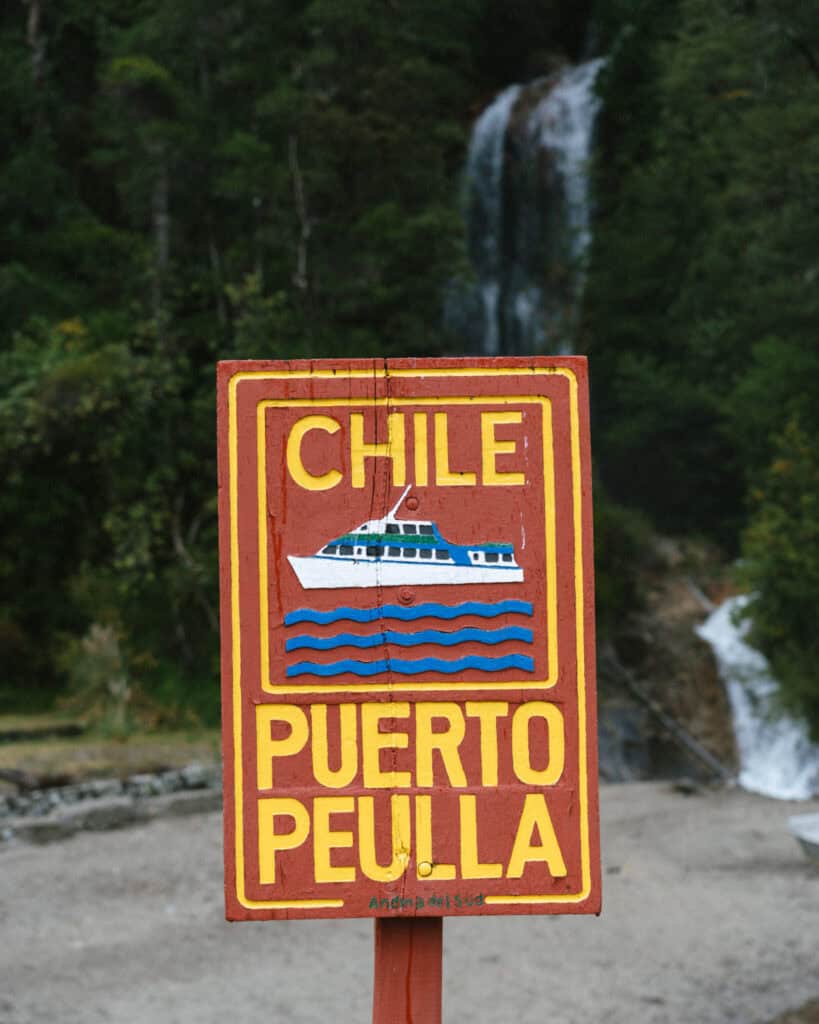
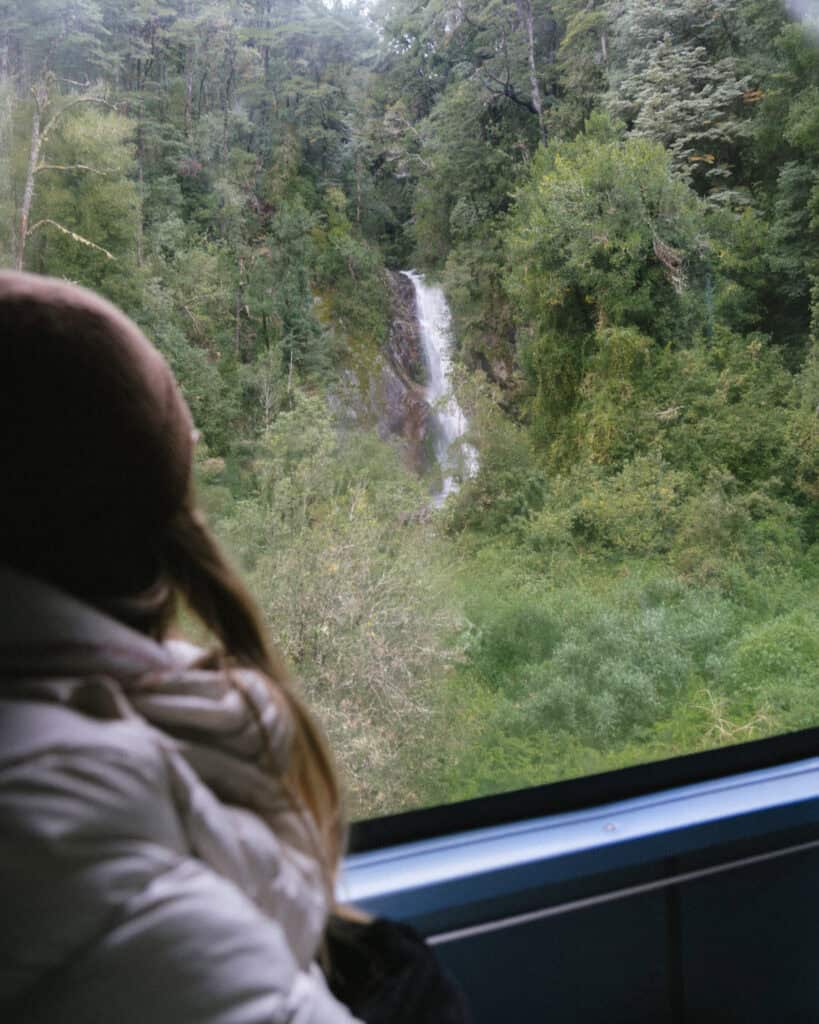
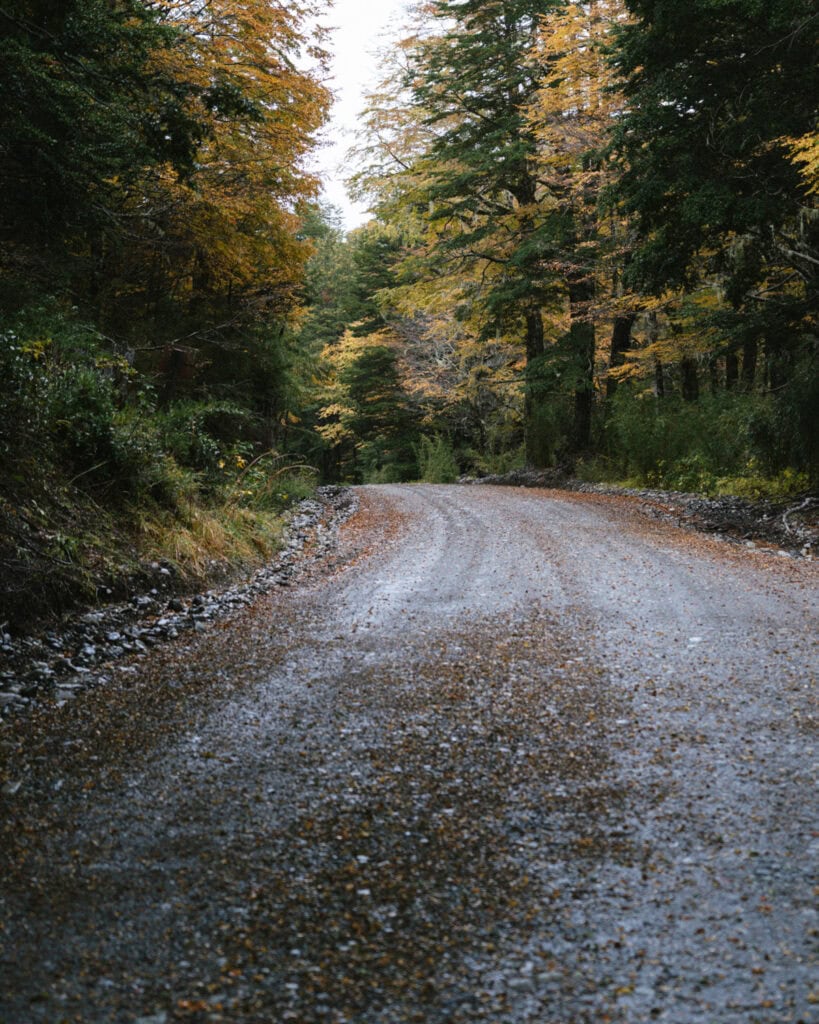
The drive takes around 1 hour to reach the Argentinian immigration office. We slowly climbed up the mountain to the peak at the highest point of the crossing. This is the lowest altitude crossing of the Andes between Chile and Argentina, only reaching about 1,000 metres.
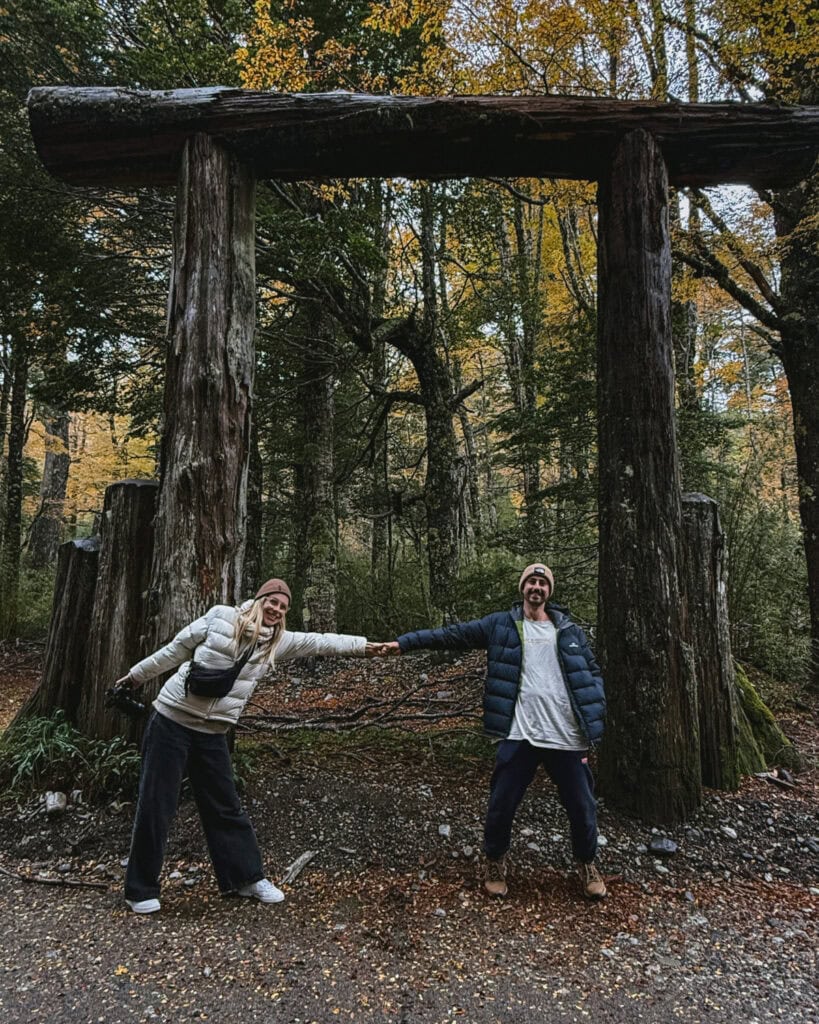
We stopped at the official line of the Chile-Argentina border. There were signs on either side and a fun line where you could stand in two countries at once!
The process at the Argentine immigration was again quick and easy. Our luggage was taken into the office for us, and the immigration officers randomly selected a few bags to search. Ours weren’t chosen, so we were in and out within 5 minutes, and our bags were taken directly to the next boat.
This has got to be the prettiest border crossing I’ve been to. The immigration office is housed in a very lovely wooden cabin right on the lake, surrounded by forest. I wouldn’t mind working here!
This crossing is where Che Guevara and Alberto Granado crossed from Argentina to Chile. There is an information board and a replica of their motorbike, La Ponderosa, which was a random but cool inclusion.
It was at this point that we crossed paths with the group travelling in the other direction. We jumped in their boat, and they jumped in our bus after clearing immigration.
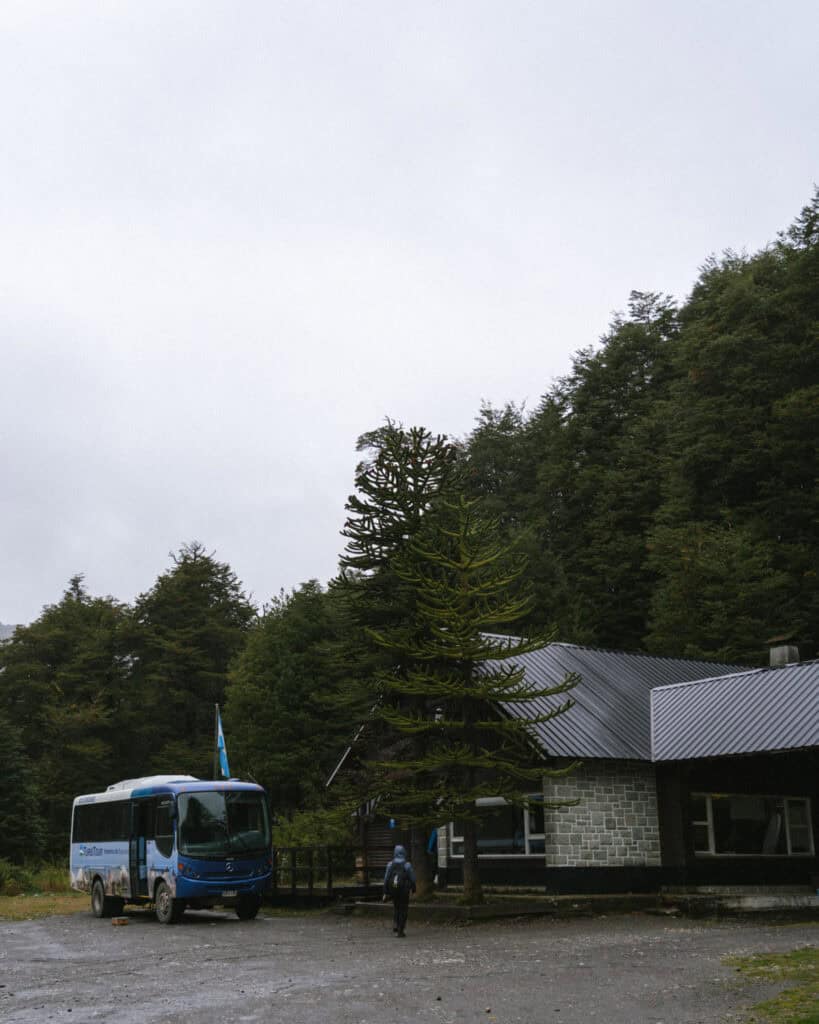
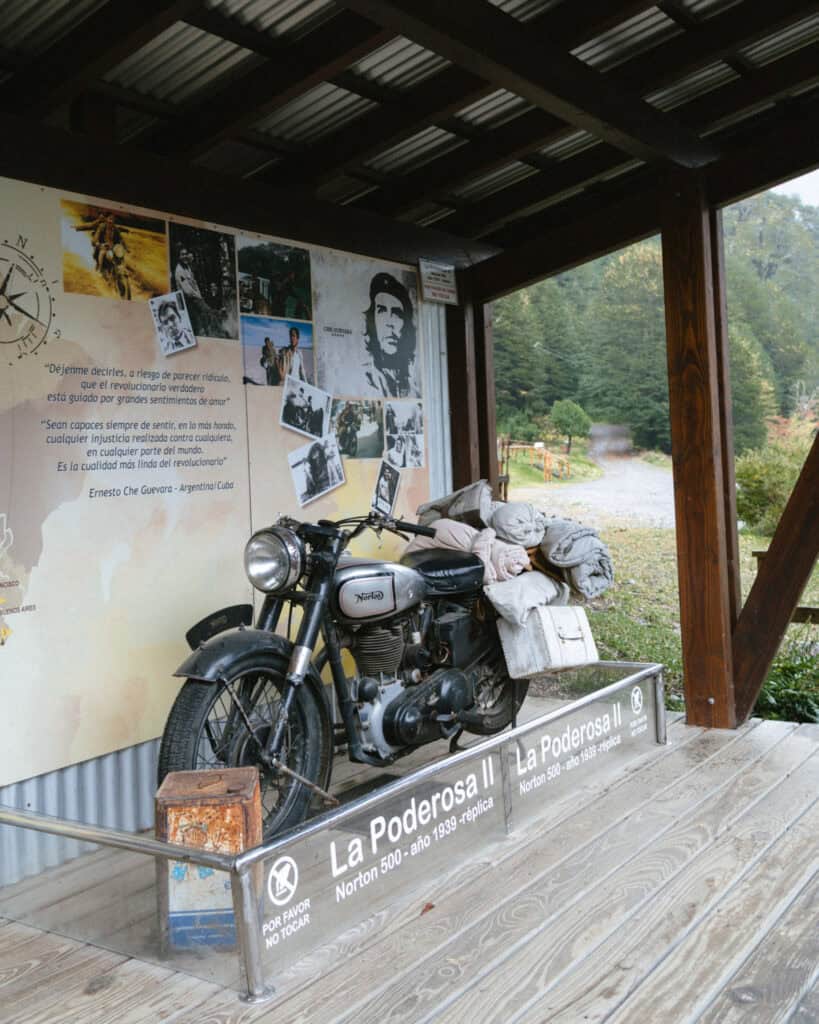
Part 4: 🚢 Lago Frias Puerto Frias – Puerto Alegre
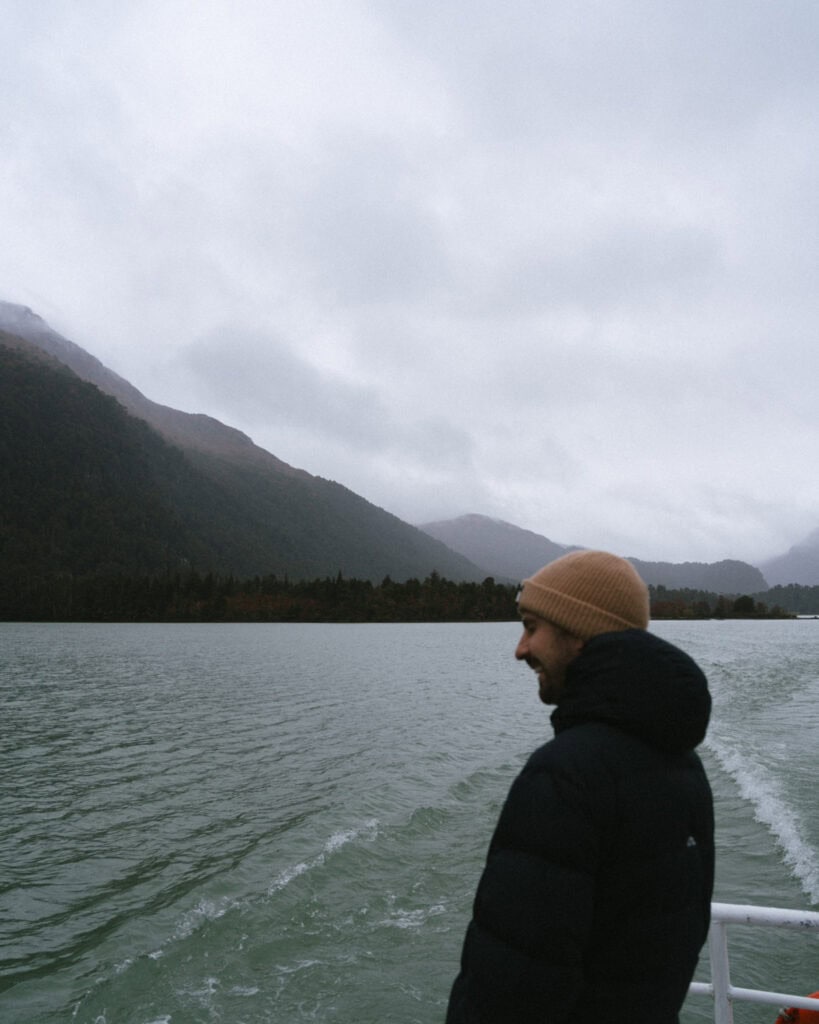
After clearing immigration, we boarded the boat straight away as it was pouring with rain at this point.
It was a very big and nice boat. Unfortunately sitting out on the back deck wasn’t an option with the weather, but it was cosy and warm inside.
This part of the journey is a very short 10-minute navigation across Lago Frias to Puerto Alegre.
The lake is a milky grey-green tone because the water comes from a glacier of the same name (Frias Glaciar) on Cerro Tronador.
On a clear day, you get a great view of Tronador, the tallest peak in the region at 3,491 metres.
Although quick, the crossing was very pretty. There are tall, rocky walls towering above either side of the lake and it’s not uncommon to see condors flying up there.
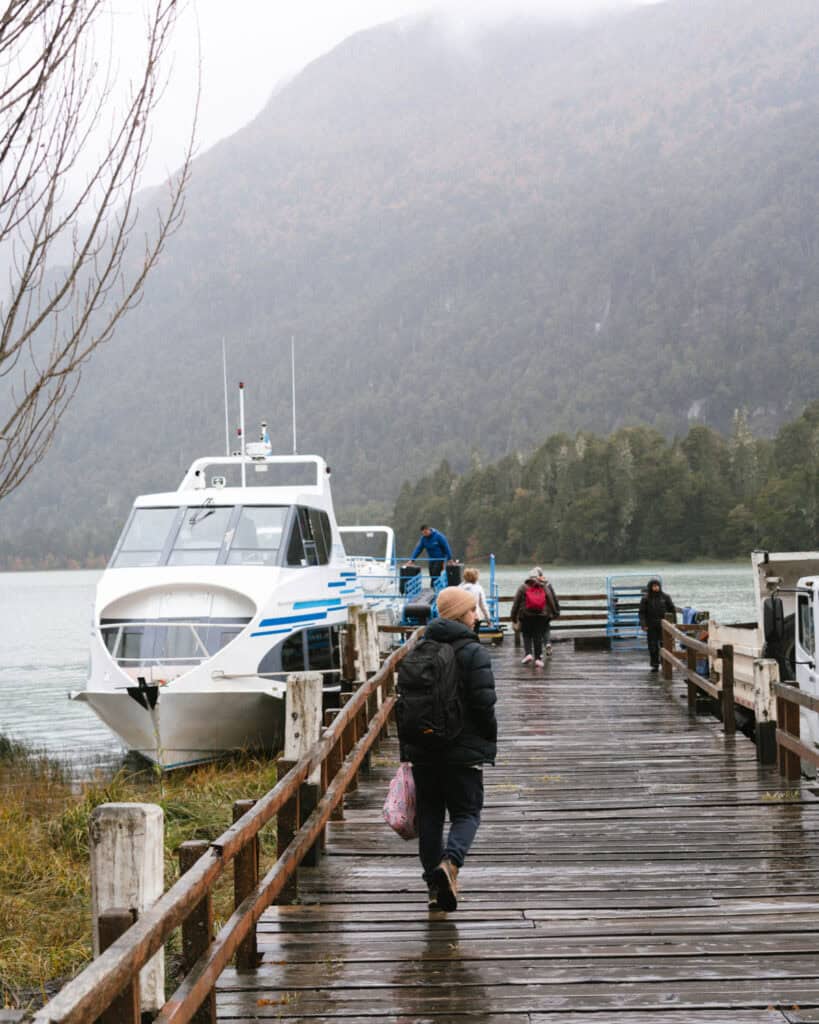
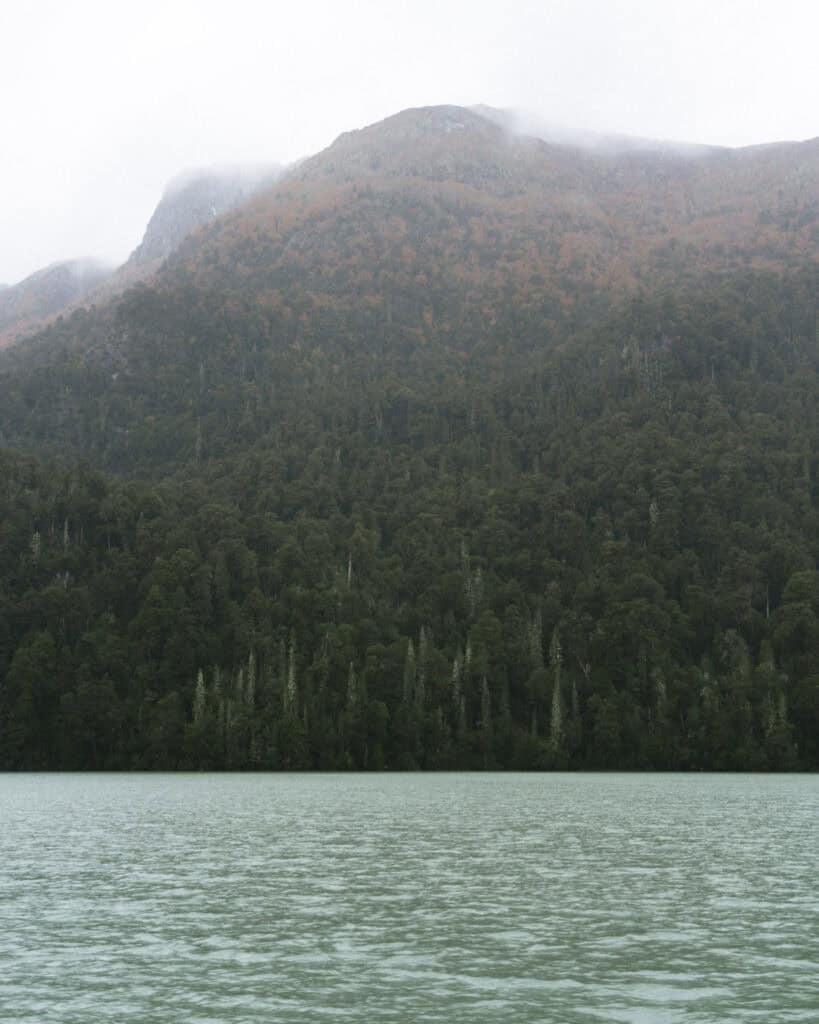
Part 5: 🚌 Puerto Alegre – Puerto Blest
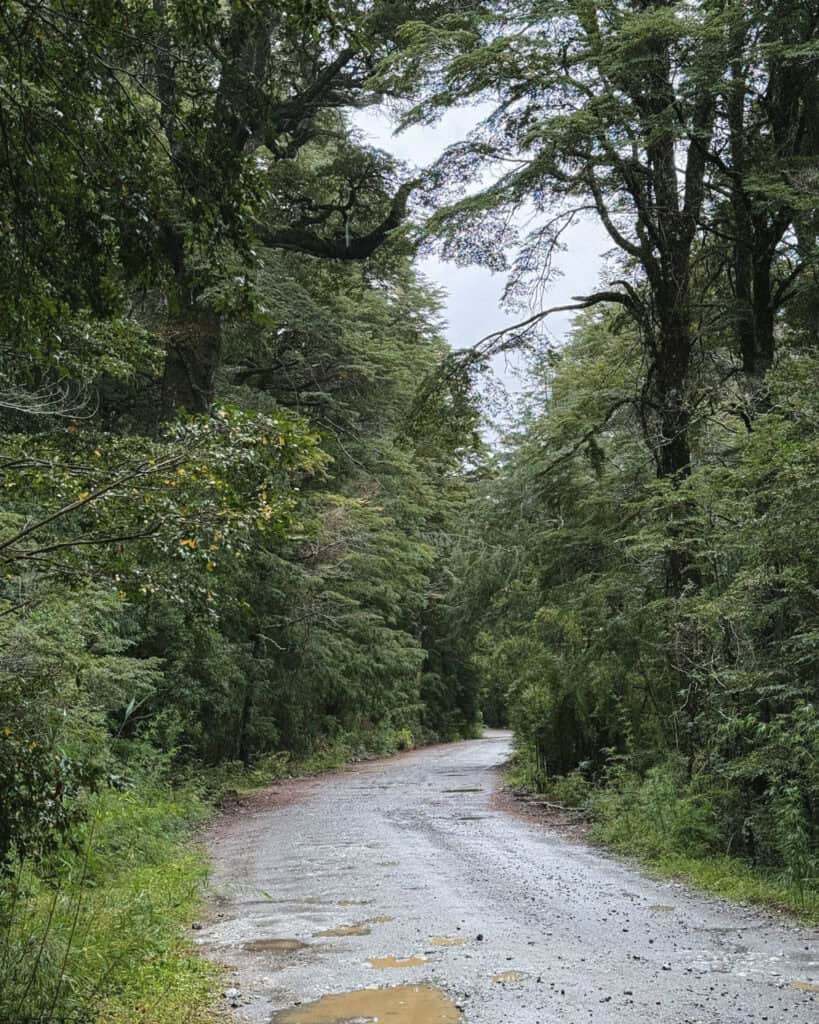
There was a bus waiting in Puerto Alegre for another quick 10-minute trip. This time we were driving through more lush forest, full of ancient Alerce trees over a thousand years old.
At this point in the trip we were combined with a lot of other travellers, who were on a day trip from Bariloche.
Lunch stop
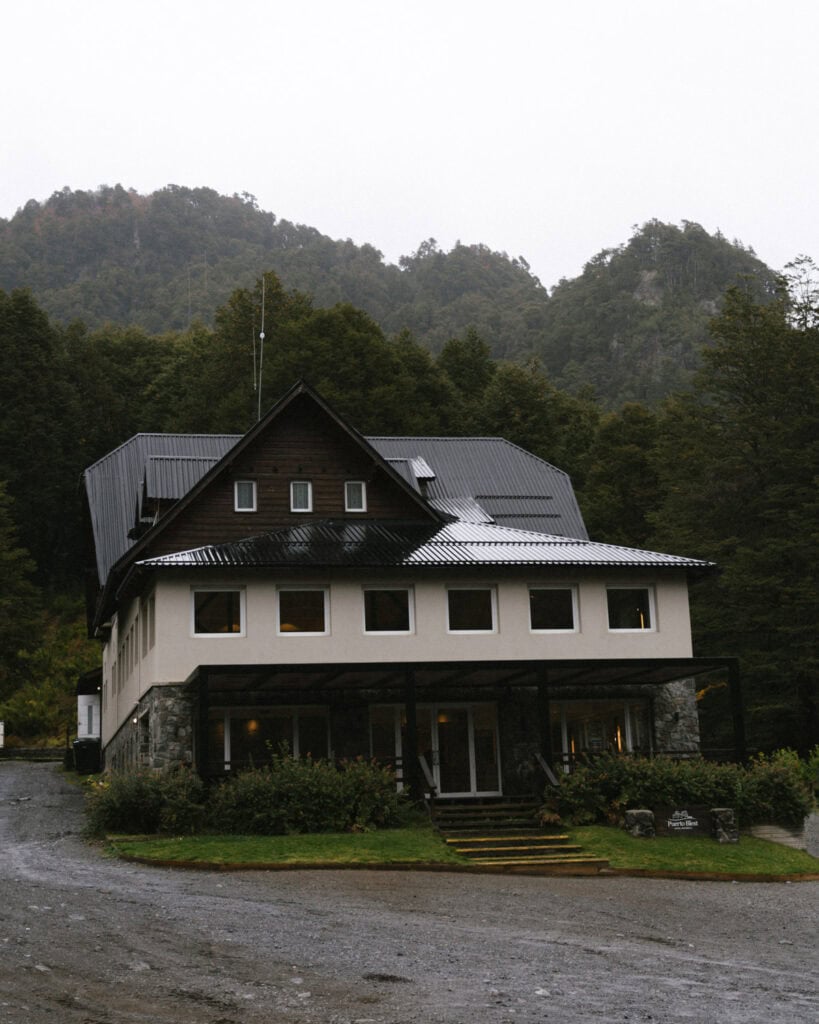
We arrived at Puerto Blest and had about 1.5 hours stop for lunch at Hotel Puerto Blest.
There is a fancy restaurant upstairs where you can have a sit-down lunch, or if you’d prefer something cheaper, there is a cafeteria downstairs. We packed our own lunch, which they didn’t comment on us eating in the cafeteria!
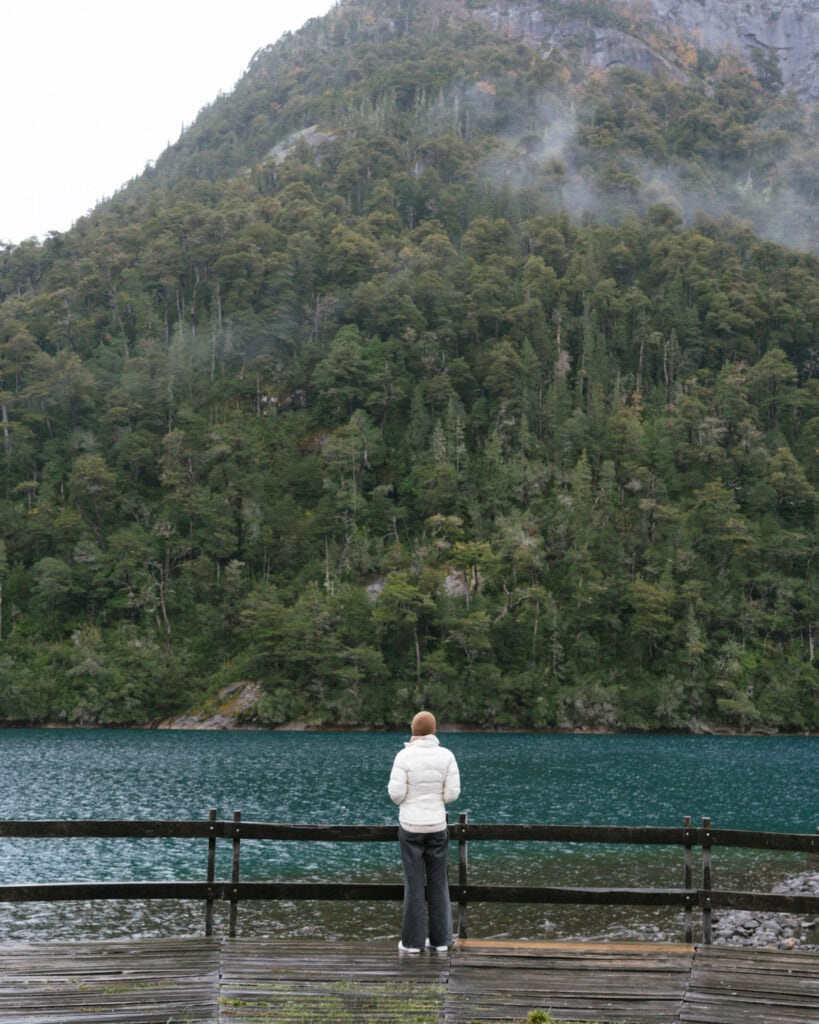
Unfortunately it was raining, so we couldn’t explore and enjoy the area as much as we would have liked. I think the break was too long, but only because it was raining and we couldn’t really get outside.
There are a few short trails you can walk around the lake, which would be a great way to spend the time on a sunny day.
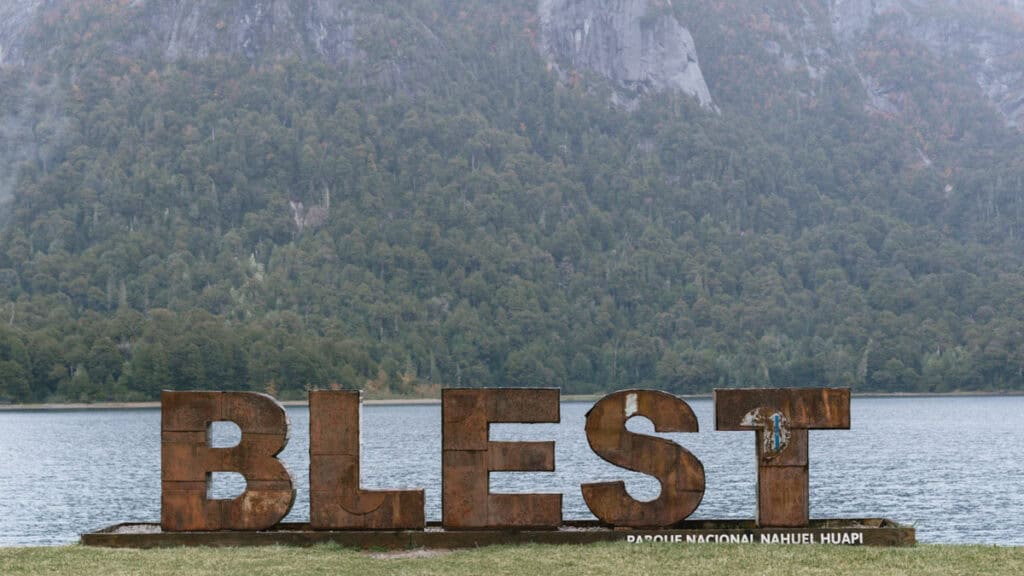
Part 6: 🚢 Lago Nahuel Huapi Puerto Blest – Puerto Pañuelo
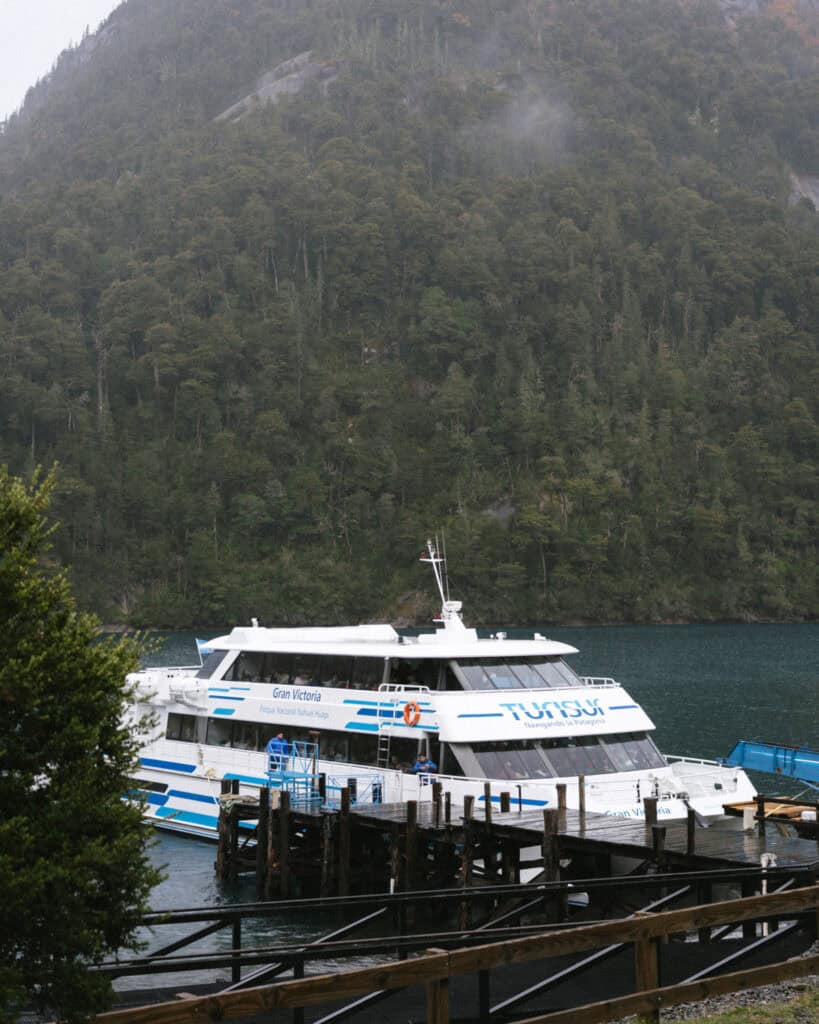
A big catamaran pulled in for our final lake leg, one hour cruising across Lago Nahuel Huapi in the eponymous national park.
The boat we boarded was already jam-packed with day visitors, which was a bit of a surprise. It was so crowded that we were lucky to get a seat together
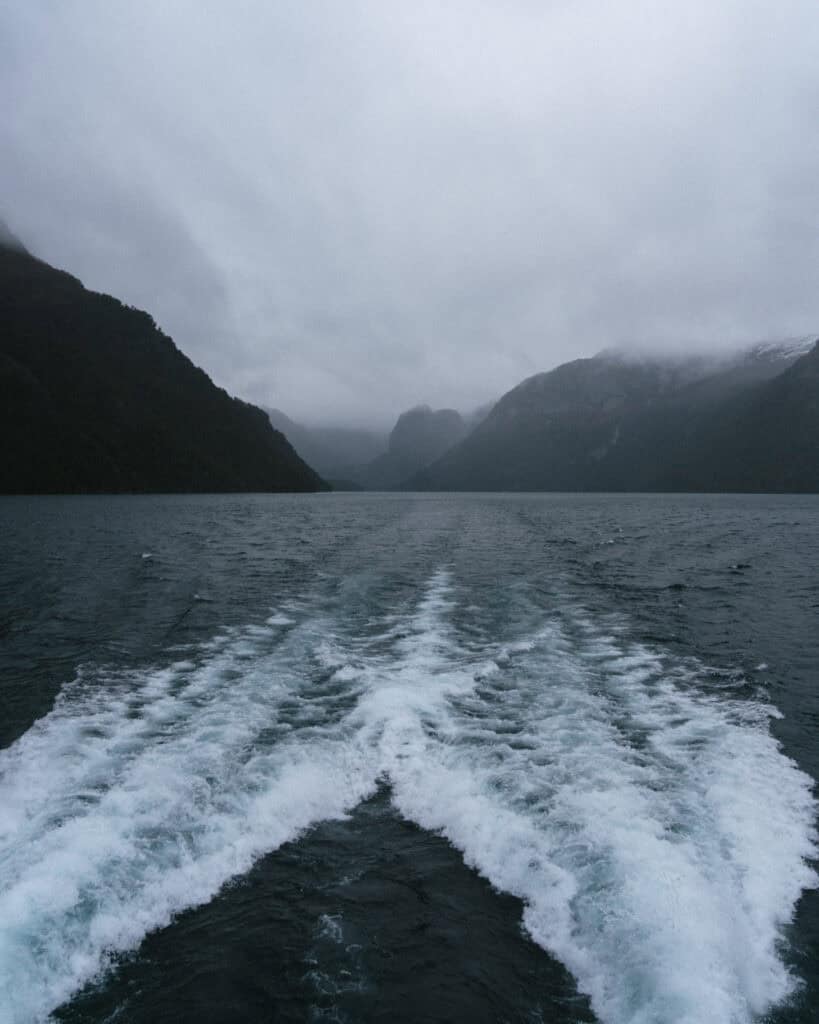
It wasn’t the greatest end to an otherwise nice journey, owing largely to the rain, which was nobody’s fault. The windows were so foggy that we couldn’t see much.
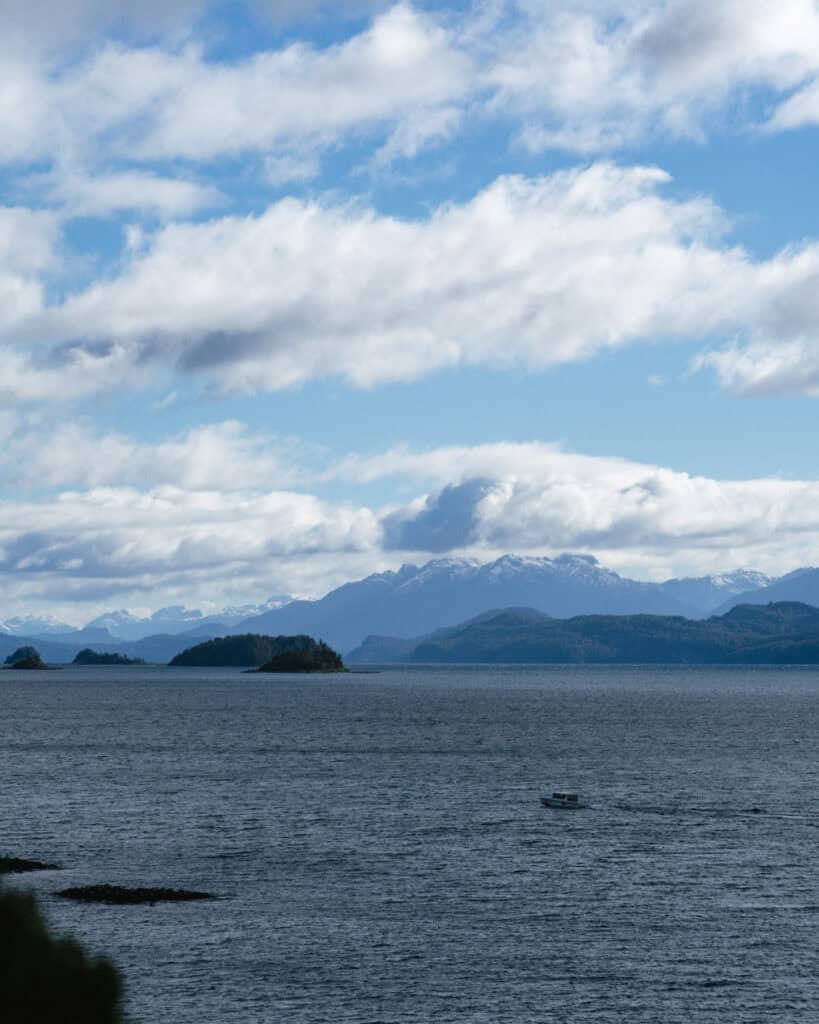
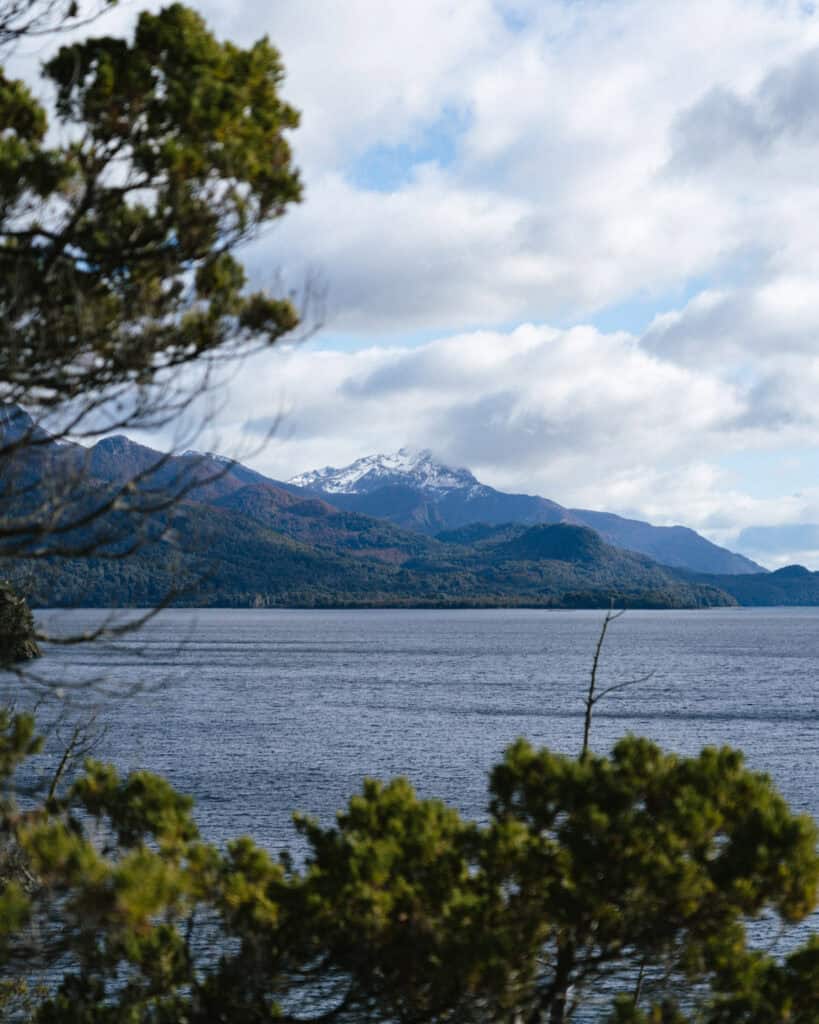
We did manage to go outside onto the back deck for some views, but it was raining quite a lot. I can imagine how stunning this part of the trip would be on a clear day. We were lucky enough to experience the beauty of Lago Nahuel Huapi in all its sunshiney glory a few days later, so trust me, it’s stunning!
The first part of the navigation cruises through the narrow Brazo Tristeza (Tristeza Arm) of the lake. It feels like the boat is going to be swallowed by the towering rocky walls and jagged peaks along the shoreline.
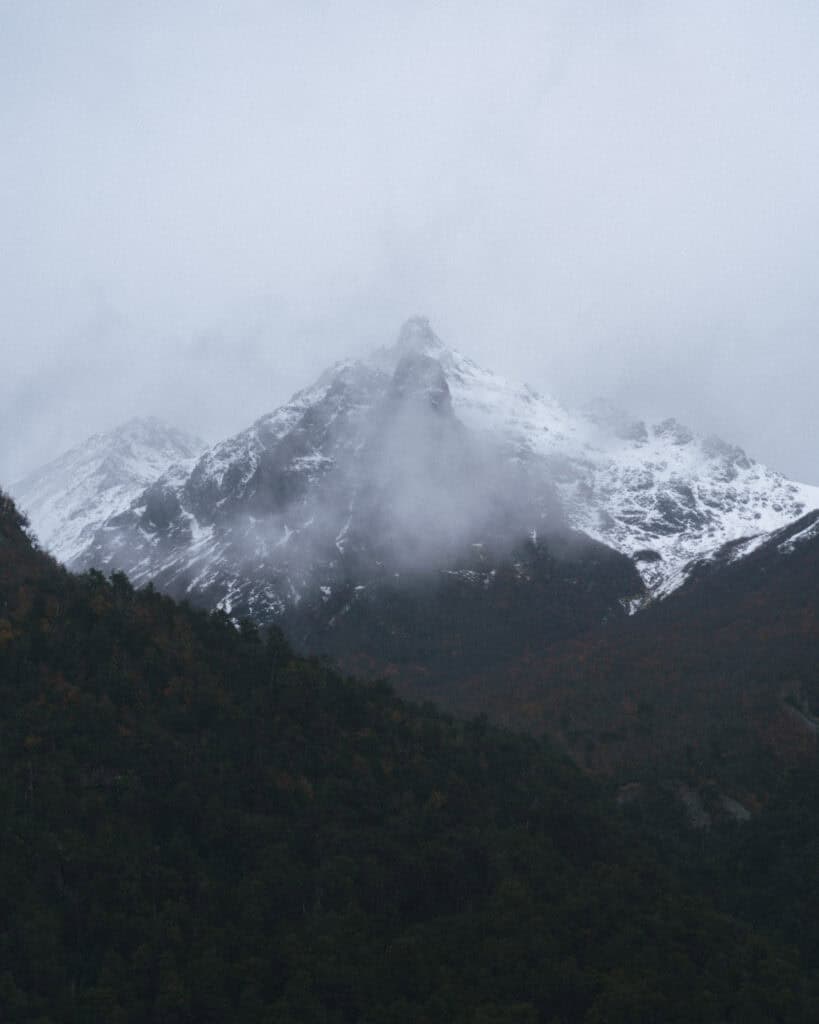
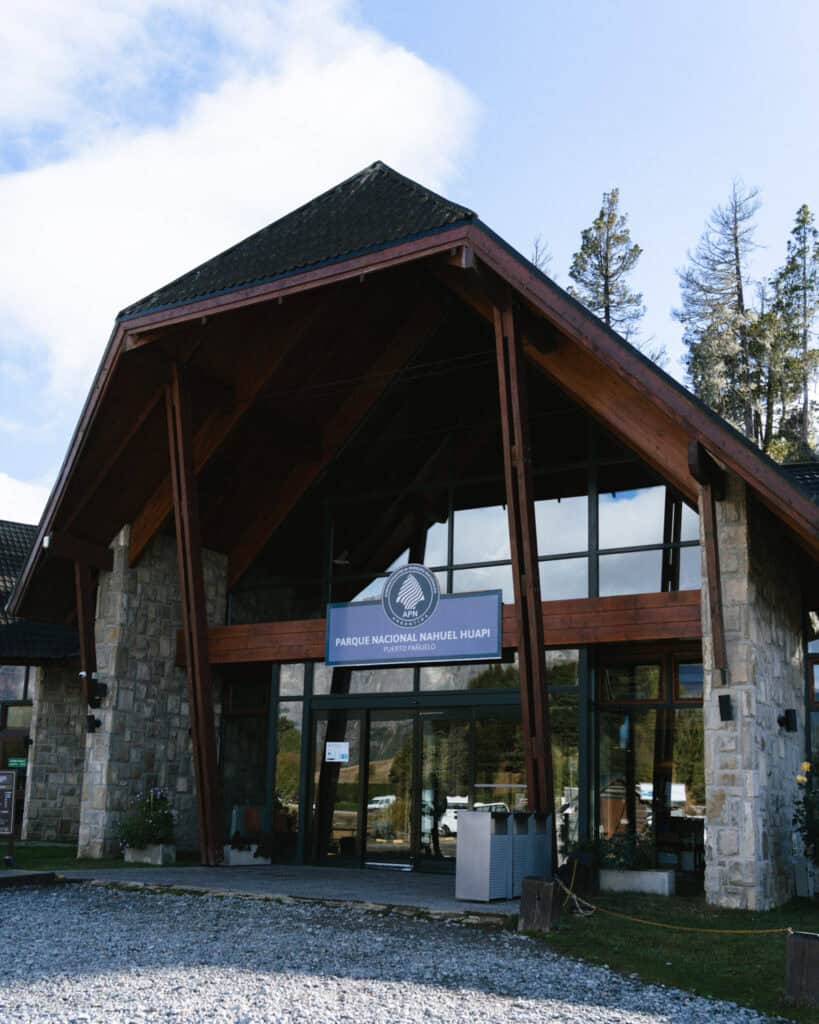
The lake eventually opened up with nearly 360° vistas all around of snow-capped mountains as we pulled into Puerto Pañuelo. We were greeted with an iconic Bariloche view of the famous Llao Llao Hotel and Llao Llao Peninsula.
Part 7: 🚌 Puerto Pañuelo – Bariloche
It was a bit cramped disembarking as the boat was so packed, but there was a bus waiting for us, and our luggage was transferred.
We were able to quickly get onto the free wifi in the port building to advise our Airbnb host of our arrival time. Of course, because we had changed countries, our Chilean SIM cards weren’t working, and we had no credit on our Argentinian ones!
This final bus was entirely full, so it was the least comfortable trip of the day, but the ride was less than an hour into the city.
The rainy weather meant the windows were unfortunately quite foggy on the bus, so we couldn’t see much, but I knew we would shortly return to this area to cycle the Circuito Chico.
We were dropped off in central Bariloche just before 6:30 pm. At this time of the year, Argentina is 1 hour ahead of Chile as they don’t have daylight savings. Our journey took a total of 10 hours.
Is the Cruce Andino worth it?
The Cruce Andino is quite a costly activity, certainly more expensive than taking a bus between Puerto Varas and Bariloche.
But it is a much more scenic option, and it really feels like you’re doing a day tour, rather than a wasted travel day.
I think if you are planning to do a boat cruise on either or both sides of the border (in Lago Nahuel Huapi in Argentina or on Lago Todos Los Santos in Chile), then it is worth saving your money on those tours and putting it towards the Cruce Andino.
The cost is not that much greater, and you essentially get two tours in one, plus the unavoidable border crossing, in a much more beautiful way than on the bus!
It’s impossible to predict, but to get the most out of the crossing, you want a clear, sunny day. Otherwise, the beautiful views of the mountains and volcanoes are obscured by cloud, and the lakes don’t look as sparkly blue as they should.
If you’re visiting the northern Patagonia region during the warmer months (October/November – March/April), your chances of a clear day are much higher.
We took a punt doing the crossing in early May and unfortunately the weather wasn’t on our side, but after experiencing both towns in the sunshine on other days, I am 10000% certain the crossing would be simply spectacular on a sunny day!
The view of Volcán Osorno on Lago Todos Los Santos alone is worth the cost. The Chilean side of the journey is simply spectacular, and this is an amazing way to experience the scenery.
⛴️ 🇨🇱 Book the Cruce Andino from Chile to Argentina
⛴️ 🇦🇷 Book the Cruce Andino from Argentina to Chile
Planning a trip to the Patagonian Lake District
Planning a trip to the beautiful lake regions in northern Patagonia? Spanning both Chile and Argentina, this is an unmissable area of Patagonia. Don’t forget to read our Puerto Varas, Chile and Bariloche, Argentina travel guides too (coming soon).
They cover all the important info you need to know about these beautiful lakeside destinations, like getting there, getting around, the best places to eat, where to stay and other handy tips to get your bearings.
🌲 Everything you need to know about Puerto Varas, Chile and Bariloche, Argentina (coming soon)
Final thoughts: Cruce Andino
Skip a boring bus ride between Puerto Varas and Bariloche and instead soak up the scenic beauty of the Patagonian Lake District on the Cruce Andino.
We both commented throughout the day how nice it was to be having a ‘travel day’ that felt like a tour. We learnt a lot from our guides, enjoyed spectacular scenery and cruised on the most popular lakes in the area.
Even the bus portions felt interesting, and switching between seven different modes of transport (when you don’t have to haul your own luggage!) made for a varied day that went very fast, compared to sitting on one bus for 8+ hours.
I would highly recommend the Cruce Andino for travelling between Chile and Argentina, if you had already planned to do a boat cruise on Lago Nahuel Huapi in Bariloche or Lago Todos Los Santos in Chile.
⛴️ 🇨🇱 Book the Cruce Andino from Chile to Argentina
⛴️ 🇦🇷 Book the Cruce Andino from Argentina to Chile
MORE PATAGONIA LAKES DISTRICT POSTS
- Puerto Varas, Chile Travel Guide (coming soon)
- Bariloche, Argentina Travel Guide (coming soon)

The Comments
Bettina
Brilliant guide, Sally, just what I needed. Very detailed and the usability is top class. I have so much need of your guide to Puerto Varas and Bariloche too as I’m planning a vacation in the lake area. Please, please, please post them soon, it will be an treasured “before Christmas” present 😀
All the best,
Bettina
Sally Rodrick
BettinaHi Bettina, ahh I wish I could say they will be done but they definitely won’t be haha, I am VERY behind on writing. I did share some brief Instagram guides on both these areas which might be helpful though:
https://www.instagram.com/p/DNEUNjiTa6A/?img_index=1
https://www.instagram.com/p/DM6DWRQTPuP/
https://www.instagram.com/p/DNMEzqXRdzp/?img_index=1
https://www.instagram.com/p/DM4-PvDO57G/?img_index=1
https://www.instagram.com/p/DNAqWkRSGL0/?img_index=1
https://www.instagram.com/p/DNTyAImT3bM/?img_index=1
https://www.instagram.com/p/DNWWenbT87V/?img_index=1
Sorry, I know that’s not as detailed as my usual blog posts, but it’s a starting point! Puerto Varas is so special, we really loved it. I hope you have a wonderful trip, Sally