This article contains affiliate links that may earn me a small commission at no extra cost to you. As an Amazon Associate, I earn from qualifying purchases. For more information, see our affiliate disclaimer.
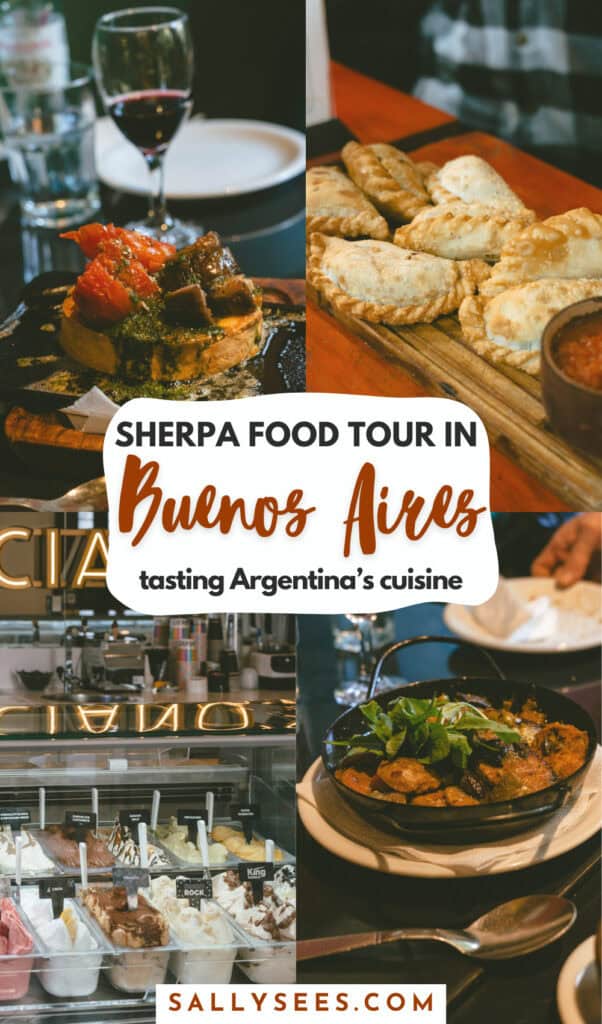
If there’s one thing you do in Buenos Aires, make it a food tour.
Argentina’s capital is the beating heart of the country, bursting with the best of Argentine cuisine. Smoking parillas grill some of the world’s best steak, historic bares notables dish up homestyle food to loyal patrons, empanadas are served by the dozen, and hidden panaderias bake sweet treats oozing with dulce de leche.
I’m a huge advocate of taking a food tour in a new city. It allows you not only to learn more about the city, get your bearings while wandering around, and understand the culture from a local perspective, but also to get the inside word on the best food to eat and where to find it.
There are dozens of foodie related experiences in Buenos Aires, and if you’ve got the time and the interest, do them all! But there is one company that stands out above the rest, Sherpa Food Tours.
We took their tour in San Telmo, and it was one of the best things we did in the city. Here’s everything you need to know about Sherpa Food Tours in Buenos Aires.
Why take a food tour?
I am a HUGE advocate for food tours. I don’t mind walking tours, and I love learning about a new destination and its culture, but a food tour does this in the best, least-boring way possible!
To me, food = culture, especially in a country like Argentina, where cuisine is so important to their identity and there is so much nuance around traditions like mate and steak.
Taking a food tour is a fun and tasty way of immersing yourself in the culture, learning about its history, getting to connect with a local AND getting to taste all the best cuisine.
Who doesn’t want to snack on empanadas, sip local Malbec, and douse everything in dulce de leche while wandering around a new city?
I also have major FOMO when it comes to finding the best local foodie spots, and in a city as big as Buenos Aires, it’s nearly impossible to sift through the thousands of restaurants, historic bars, cafes, panaderias, and market stalls without some insider tips.
Another major positive of taking food tours is knowing what to order. You might have an idea of some of the most popular foods in your new destination (like empanadas in Argentina), but these tours go beyond just the most well-known dishes, and you’ll get to try things you’ve probably never heard of before and never would have ordered on your own.
Plus, going in a group means you get to sample a small amount of everything vs going to a restaurant by yourself or with one travel companion, and having to order full servings of many things if you want to sample a variety of dishes.
A food tour solves all these problems!
I highly recommend organising a tour for your first day in the city, so you get the full benefit of your experience, new foodie knowledge and your guide’s recommendations for the duration of your stay in Buenos Aires, and Argentina overall.
About Sherpa Food Tours
Sherpa Food Tours is a global food tour company, connecting travellers with various cities around the world through food. They use local guides to showcase the culinary scene, sharing inside tips on the best local cuisine and hidden gem restaurants that most travellers won’t experience.
They offer tours in the UK, Europe, Mexico and Argentina, aka some of the best foodie destinations in the world!
Sherpa has two different tours on offer in Buenos Aires:
They pride themselves on small, intimate experiences with a maximum of 10 participants on each tour, with a local guide.
The tours are suitable for solo travellers, couples, friends and families of all ages. The guides do a great job of bringing together their groups, and it’s a fun way to meet other travellers and share a common passion – food (oh, and wine too, if you’re into that!).
On their Buenos Aires tours, they can cater to vegetarians and gluten-free travellers if you advise them at the time of booking.
Sherpa Food Tours in Palermo
- 💰 Cost: $90 USD standard | $115 USD premium
- 📅 Schedule: multiple departures per day, 11/11:30 am, 4:30 pm, 5:30 pm and 6:30 pm
- ⏰ Duration: 3 – 3.5 hours
- 🥟 Food tastings: 8+ food and drink samples from 5+ locations
This tour has more than 5,000 5-star reviews on Viator, which gives you an idea of how good Sherpa are!
Their most popular tour explores the funky neighbourhood of Palermo, sampling 8+ local delicacies at various restaurants, food stalls and bars.
There is the option of taking a standard or premium tour, and you can choose your preference when you book on Viator.
The standard tour focuses on local favourites, visiting more traditional restaurants, whereas the premium option, which is slightly more expensive ($115 USD vs $90 USD), focuses on some of the upper-class eateries around Palermo, including some Michelin-featured spots!
There are multiple departures every day of the week, including evening options. The tour runs for approximately 3.5 hours.
Although this is their most popular tour, we didn’t choose this one. We were staying in Palermo and had spent a lot of time eating and exploring the barrio independently, so we wanted to take the chance to explore a different neighbourhood and do a food tour at the same time.
Sherpa Food Tours in San Telmo
- 💰 Cost: $69 USD
- 📅 Schedule: 11:30 am and 4:30 pm (peak season only)
- ⏰ Duration: 3 – 3.5 hours
- 🥟 Food tastings: 5+ food and drink samples from 4+ locations
San Telmo is one of BA’s most historic neighbourhoods, and a huge hub for all things food.
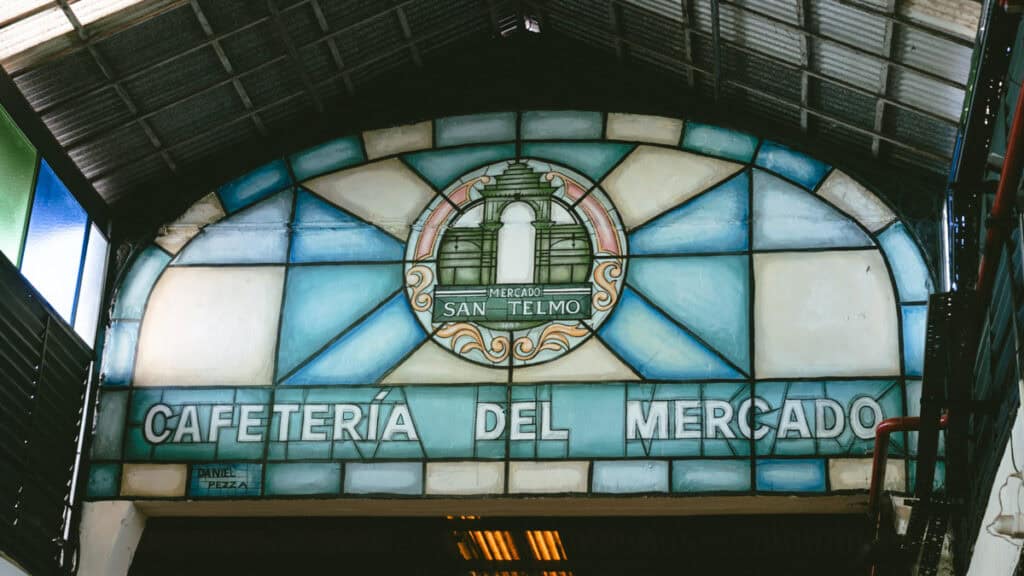
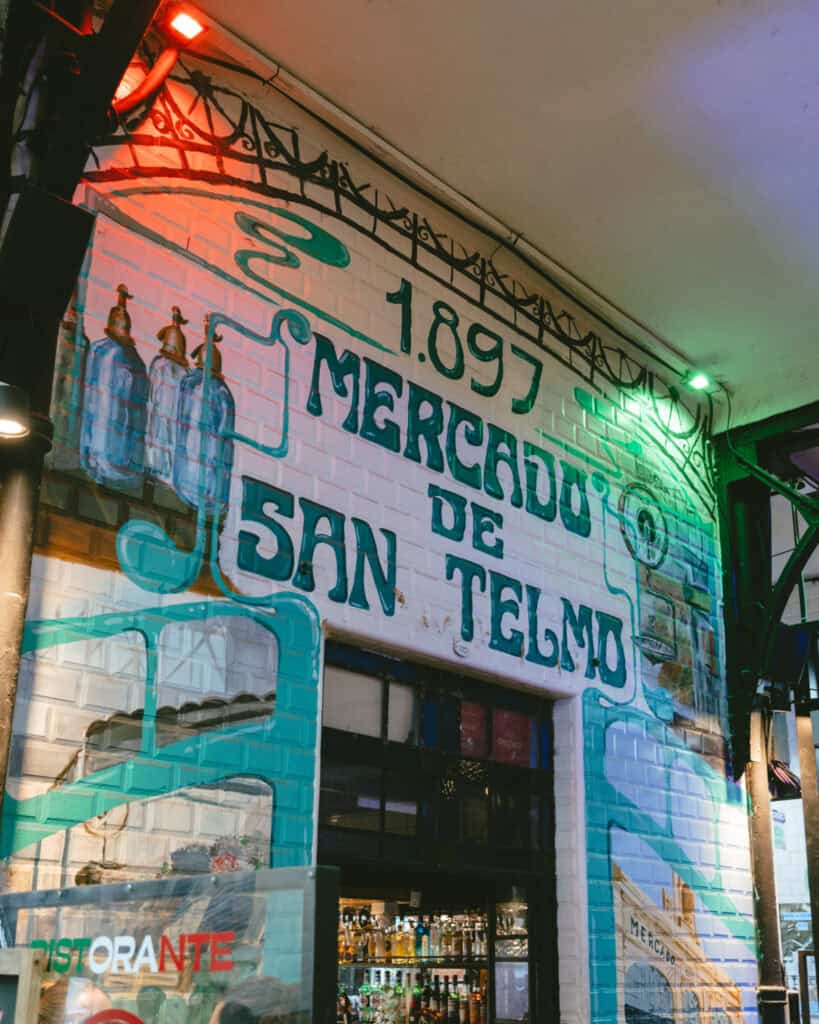
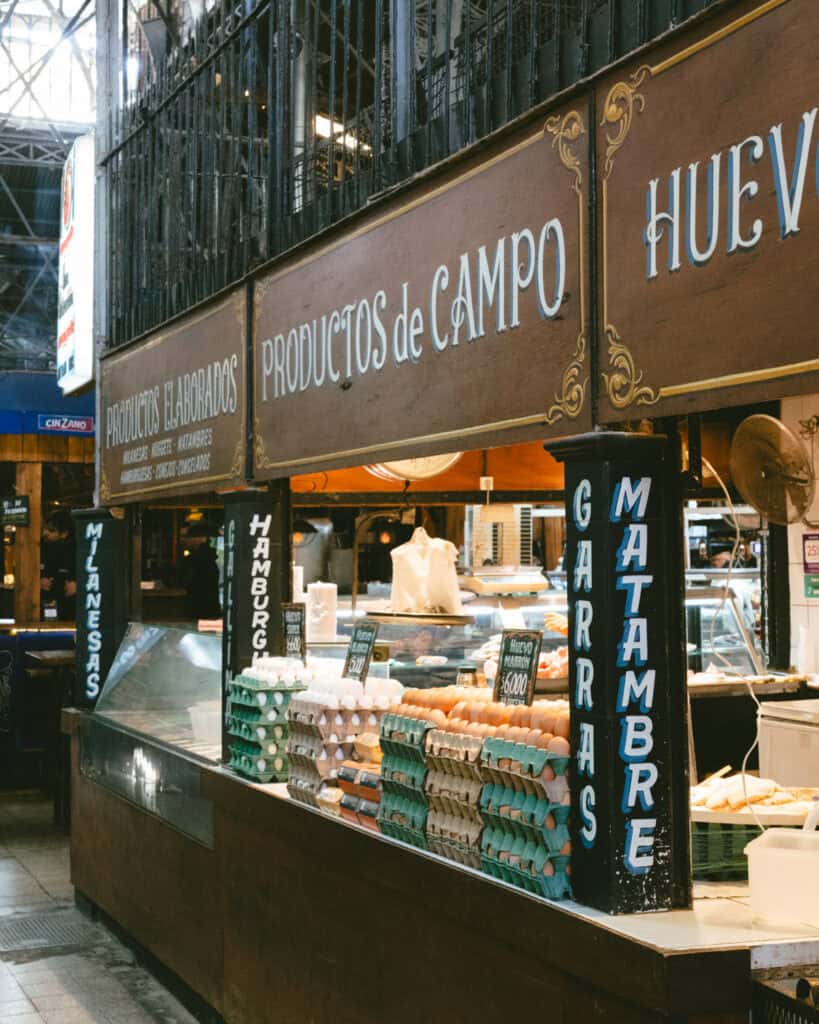
Hosting the famous Mercado de San Telmo (San Telmo Market), there are a LOT of great things to taste here.
(Just to clarify, I mean the indoor San Telmo Market, which is open 7 days a week. San Telmo also hosts the Feria de San Telmo (San Telmo Street Fair) every Sunday, which is an outdoor flea market, and not so foodie focused.)
This is the tour we opted for, so we could not only experience Argentine cuisine, but also explore and learn more about a neighbourhood we weren’t staying in.
The San Telmo tour only runs from Tuesday – Saturday, to avoid the crazy crowds in San Telmo on Sundays when the street fair is on. There is a tour at 11:30 am, and during peak season, they also offer a 4:30 pm departure. The tour runs for 3.5 hours.
🥟 Book your San Telmo Sherpa Food Tour here
Our Buenos Aires food tour experience
I don’t want to spoil all the fun, so while I will share about the different stops we visited on our tour, I won’t specifically name all the places we went to.
The tours do change locations frequently, to share the love with lots of different local restaurants and food spots.
Stop 1 – historic bar
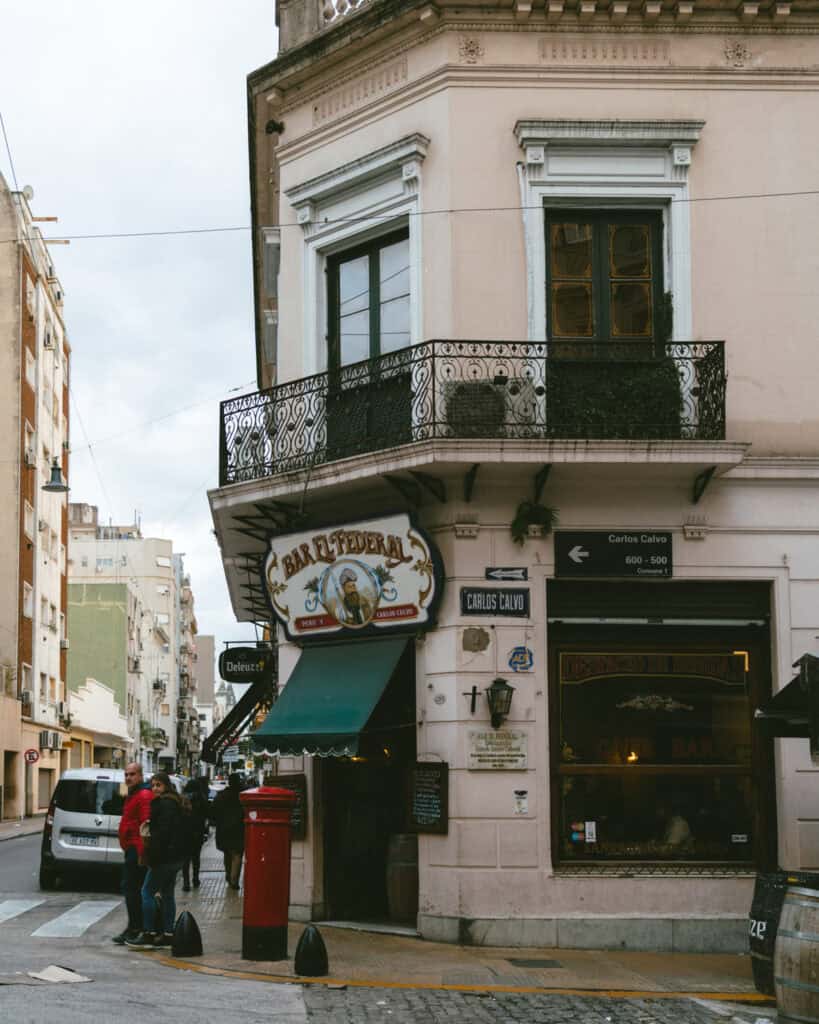
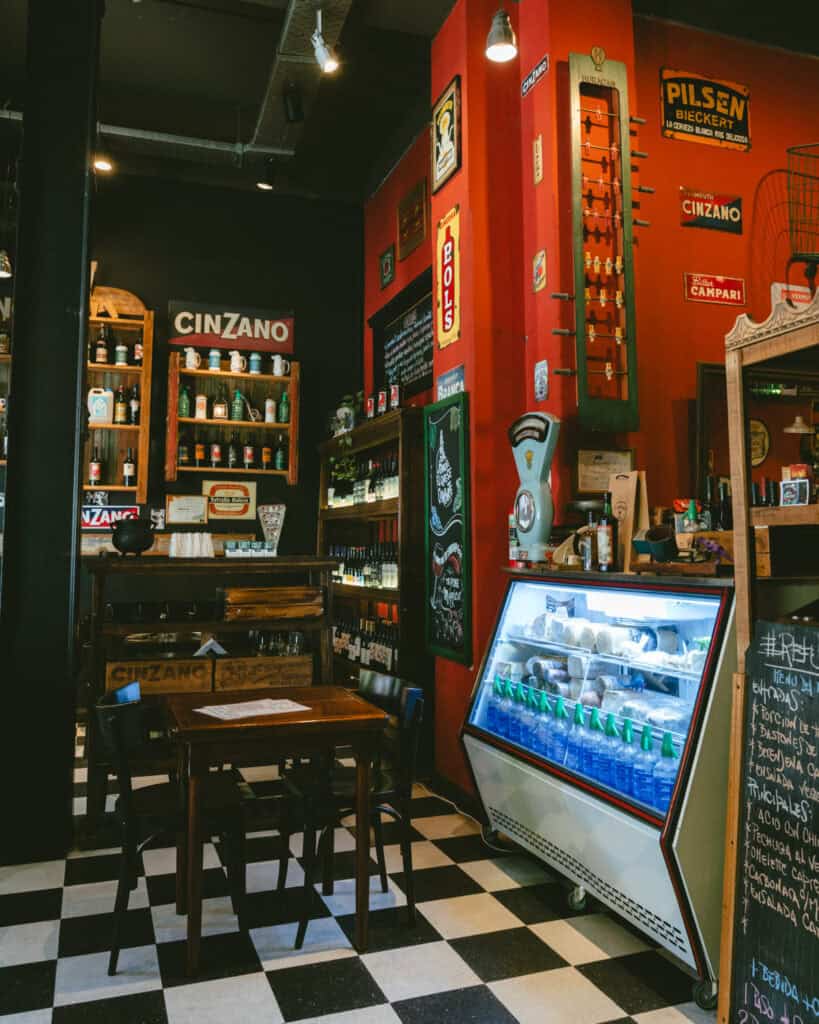
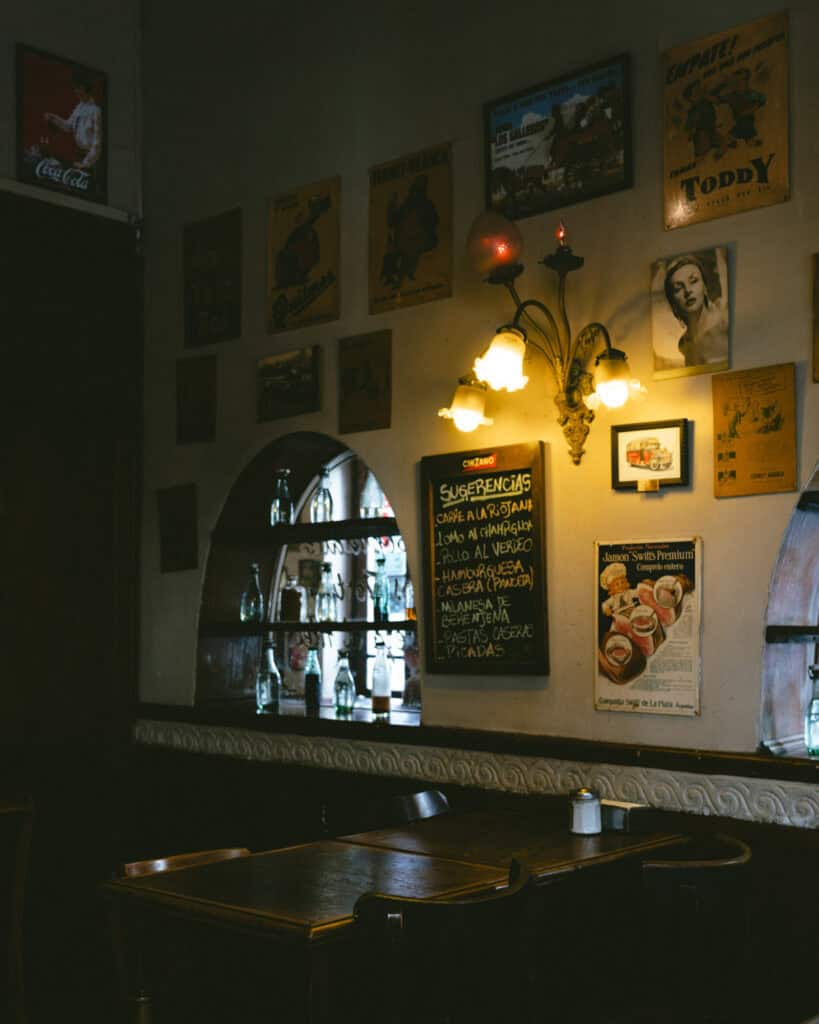
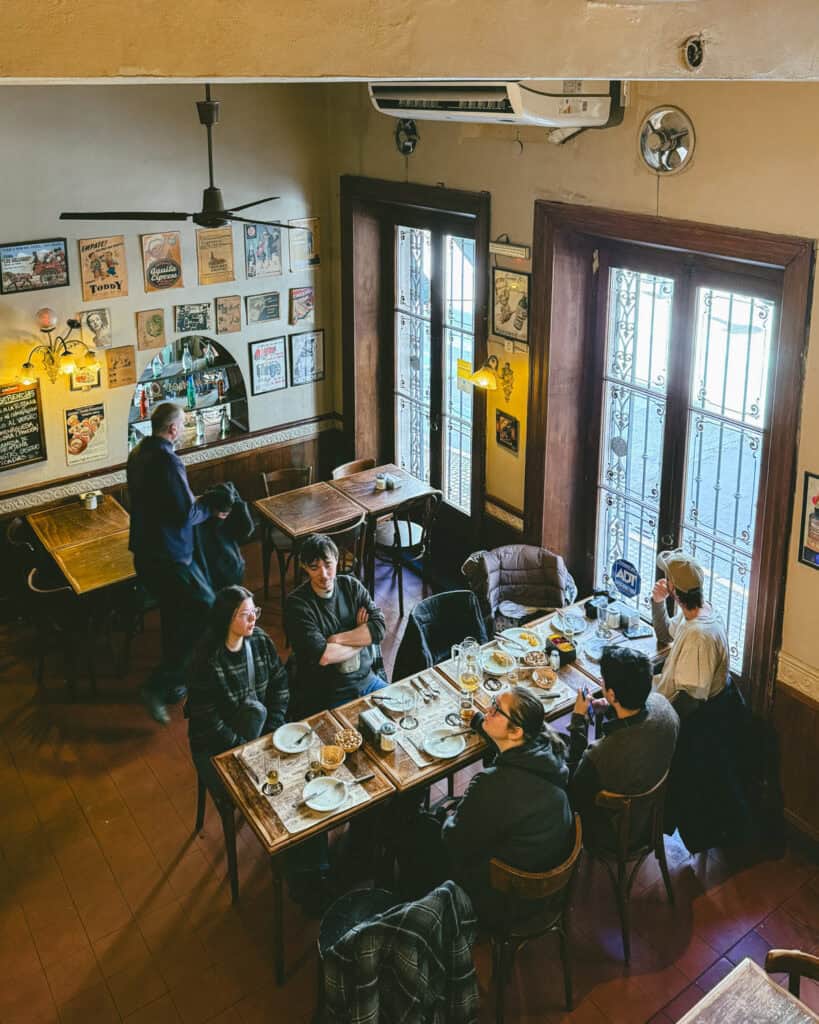
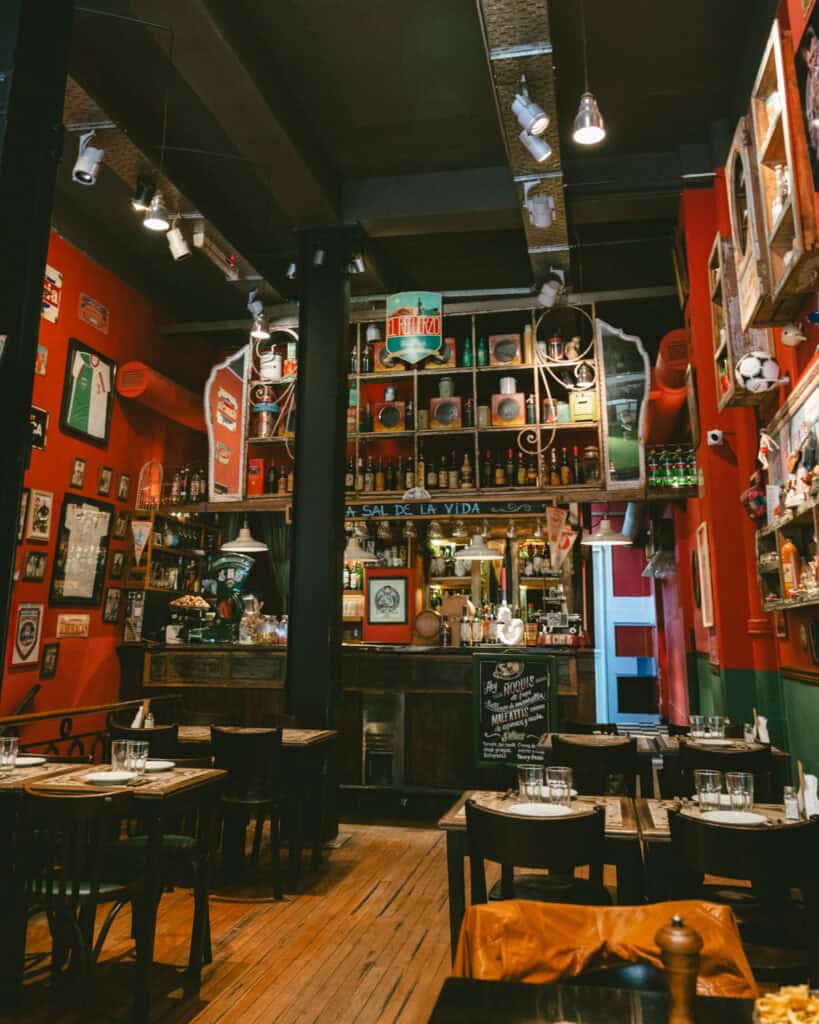
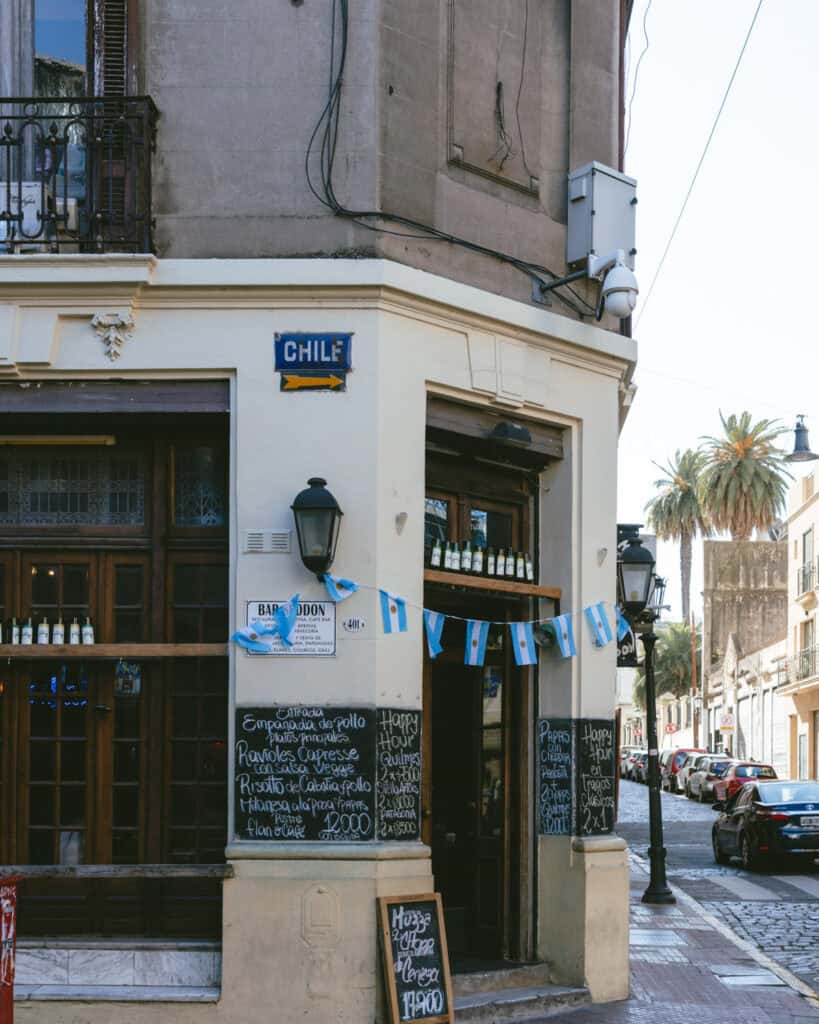
One of the things I loved the most about Buenos Aires was its bares notables and cafes notables. Basically, these are old, historic food spots that have been local watering holes for centuries. Sometimes called bars, sometimes called cafes, the reality is that most are all of the above!
You can grab a coffee and a medialuna in the morning, a greasy milanesa for lunch, and a fernet and coke or a bottle of Malbec and a picada for happy hour.
The city created a list of notable historic bars and cafes that have a rich history and are excellent examples of preserved culture in the city. Hence, the bar notable and cafe notable label. You’ll often see a sign in the window of the venues that made the list.
With that context, the meeting point and first stop of our Sherpa Food Tour was one of the oldest bars in the city.
We met our guide, Kate, who was a Colombian expat who had been living in Buenos Aires for more than a decade. Specifically in San Telmo, so we knew we were going to get the best inside scoop!
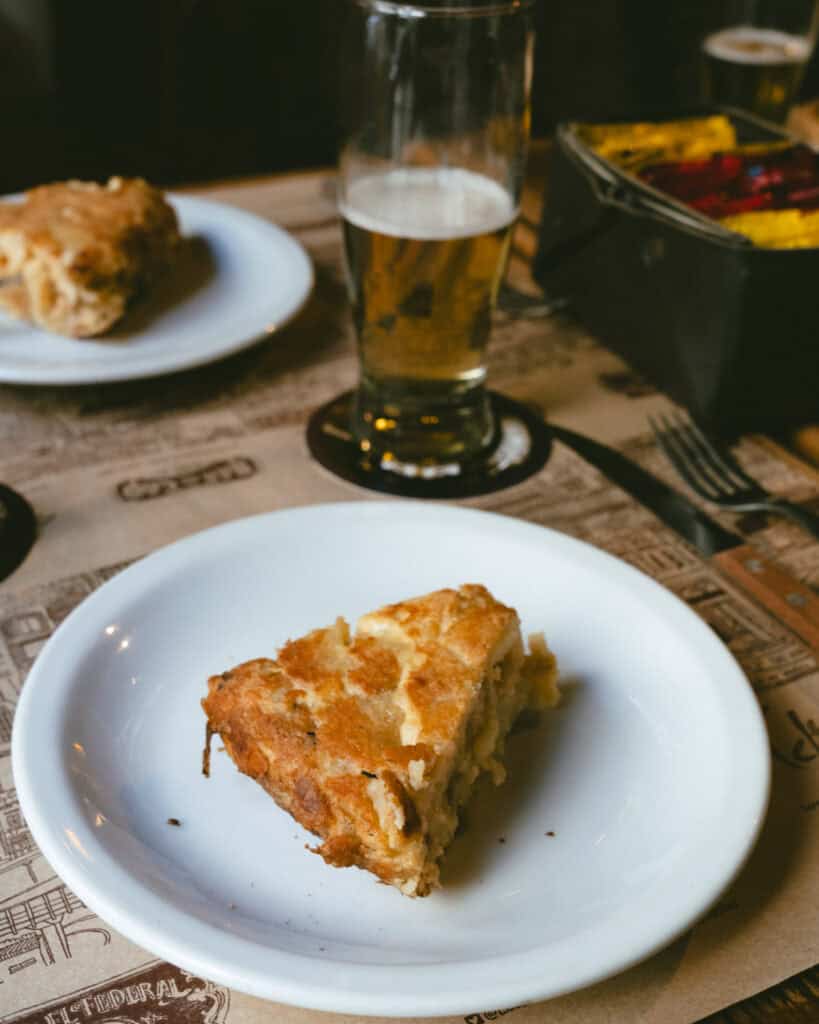
Our group of 7 slowly arrived and joined the table, where we kicked off our tour and had our first tasting. It was classic bar food, and we started with local draft beer and a tasty tortilla de papas, aka a Spanish omelette, made with potato, egg and onion. Yum!
Stop 2 – Mercado de San Telmo
After getting to know each other and getting a crash course on the history of the San Telmo neighbourhood, Argentine cuisine and its many international influences, we moved on to our second stop, the Mercado de San Telmo.
We had actually been in San Telmo a few days prior, on Sunday, for the Feria de San Telmo. We barely stepped foot in the indoor market before escaping the incredibly noisy, busy and overwhelming aisles. You should go to San Telmo on a Sunday, but it’s definitely not the best day to explore the indoor market and our visit during the tour on a Tuesday was much more enjoyable.
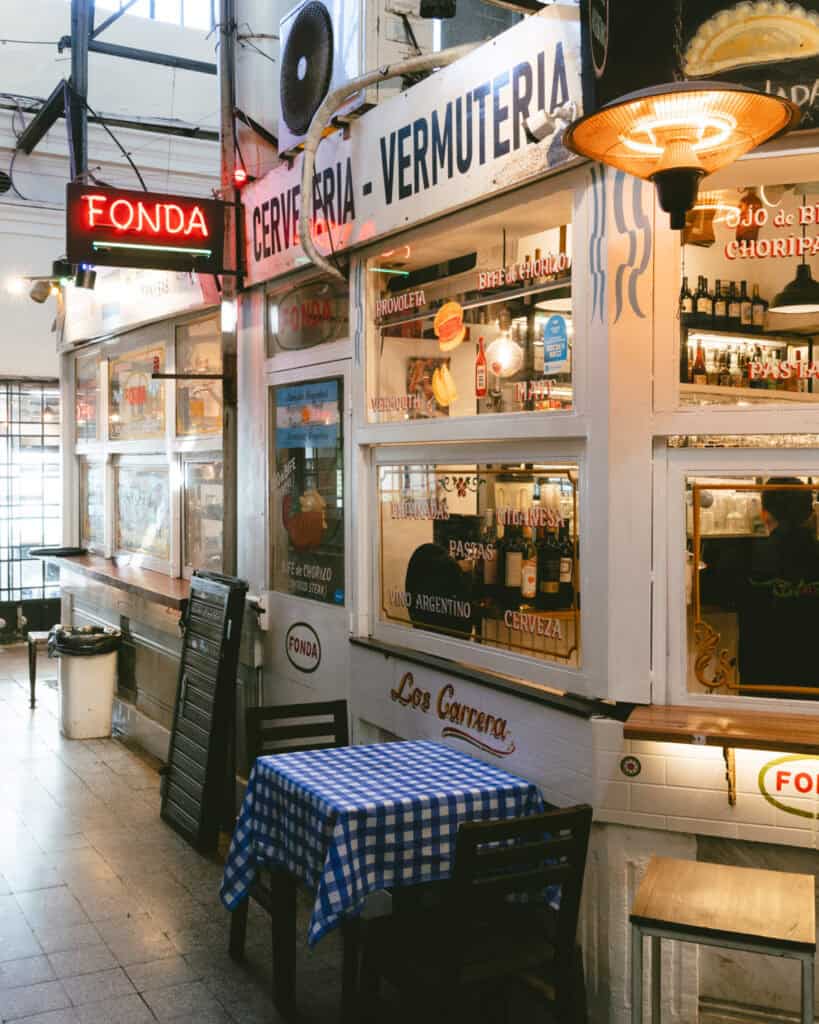
The market is a mouthwatering collection of all kinds of food stalls, both ready to eat and ingredients to take home. We wandered the aisles, and Kate pointed out different stalls, some that had been in business for decades.
We sampled a few different tasty bites inside the market.
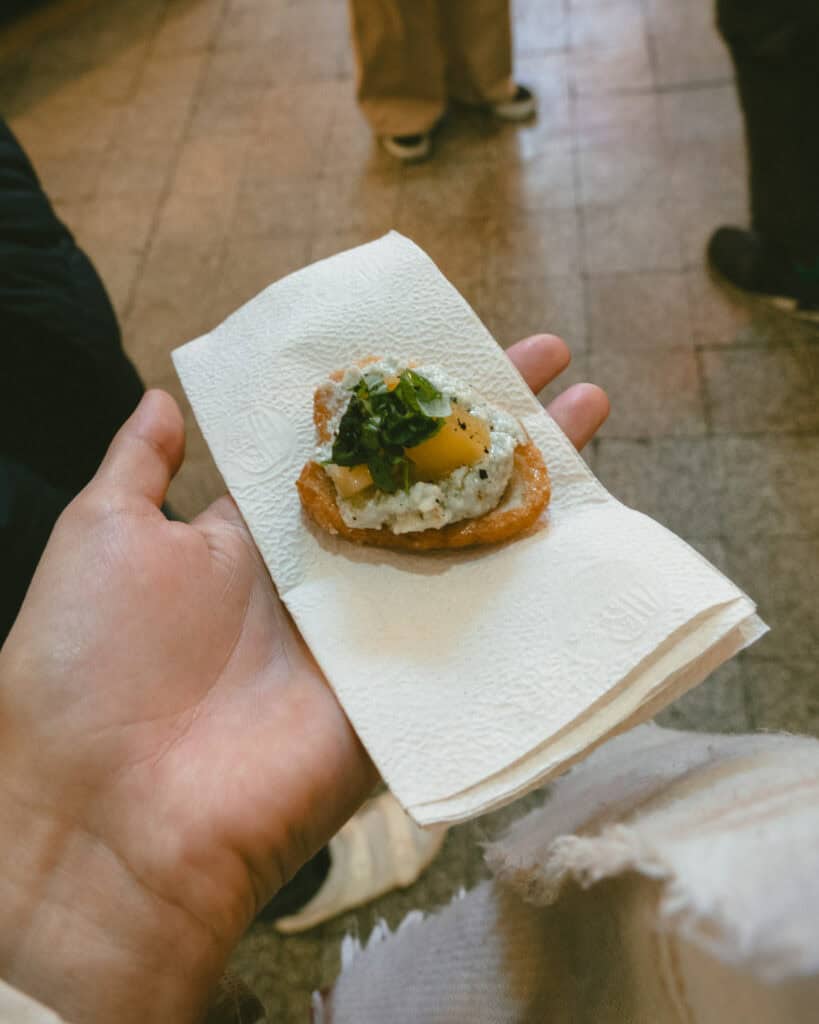
The first was something highly unusual that we never would have known to ask for, and I will do my best to explain. I don’t know the formal name for what we ate (or if it even has one?), but it was a sweet biscuit called a palmito, topped with a combination of blue cheese, pineapple and herbs. It sounds like it would not work, but trust me, it was so delicious!
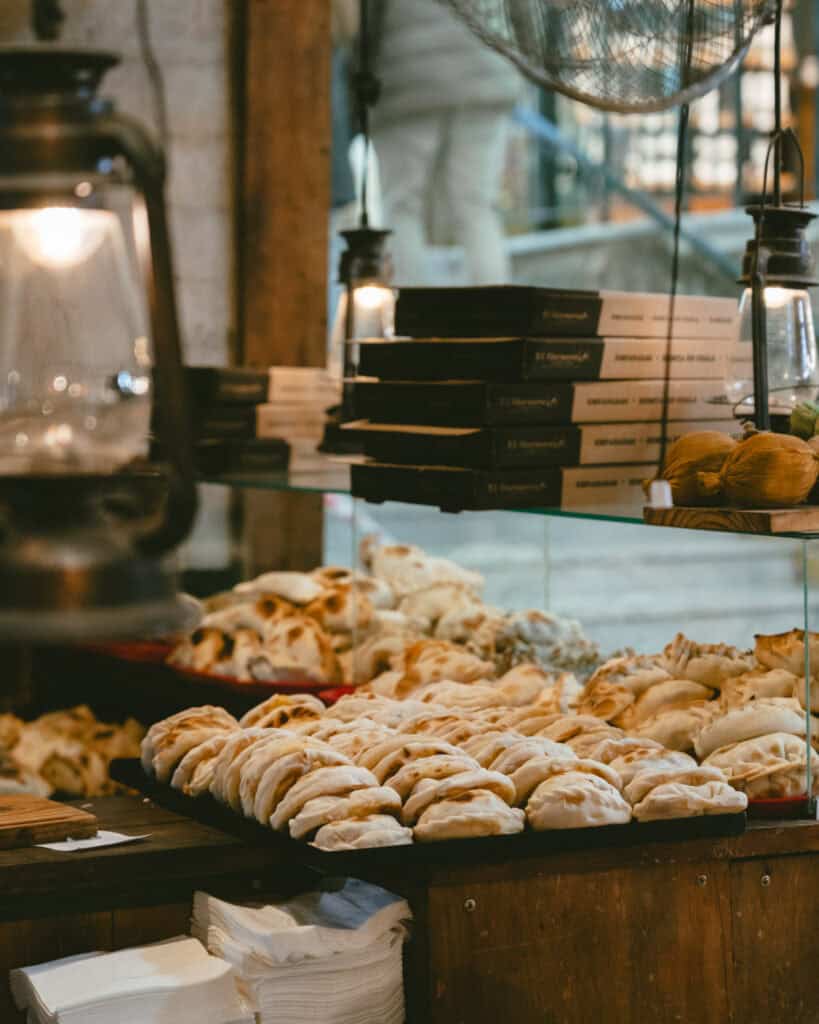
While inside the market, we also tried an Argentine classic: empanadas.
Every Porteño (Buenos Aires local) has their favourite empanada spot, flavour and preference of baked vs fried. It’s an ongoing debate to which there is no winner, as it’s totally subjective, but El Hornerno inside the market is considered by many to be one of the best in the city.
We sampled some fried empanadas, in the salteña style from the region of Salta in the north, with flavoured ground beef.

Stop 3 – comida criolla
In Argentina, the term comida criolla refers to traditional, home-cooked classic food with recipes being handed down from generation to generation. The act of eating in Argentina is slow and special, and something to be savoured and shared with family and friends.
A lot of the food tours we have done in other parts of the world, like Mexico, focus on street food and quick bites and are generally more fast-paced, as the food is designed to be eaten on the fly. This is NOT Argentina.
So for our third stop, we were back in a cosy historic restaurant, seated together at a table, ready to eat dishes that abuela would cook.
Chorizo is a very important part of Argentine cuisine. The most popular incarnation of this is the choripán (chorizo sandwich), which most tourists are familiar with and will probably try at some point throughout their time in the country.
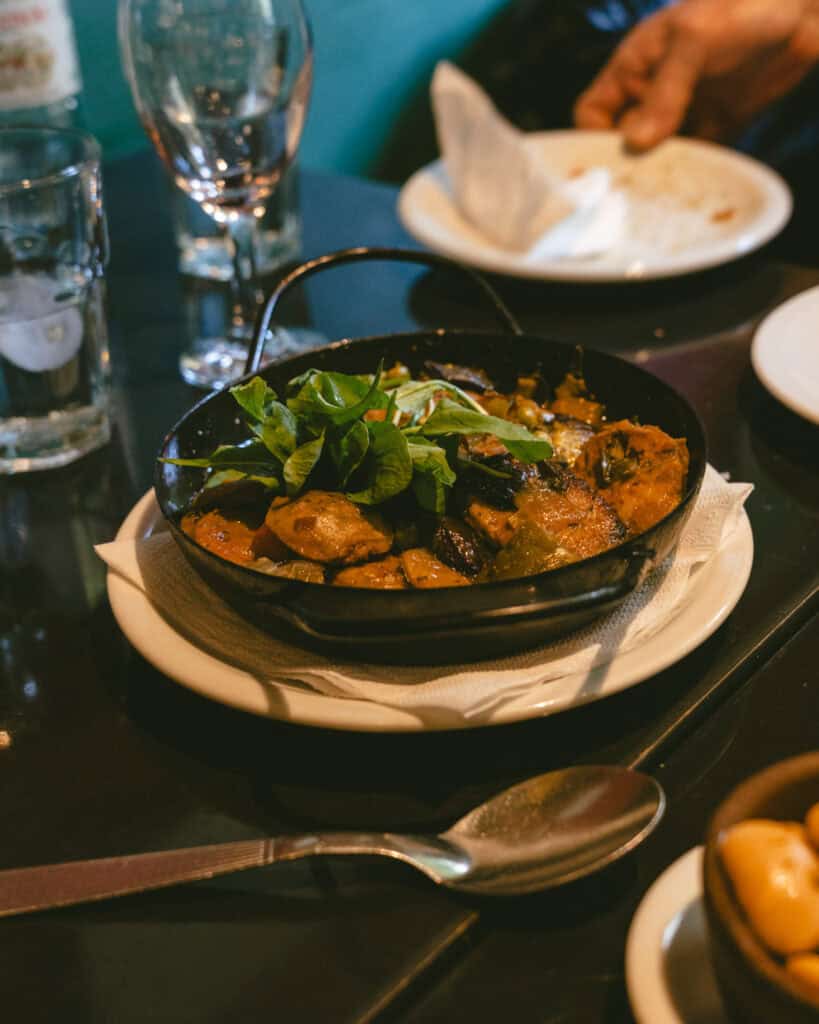
Instead, Kate wanted to show us an alternative chorizo dish that we most likely wouldn’t find on our own, and she was right. We enjoyed a tasty chorizo stew, as well as another classic Argentine dish – provoleta.
A firm cheese that Argentines specifically created so they could put it on the parilla with the other meat and make sure it didn’t melt and fall apart. Today’s version has a tough outer exterior that holds its shape on the grill, but once you cut into the centre, it’s a gooey explosion of cheesy goodness!
We also got to sample some tasty Malbec, which we had absolutely indulged in during our time in Argentina. It was served in a very typical pingüinito, aka a penguin-shaped pitcher! We didn’t notice this anywhere else in the country, but they were all over Buenos Aires.
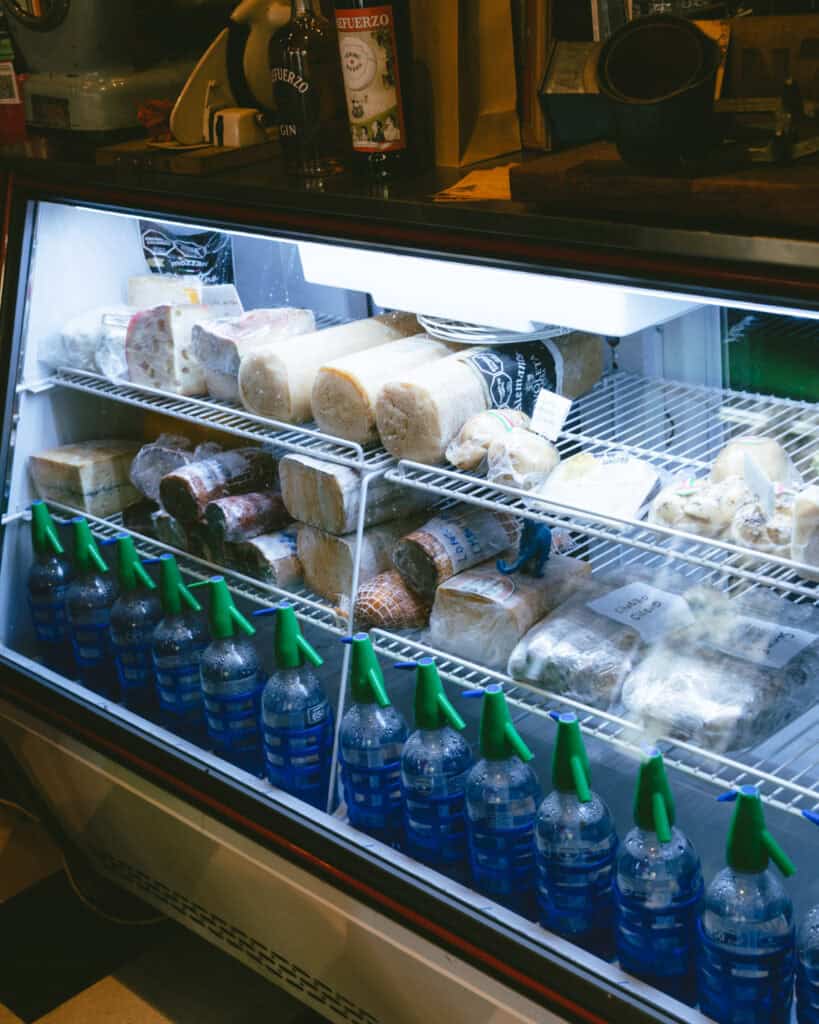
Alongside our wine was a sifón de soda, a siphon to create sparkling water. I love soda water and we drink it frequently at home, but I always miss it when we travel. Not in Argentina! These sifónes were everywhere, and we were always served bubbly water alongside our coffee or with meals.
Kate also taught us that locals will mix wine with sparkling water if the wine isn’t that nice, or to make a more refreshing drink on a hot summer day, a tinto de verano, like a sangria.

Stop 4 – mate and dulce de leche
After walking off our big meal, we swung back via the Mercado de San Telmo to a different area of the market.
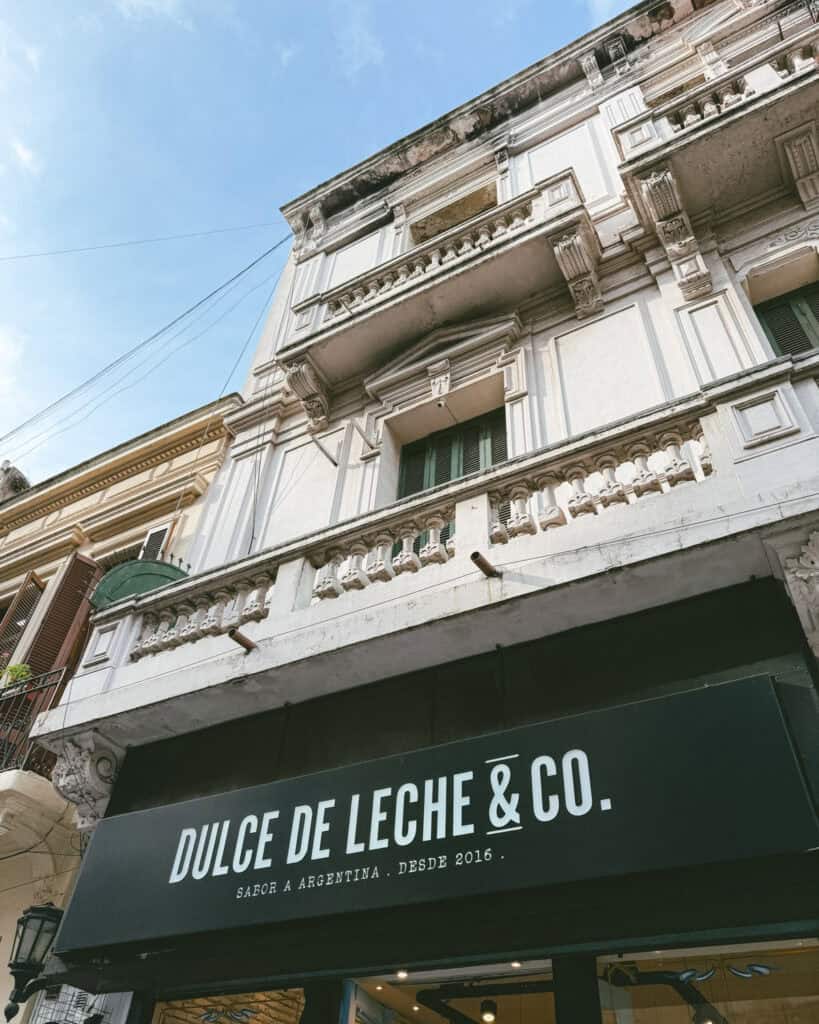
Our first stop was to sample what is arguably the best part of Argentine cuisine – dulce de leche.
This sweet milky caramel is everywhere! I don’t know how Argentinians are so slim, because they lather this delicious sugary goodness on toast, medialunas, inside pastries, on top of already sweet desserts – you name it, they put dulce de leche on it.
We got to try a few different varieties of dulce de leche, as well as dulce de leche liqueur. I’m not usually a big fan of milky alcohol, but I must say this was pretty damn good.
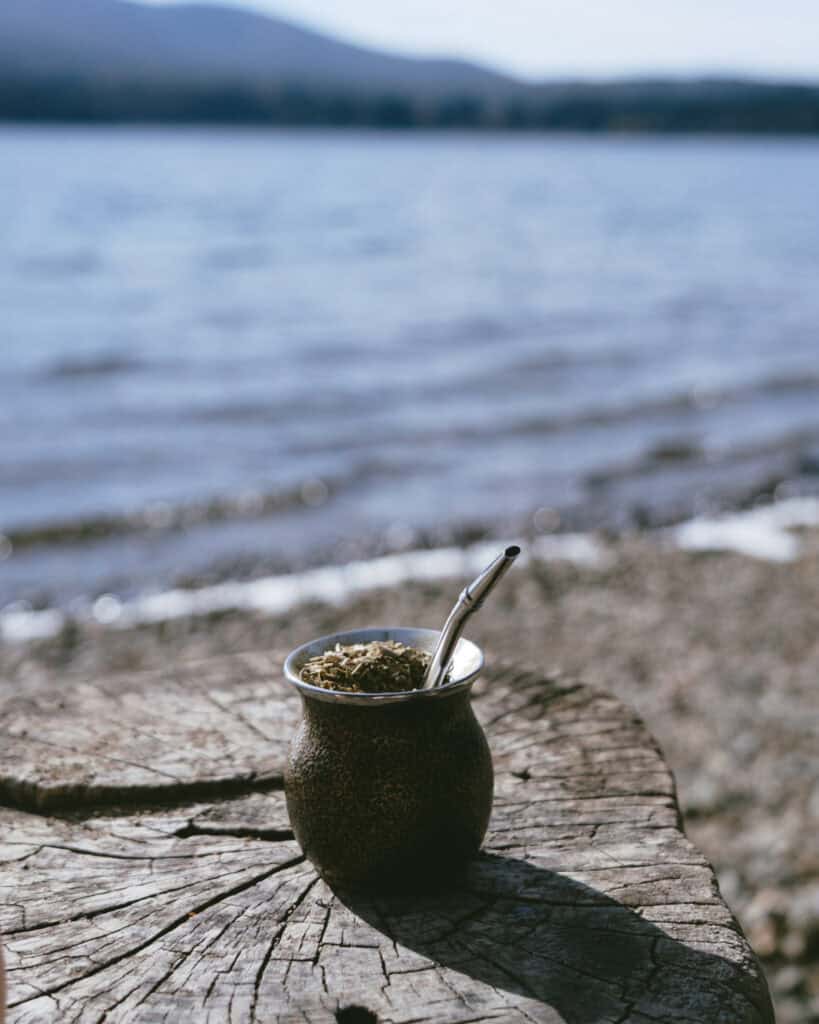
The next stop was at a yerba mate store.
Mate is a huge part of Argentine culture and comes with a lot of ‘rules’ for lack of a better word. I won’t give you the full spiel here (that’s why you should do the tour!), but there are a lot of important etiquettes and practices you need to understand before drinking mate.
Brayden had already fallen in love with mate months ago when we arrived in Argentina, and had been drinking it constantly during our travels.
Stop 5 – sweet finale
After some more time strolling around San Telmo, seeing tango dancers in Plaza Dorrego and ticking off a few more historic landmarks, our tour was coming to an end.
But not before a sweet finish! My favourite.
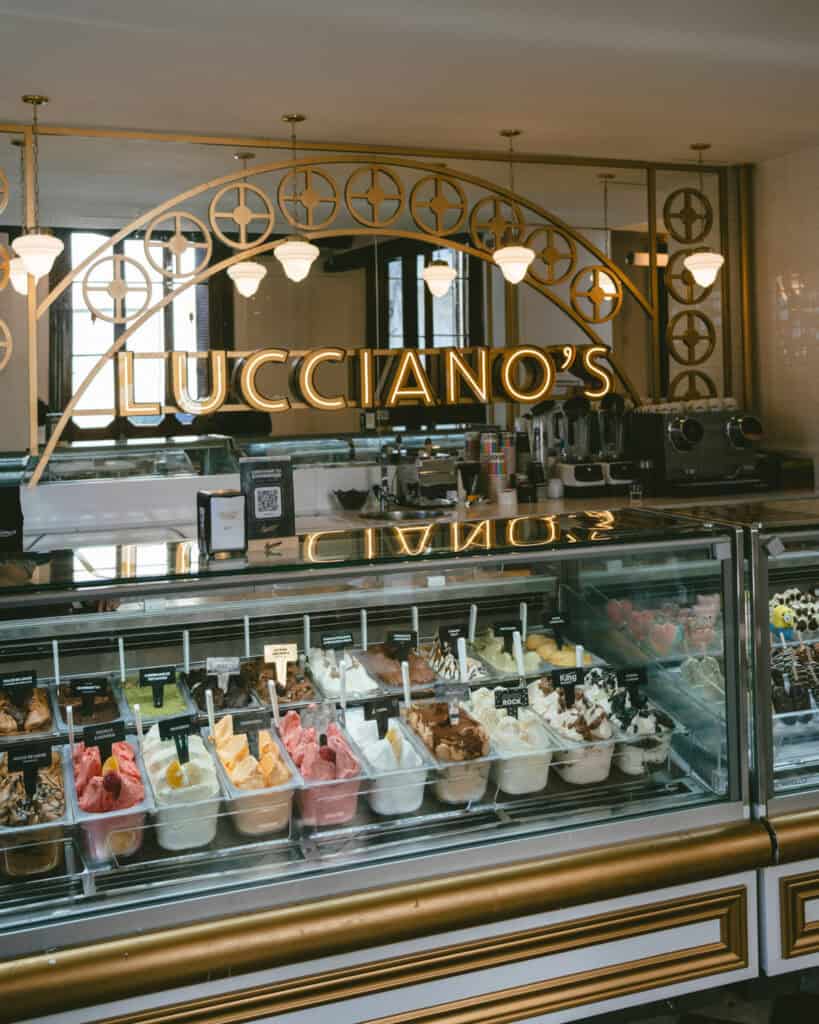
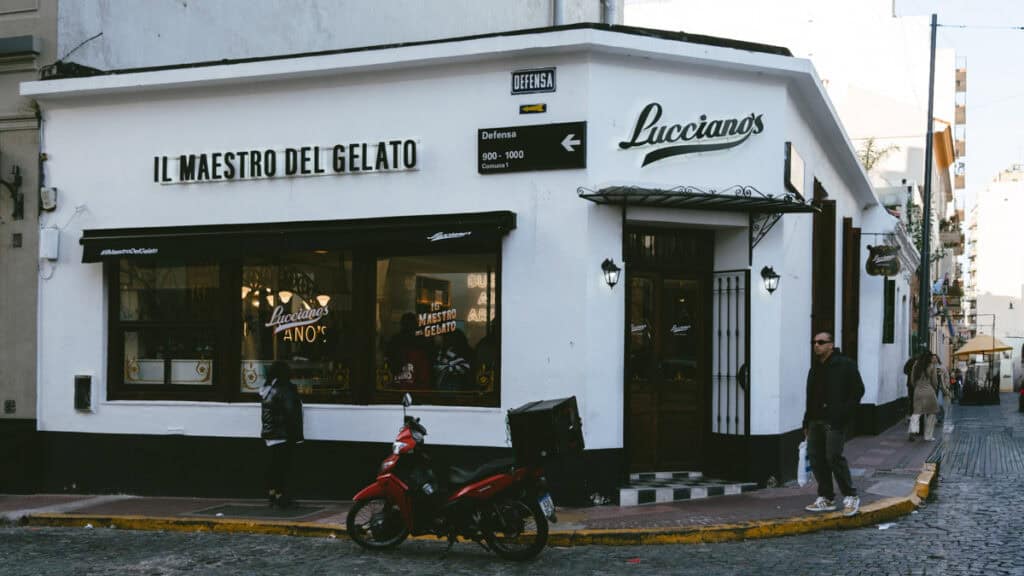
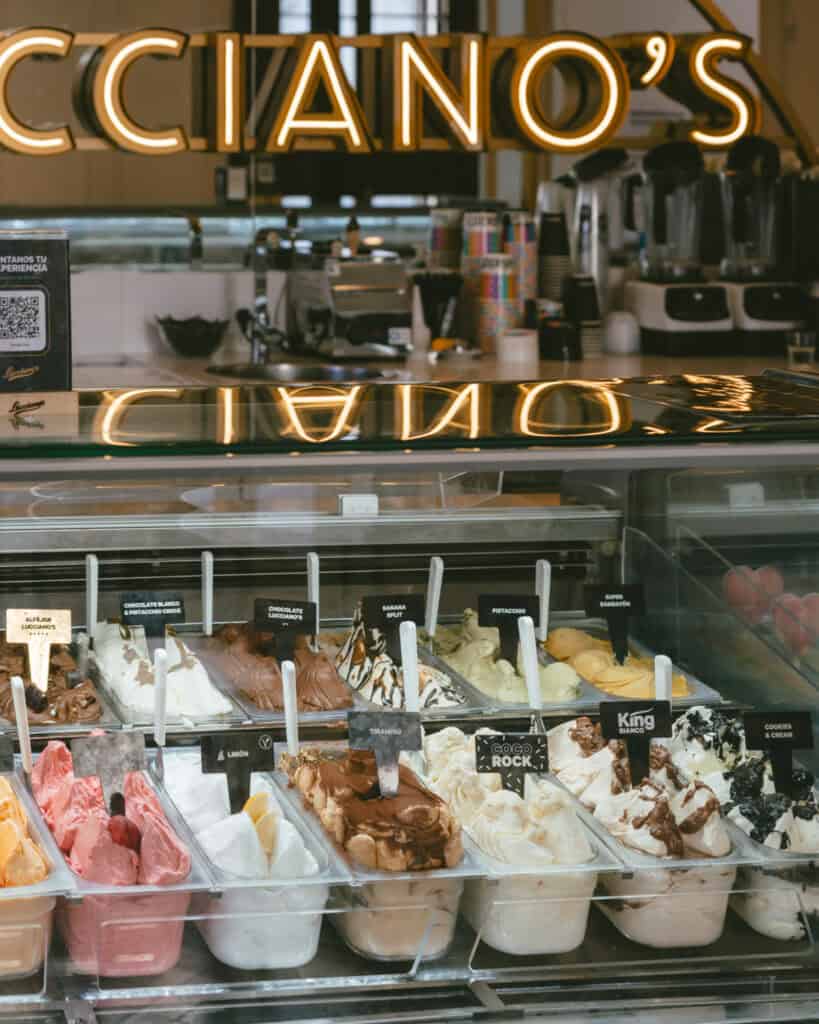
Ice cream, or should I say gelato, is another big thing in Argentina, thanks to the heavy Italian immigration, and similar to empanadas, everyone has their favourite place.
Lucciano’s is one of the city’s gelato institutions with various locations and a cult following. It wasn’t until I got to Argentina that I willingly chose pistachio as my ice cream flavour, but that all changed here, and Lucciano’s does it better than anyone!
As our tour came to a close, Kate shared her final tips and recommendations for the rest of our time in the city and helped everyone make arrangements for getting back to their accommodation or on to another area to explore further.
We were happy, and we were full!
What to wear and bring
First and foremost, COME HUNGRY! Do not eat before your tour. I can guarantee you will be rolling out of there.
Wear comfortable clothes that are weather-appropriate. You’ll be in and out of restaurants and wandering around neighbourhoods outside throughout the tour. For us, that meant lots of warm woollies in winter, but if you’re visiting in summer, this might mean a hat and sunglasses.
Definitely wear comfy shoes too. The streets around Buenos Aires, particularly in San Telmo, are uneven cobblestone, so go for comfort over fashion.
I would also highly recommend wearing a loose waistband or a dress/jumpsuit if it suits the weather. Seriously, you will be eating so much food that you want to leave as much space as possible!
There was water available at every spot we visited, but a water bottle never goes astray, a cash tip for your guide if you had a good experience, and a phone or camera to capture all the yummies you eat!
Sherpa Food Tours Buenos Aires: Worth it?
I highly recommend joining one of the Sherpa Food Tours in Buenos Aires. Whether you opt for popular Palermo or historic San Telmo, you’ll have a great experience getting to know more about this amazing city and its cuisine.
Unfortunately, due to the way we planned our Argentina itinerary, Buenos Aires was our second last stop after more than two months already in the country.
We may not have got as much out of the tour as we would have if we had arrived directly in BA, but I know if this were day 1 or 2 of our time in Argentina, it would have set a strong foundation for all our eating and drinking adventures to come!
I think the Buenos Aires food tours with Sherpa are great value with so much included for the price, and you can’t go wrong with a day of eating and drinking delicious Argentine cuisine and wandering around one of the best cities in Latin America.
It’s a big yes from me!
🧉 Book a Palermo food tour here or a San Telmo food tour here